Hospitality and commercial outdoor spaces are under constant pressure to look premium while surviving heavy daily use, humidity, salt air, and tight maintenance budgets. Hotel groups, resort operators, and furniture distributors are increasingly turning to poly outdoor furniture as a practical answer to these demands. Unlike traditional wood, it resists rot, fading, and insect damage without frequent refinishing. For procurement teams managing multi-property rollouts or import distributors sourcing for wholesale catalogs, understanding what poly lumber actually offers, and how it compares to teak or aluminum, is essential before committing to a large-scale order.
What Is Poly Outdoor Furniture?
Poly outdoor furniture refers to furniture built from high-density polyethylene, commonly known as HDPE poly lumber. This is not the same as thin injection-molded plastic. Poly lumber is a dense, engineered material manufactured from recycled and virgin HDPE resin, then color-pigmented all the way through the material rather than surface-painted. It is fabricated into board and profile shapes and assembled much like solid wood, using stainless steel fasteners.
The core appeal of poly lumber outdoor furniture for commercial buyers is that it requires no sealing, staining, or repainting. It does not absorb moisture, so it will not warp, crack, split, or rot when exposed to rain, pool splash, or coastal humidity. For hospitality outdoor furniture programs where maintenance crews are stretched thin across multiple properties, this translates directly into lower lifecycle costs.
Because the color runs through the material rather than sitting on the surface, scratches and scuffs from daily guest use do not expose bare wood or reveal a different base color underneath, which keeps furniture looking presentable for years without repainting.
Kingmake Poly Furniture Collections
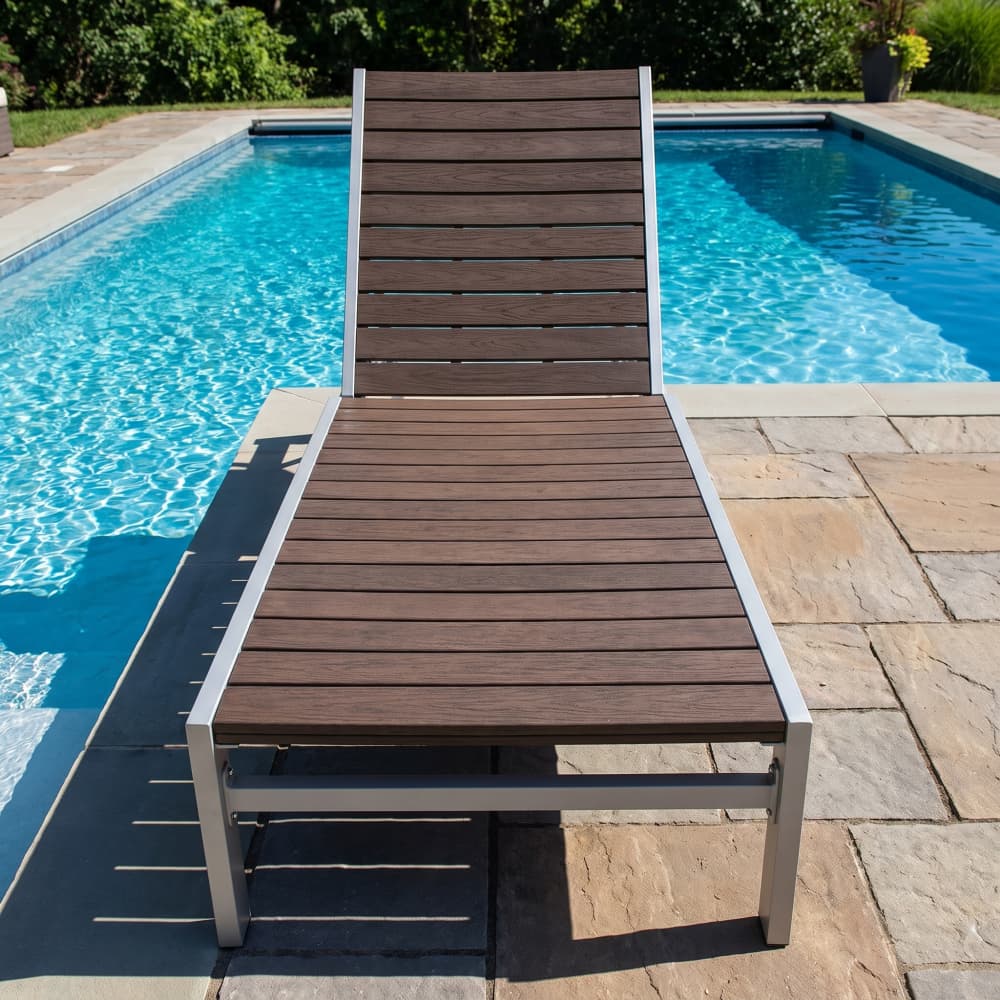
Kingmake produces poly outdoor furniture across several core product lines used in hotel, resort, and commercial outdoor projects. Our HDPE-based collections include outdoor sun loungers designed for poolside and beachfront use, and outdoor daybeds built for lounge areas, cabanas, and resort terraces.
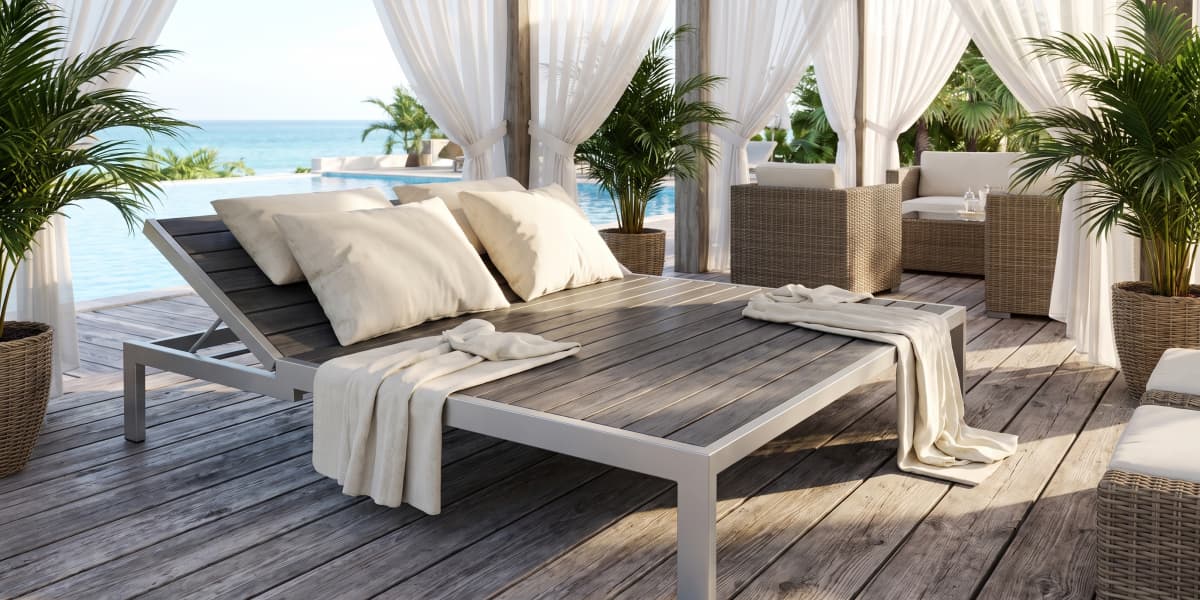
Both lines are engineered to handle constant guest turnover, direct sun exposure, and frequent cleaning with commercial-grade disinfectants.
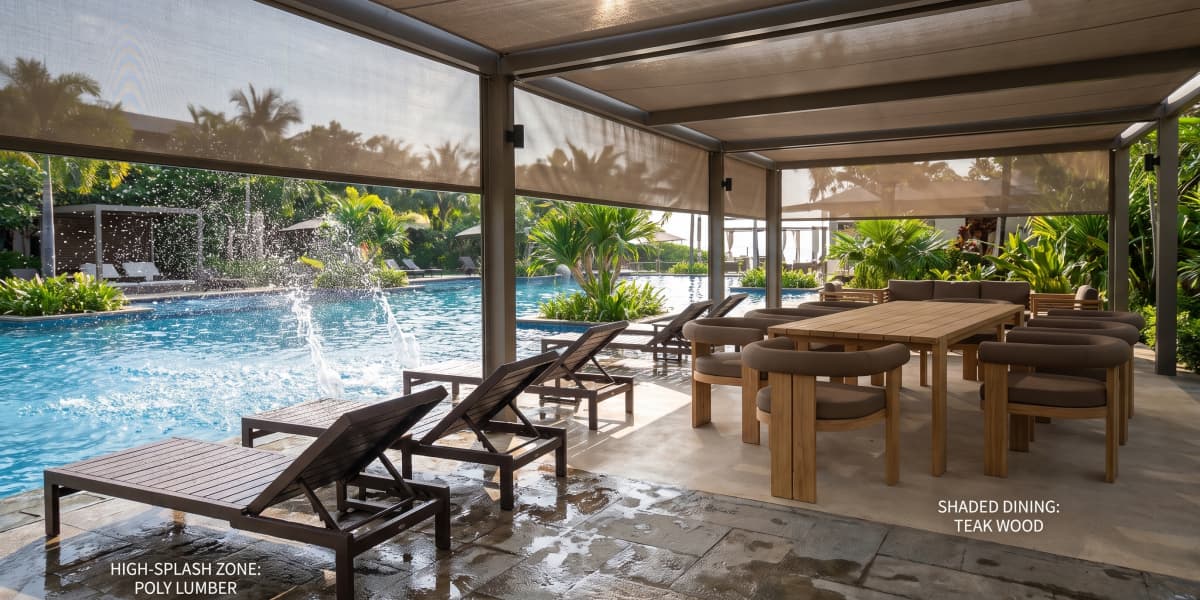
These poly collections are frequently specified alongside our aluminum and teak ranges within the same property, allowing procurement teams to mix materials by application. For example, poly lumber is often chosen for high-splash zones near pools, while teak or aluminum pieces are used in covered lounge or dining areas. You can review completed installations in our
HDPE patio furniture project gallery, which shows how poly pieces have been deployed across real hospitality settings.
For distributors and importers building a
wholesale outdoor furniture catalog, Kingmake's poly range is manufactured to consistent dimensional and color specifications across production runs, which matters when matching replacement pieces or expanding an existing property years after the original order.
Why Poly Lumber Outperforms Wood in Wet and Humid Climates
Traditional hardwood and softwood furniture is vulnerable in coastal, tropical, and humid environments. Repeated wet-dry cycles cause wood fibers to expand and contract, which eventually leads to cracking, splitting at joints, and surface graying. Left untreated, exposed wood can also develop mold or begin to rot within a few seasons in high-humidity climates.
Outdoor poly furniture avoids this failure pattern because HDPE is a closed, non-porous material. It does not draw in moisture, so freeze-thaw cycles, monsoon seasons, and salt spray near beachfront resorts have minimal structural effect on the furniture over time. This makes poly lumber a practical choice for properties in Southeast Asia, the Gulf region, the Caribbean, and other markets where humidity and heat place heavy demands on outdoor materials.
There is a trade-off worth noting for procurement teams: poly lumber has less of the natural grain texture and warmth that high-end teak offers, so it is often positioned for casual, poolside, or high-traffic commercial areas rather than formal fine-dining terraces where a natural wood aesthetic is prioritized.
Poly vs Teak vs Aluminum: Choosing the Right Material
Material selection for commercial outdoor furniture is rarely a single "best" answer. It depends on climate, budget, maintenance staffing, and the design tone of the property. The comparison below outlines how poly lumber stacks up against two other materials commonly specified in hospitality projects.
| Factor | Poly Lumber Furniture | Teak Wood Furniture | Aluminum Frame Furniture |
| Moisture resistance | Excellent, non-porous | Good, but needs periodic oiling | Excellent with powder coating |
| Maintenance level | Very low | Moderate to high | Low |
| Typical lifespan (commercial use) | Long, minimal upkeep required | Long, if maintained properly | Long, resistant to corrosion when treated |
| Aesthetic profile | Solid color, modern or casual look | Natural grain, premium warm tone | Sleek, lightweight, contemporary |
| Best-fit application | Poolside, beach clubs, high-splash zones | Fine dining terraces, lobby lounges | Rooftop bars, modern resort exteriors |
| Relative weight | Heavier, resists tipping in wind | Heavy, stable | Lightweight, easy to reposition |
Many resort and hotel projects do not use a single material property-wide. Instead, designers assign poly furniture to high-wear, high-moisture zones, while reserving teak or aluminum for spaces where guests spend more time seated and appearance carries more weight.
Customization: Colors and Finishes for Poly Furniture
For hospitality brands and distributors, matching furniture to a property's design identity is usually non-negotiable. Kingmake offers OEM outdoor furniture customization for poly lumber lines, including a range of solid through-color options such as grey, white, teak-tone, black, and coastal blue tones commonly requested for beach clubs and resort pool decks.
Beyond color, custom
patio furniture requests can include adjusted dimensions for specific lounge layouts, branded hardware finishes, and coordinated cushion or upholstery packages sourced to match a hotel group's broader design language. This is particularly relevant for outdoor furniture brands and distributors building private-label product lines, where consistent branding across a wholesale outdoor furniture catalog matters as much as the furniture's physical durability.
Because poly lumber is pigmented through the full thickness of the material rather than painted, custom colors retain their appearance even after years of sun exposure and heavy cleaning, which is a meaningful advantage for multi-property hotel groups standardizing furniture across several locations over time.
Bulk Ordering and OEM for Poly Outdoor Furniture Projects
Large-scale procurement for hotels, resorts, and distributor catalogs comes with different priorities than single-property purchases: consistent lead times, reliable quality control across production batches, and clear communication on customization and packaging. Kingmake supports bulk and OEM ordering for poly outdoor furniture with structured production planning suited to project timelines.
For developers and architects managing new-build hospitality projects, working with a manufacturer that also produces
commercial outdoor furniture across multiple material categories can simplify sourcing, since poly, teak, and aluminum pieces can be coordinated and shipped together rather than managed through separate suppliers. Kingmake's
hospitality outdoor furniture projects and
hotel furniture project references demonstrate how bulk poly and mixed-material orders have been delivered for real properties.
What to Evaluate Before Ordering Commercial Outdoor Furniture
Before placing a bulk or project order, procurement teams should confirm the following with any prospective supplier:
Material specification: Confirm the poly lumber grade, wall thickness, and UV stabilization additives used in production.
Weight capacity and structural testing: Ask for load ratings appropriate to commercial, high-turnover use.
Color and finish samples: Request physical samples before committing to a full production run.
Lead times and production capacity: Clarify timelines against your project's installation schedule.
Customization options: Confirm whether OEM branding, sizing, or cushion coordination is available.
Quality control process: Ask how batches are inspected before shipment.
Shipping and packaging: Confirm container loading plans and damage-prevention packaging for long-distance freight.
After-sales support: Understand warranty terms and replacement part availability.
Working through this checklist early helps avoid delays and mismatched expectations later in the project, particularly for multi-property rollouts where consistency across locations is critical.
FAQs
What's the difference between poly lumber and HDPE?
HDPE, or high-density polyethylene, is the raw resin material. Poly lumber is the finished, engineered board product made from HDPE, pigmented through its full thickness and shaped into furniture-grade profiles.
Does poly outdoor furniture fade in the sun?
Quality poly lumber includes UV-stabilizing additives and through-body color, so fading is significantly slower than painted wood or lower-grade plastics, though very intense, prolonged sun exposure can cause gradual, minor color mellowing over many years.
How much maintenance does poly furniture need?
Routine maintenance is limited to occasional washing with soap and water. It does not require sealing, staining, oiling, or repainting, which is a key reason hospitality operators favor it for high-traffic outdoor areas.
Is poly outdoor furniture suitable for commercial hospitality use?
Yes. Its resistance to moisture, low maintenance needs, and durability under heavy daily use make it well suited to hotel pool decks, beach clubs, resort terraces, and restaurant patios.
Can poly outdoor furniture be customized for branding purposes?
Yes. Kingmake offers custom colors, dimensions, and coordinated cushion packages for OEM and private-label hospitality projects.
How does poly furniture compare in cost to teak or aluminum?
Poly lumber is typically positioned as a mid-range investment, often lower in long-term maintenance cost than teak, while offering different aesthetic and weight characteristics compared to aluminum framing.
Conclusion
Poly outdoor furniture offers commercial buyers a practical balance of durability, low maintenance, and design flexibility for demanding hospitality environments. Its resistance to moisture and fading makes it a reliable choice for pool decks, beach clubs, and high-traffic resort areas, while OEM customization allows hotel groups and distributors to align furniture with their brand identity across multiple properties.
For procurement teams evaluating poly lumber against teak or aluminum, the right choice often comes down to climate conditions, maintenance capacity, and the design tone of each outdoor space. With more than 18 years of experience manufacturing outdoor furniture for hospitality and commercial projects worldwide, Kingmake provides a one-stop solution covering design, production, customization, and quality control. Explore our full
outdoor furniture product range or visit
Kingmake Outdoor Furniture to discuss a poly furniture project with our team.

 For a deeper look at each material individually, procurement teams can review Kingmake's teak outdoor furniture projects and aluminum patio furniture projects to compare finished installations against poly lumber options before finalizing a specification.
 Whatsapp
 sales@cnkingmake.com
 +8613925925021