Hospitality outdoor spaces are under more pressure than ever to look premium while surviving heavy daily use. Hotels, resorts, and restaurants are furnishing pool decks, rooftop lounges, and garden terraces faster than before, and procurement teams need materials that hold up to sun, rain, and salt air without constant replacement. This is why plastic outdoor furniture, particularly HDPE-based plastic wicker, has become a serious category for commercial buyers rather than a budget afterthought. For hotel procurement managers, distributors, and developers, the real question isn't whether plastic furniture belongs in a commercial project. It's which type of plastic, sourced from which supplier, actually performs over a five-to-ten-year ownership period.
What People Mean by "Plastic Outdoor Furniture" Today
When buyers search for plastic outdoor furniture, they are rarely looking for the thin, injection-molded stacking chairs sold in supermarkets. In commercial sourcing, the term has shifted to describe engineered materials such as HDPE (high-density polyethylene) resin woven into wicker patterns, or molded into solid poly lumber components. This distinction matters enormously for procurement decisions, because the performance gap between consumer-grade plastic and commercial-grade HDPE is significant.
Searches for
plastic patio furniture and
plastic outdoor furniture typically split into two buyer intents: residential shoppers comparing price points, and commercial buyers comparing durability, UV resistance, and supply consistency. As a manufacturer,
Kingmake focuses on the second group, producing furniture built on
hdpe outdoor furniture and
poly outdoor furniture platforms designed specifically for hospitality-grade wear.
Understanding this terminology upfront helps buyers write clearer RFQs and avoid mismatched quotes from suppliers working with lower-grade resins.
Plastic Wicker vs. Natural and Synthetic Rattan: Terminology Explained
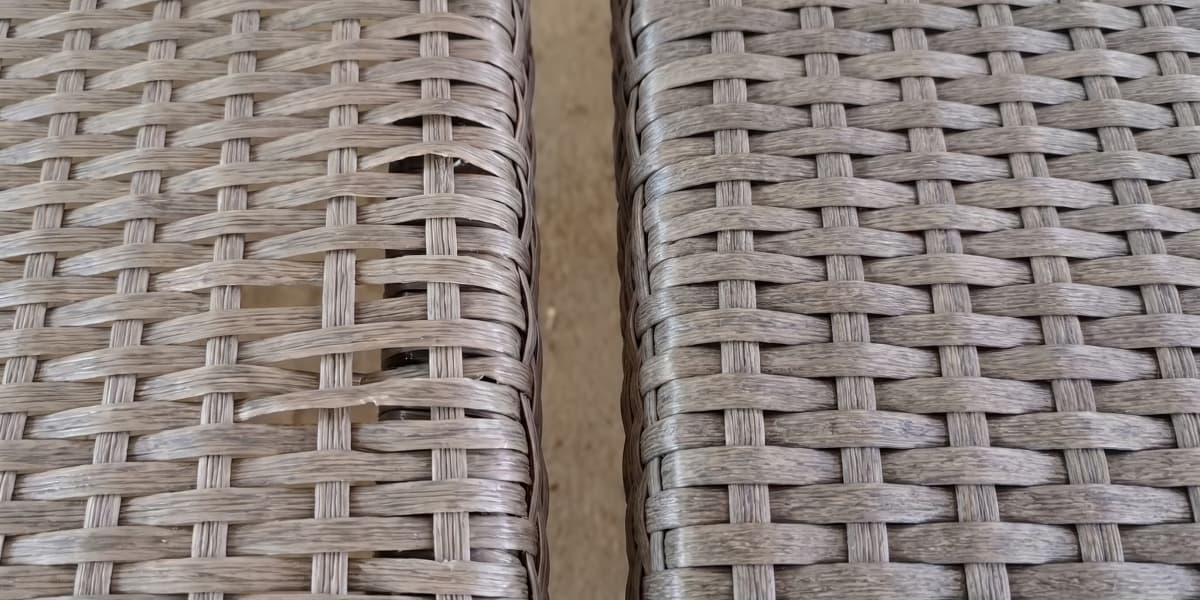
Procurement teams often use "plastic wicker," "poly rattan," and "synthetic rattan" interchangeably, but the underlying material can vary widely between factories. Most reputable commercial suppliers now use poly lumber outdoor furniture components paired with woven outdoor poly furniture strands extruded from HDPE resin, rather than PVC or recycled scrap plastics with inconsistent thickness.
The woven strand itself is typically what buyers mean by "plastic wicker patio furniture." It's engineered to resist UV fading, cracking, and moisture absorption far better than natural rattan, which requires more frequent refinishing in outdoor hospitality settings. For a deeper technical breakdown of weave types, gauge thickness, and frame pairing, Kingmake's
wicker and rattan furniture guide covers how weave selection affects both aesthetics and long-term maintenance cost.
For procurement purposes, always ask suppliers to specify the resin type and wall thickness of the woven strand, not just "plastic wicker" as a generic label.
Kingmake Plastic-Wicker Collections for Hospitality Projects
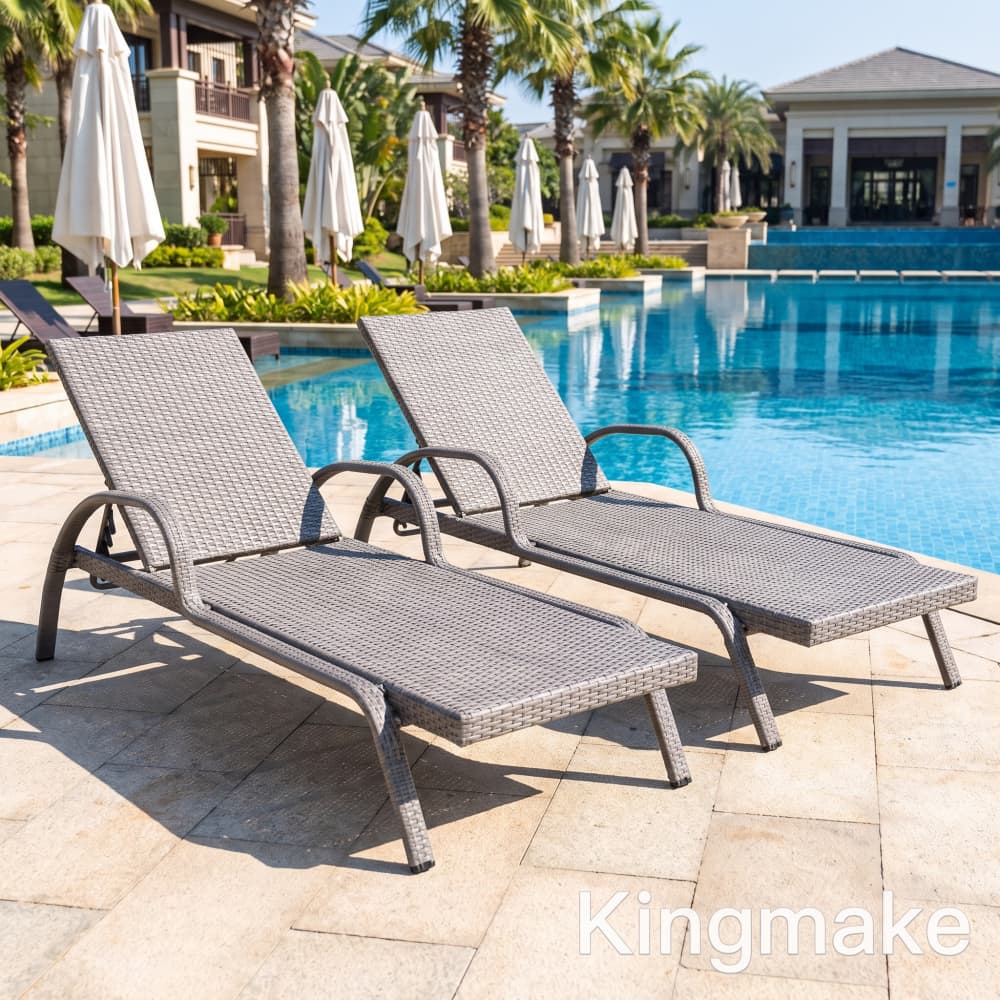
Kingmake Outdoor Furniture manufactures a range of PE wicker-woven pieces built for continuous outdoor exposure, including lounge chairs, dining sets, and swing seating designed for pool decks, garden bars, and resort common areas. These collections are engineered around HDPE strands over powder-coated aluminum frames, giving hospitality buyers a combination of lightweight handling and long-term structural stability.
Buyers evaluating seating for high-traffic areas can review Kingmake's woven
outdoor chair collection and
swing chair range, both built on the same commercial-grade weave standard used across Kingmake's hospitality projects. Custom weave colors, frame finishes, and cushion fabrics are available for brands that need to match a specific property's design language.
This matters for developers managing multi-property rollouts, where consistent finish quality across bulk orders is often more important than any single design feature.
Durability Comparison: Cheap Injection-Molded Plastic vs. HDPE Weave
One of the most common procurement mistakes is treating all "plastic outdoor furniture" as equivalent when comparing quotes. Injection-molded plastic chairs, often marketed under generic resin patio furniture or budget outdoor furniture listings, are usually built from lower-cost polypropylene that becomes brittle after one or two seasons of UV exposure. HDPE-woven furniture, by contrast, is engineered for extended sun and moisture exposure and is far more common in serious commercial specifications.
Kingmake documents this performance gap in more detail in its
HDPE patio furniture project case studies, which walk through real installation examples and expected service life under coastal and pool-deck conditions.
Material Comparison Table
| Material Type | Typical Use Case | UV Resistance | Expected Commercial Lifespan | Maintenance Level |
| Injection-molded plastic (PP) | Budget consumer furniture | Low to moderate | 1–3 years | Low, but frequent replacement |
| HDPE plastic wicker | Hospitality lounge, dining, pool areas | High | 7–10+ years | Low |
| Poly lumber (solid HDPE board) | Outdoor bars, planters, structural trim | High | 10+ years | Very low |
| Natural rattan | Indoor-covered or low-exposure areas | Low | 2–4 years outdoors | High |
| Aluminum frame with fabric | Dining sets, sun loungers | High (frame) | 8–12 years | Moderate |
This comparison is useful for RFQ documents, especially when a project mixes seating types across a property and procurement needs a shared durability benchmark.
Commercial Use Cases for Plastic and HDPE Outdoor Furniture
Commercial outdoor furniture buyers rarely furnish a single space; most projects span multiple zones with different exposure levels and traffic patterns. HDPE-based hdpe patio furniture performs well across several hospitality use cases:
Poolside lounge areas, where constant sun and chlorine exposure quickly degrade lower-grade plastics
Rooftop bars and terraces, where lightweight frames simplify installation and repositioning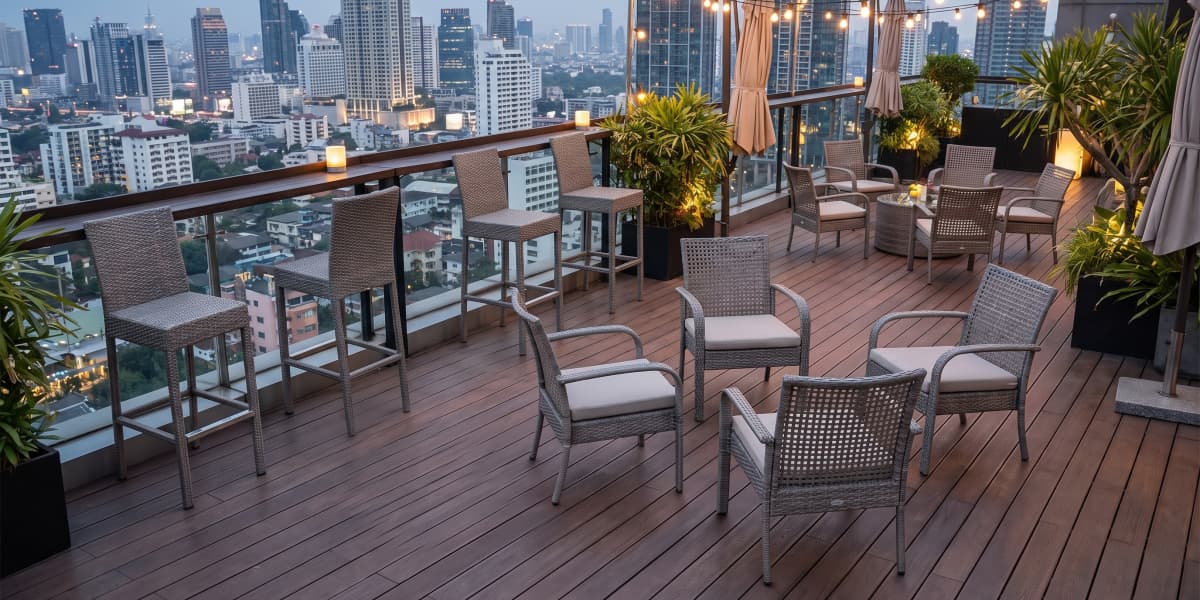
Beach clubs and coastal resorts, where salt air accelerates corrosion in unprotected metal furniture
Restaurant patios, where stackable poly-framed chairs support fast turnover and storage
Garden and courtyard seating, where woven wicker finishes complement landscaped design themes
Some buyers also compare HDPE against other engineered materials during specification. Kingmake's editorial coverage of
resin outdoor furniture and
recycled plastic outdoor furniture trends offers useful background for teams researching sustainability claims or alternative resin sourcing, even outside Kingmake's own product range.
What to Evaluate Before Ordering Commercial Outdoor Furniture
Before issuing a purchase order, procurement teams should confirm the following with any supplier, whether ordering plastic wicker, aluminum, or teak collections:
Resin or material grade — request the exact HDPE, PP, or poly lumber specification, not a generic "plastic" label
UV and colorfastness testing data — ask for accelerated weathering test results where available
Frame construction — confirm whether frames are aluminum, galvanized steel, or reinforced poly lumber
Weight load and stacking tolerance — especially important for high-turnover restaurant and event seating
Customization options — weave color, cushion fabric, and branding for multi-property consistency
Lead times and production capacity — confirm realistic timelines against your project's opening date
Quality control process — ask how factory inspections are documented before shipment
Warranty terms and after-sales support — clarify coverage for frame, weave, and hardware separately
This checklist helps distributors and developers compare quotes on equal terms rather than relying on price alone, which is where many
patio furniture projects run into unexpected costs later.
Procurement Considerations for Distributors and Developers
Bulk buyers face a different set of pressures than single-property owners, particularly around consistent quality across large order volumes and predictable lead times for multi-site rollouts. When sourcing wholesale outdoor furniture, it's worth requesting sample units from the same production line that will fulfill the full order, rather than approving a showroom sample that may not reflect batch consistency.
Custom OEM programs are common in this category. Buyers working on
custom outdoor furniture or
OEM outdoor furniture programs should confirm minimum order quantities, tooling costs for custom weave colors or frame shapes, and whether the factory can support phased shipments for staged property openings. Reviewing a supplier's
full product range before finalizing specifications can also help identify complementary categories, such as umbrellas or planters, that streamline a single-vendor procurement process.
Long-term ROI depends less on unit price and more on total cost of ownership, including replacement frequency, shipping damage rates, and after-sales responsiveness. A slightly higher per-unit cost for genuine HDPE construction often works out cheaper than repeated replacement cycles for lower-grade plastic seating.
FAQs
Is plastic wicker patio furniture the same as HDPE furniture?
Not always. "Plastic wicker" describes the woven appearance, while HDPE refers to the specific resin used. Quality plastic wicker patio furniture for commercial use should be made from HDPE strands, but buyers should confirm this directly rather than assuming based on the term alone.
Is plastic outdoor furniture durable enough for commercial use?
Yes, when it's genuine HDPE-based construction rather than injection-molded consumer plastic. HDPE plastic outdoor furniture is engineered for continuous UV and moisture exposure and is widely used across hotels, resorts, and restaurants for lounge and dining seating.
How do I tell cheap plastic furniture from quality HDPE furniture?
Check for resin specification sheets, ask about UV testing results, and inspect strand thickness and weave tension in physical samples. Cheap plastic often feels thin and flexible, while HDPE weave holds firm structure and consistent color depth.
What is the typical lifespan of HDPE outdoor furniture in hospitality settings?
Well-constructed HDPE plastic outdoor furniture generally performs for seven to ten years or more in commercial settings, depending on climate exposure and traffic levels, compared to one to three years for budget injection-molded plastic.
Can plastic outdoor furniture be customized for hotel branding?
Yes. Weave colors, cushion fabrics, and frame finishes can typically be customized for OEM and hospitality branding programs, though minimum order quantities and lead times vary by supplier and customization complexity.
Does poly outdoor furniture require special maintenance in coastal locations?
HDPE-based poly outdoor furniture generally requires minimal maintenance even in coastal environments, since the material resists salt corrosion and moisture absorption better than natural fiber or untreated wood alternatives.
Conclusion
Choosing the right plastic outdoor furniture for a commercial project comes down to understanding material grade, not just price. HDPE-based plastic wicker and poly lumber construction consistently outperform budget injection-molded plastics in UV resistance, structural stability, and long-term maintenance cost, making them a practical fit for hotels, resorts, restaurants, and large-scale developments. Procurement teams that request clear resin specifications, weathering data, and quality control documentation are better positioned to avoid costly replacement cycles down the line.
With more than 18 years of experience manufacturing hospitality-grade
outdoor furniture, Kingmake supports distributors, developers, and hospitality brands with HDPE-based plastic wicker collections, OEM customization, and reliable production timelines for projects of any scale. For teams evaluating suppliers, Kingmake's
poly outdoor furniture projects and broader
project portfolio offer a practical starting point for comparing real-world commercial installations.

 Whatsapp
 sales@cnkingmake.com
 +8613925925021