What Does "Resin Outdoor Furniture" Actually Mean?
Hospitality and commercial buyers are seeing more outdoor living projects specified with low-maintenance, weather-resistant materials, and "resin outdoor furniture" is one of the most searched terms in that category. But the term itself is often used loosely, and that ambiguity causes real procurement problems: buyers may compare quotes for products that are not actually made from the same material.
Strictly speaking, resin outdoor furniture refers to pieces manufactured through injection molding or resin casting, where liquid or pelletized resin (typically polypropylene or a resin blend) is poured or injected into a mold to form a single, seamless piece. Classic examples include molded resin Adirondack chairs, stackable resin patio chairs, and resin-topped side tables. This is different from furniture built by weaving synthetic strands around a metal frame, even though both are frequently marketed under the same "resin" label.
For procurement teams comparing suppliers, understanding this distinction upfront can prevent mismatched expectations on price, lead time, and durability once samples or containers arrive.
Cast/Molded Resin vs. Resin Wicker vs. HDPE: Clearing Up the Confusion
This is where most buyer confusion starts. In supplier catalogs and online listings, three different construction methods often get grouped under "resin":
Cast or injection-molded resin — a single molded shell or component, no weaving involved.
Resin wicker — a marketing term for synthetic strands (usually PE or PVC) woven around an aluminum or steel frame. Despite the name, this is a woven product, not a molded one.
HDPE (High-Density Polyethylene) — a dense, UV-stabilized plastic used either for solid molded components or for woven "resin wicker" style strands, and increasingly for lumber-style boards used in Adirondack chairs, benches, and outdoor kitchen fronts.
In practice, when hospitality buyers search for "resin patio furniture," a meaningful share of them are actually looking for HDPE-woven or HDPE-lumber furniture, because that is what dominates commercial hospitality projects today. Knowing which construction method a supplier is quoting is one of the first questions worth asking during sourcing, since it directly affects weight, repairability, and expected service life outdoors.
Pros & Cons of True Resin (Injection-Molded) Furniture
Where Cast Resin Performs Well
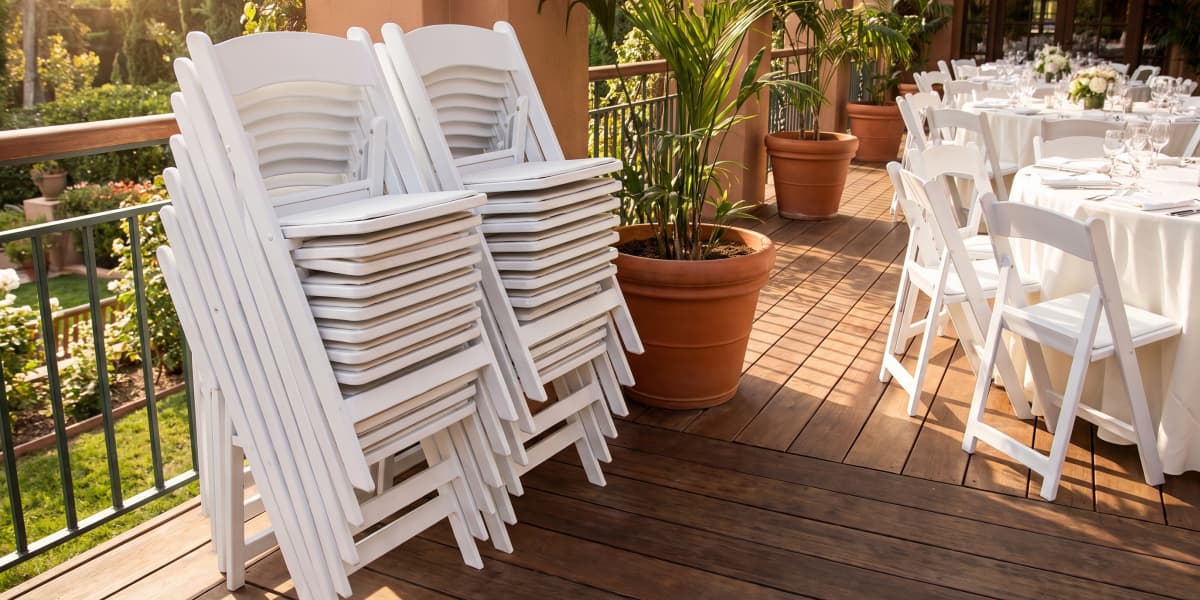
Injection-molded resin furniture has genuine strengths for certain use cases. It is typically lightweight, which simplifies handling and rearranging for events or seasonal storage. Tooling allows for consistent, low-cost mass production once a mold is created, which can suit large residential retail volumes. Molded resin also resists splintering and does not require sealing or staining the way that natural wood does.
Where Cast Resin Falls Short for Commercial Projects
For hotels, resorts, restaurants, and other high-traffic commercial environments, cast resin furniture presents some practical limitations:
| Factor | Cast/Molded Resin | HDPE Woven or Lumber |
| Structural reinforcement | Often relies on the molded shell alone | Typically built on an aluminum or stainless frame |
| Repairability | Cracked shells are usually not repairable | Individual strands or boards can often be replaced |
| Load capacity for commercial use | Moderate; varies by mold design | Generally higher, frame-supported |
| UV and color stability over years | Can fade or become brittle over time | UV-stabilized HDPE resists fading and brittleness |
| Design flexibility for hospitality projects | Limited to existing mold shapes | Custom colors, weaves, and dimensions available |
| Typical use case | Poolside, residential patios, events | Lobbies, resort decks, restaurants, large-scale contracts |
This is why many resort and hotel procurement teams that start their search with "resin outdoor furniture" end up specifying HDPE-based products once they compare long-term maintenance costs and repair options across a multi-year contract.
Why Kingmake Builds with HDPE & Poly Instead of Cast Resin
To be transparent with buyers researching this category: Kingmake does not currently manufacture true injection-molded, cast resin furniture. Our production is built around
HDPE outdoor furniture and poly lumber construction, paired with aluminum frames, because these materials better suit the durability, load, and customization requirements of
commercial outdoor furniture projects for
hospitality outdoor furniture clients.
Over more than 18 years of supplying
hotel outdoor furniture and resort furniture programs, we have found that frame-supported HDPE and poly constructions hold up more predictably across multi-year contracts, are easier to service in the field, and allow for the OEM/ODM customization that hospitality brands and developers typically request. If your project brief specifically calls for injection-molded resin, we would rather point you toward that distinction now than have it surface after a container has shipped.
Closer Alternatives in Kingmake's Range
For buyers who arrived here searching "resin outdoor furniture" or "resin patio furniture" but are open to material alternatives, two Kingmake product lines are typically the closest match in look, weight class, and price positioning:
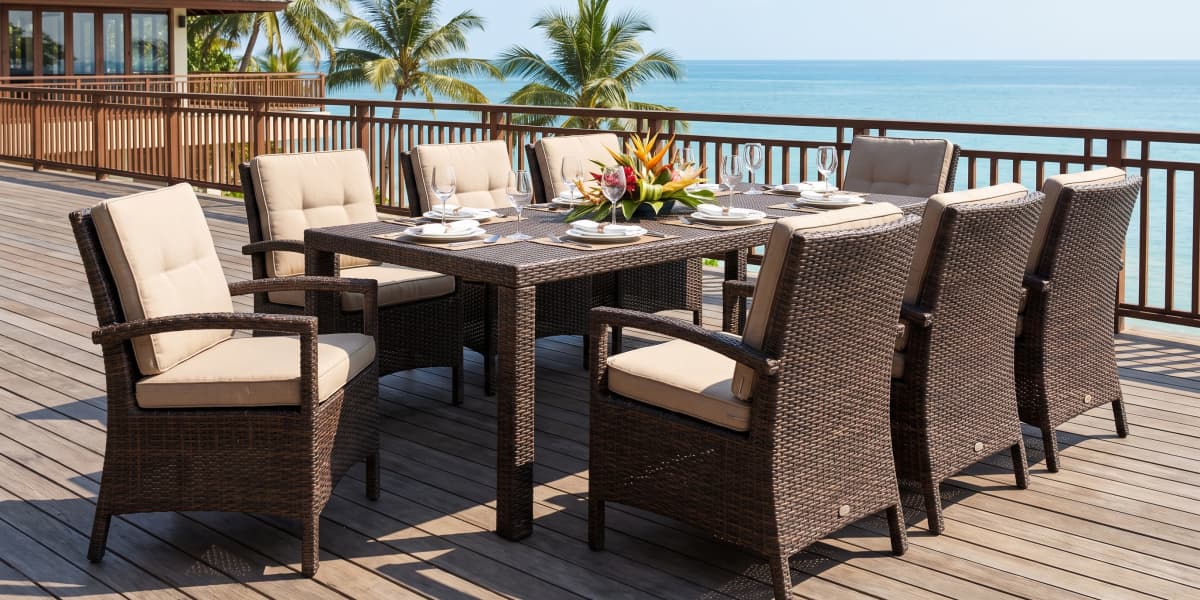
HDPE patio furniture — frame-supported woven and molded HDPE pieces designed for poolside, restaurant, and resort deck applications, with UV-stable coloring and replaceable components.
Poly outdoor furniture — poly lumber constructions suited to Adirondack-style seating, benches, and outdoor kitchen elements, offering a wood-like appearance without the maintenance of natural timber.
What to Evaluate Before Ordering Commercial Outdoor Furniture
Whatever material category you land on, the following checklist applies to any resin, HDPE, or poly outdoor furniture order for a hospitality or commercial project:
Confirm the exact construction method (molded, woven, or lumber-style) and material grade in writing, not just the marketing name.
Ask for UV-stability and colorfastness data relevant to your climate zone.
Verify frame material (aluminum, steel) and its warranty terms separately from the surface material warranty.
Request load-capacity specs appropriate to commercial, high-turnover seating.
Clarify repair and replacement-part availability for damaged components.
Confirm OEM/ODM customization options if branding, color matching, or bespoke dimensions are required.
Review production lead times against your project timeline, including sample approval stages.
Ask about container loading efficiency and shipping terms for large or repeat orders.
FAQs
Is resin outdoor furniture the same as HDPE furniture?
Not exactly. True resin furniture is injection-molded or cast as a single piece, while HDPE furniture is usually woven strands or lumber-style boards built onto a supporting frame. Both are plastic-based, but the construction method and typical durability profile differ.
Is resin outdoor furniture durable?
Injection-molded resin furniture is durable for light to moderate residential use, but it generally lacks the frame reinforcement and repairability of HDPE woven or lumber-style furniture, which is why most commercial hospitality projects specify the latter for high-traffic settings.
Does Kingmake manufacture resin outdoor furniture?
No.
Kingmake Outdoor Furniture manufactures HDPE and poly outdoor furniture rather than injection-molded cast resin products. Buyers researching resin options are welcome to review our HDPE patio furniture and poly outdoor furniture lines as closely related alternatives.
What is resin wicker, and is it real resin?
"Resin wicker" is a common marketing term for synthetic strands, often HDPE or PVC, woven around a metal frame. It is not molded resin in the technical sense, so it's worth confirming the actual material with any supplier using this term.
Which material is better for a hotel pool deck: resin or HDPE?
For high-traffic commercial settings like pool decks, frame-supported HDPE furniture is generally preferred over cast resin because of its higher load capacity, better UV stability over time, and easier component-level repairs.
Can resin-style furniture be customized for hospitality branding?
Molded resin furniture has limited customization since it depends on existing molds. HDPE and poly constructions typically offer more flexibility for custom colors, weave patterns, and dimensions, which is why they are more commonly used in OEM/ODM hospitality programs

 Whatsapp
 sales@cnkingmake.com
 +8613925925021