Hospitality outdoor spaces are under more pressure than ever to perform. Guests expect resort-style poolside seating, restaurants want durable terrace furniture that survives daily turnover, and developers need outdoor furnishing that holds its finish through years of sun, salt air, and rain. For procurement teams, this translates into a practical question: which material actually delivers on durability, lead times, and long-term ROI without inflating maintenance budgets?
Metal outdoor furniture has become a default answer for many commercial buyers, but "metal" covers a wide range of products with very different performance profiles. This guide breaks down what metal outdoor furniture really means, how to choose between materials, and what to check before placing a bulk or OEM order.
What Counts as "Metal" Outdoor Furniture?
Metal outdoor furniture is a broad category that includes any outdoor seating, dining, or lounge product built on a metal frame or structure. In commercial and hospitality settings, this almost always means one of two materials: aluminum or wrought iron. Both fall under the umbrella terms outdoor metal furniture and metal patio furniture, and both are engineered specifically to resist rust, UV exposure, and repeated outdoor use.
Unlike residential buyers who may prioritize style first, commercial buyers evaluating patio furniture metal options need to think in terms of lifecycle cost, warranty coverage, and consistency across large orders. A hotel replacing 200 poolside chairs cannot afford frame failures within the first two seasons, so the specific alloy, finish, and construction method matter more than they would for a single household purchase.
Metal outdoor furniture generally splits into two performance tiers:
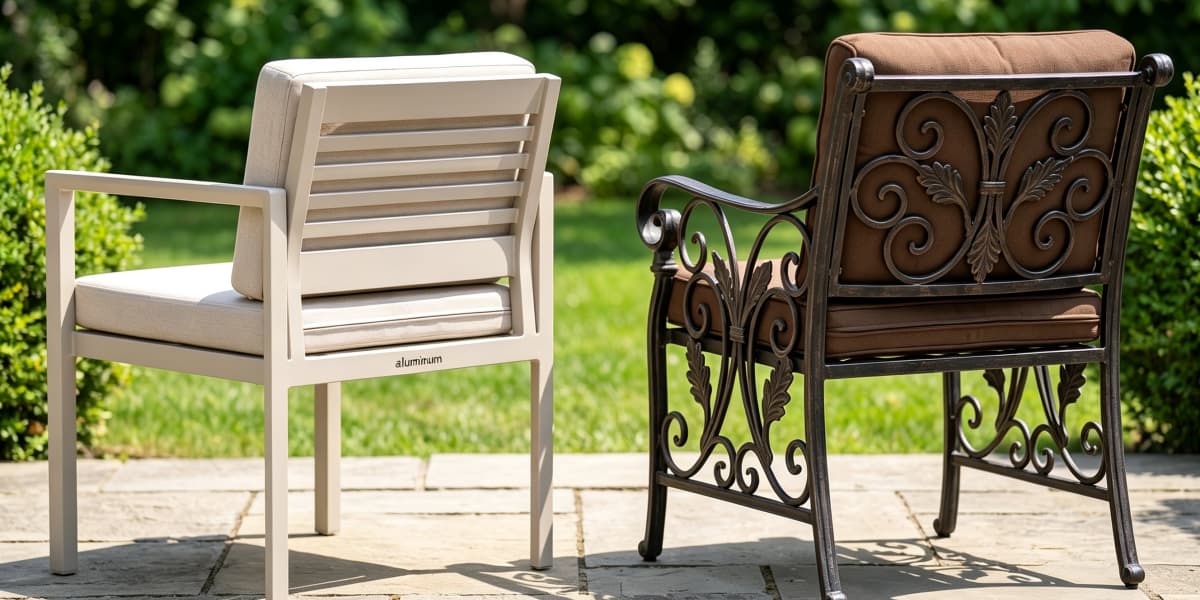
Lightweight, corrosion-resistant frames (aluminum) suited to high-volume hospitality use and frequent rearrangement.
Heavier, decorative frames (wrought iron) suited to fine dining, boutique hotels, and settings where visual weight and craftsmanship matter more than portability.
Aluminum vs Wrought Iron: Choosing the Right Metal for Your Project
Both materials are legitimate choices for commercial outdoor furniture, but they serve different project priorities. Understanding the trade-offs early avoids costly reordering later in a project timeline.
Weight and Handling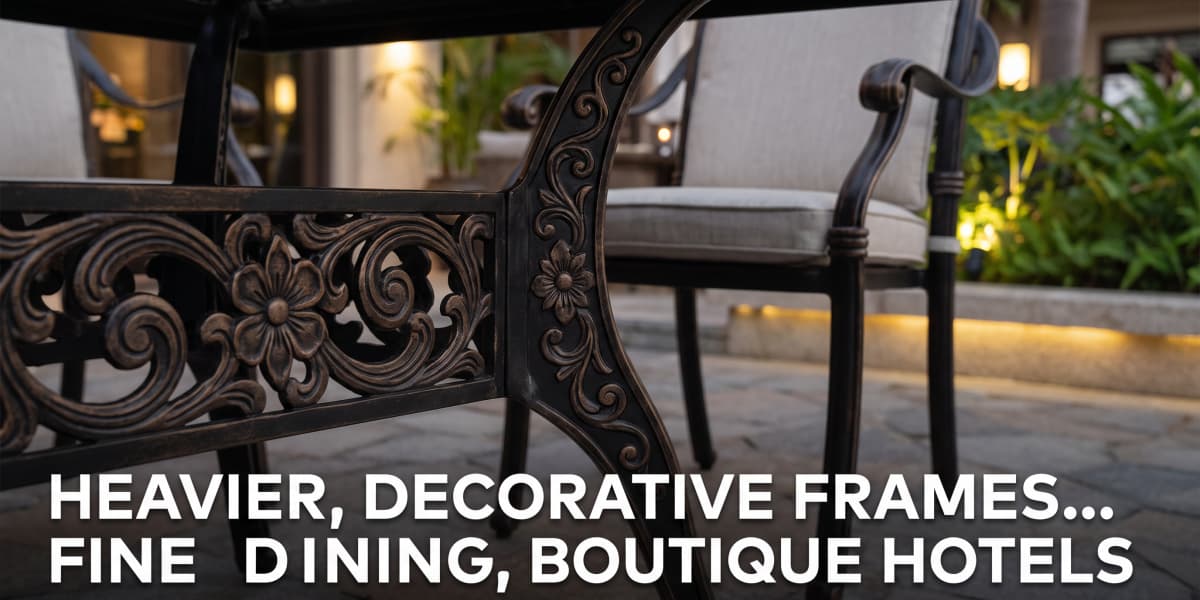
Aluminum furniture is significantly lighter, which matters for properties that reconfigure seating daily, such as event lawns, rooftop bars, or poolside decks. Our
aluminum patio furniture collection is built for exactly this kind of frequent movement without frame fatigue. Wrought iron, by contrast, is heavier and more stable in open, windy locations, which is why it remains popular for waterfront terraces and rooftop restaurants where wind load is a real concern.
Cost and Total Ownership
Aluminum generally carries a lower landed cost at scale and lower shipping weight, which affects freight budgets on large hospitality orders. Wrought iron typically costs more per unit but can justify the premium in settings where a heavier, more traditional aesthetic supports a property's brand positioning. Our
wrought iron outdoor furniture range is engineered to reduce the maintenance gap that has historically made iron furniture expensive to own long term.
Weather Resistance and Climate Fit
Both materials, when properly finished, resist rust and UV degradation. Aluminum naturally resists corrosion because it does not contain iron, making it a strong default for coastal properties and humid climates. Wrought iron requires a reliable protective coating system to match that resistance, which is why finish quality is the real differentiator rather than the base metal alone.
Comparison Table: Aluminum vs Wrought Iron for Commercial Projects
| Factor | Aluminum Outdoor Furniture | Wrought Iron Outdoor Furniture |
| Weight | Lightweight, easy to reposition | Heavier, more stable in wind |
| Corrosion resistance | Naturally rust-proof | Requires quality powder coating |
| Typical use case | Resorts, pool decks, rooftop bars | Fine dining, boutique hotels, courtyards |
| Freight cost (bulk orders) | Lower due to weight | Higher due to weight |
| Aesthetic | Modern, minimalist | Classic, decorative |
| Maintenance | Low | Low to moderate, depends on finish |
 Kingmake Metal Furniture Collections
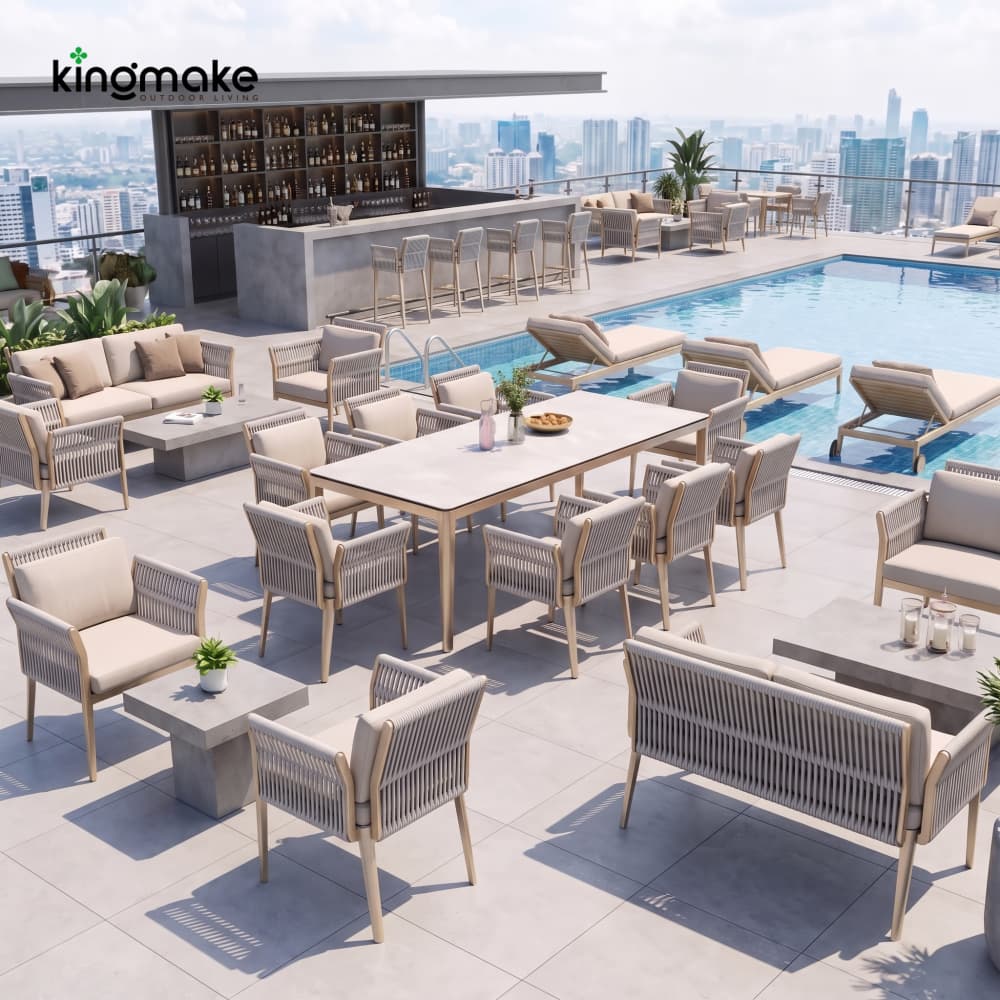
Kingmake produces metal outdoor furniture across the core categories hospitality buyers request most often. Our
outdoor chairs and
outdoor sofas are available with aluminum or wrought iron frames, paired with weather-resistant fabrics or slatted seating depending on the project brief.
For resort and rooftop settings, our
swing chairs with reinforced metal frames offer a statement piece without sacrificing structural durability. Shade solutions matter just as much as seating, and our
patio umbrellas use the same corrosion-resistant metal poles and ribs to match the frame quality of the seating around them.
Every collection is designed so procurement teams can mix aluminum and wrought iron pieces within a single project without visible inconsistency in finish or hardware quality.
Rust-Proofing & Powder-Coat Finishes for Metal Outdoor Furniture
Rust is the single biggest concern buyers raise about metal patio furniture, and it is also the most solvable through correct manufacturing process. Kingmake applies a multi-stage finishing process to every metal frame:
Surface pretreatment to remove oils and oxidation before coating.
A phosphate or chromate conversion layer to improve coating adhesion.
Electrostatic powder coating, cured at controlled temperatures for an even, durable shell.
Edge and weld-point reinforcement, since these are the most common failure points on lower-quality furniture.
This process is what separates rust proof outdoor furniture from furniture that merely looks finished at the point of shipping. Weatherproof metal furniture depends less on the base alloy and more on whether the coating process was done correctly and consistently across the full production run, which matters enormously when a hotel is ordering hundreds of identical units.
Metal Outdoor Furniture for Commercial & Hospitality Projects
Commercial outdoor furniture has different demands than residential furniture: heavier daily use, exposure to pool chemicals or salt air, and the need for visual consistency across dozens or hundreds of units. Metal frames handle this well because they hold their shape and finish under repeated use in ways that some wood and resin products cannot match over multi-year cycles.
This makes metal a common choice across
commercial outdoor furniture projects, from resort pool decks to open-air lobbies. Restaurants in particular benefit from metal's stacking and cleaning advantages; our
restaurant outdoor furniture line is built around fast turnover, easy wipe-down surfaces, and frames that tolerate daily stacking without loosening joints.
For developers managing multiple property types, metal furniture also simplifies specification. A single frame finish and color palette can often serve pool areas, restaurant terraces, and lobby lounges, reducing the number of separate product lines a procurement team needs to manage across a portfolio.
Bulk Order & OEM for Metal Outdoor Furniture Collections
Hospitality brands and distributors typically need more than off-the-shelf products. Kingmake supports full OEM outdoor furniture and custom outdoor furniture programs for metal collections, including:
Custom powder-coat colors matched to brand guidelines
Frame size and proportion adjustments for specific room or deck layouts
Fabric, cushion, and tabletop material customization
Private labeling and packaging for distributors and importers
For wholesale outdoor furniture buyers, minimum order quantities and lead times vary by product complexity, but early material and finish decisions are the biggest lever for keeping a project timeline on track. Our
customization page outlines the process for scoping a custom metal furniture program from initial sample to full production run.
What to Evaluate Before Ordering Commercial Outdoor Furniture
Use this checklist during supplier evaluation and before finalizing a purchase order:
Confirm the base alloy (aluminum grade or iron type) and ask for mill certification if available.
Request finish specifications, including coating type and cure process.
Ask for salt spray or accelerated weathering test data where available.
Confirm frame warranty terms and what conditions void coverage.
Verify sample lead time versus full production lead time.
Check whether the factory supports OEM color and size customization.
Review packaging and freight handling for bulk or container shipments.
Ask for references from hotel, resort, or hospitality brand outdoor furniture projects.
Conclusion
Choosing between metal patio furniture and other outdoor materials comes down to matching the right alloy and finish to the project's climate, usage pattern, and brand positioning. Aluminum suits high-turnover hospitality environments where weight and corrosion resistance matter most, while wrought iron fits settings where a heavier, decorative presence adds to the guest experience. In both cases, the manufacturing process, particularly rust-proofing and finish quality, determines whether furniture holds up across years of commercial use rather than just the first season.
Kingmake Outdoor Furniture has spent more than 18 years manufacturing metal outdoor furniture for hotels, resorts, restaurants, and distributors worldwide, with in-house R&D, finishing, and OEM customization under one roof. For procurement teams evaluating suppliers for an upcoming project, our team can walk through material options, lead times, and custom specifications based on your specific property or portfolio needs.
FAQ
Is metal outdoor furniture better than wood or plastic?
It depends on the project. Metal generally offers stronger structural durability and better resistance to warping than wood or plastic, particularly in high-use commercial settings. Wood and resin may still suit projects prioritizing a specific look or lower upfront cost.
Does metal patio furniture rust over time?
Properly finished metal outdoor furniture, especially aluminum, resists rust well over time. Wrought iron requires a quality powder-coat finish to achieve similar resistance, and finish quality matters more than the base metal alone.
What's the difference between aluminum and wrought iron patio furniture?
Aluminum is lighter, naturally corrosion-resistant, and easier to move, making it common for pool decks and resorts. Wrought iron is heavier, more decorative, and better suited to fine dining or boutique settings where visual weight matters.
Is metal outdoor furniture suitable for commercial hospitality projects?
Yes. Metal frames hold up well under daily use, repeated stacking, and exposure to pool chemicals or salt air, which is why they are widely used across hotels, resorts, and restaurants.
How long does metal outdoor furniture typically last?
With proper finishing and maintenance, commercial-grade metal outdoor furniture can last many years, though lifespan varies by climate, usage intensity, and coating quality.
Can metal outdoor furniture be customized for hotel brand standards?
Yes. Custom powder-coat colors, frame sizing, and fabric selections are commonly available through OEM programs for hospitality brands and distributors.

 Whatsapp
 sales@cnkingmake.com
 +8613925925021