Introduction
You spent good money on a new outdoor sectional, only to watch the cushions fade, sag, or start growing mildew by the second summer. Sound familiar? It's one of the most common complaints among patio owners, and the fix is simpler than most people realize. Choosing the right outdoor sectional cushions comes down to three things: picking the right fabric for your climate, measuring correctly for replacement cushions, and knowing how to keep them clean. This guide covers all three in plain language, so you can make a confident decision and actually enjoy your outdoor space.
The 4 Things That Make Outdoor Sectional Cushions Last
Before diving into specifics, here is the framework most buyers overlook. Every outdoor sectional cushion can be evaluated on four dimensions:
Fabric type — determines UV resistance, water performance, and how long color stays vivid
Fill material — determines how firm the cushion feels, how quickly it dries, and how many years it holds its shape
Waterproofing rating — "water resistant" and "waterproof" are not the same thing, and the difference matters a lot in rainy climates
Zippered, removable cover — makes deep cleaning possible without replacing the whole cushion
Getting all four right means cushions that survive seasons, not just months. The sections below explain each one in detail.
Outdoor Cushion Fabrics Compared: Sunbrella, Olefin, and Polyester
| Feature | Sunbrella (Acrylic) | Olefin (Polypropylene) | Polyester |
| Weather durability | 5–7 years | 3–5 years | 1–3 years |
| Waterproof rating | Water repellent (high-grade) | Water repellent (inherent) | Needs DWR coating |
| UPF rating | UPF 50+ | UPF 30–40 | UPF 15–25 |
| Fabric weight | 8–10 oz/yd² | 6–8 oz/yd² | 5–6 oz/yd² |
| Price range | $$$ | $$ | $ |
| Best for | Full sun, all-weather exposure | Covered patios, most climates | Indoor/outdoor, shaded areas |
Sunbrella: The Gold Standard for Outdoor Cushion Fabric
Sunbrella is woven from solution-dyed acrylic fiber, which means color is baked into the thread itself rather than printed on top. The result is a fabric that resists fading for five years even under direct sun — and Sunbrella backs that with an actual warranty. At UPF 50+, it blocks more than 98% of UV radiation.
The weight (8–10 oz/yd²) gives it a satisfying, substantial feel. Covers are machine washable on a gentle cycle with mild soap. It costs 1.5 to 2 times more than Olefin, but when cushions are fully exposed to the elements year-round, nothing else comes close to the return on investment.
Olefin: Best Value for Most Outdoor Settings
Olefin (polypropylene) is the sweet spot for most homeowners. It is naturally resistant to moisture and mold because the fiber itself does not absorb water, so there is no coating to wear off over time. Colors stay stable, abrasion resistance is strong, and at 6–8 oz/yd² it is still a substantial fabric.
For covered patios, pergola-shaded seating areas, or anywhere with partial sun exposure, Olefin delivers excellent performance at a noticeably lower price than Sunbrella. It is the most practical choice for the majority of outdoor spaces.
Polyester: Budget Pick for Covered Spaces Only
Standard polyester outdoor fabric is the most affordable option, but it requires a DWR (durable water repellent) coating to perform outdoors. That coating degrades after two to three years of sun and rain exposure, after which the fabric begins absorbing water readily.
Polyester makes sense for cushions in a covered porch that rarely see direct rain, or for pieces that get moved inside during wet weather. For any fully exposed outdoor sectional, it is a short-term solution.
Cushion Fill Types: Foam, Fiber, and Quick-Dry Foam
The fabric keeps weather out; the fill determines comfort and longevity. Here is how the three main options compare.
| Fill Type | ILD Range | Dry Time After Rain | Lifespan | Best Climate |
| High-density foam | ILD 35–45 | 24–48 hours | 4–6 years | Dry / semi-dry |
| Quick-dry foam | ILD 30–40 | 2–4 hours | 4–6 years | Rainy / humid |
| Polyester fiber | N/A | 12–24 hours | 2–3 years | Low-use, decorative |
High-Density Foam (ILD 35–45): Firm Support for Daily Use
ILD stands for Indentation Load Deflection — it measures how firm a foam is. For outdoor use, ILD 35–45 is the recommended range. Indoor furniture typically uses ILD 20–30, which feels comfortable inside but compresses and stays damp after any moisture exposure outdoors.
High-density foam holds its shape through seasons of use, supports heavier body weights without bottoming out, and is the most widely available option. The trade-off is drying time: after a heavy rain, these cushions can take one to two days to fully dry inside, which is why pairing them with a fabric cover that drains quickly matters.
Quick-Dry Foam: The Best Choice for Rainy Climates
Quick-dry foam (sometimes called reticulated or open-cell foam) has a porous structure that allows water to pass through and drain out quickly. After a rainstorm, the cushion can dry in two to four hours rather than two days. That speed dramatically reduces mold risk.
This fill costs roughly 30% more than standard high-density foam, but in climates with regular rainfall — the Pacific Northwest, the Southeast, coastal areas — it pays for itself quickly by extending cushion life and eliminating the constant hassle of moving cushions before every rain.
Polyester Fiber Fill: Soft Feel, Lower Durability
Fiberfill gives outdoor cushions a softer, plusher feel. The downside is support: fiber compresses over time and does not bounce back the way foam does. After two to three years of regular use, fiber-fill cushions often look and feel noticeably flatter.
Fiber fill works well for decorative back cushions or for sectionals that see light, occasional use. For primary seating that gets daily use, foam is the better choice.
How to Measure Outdoor Sectional Cushions: A Sizing Guide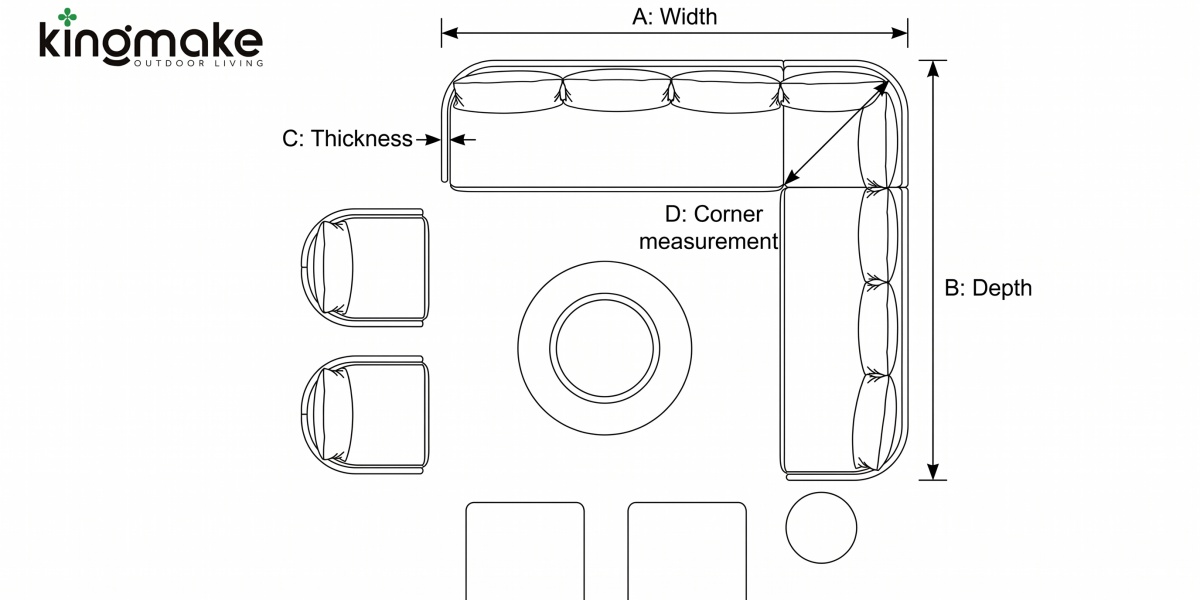
Getting the measurement right is the most important step when shopping for replacement cushions for outdoor sectional furniture. A cushion that is even an inch off in one direction looks sloppy and may not stay in place.
Step-by-Step: How to Measure Your Sectional for Replacement Cushions
Follow these five steps with a soft measuring tape:
Measure seat width — measure the full left-to-right distance of the seat platform (front edge to front edge, not including armrests)
Measure seat depth — measure front to back along the seat platform surface
Measure back cushion height — measure from the seat surface to the top of the backrest
Measure current cushion thickness — standard outdoor sectional cushions run 3 to 5 inches; note your existing thickness
Subtract 0.5 inches from each dimension — this gives the cushion room to fit inside the frame without forcing or bunching
Write all measurements down before ordering. When in doubt, round down rather than up.
Standard Outdoor Sectional Cushion Sizes
Most commercial sectional cushions follow these common dimensions:
| Cushion Type | Common Sizes |
| Seat cushion | 24"×24", 24"×28", 26"×26" |
| Back cushion | 20"×20", 20"×24" |
| Chaise / daybed | 22"×72", 24"×75" |
| Corner seat | 28"×28", 30"×30" |
The most widely available size is outdoor sectional cushions 24x24, which fits the majority of standard modular sectional frames sold by major retailers.
Custom vs. Standard: When to Go Custom
If your measurements are within 1 inch of a standard size, buy standard and add a non-slip mat underneath to prevent shifting. The cost difference is significant, and the fit will be acceptable.
If your measurements differ by more than 1 inch, custom is the right call. Custom-made replacement cushions for outdoor sectional furniture typically cost 20–40% more than standard sizes but eliminate the gaps, bunching, and instability that come from a poor fit. Manufacturers like
Kingmake Outdoor Furniture offer OEM and ODM cushion customization for exactly this situation.
Waterproofing Levels: What the Ratings Actually Mean
"Waterproof" is one of the most misused words in
outdoor furniture marketing. Here is what the ratings actually mean.
Water Resistant vs. Waterproof: Don't Be Misled
Water resistant — the fabric can handle light splashes or a brief shower, but prolonged rain will eventually soak through. Most standard outdoor fabrics fall here.
Water repellent (DWR) — a chemical coating causes water to bead and roll off. Effective when new, but the coating degrades with UV exposure and washing and typically needs reapplication every one to two years.
Waterproof — the fabric itself blocks water, usually via a PVC or polyurethane backing. Fully waterproof, but less breathable, which can trap moisture and heat underneath.
Which Rating Do You Actually Need?
Use this as a quick guide:
Full sun, no cover, rainy climate → Sunbrella fabric + quick-dry foam. This is the only combination that handles year-round exposure reliably.
Covered patio or pergola, moderate rain → Olefin with natural water repellency. No additional coating needed.
Mostly shaded, rarely rained on → Standard polyester with DWR treatment. Reapply the treatment annually.
Best Outdoor Sectional Cushions: Our Top Picks
These recommendations cover the most common buyer situations, from daily family use to budget-conscious replacements.
Best Overall: Sunbrella Fabric with Quick-Dry Foam
For anyone whose sectional is fully exposed to sun and rain, this combination is the clear winner. Sunbrella's fade resistance and quick-dry foam's drainage speed mean the cushions look good and stay comfortable through multiple seasons without constant maintenance. Expect to pay $180–$350 per cushion set depending on size. The five-year lifespan means a lower cost-per-year than cheaper alternatives.
Best for: Fully exposed patios, beach houses, pool areas, resort settings.
Best Budget Replacement Cushions (Under $120/Set)
Olefin fabric over high-density foam hits the right balance for most homeowners on a budget. The inherent moisture resistance of Olefin means no coating to worry about, and high-density foam at ILD 35–40 provides firm, comfortable support. Look for zippered covers so you can wash the fabric separately. This is the best value pick for semi-covered patios.
Best for: Covered patios, pergola-shaded areas, budget-conscious shoppers.
Best for Rainy Climates: Quick-Dry Foam with Olefin
If you live somewhere that sees frequent rain from spring through fall, pair Olefin fabric covers with quick-dry foam inserts. The foam drains in hours, and Olefin's natural water resistance keeps the cover from soaking through. This setup handles wet conditions without the premium price of full Sunbrella. See more inspiration for sectional setups designed for various climates in Kingmake's
small outdoor sectional guide.
Best for: Pacific Northwest, Southeast US, tropical and coastal climates.
Best Custom-Size Outdoor Sectional Cushions
For non-standard sectional frames — custom-built furniture, vintage pieces, or commercial configurations — a made-to-measure cushion is the only real solution. Kingmake Outdoor Furniture offers custom cushion fabrication as part of its
full outdoor furniture product range, including material selection, sizing, and finish matching for hospitality and residential projects.
Best for: Unique frame dimensions, commercial projects, OEM orders.
Best Colorful or Patterned Outdoor Sectional Cushions
If the goal is to add personality to a neutral frame, patterned Olefin or Sunbrella cushions in bold geometrics, stripes, or botanical prints make a significant visual impact. Stick to colors with high contrast rather than blended pastels — they hold visual interest longer and show less dirt. Coordinate with planters, rugs, or throw pillows in one or two complementary accent colors to avoid a cluttered look.
Best for: Decorative patios, lifestyle-focused outdoor rooms, entertaining spaces.
How to Clean and Maintain Outdoor Sectional Cushions
Even the best outdoor sectional seat cushions will deteriorate faster than they should without basic maintenance. The good news is that cleaning is straightforward when you know the right approach for your fabric type.
Routine Cleaning: What to Do Every Month
A quick monthly clean prevents buildup that eventually becomes a deep-cleaning problem. Follow these four steps:
Beat out loose dust — lift each cushion and tap it firmly against the back of a chair or railing to knock out dry debris
Scrub with a soft brush and warm water — add a small amount of mild dish soap; scrub in circles, then rinse thoroughly with a garden hose
Stand cushions on edge to dry — never lay them flat; standing them upright allows air to circulate on both sides and speeds drying significantly
Reapply DWR spray if needed — for Olefin and polyester covers, one light coating of outdoor fabric protector spray once per season keeps water-repellency strong
Deep Cleaning: Removing Mold, Mildew, and Stains
For cushions that have developed mildew or stubborn stains, use a targeted cleaning solution based on your fabric:
Sunbrella: Mix 1 cup of bleach, ¼ cup of mild liquid soap, and 1 gallon of warm water. Apply with a soft brush, let sit for 15 minutes, scrub, and rinse thoroughly. Do not machine wash Sunbrella cushion covers on a hot cycle or with harsh detergents — it damages the fabric's UV coating.
Olefin: White vinegar diluted 1:1 with water works well for mildew. For stains, a mild soap solution with a soft brush is sufficient.
Polyester: Warm water and a gentle soap. Avoid bleach, which degrades polyester fiber over time.
Always rinse completely and allow 48 hours of drying time before storing or using the cushion again.
Seasonal Storage Tips for Outdoor Cushions
End-of-season storage done correctly means your cushions will come out looking almost new the following spring.
Clean thoroughly and allow at least 48 hours to fully dry before storing
Store in a breathable bag or storage box — never a sealed plastic bag, which traps humidity and creates ideal conditions for mold
Keep in a cool, dry location away from rodents (a garage shelf or storage bench works well)
Consider outdoor furniture covers for cushions you prefer to leave outside — a good cover keeps them clean and dry without requiring full seasonal storage
Frequently Asked Questions About Outdoor Sectional Cushions
Can outdoor sectional cushions get wet?
It depends on the fabric. Sunbrella and Olefin cushions can handle rain — they are designed for outdoor exposure — but they should be stood on edge to dry rather than left lying flat in puddles. Polyester cushions with DWR coating can tolerate light rain but will begin absorbing water if left soaked for extended periods. The fill material matters too: quick-dry foam handles wet conditions significantly better than standard high-density foam.
How do I keep outdoor cushions from getting moldy?
The key is drying. Mold grows where moisture sits. Always stand cushions on edge after rain rather than leaving them flat, and bring them in or cover them during extended wet periods. Choose quick-dry foam fill if you live in a rainy climate. A light application of an outdoor anti-mildew spray once per season adds extra protection, especially for any gaps where water tends to pool.
How long do outdoor sectional cushions last?
With proper care, Sunbrella cushions typically last 5–7 years. Olefin cushions last 3–5 years. Polyester cushions with a DWR coating last 1–3 years before the coating degrades and water resistance drops significantly. In all cases, cushions that are stored during winter and kept clean will outlast those left outside year-round by a significant margin.
Are outdoor sectional cushion covers machine washable?
Removable Olefin and polyester covers are generally machine washable on a gentle cold-water cycle with mild detergent. Sunbrella covers can be hand-washed or spot-cleaned, but machine washing on hot cycles is not recommended as it can damage the solution-dyed fibers and weaken the fabric's UV protection. Always check the care label on your specific product before washing.
Conclusion
Finding the right outdoor sectional cushions is less about brand names and more about matching materials to your actual environment. If your sectional sits in full sun and sees regular rain, invest in Sunbrella fabric and quick-dry foam. For most covered patios, Olefin fabric over high-density foam delivers excellent performance at a lower cost. When replacing old cushions, measure carefully and go custom if you are more than an inch off from a standard size.
For hospitality projects, large-scale commercial builds, or homeowners who want genuinely durable, customizable outdoor seating,
Kingmake Outdoor brings over 18 years of manufacturing experience to every order — from standard collections to fully tailored OEM solutions. Explore the full range at
https://www.cnkingmake.com/products.html and give your outdoor space cushions that are built to last.



 Whatsapp
 sales@cnkingmake.com
 +8613925925021