
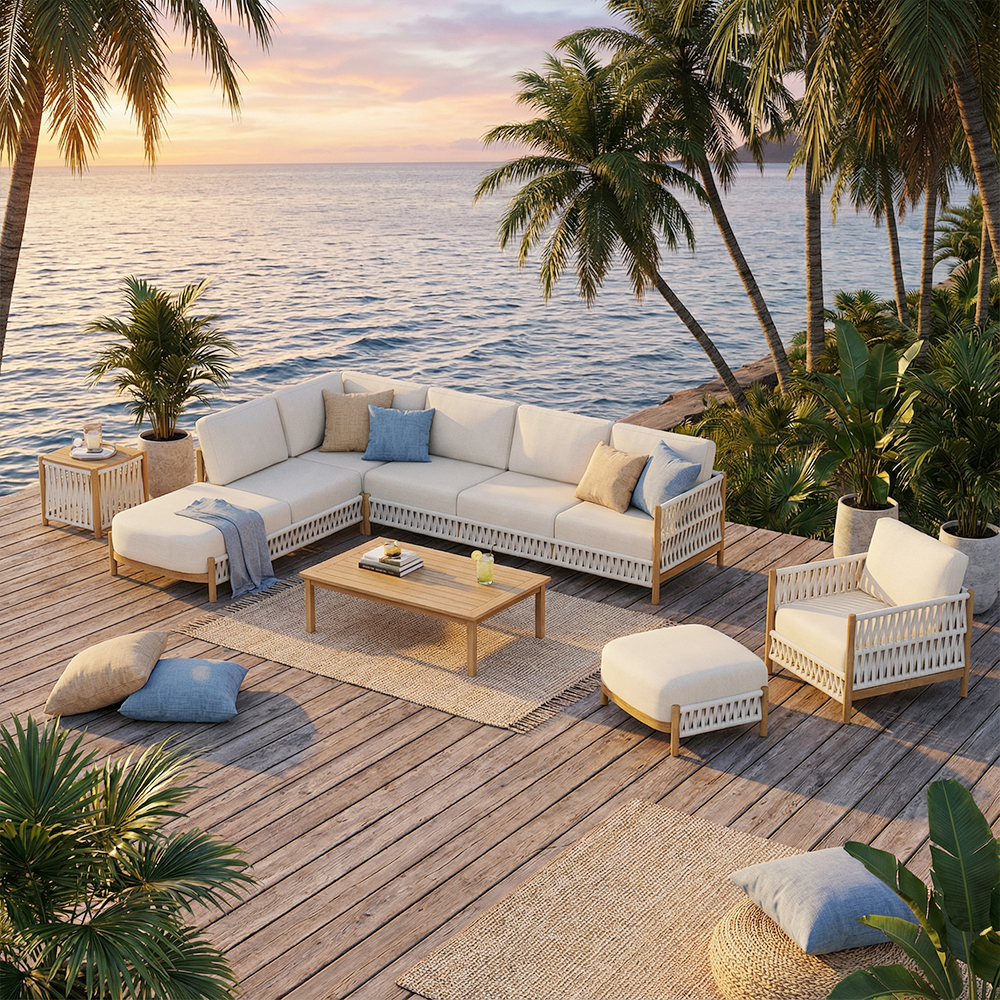
Hidden Costs of Choosing the Wrong Outdoor Furniture
Outdoor furniture decisions often start with a simple goal: make the space look inviting. For hotels, resorts, restaurants, and commercial outdoor venues, it’s also about keeping operations smooth and protecting brand perception. The problem is that “wrong” outdoor furniture doesn’t fail all at once. It fails quietly through fading, wobbling, mildew, rust, uncomfortable seating, and constant small repairs that add up to a bigger expense than the purchase price ever suggested.
If you’ve ever replaced cushions mid-season, chased down matching parts that are no longer available, or watched guests avoid a beautifully styled lounge area because it’s too hot, too low, or just not comfortable, you’ve already seen hidden costs in action.
The good news is that most of these costs are preventable. Once you start evaluating outdoor furniture like an asset with a total cost of ownership mindset you make choices that hold up under real weather and real guest traffic.
What “Hidden Costs” Really Means
Hidden costs are the expenses you didn’t plan for when you approved the furniture budget. They show up after delivery, once the furniture is exposed to sun, rain, chlorine, salt air, spills, and daily use. In hospitality settings, these costs multiply because furniture isn’t used by one careful owner. It’s used by hundreds of guests and managed by a team that has limited time to baby-sit products that aren’t built for commercial reality.
Hidden costs typically land in four areas:
Replacement frequency
Maintenance and labor
Operational friction (storage, handling, downtime)
Guest experience and brand impact
When these are considered, the “cheaper” choice often becomes the most expensive.
Hidden Cost #1: You End Up Buying Twice (or More)
The most common hidden cost is replacement. Furniture that looks great in a showroom or in a product photo can deteriorate quickly outdoors. Low-grade plastics can become brittle and crack. Steel that isn’t properly protected can rust, especially once the finish is scratched. Inexpensive wicker alternatives can stretch, sag, or fade. Bargain cushions can lose shape, trap moisture, and develop odor.
In residential settings, an owner might tolerate that for a few seasons. In a hotel or resort, the impact is immediate. Worn furniture signals neglect, even when everything else is premium. Guests notice faded sling fabric, uneven chair legs, and sagging seats. They also notice when half the loungers look “new” and the other half look “tired,” because replacements happen in batches.
Replacement costs aren’t only the cost of a new chair or lounger. They also include shipping, receiving, storage space for incoming inventory, labor to swap units, and the headache of finding “the same” model that no longer exists. Even when you can reorder, dye lots change, finishes shift, and exact matches disappear especially with lower-end lines that rotate frequently.
Over a five-year period, replacing a low-quality set multiple times can easily exceed the total cost of purchasing durable, hospitality-grade furniture once.
Hidden Cost #2: Maintenance That Becomes a Monthly Expense
Some outdoor furniture requires more upkeep than buyers realize. That doesn’t automatically make it a bad choice, but it does mean you need to budget time, products, and labor.
A few examples of “surprise” maintenance:
Wood pieces that need seasonal cleaning and periodic refinishing.
Metal pieces that need regular rinsing in coastal areas.
Cushions that require frequent drying, washing, and storage to avoid mildew.
Fabrics that stain easily and require specialized cleaning methods.
The hidden cost is rarely the cleaning product itself. It’s the hours of staff time and the operational disruption. When maintenance isn’t planned, it gets delayed. Delayed maintenance accelerates deterioration, which triggers earlier replacement. That cycle repeats.
A smarter approach is to choose materials that align with the maintenance capacity of the property. If your team can maintain teak beautifully, teak can be a strong long-term investment. If not, a high-quality powder-coated aluminum frame with performance fabric may deliver better durability with lower ongoing upkeep.
Hidden Cost #3: Climate Mismatch (The USA Makes This More Expensive)
Outdoor furniture performance is deeply tied to climate. In the U.S., properties deal with everything from high UV deserts to humid coastal air to freeze-thaw cycles. If furniture isn’t chosen for the specific environment, premature failure isn’t a possibility—it’s the expectation.
Coastal environments are the most punishing. Salt air speeds corrosion and attacks hardware. In these regions, even high-quality metal needs the right finish, the right hardware, and a rinse-and-clean routine. Cheap furniture can start failing within a season if it’s not built for coastal exposure.
Hot, high-UV regions create a different problem: fading, fabric breakdown, heat retention, and surface temperatures that make furniture uncomfortable to use. Dark finishes can become very hot. Low-grade fabrics can lose color and weaken quickly. Cushions without the right material structure can degrade and lose shape under constant heat.
Humid, rainy climates bring mildew and moisture-related issues. Cushions that don’t dry quickly become a liability. Furniture that traps water, especially in joints or woven elements, can develop odor, discoloration, and fabric deterioration.
Cold climates add freeze-thaw stress. Water that enters small gaps expands when frozen, damaging finishes and causing cracking over time. Furniture that might hold up fine in California may deteriorate much faster in Chicago if it’s not chosen and stored properly.
Climate mismatch is costly because it forces early replacement and increases maintenance. It also creates unpredictable performance across the same product line if parts of a property are exposed to different conditions pool deck, rooftop, beachfront, shaded terrace.
Hidden Cost #4: Storage and Handling Problems You Didn’t Plan For
Outdoor furniture doesn’t only live outdoors. Most hospitality properties need some form of offseason storage, storm preparation, or event reconfiguration. This is where operational friction becomes a real cost.
Furniture that doesn’t stack, fold, or move efficiently requires more storage space and more staff time. Bulky daybeds or oversized modular pieces can be fantastic if the site is designed for them and the operations team can manage them. If not, they become a constant burden.
When storage is difficult, furniture is left exposed during harsh weather. That increases wear and shortens lifespan. Then the property spends more on covers, storage solutions, or replacement.
Cushions create another layer of hidden cost. Cushions that aren’t designed to dry fast need storage. Storage requires space. Space requires planning. Without it, cushions get left out, absorb moisture, and develop mildew or odor. Then you replace cushions more frequently than you expected, often mid-season when suppliers are least available.
Even small items side tables, ottomans, umbrellas carry handling costs. If umbrellas aren’t wind-rated for the site and don’t have proper bases, you replace canopies and ribs. If bases are too light, staff spend time moving them or dealing with safety concerns. These costs rarely show up on the original quote, but they show up in operations.
Hidden Cost #5: Comfort Mistakes Turn Furniture into Decoration
One of the most overlooked costs is comfort. A chair that photographs well but feels awkward won’t get used. A lounger with poor ergonomics will sit empty, even when the pool deck is busy. Over time, that space becomes underperforming. Guests cluster in the few areas that feel right, which creates crowding and service issues.
Comfort failures are subtle: seat height, back angle, cushion density, arm placement, and even surface temperature. Materials that retain heat can make seats uncomfortable in the afternoon sun. Cushions that compress too quickly don’t support guests for longer stays. Daybeds without stable back support become “pretty but impractical.”
In commercial settings, comfort isn’t only about guest satisfaction. It affects time-on-seat, which affects food and beverage revenue. If guests leave the pool deck because seating is uncomfortable, you lose spend opportunities. If guests don’t post photos because the furniture looks worn or feels cheap, you lose marketing value.
The result is a cost you can’t always measure directly but can see in behavior, reviews, and repeat bookings.
Hidden Cost #6: Safety and Liability Risk
When furniture fails in a commercial environment, it’s more than an inconvenience. It’s a risk. Wobbly chairs, unstable tables, sharp edges, weak joints, and failing sling fabrics can create safety issues. Umbrellas that aren’t secured properly can become hazards in wind. Loose parts can cause trips or minor injuries. Minor injuries can become complaints, claims, or reputational damage.
The hidden cost here is not only the replacement or repair. It’s the potential for incidents that harm the guest experience and create administrative burden. It’s also the cost of pulling items out of service, which reduces capacity during peak periods.
Choosing furniture with strong construction, stable bases, reliable hardware, and appropriate weight is a risk management decision as much as it’s a design decision.
Hidden Cost #7: Aesthetic Drift and Brand Inconsistency
Hotels and resorts rely on visual consistency. Outdoor zones are part of the brand story especially in the U.S., where pool decks, rooftop lounges, and beachfront setups are major booking drivers.
When furniture fails early and you replace items in small batches, you get “aesthetic drift.” The lounge chairs don’t match the originals. The new cushions are a slightly different tone. The replacement wicker has a different weave. The umbrellas change shape. The space starts to look like it was assembled over time rather than designed intentionally.
This affects guest perception, photography, and marketing. It also affects future procurement because the property ends up chasing the old look instead of evolving the design strategically.
How to Avoid Hidden Costs: A Practical Buying Framework
Avoiding hidden costs doesn’t require buying the most expensive option. It requires buying the right option—based on climate, usage, operations, and lifecycle.
1) Think in Total Cost of Ownership, Not Unit Price
Ask what the furniture will cost over five years, not what it costs today. Consider replacement cycles, cushion replacements, labor, storage, and downtime. A slightly higher upfront investment often reduces total spend dramatically.
2) Match Materials to the Site
Choose frames, finishes, and fabrics based on local conditions. Coastal sites need corrosion resistance and appropriate hardware. High-UV sites need fade resistance and materials that don’t degrade under constant sun. Humid sites need quick-dry cushion systems and fabrics that resist mildew.
3) Evaluate Construction, Not Just Looks
Look for robust joinery, stable legs, and proven frame designs. In hospitality settings, lightweight is useful, but “too light” can reduce stability. The right balance depends on the product category and the environment.
4) Plan for Cushions Like You Plan for Linens
Cushions are consumables in many properties. Choose removable covers, fabrics that clean well, and foam systems that dry quickly. Make sure there’s a plan for storage, rotation, and replacement. Your cushion strategy should be as intentional as your towel strategy.
5) Test Comfort and Ergonomics
Whenever possible, test for real comfort. Consider how long guests will use the furniture and what the primary activities are sunbathing, dining, lounging, socializing. Comfort is not a luxury feature. It’s a usage feature.
6) Choose a Supplier That Supports Lifecycle Needs
Outdoor furniture isn’t a one-and-done purchase. The right manufacturing partner supports your project with consistent production, customization, replacement parts, and long-term quality control. This matters especially for properties running multi-site portfolios or large-scale resort projects.
The Kingmake Approach: Durable Outdoor Furniture for Real Hospitality Use
At Kingmake Outdoor, we design and manufacture outdoor furniture for high-traffic hospitality environments worldwide. Our goal is simple: help hotels and resorts avoid the hidden costs that come from poor material choices, weak construction, and mismatched specifications.
We build outdoor sofas, loungers, daybeds, dining sets, chairs, umbrellas, and complete outdoor project solutions with commercial performance in mind. That means choosing materials engineered for sun, rain, humidity, and coastal exposure, and offering customization that aligns with the design intent of the property.
When hotels treat outdoor furniture as a strategic asset—one that affects guest experience, operations, and brand value—the buying decision becomes clear. The cheapest furniture isn’t cheap once you account for replacements, labor, and guest dissatisfaction. The best value is furniture that lasts, looks consistent, and keeps outdoor zones guest-ready season after season.
FAQs
1) What is the biggest hidden cost of cheap outdoor furniture?
The biggest hidden cost is replacement frequency. Low-quality items often need to be replaced much sooner, which increases total spend through shipping, labor, and brand inconsistency.
2) What material is best for commercial outdoor furniture in harsh climates?
Powder-coated aluminum frames paired with performance outdoor fabrics are a common choice for commercial use because they balance durability, corrosion resistance, and low maintenance.
3) Why do outdoor cushions get moldy so quickly?
Moisture trapped in foam and fabric—especially in humid or rainy climates—creates ideal conditions for mildew. Quick-dry cushion systems, removable covers, and a clear storage plan reduce this risk.
4) How often should hotels replace outdoor furniture?
It depends on quality and usage intensity. Low-quality furniture may need replacement in a few seasons, while hospitality-grade furniture can last many years with proper maintenance and parts support.
5) How can hotels prevent furniture from fading in full sun?
Use UV-resistant performance fabrics and finishes designed for outdoor exposure, and plan layout zones that balance sun and shade where possible.
6) What should I look for when buying outdoor furniture for a hotel pool deck?
Focus on durability, corrosion resistance, comfort, cleanability, and operational efficiency—stackability, cushion strategy, and parts availability matter as much as design.
 Whatsapp
 sales@cnkingmake.com
 +8613925925021