Outdoor social spaces have become one of the strongest drivers of guest satisfaction and revenue per available room across the hospitality industry. Rooftop lounges, poolside bars, and resort terraces are no longer optional amenities; they are expected. For procurement managers, resort owners, and furniture distributors, the challenge is finding outdoor bar ideas that combine strong visual appeal with the durability, lead-time reliability, and long-term ROI a commercial project demands. This guide walks through layout concepts, material choices, and procurement considerations for buyers planning bar furniture at scale.
Outdoor Bar Ideas by Setting — Rooftop, Poolside & Backyard
The right outdoor bar concept depends heavily on where it will be installed. A rooftop bar faces different wind loads and sightline requirements than a poolside setup, and a backyard patio bar has a different budget and usage pattern altogether. Sourcing outdoor bar ideas that match the setting, rather than copying a generic design, is the first step toward a project that performs well over its full service life.
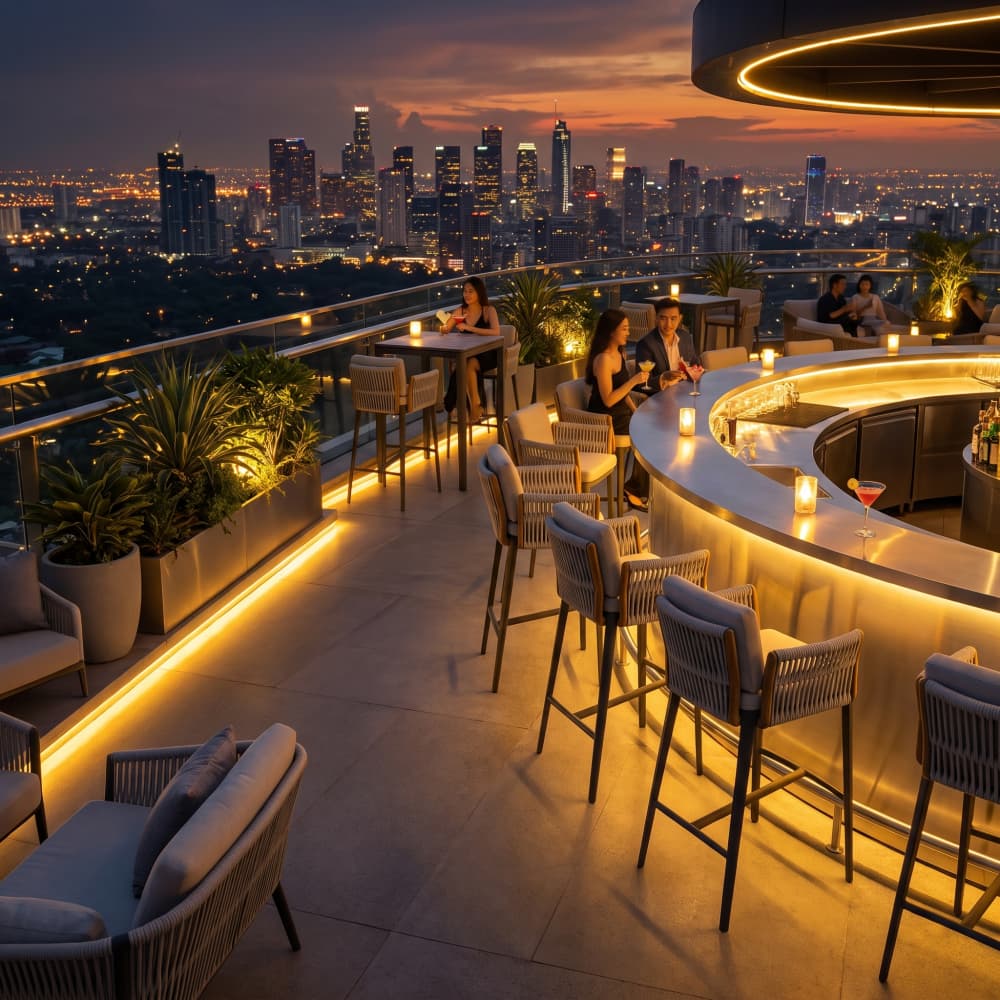
Rooftop bars benefit from lightweight, wind-resistant furniture with a low visual profile so they don't obstruct skyline views. Aluminum-framed counters, slim bar stools, and low-maintenance planters work well because they reduce structural load on the roof deck while still delivering a premium look for guests.
Poolside bars need materials that tolerate constant splashing, sunscreen residue, and chlorine exposure. HDPE (high-density polyethylene) counters and powder-coated aluminum frames resist fading and corrosion far better than untreated wood, which makes them a practical choice for hotels and resorts running high guest turnover.
Backyard and residential-style bars, often specified by developers building villa communities or boutique short-term rental properties, tend to favor a warmer aesthetic. Teak-look composite tops paired with woven or aluminum seating strike a balance between hospitality-grade durability and a relaxed, residential feel.
Creative Outdoor Bar Layouts — L-Shape, Island & Built-In Designs
Beyond setting, layout is the second major decision point. A creative outdoor bar idea should solve a real spatial or operational problem, not just look attractive in a rendering. Below are the layout types most commonly specified for commercial and hospitality projects.
L-shape bars work well in corner locations and allow bartenders to serve two sides of a space simultaneously, which is useful for busy pool decks or terrace corners.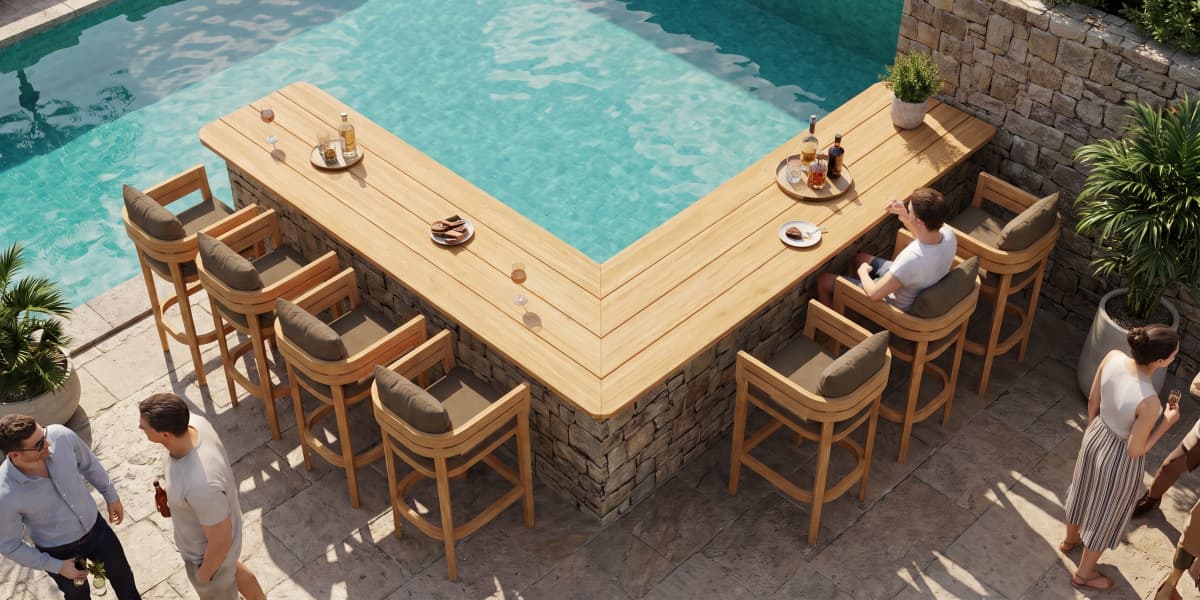
Island bars stand independently in the center of a space and support 360-degree guest access, making them ideal for large rooftop lounges or resort courtyards where flow and capacity matter.
Built-in bars are integrated into permanent hardscaping, such as a stone or concrete base with a modular counter top, offering a more architectural, permanent look for flagship properties.
Compact linear bars suit smaller terraces, boutique hotels, or backyard patios where space is limited but a defined bar zone is still needed.
Each layout has different implications for furniture sourcing. Island and L-shape configurations often require custom-cut counter tops and modular bases, which is where working with a manufacturer offering true
custom outdoor furniture capability becomes important, rather than relying on fixed catalog dimensions that may not fit the site.
Choosing Materials for Weatherproof Outdoor Bars
Material selection is the single biggest factor in how long an outdoor bar performs before it needs repair or replacement. For commercial buyers managing multi-property portfolios, material choice directly affects lifecycle cost, not just upfront price.
Aluminum frames are lightweight, rust-resistant when properly powder-coated, and easy to ship in volume, which makes them a common choice for large hospitality rollouts. Projects using
aluminum patio furniture typically see lower long-term maintenance costs compared with untreated metal or solid wood alternatives.
Teak wood offers a premium natural aesthetic and strong weather resistance when properly kiln-dried and finished, but it carries a higher unit cost and requires periodic oiling to maintain appearance, which should be factored into a property's maintenance budget.
HDPE and weather-resistant composites have grown in popularity for commercial bar tops because they don't rot, splinter, or absorb moisture, and they hold color well under UV exposure. Buyers evaluating
HDPE outdoor furniture often find it delivers a strong balance of appearance and near-zero maintenance, which is particularly useful for coastal or high-humidity resort locations.
Material Comparison Table
| Material | Weather Resistance | Maintenance Level | Typical Use Case | Relative Cost |
| Aluminum frame | High (rust-resistant when coated) | Low | Rooftop bars, high-volume hospitality projects | Medium |
| Teak wood | High (natural oils resist decay) | Medium (periodic oiling) | Resort and villa-style bars | High |
| HDPE / composite | Very high (won't rot or fade easily) | Very low | Poolside and coastal properties | Medium |
| Rattan / woven synthetic | Medium to high | Low to medium | Backyard and boutique patio bars | Low to medium |
This comparison is a useful starting point, but the right material also depends on climate, guest volume, and how a property balances upfront cost against a longer replacement cycle.
Top Outdoor Bar Ideas for Commercial & Hospitality Spaces
For hotels, resorts, and restaurants, outdoor bar top ideas need to go beyond appearance and account for operational realities such as staff workflow, cleaning routines, and guest capacity during peak hours.
A well-planned commercial outdoor bar typically includes a durable, stain-resistant counter surface, adequate under-counter storage for glassware and supplies, and seating that can be rearranged for events without excessive wear. Many properties are now sourcing a coordinated
outdoor bar set rather than assembling individual pieces, which helps ensure consistent finish, height, and structural quality across the whole installation.
For developers and hospitality brands managing multiple properties, working with a supplier experienced in
commercial outdoor furniture reduces the risk of inconsistent quality between locations and simplifies reordering when a property needs to expand or replace worn pieces.
Practical considerations for hospitality-grade bars:
Counter height should accommodate both standing service and bar-stool seating, typically 105–110 cm for standing-height bars.
Non-slip, easy-clean surfaces reduce staff turnover time between guest sittings.
Modular components make it easier to reconfigure the bar for private events or seasonal layout changes.
UV-stable finishes protect brand-consistent color across properties in different climates.
Pairing Bar Stools, Umbrellas & Counters for a Finished Look
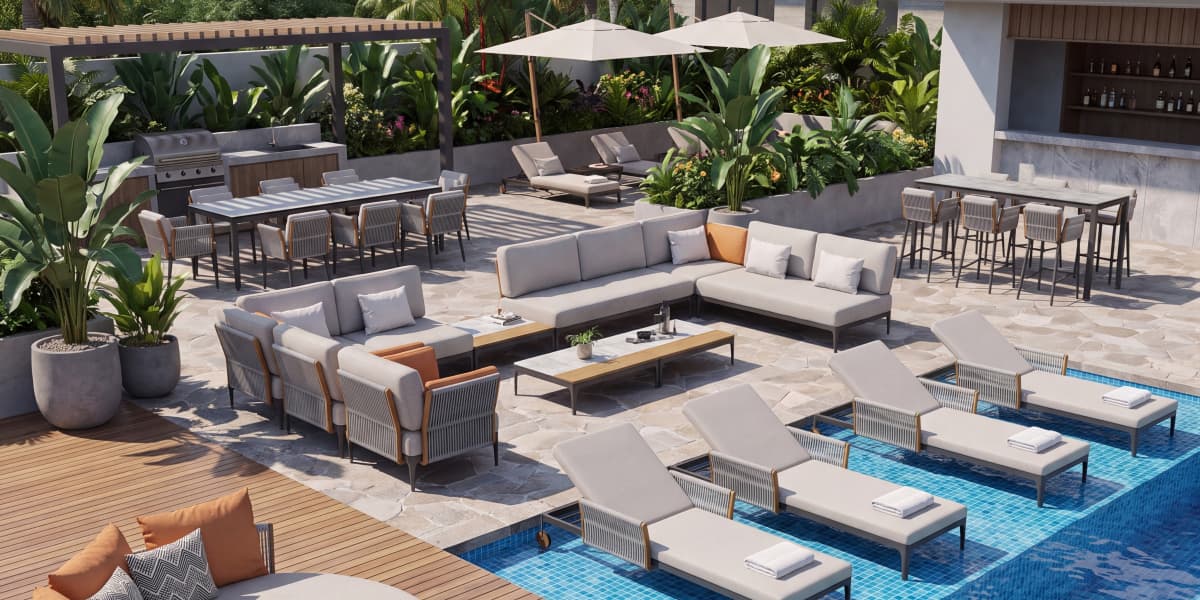
An outdoor bar is rarely judged on the counter alone. Guests experience it as a complete environment, which means seating, shade, and counter design need to be sourced as a cohesive system rather than separate purchases.
Choosing the right
bar stools means matching frame material and finish to the counter, while also considering stackability for storage during off-season or bad weather. For properties in hot or rainy climates, pairing the bar area with a well-positioned
patio umbrella extends usable hours and protects both guests and furniture finishes from prolonged sun exposure.
For distributors and architects specifying multiple product lines together, consistency in frame color, hardware finish, and material grade across stools, umbrellas, and counters is what separates a coordinated hospitality environment from a mismatched assembly of individual pieces.
What to Evaluate Before Ordering Commercial Outdoor Furniture
Before placing a bulk or project order, procurement teams should confirm the following:
Material certification — request test data on UV resistance, corrosion resistance, and load capacity.
Customization capability — confirm the supplier can adjust dimensions, finishes, and branding for project-specific needs.
Production lead time — align factory capacity with your project's installation schedule.
Sample availability — request physical samples before committing to a full production run.
Quality control process — ask how the manufacturer inspects finished goods before shipment.
After-sales support — confirm warranty terms and replacement part availability.
Shipping and logistics experience — verify the supplier has handled export documentation and freight for your region before.
Skipping these checks is one of the most common reasons commercial furniture projects run over budget or miss opening deadlines.
FAQ about Outdoor Bar Ideas
What's the best layout for a small outdoor bar?
For limited space, a compact linear bar or a corner L-shape layout works best. Both minimize footprint while still providing enough counter length for two to three staff positions, making them practical for boutique hotels and backyard patios.
What material lasts longest for an outdoor bar counter?
HDPE and powder-coated aluminum generally offer the longest service life with the least maintenance, since neither material rots, rusts easily, or requires periodic refinishing the way natural wood does.
How do I design an outdoor bar for a hotel or rooftop lounge?
Start with guest capacity and staff workflow, then select a layout (L-shape, island, or built-in) that supports that flow. From there, choose weather-appropriate materials and coordinate stools, shade structures, and counters as one cohesive system.
How much does a commercial outdoor bar setup typically cost?
Costs vary widely based on material, size, and customization level, ranging from moderate for a standard aluminum or HDPE package to significantly higher for fully custom teak or built-in stone-based designs. Requesting a project quote is the most reliable way to budget accurately.
Can outdoor bar furniture be customized with branding or specific colors?
Yes. Manufacturers offering OEM/ODM services can typically adjust frame colors, fabric choices, counter finishes, and even add branded elements to match a hotel's or resort's identity guidelines.
How long does it take to produce and ship a custom outdoor bar order?
Lead times depend on order volume and customization complexity, but commercial buyers should generally plan for several weeks of production plus shipping time, and should confirm exact timelines with the supplier before finalizing project schedules.
Bring Your Outdoor Bar Idea to Life with Kingmake
Whether you're outfitting a rooftop lounge, a resort pool deck, or a portfolio of hotel properties, turning an outdoor bar concept into a finished, durable installation depends on the manufacturing partner behind it.
Kingmake Outdoor Furniture brings more than 18 years of experience producing
hospitality outdoor furniture and
hotel outdoor furniture for projects worldwide, with in-house R&D, production, and quality control under one roof.
Our
customization services support architects, developers, and distributors who need dimensions, finishes, or branding tailored to a specific site, while our OEM and
wholesale outdoor furniture programs are built for import partners and hospitality brands ordering at scale. If you're ready to move from concept to procurement, our team can help translate your outdoor bar idea into a project-ready specification.

 Whatsapp
 sales@cnkingmake.com
 +8613925925021