
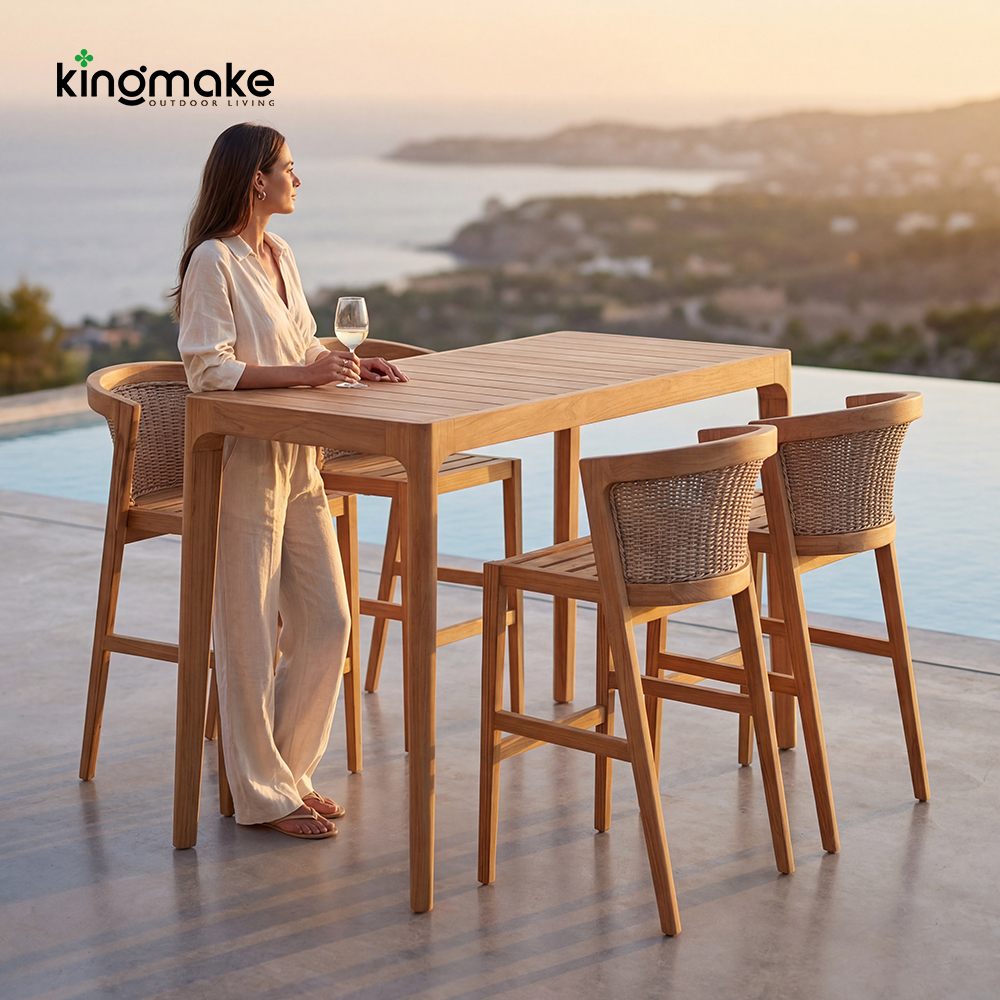
Bar Stool Height Guide: Standard Sizes & How to Choose Correctly
Ensuring guest comfort and aesthetic harmony in hospitality spaces.
Quick Summary / Key Takeaways
Measure the bar or counter height accurately before selecting stools, allowing 10 to 12 inches of clearance between the seat and the counter to support comfortable seating.
Standard bar height stools measure 28 to 32 inches, while counter height stools range from 24 to 27 inches, covering most hospitality bar and dining applications.
Correct bar stool height supports natural posture, smooth movement, and a more comfortable guest experience throughout the space.
In outdoor settings, choose weather resistant materials and confirm stool height aligns precisely with existing bar or counter structures to maintain comfort and stability.
Prioritize guest comfort and visual balance, as well proportioned seating enhances both the function and the overall impression of the space.
Introduction

Choosing the correct bar stool height is essential to creating a hospitality space that feels comfortable, balanced, and intentional. Even the most thoughtfully designed bars and counters can feel awkward if seating proportions are off, affecting posture, circulation, and the overall guest experience. Bar stool height is not just a measurement detail but a foundational element that shapes how guests use and enjoy a space.
Standard bar stool sizes are designed to work in harmony with common counter and bar heights. When stool height is properly matched, guests sit naturally, footrests provide proper support, and the space maintains a clean, cohesive visual flow. Understanding these standard dimensions helps avoid common layout mistakes while supporting comfort and ease of movement across dining and bar areas.
This guide explores standard bar stool heights, how to measure correctly, and key comfort and design considerations to help you choose with confidence. By focusing on proportion, durability, and long term performance, it offers practical insight shaped by hospitality experience and craftsmanship. Designed for hospitality. Made to last. Kingmake.
Standard Seating Heights for Hospitality Bars and Counters
| Seating Type | Counter or Table Height | Recommended Stool Height | Ideal Legroom |
|---|---|---|---|
| Dining Chair | 28 to 30 inches | 18 to 20 inches | 10 to 12 inches |
| Counter Height Stool | 34 to 36 inches | 24 to 27 inches | 8 to 12 inches |
| Bar Height Stool | 40 to 42 inches | 28 to 32 inches | 8 to 12 inches |
| Extra Tall Stool | 44 to 48 inches | 33 to 36 inches | 8 to 12 inches |
Bar Stool Dimensions and Practical Use Considerations
| Dimension | Typical Range | Impact on Comfort and Use | Common Applications |
|---|---|---|---|
| Seat Height | 24 to 32 inches | Determines legroom, posture, and counter alignment | Counters and bars |
| Seat Width | 15 to 22 inches | Supports guest comfort and spacing efficiency | Dining and bar seating |
| Footrest Height | 12 to 18 inches below seat | Improves leg support and circulation | Extended seating use |
| Overall Depth | 17 to 24 inches | Affects clearance, movement, and stability | Compact to open layouts |
Pre-Selection Planning Checklist for Bar Stool Height
Measure all bar and counter surfaces precisely to determine the correct bar stool height and required legroom.
Confirm adequate clearance for guests to sit, stand, and move comfortably without obstruction.
Select materials and finishes that balance visual appeal with durability for daily hospitality use.
Order samples to test comfort and visual fit within the actual space.
Post-Installation Review Checklist for Bar Stool Performance
Observe how guests use the bar stools, noting posture, comfort, and ease of movement.
Gather feedback from staff and guests regarding seating comfort and overall flow.
Inspect stools regularly for stability, alignment, and signs of wear in high traffic areas.
Replace or adjust any stools that fall short of comfort, performance, or visual standards.
Table of Contents

Section 1: UNDERSTANDING STANDARD BAR STOOL HEIGHTS
Section 2: MEASURING FOR THE PERFECT FIT
Section 3: DESIGN AND COMFORT CONSIDERATIONS
Section 4: SPECIALTY SEATING AND OUTDOOR APPLICATIONS
Frequently Asked Questions
Section 1: UNDERSTANDING STANDARD BAR STOOL HEIGHTS
FAQ 1: What are the standard bar stool height measurements?
Standard bar stool height generally ranges from 28 to 32 inches, designed to pair with bar counters measuring approximately 40 to 42 inches high, which is the most common setup in resort bars, rooftop lounges, and beachfront dining areas. For counter height applications often used in casual outdoor dining or poolside settings, counter stools typically measure 24 to 27 inches, matching counters around 34 to 36 inches high. These proportions support comfortable seating, proper posture, and consistent footrest alignment during extended use.
For the best result, always measure the actual bar or counter before selecting seating. Outdoor bar stools are available in both bar height and counter height configurations, with integrated footrests and ergonomic proportions engineered for hospitality environments. Following a clear bar stool height guide ensures 10 to 12 inches of clearance, helping maintain guest comfort, ease of movement, and a polished, professional look across outdoor spaces.
FAQ 2: How does counter height influence bar stool selection?
Counter height plays a defining role in selecting the correct bar stool, as proper spacing between the seat and tabletop is essential for comfort and posture. For counters measuring 34 to 36 inches, a 24 to 27 inch counter stool provides the right balance, allowing guests to sit naturally with their feet supported by an integrated footrest. Higher bar surfaces measuring 40 to 42 inches require 28 to 32 inch bar stools, which are commonly used in resort bars, rooftop lounges, and beachfront settings where guests remain seated for extended periods.
Outdoor bar stools are designed with fixed footrest placement and ergonomic proportions that correspond precisely to these height ranges. Selecting the correct stool height helps prevent pressure on the legs and lower back while maintaining a refined visual balance across the space. Measuring the counter before final selection ensures 8 to 12 inches of clearance, supporting long term comfort and consistent performance in high use hospitality environments.
FAQ 3: What is the ideal legroom for a comfortable bar stool?
The ideal legroom for a comfortable bar stool is 10 to 12 inches between the top of the seat and the underside of the counter or bar. This spacing allows guests to sit naturally, adjust their posture, and move their legs freely without pressure on the knees or thighs. In hospitality settings such as resort bars and rooftop lounges, this clearance is especially important because guests often remain seated for extended periods.
Adequate legroom also improves ease of entry and exit, reduces fatigue, and contributes to a balanced visual proportion between the stool and the bar. Verifying this measurement during planning ensures seating performs as comfortably as it looks across high use outdoor environments.
FAQ 4: Are there different types of bar stools based on height?
Yes, bar stools are primarily categorized by height to ensure they pair correctly with different counter and bar surfaces. The most common types are counter height stools, measuring 24 to 27 inches for counters around 34 to 36 inches high, and bar height stools, measuring 28 to 32 inches for bar surfaces approximately 40 to 42 inches high. These two height categories cover the vast majority of outdoor hospitality applications, from poolside dining counters to rooftop bars and beachfront lounges.
Selecting the appropriate height based on the actual counter or bar measurement helps maintain proper posture, visual balance, and ease of use for guests. This bar stool height guide focuses on these standard sizes to support reliable performance and refined outdoor seating layouts.
Section 2: MEASURING FOR THE PERFECT FIT
FAQ 5: How do I accurately measure my bar or counter for stools?
Begin by measuring from the floor to the top surface of the bar or counter using a tape measure. This total height establishes the baseline for selecting the correct stool. From that measurement, subtract 10 to 12 inches to determine the ideal seat height that allows guests to sit comfortably with natural leg movement and proper foot support. Measuring at several points along the counter is recommended, particularly in outdoor spaces where flooring or surfaces may vary slightly.
This approach helps ensure the selected stool height aligns cleanly with the counter, supporting both comfort and visual balance in resort patios, rooftop bars, and beachfront lounges. Accurate measurements during planning make it easier to choose seating that performs reliably in high use hospitality environments while maintaining a refined overall look.
FAQ 6: What is the importance of considering tabletop thickness?
Tabletop thickness plays an important role in overall seating comfort because it directly affects the usable legroom beneath the counter. While overall counter height is measured from the floor to the top surface, guest comfort depends on the clearance from the floor to the underside of the tabletop, where knees and legs naturally move. Thicker tabletops can reduce effective legroom, even when the stool height appears correct at first glance.
In outdoor bar and dining environments, accounting for this detail helps ensure seating feels open and comfortable rather than restrictive. Measuring to the underside of the counter allows stool height and footrest positioning to align properly, supporting natural posture and ease of movement. Incorporating this step into your bar stool height guide helps prevent crowding and maintains a refined, comfortable experience across resort patios, rooftop bars, and beachfront lounges.
FAQ 7: Should I account for guests of varying heights?
Yes, accounting for guests of varying heights is an important part of creating comfortable and inclusive seating. While bar stools are produced within standard height ranges, comfort is achieved through thoughtful proportions, supportive seat design, and well placed footrests. These details allow guests of different heights to sit comfortably and maintain a natural posture during extended use.
Offering both counter height and bar height seating within a space adds flexibility while maintaining consistency in design and performance. Proper spacing between stools further enhances ease of movement and overall comfort. A well considered bar stool height guide balances standard sizing with practical design choices that support a wide range of guests without compromising durability or visual harmony.
FAQ 8: How does floor type affect bar stool height perception?
Floor type can subtly influence how bar stool height is perceived and how stable the seating feels in use. Softer surfaces such as outdoor carpets or decking systems may compress slightly under weight, causing stools to feel marginally lower, while solid surfaces like tile, stone, or concrete provide a consistent and stable height. Uneven flooring can also affect balance, which impacts both comfort and the perceived seating height during use.
Bar stools designed for hospitality environments are typically equipped with level bases and protective foot caps to help maintain stability across different surfaces. Testing stools on the actual floor where they will be used allows you to confirm comfort and balance before final placement. Selecting appropriate floor protectors or glides helps preserve surface finishes while ensuring the stool performs as intended, supporting a consistent and comfortable seating experience.
Section 3: DESIGN AND COMFORT CONSIDERATIONS
FAQ 9: How does bar stool height impact guest posture and comfort?
Bar stool height plays a critical role in guest posture and overall comfort. When the seat height is properly matched to the counter, guests can rest their feet naturally on the footrest while maintaining balanced spinal alignment. This positioning reduces pressure on the lower back and legs, supporting a relaxed posture during extended periods of seating.
Stools that are too high can cause legs to hang uncomfortably or force guests to slouch, while stools that are too low may lead to shoulder and neck strain as guests reach upward toward the counter. Selecting the correct stool height helps maintain comfort, encourages proper posture, and supports an enjoyable dining or social experience. This consideration is central to any well planned bar stool height guide.
FAQ 10: What role does footrest placement play in comfort?
Footrest placement is essential to bar stool comfort because it provides proper support for the legs and feet, preventing discomfort caused by dangling legs or excess pressure on the thighs. When the footrest is positioned correctly, guests can maintain a relaxed posture with their knees naturally bent and weight evenly distributed. This support is especially important for bar height stools, where the floor is typically out of reach during seated use.
For fixed height bar stools, footrests are positioned in proportion to the seat height, generally 12 to 18 inches below the seat, to align with standard bar and counter dimensions. Thoughtful footrest placement enhances circulation, reduces fatigue, and completes the overall ergonomic balance of the stool. In hospitality settings where guests may remain seated for extended periods, this detail plays a meaningful role in delivering consistent comfort and a refined seating experience.
FAQ 11: How can bar stool height enhance the visual flow of a space?
Correct bar stool height significantly enhances the visual flow of a space by creating a harmonious and balanced aesthetic. When stool height is properly matched to the counter, seating appears balanced and intentional, allowing the eye to move smoothly across the bar or dining area. Proportional seating creates a clean visual line that supports the overall design rather than competing with it.
Inconsistent or poorly matched heights can interrupt this flow, making a space feel cluttered or uneven. Maintaining consistent bar stool height across similar seating zones helps create a cohesive, polished look that reinforces the quality of the furnishings and the care put into the space. This attention to proportion enhances how guests experience the environment, even before they take a seat.
FAQ 12: What materials are best for different hospitality settings?
The best materials for hospitality bar stools depend on whether the setting is fully outdoor, semi outdoor, or covered dining. For outdoor and open air environments, powder coated aluminum, solid teak, and synthetic rope weaving are well suited for commercial use due to their strength, weather resistance, and long term durability. Aluminum frames resist corrosion and are easy to maintain, teak offers natural stability and ages beautifully, and rope woven elements improve airflow and seating comfort.
Material choice also influences the overall look and upkeep of the space. Aluminum and rope designs complement modern hospitality interiors and exteriors that require low maintenance, while teak brings warmth and refinement to more natural or resort inspired settings. Selecting materials that match the environment helps ensure bar stools remain comfortable, visually cohesive, and reliable through daily commercial use.
Section 4: SPECIALTY SEATING AND OUTDOOR APPLICATIONS
FAQ 13: When should I consider extra-tall bar stools?
Extra tall bar stools are typically considered when a counter or bar surface exceeds the standard 40 to 42 inch height, usually measuring 44 to 48 inches. In these cases, standard bar stools may feel too low, making it difficult for guests to sit comfortably or reach the surface. Extra tall stools are most often used for custom built high top installations or specialized viewing areas where elevation is required.
For most hospitality applications, standard bar height seating remains the preferred and most practical solution due to its comfort, stability, and visual balance. When working with non standard counter heights, it is important to measure carefully and evaluate whether a custom seating solution is appropriate. This bar stool height guide emphasizes selecting stool heights that support comfort and usability without compromising design consistency.
FAQ 14: What are the considerations for outdoor bar stool height?
When selecting bar stool height for outdoor use, the most important considerations are proper height alignment, stability, and long term performance in changing weather conditions. Outdoor bar stools should maintain the same 10 to 12 inches of clearance between the seat and the bar surface to ensure guest comfort, even in open air settings. Accurate measurement remains essential so seating feels natural and proportionate to outdoor counters or bar tables.
Material choice and construction also influence how well the stool performs outdoors. Aluminum frames, solid teak, and synthetic rope elements are well suited for exterior use due to their resistance to moisture, sun exposure, and temperature changes. Stable bases and well balanced proportions help seating remain secure on patios, decks, or stone surfaces. Ease of cleaning and practical storage options further support smooth daily operation in hospitality environments. The same bar stool height guide principles apply outdoors, with added attention to durability and stability.
FAQ 15: How do swivel and adjustable stools fit into design plans?
Swivel stools can be a useful design choice in hospitality spaces where guest interaction and ease of movement are priorities. A swivel function allows guests to turn comfortably without moving the stool, supporting a relaxed and social atmosphere around bar counters and shared seating areas. When thoughtfully integrated, swivel stools enhance usability while maintaining a clean and intentional layout.
Fixed height stools remain the preferred choice for consistency, stability, and long term performance. Comfort is achieved through accurate height selection, balanced proportions, and well positioned footrests rather than adjustable mechanisms. Using swivel stools selectively while keeping seat heights consistent helps maintain both functionality and a refined, cohesive look throughout the space.

 Whatsapp
 sales@cnkingmake.com
 +8613925925021