Introduction
Outdoor Furniture cushions take a beating. Sun, rain, pollen, bird droppings, food spills, and humidity all work against them day after day. According to recent consumer home care trends, more homeowners than ever are investing in quality outdoor living spaces — and protecting that investment starts with knowing how to clean outdoor furniture cushions properly.
If you've noticed musty smells, dark spots, or a general dinginess on your patio cushions, you're not alone. These are common problems, and the good news is that most of them can be fixed with supplies already in your kitchen. Whether you're dealing with light surface dirt or a stubborn mildew outbreak, this guide covers everything you need to know.
At
Kingmake Outdoor Furniture, we've spent over 17 years manufacturing durable outdoor furniture for hotels, resorts, and homes worldwide. Proper cushion care is one of the simplest ways to extend the life of your outdoor setup — so let's walk through it together.
Know Your Cushion Before You Clean It
Before reaching for a scrub brush, take a moment to understand what your cushion is made of. Most outdoor cushion fabrics fall into a few common categories:
| Fabric Type | Key Traits | Cleaning Notes |
| Solution-dyed acrylic (e.g., Sunbrella) | Fade-resistant, quick-drying | Most methods safe; handles mild bleach |
| Polyester | Affordable, water-resistant | Mild soap and water; may fade over time |
| Olefin | Stain and mildew resistant | Easy to clean; great for humid climates |
| Cotton blends | Soft but absorbs moisture | Needs careful drying; mildew-prone |
| Vinyl / PVC mesh | Very water resistant | Wipe-clean; avoid abrasive scrubbing |
Always check the care label sewn into your cushion before cleaning. It lists safe detergents, water temperature guidance, and whether machine washing is allowed. Ignoring this step can damage the fabric or remove protective coatings.
How to Clean Outdoor Patio Cushions?
This approach works for general dirt, dust, and seasonal grime. Plan to do this at least twice a year — once in spring when you bring cushions out, and again in fall before storage.
What you need:
Step-by-step process: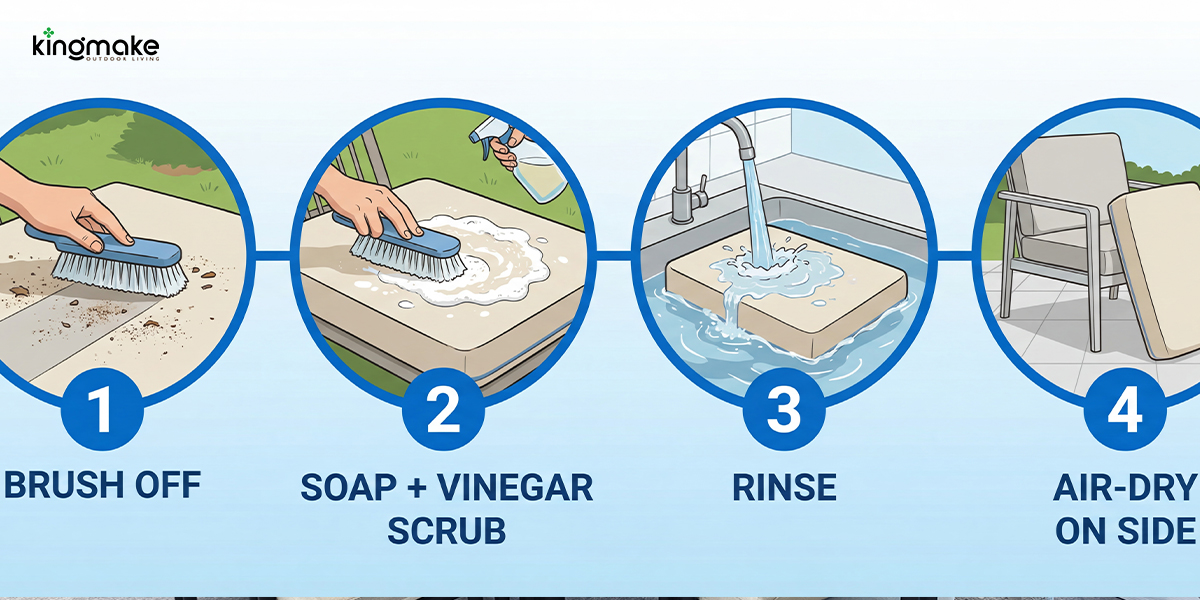
Take the cushions outside and lay them on a clean, dry surface like a driveway or patio. Avoid setting them on grass, which can transfer more dirt.
Use a soft brush to sweep off any loose dirt, dust, pet hair, or debris.
Rinse the cushions thoroughly with your garden hose to wet the fabric and loosen surface grime.
Mix half a cup of dish soap, one cup of white vinegar, and one gallon of warm water in a bucket. This combination is effective at cutting grease and neutralizing odors without damaging most fabrics.
Dip your brush or sponge into the solution and scrub the cushions from top to bottom, covering the entire surface on both sides.
For visible stains, apply a 50/50 mix of white vinegar and warm water directly to the spot. Let it sit for 15 to 20 minutes before scrubbing.
Rinse the cushions thoroughly with the garden hose until no soapy residue remains. Soap left in the fabric can attract more dirt over time.
Press out excess water with your hands or a clean towel. Then stand the cushions on their sides in a sunny spot to air-dry completely. Sunlight naturally kills bacteria and helps speed up drying.
Pro tip from Kingmake: Never put cushions back on your outdoor sofas or dining sets while they're still damp. Trapped moisture between the cushion and frame is one of the leading causes of mildew. How to Clean Outdoor Cushions with Mildew
Mildew is one of the most common problems homeowners face with outdoor cushions. It shows up as flat, powdery gray or white patches and often comes with a musty smell. Left untreated, it can spread and permanently stain the fabric — or even affect your health.
Here are three proven methods to tackle it.
Method 1: White Vinegar (Natural and Eco-Friendly)
White vinegar is mildly acidic and can kill up to 82% of mold species without damaging most fabrics. It's also inexpensive and safe for use around children and pets once dry.
Brush off loose mildew outdoors using a dry cloth or brush. Do this outside to avoid spreading spores indoors.
Mix equal parts distilled white vinegar and water in a spray bottle.
Spray generously over all affected areas.
Let the solution sit for 15 to 30 minutes.
Scrub with a soft-bristle brush, then rinse thoroughly with a garden hose.
Air-dry in direct sunlight — UV rays help destroy any remaining mold spores.
Method 2: Dish Soap and Bleach (For Tough Cases)
This method is best for white or colorfast fabrics only. Always test on a hidden area first.
Mix a quarter cup of mild dish soap with one cup of bleach per gallon of lukewarm water.
Rinse the cushion first to remove loose dirt.
Apply the solution with a sponge or brush, covering the entire surface.
Let it sit for 5 to 10 minutes.
Rinse very thoroughly with clean water.
Air-dry completely in the sun.
Important: Never mix bleach with ammonia-based cleaners. This creates toxic fumes.
Method 3: Borax Solution (For Stubborn Growth)
Borax is a powerful natural mineral that removes mildew and neutralizes odors effectively.
Mix one cup of Borax with a few squirts of dish soap in a bucket of cold water.
Wearing gloves, dip a brush into the mixture and scrub the cushion vigorously.
Let the solution sit on the fabric for 5 minutes.
Rinse with a garden hose at medium pressure.
Allow to dry in a sunny, ventilated spot.
Note: Borax is toxic if ingested. Keep it away from children and pets, and wear gloves during use.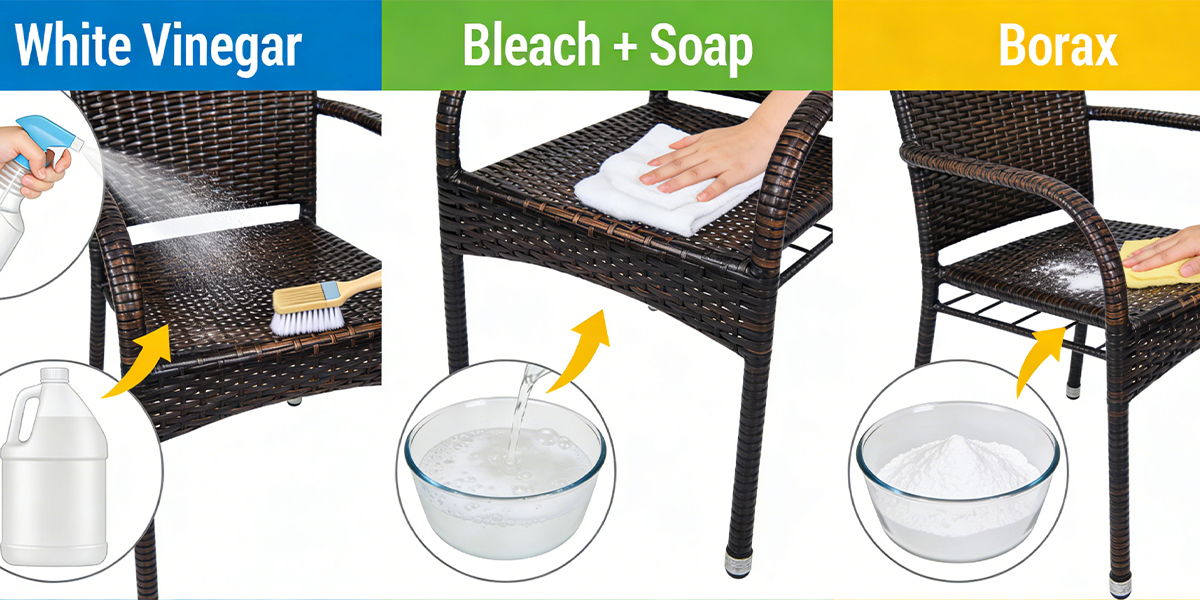
Cleaning Removable Cushion Covers: Machine Washing Made Easy
If your outdoor furniture cushions have removable zip-off covers, you're in luck. Washing them is much simpler.
Unzip the covers and shake out any loose debris outside.
Pre-treat any visible stains with a dab of dish soap or a vinegar and water spray. Let it sit for 10 minutes.
Place covers in the washing machine and select a gentle cold-water cycle.
Add your regular mild detergent. For mildew issues, pour one cup of distilled white vinegar into the fabric softener dispenser instead of detergent.
Skip the fabric softener — it can leave a residue that attracts dirt.
Once washed, hang covers to air-dry completely before placing them back on the cushion inserts. Machine drying on high heat can cause shrinkage or damage stitching.
Dealing with Specific Stains on Outdoor Cushions
Different stains need different approaches. Here's a quick reference:
Oil and Grease: Sprinkle baking soda or cornstarch on the stain and leave it for 30 minutes to absorb the oil. Brush it off, then gently scrub the area with dish soap and warm water using an old toothbrush. Rinse and air-dry.
Grass Stains: Mix a few drops of hydrogen peroxide with a tablespoon of baking soda to form a paste. Apply it to the stain, let it sit for 30 minutes, scrub, then rinse well.
Bird Droppings: Let the dropping dry fully, then use a spoon to lift it off gently. Blot the remaining stain with a mix of mild dish soap and water. Rinse and air-dry.
Tree Sap: Use a spoon to scrape off as much sap as possible. Then spray a 50/50 mix of warm water and white vinegar on the area, let it sit, and wipe away. For stubborn sap, dab with rubbing alcohol on a cloth.
How Often Should You Clean Outdoor Patio Cushions?
Consistent maintenance prevents stains and mildew from taking hold in the first place. As a general guide:
Weekly: Wipe down with a damp cloth to remove surface dust and pollen, especially in humid climates.
Monthly: Give them a rinse with a garden hose to clear any buildup.
Twice a year: Do a full deep clean using the methods above — once in spring and once before fall storage.
After heavy rain: Check for trapped moisture and allow cushions to dry fully before storing or covering them.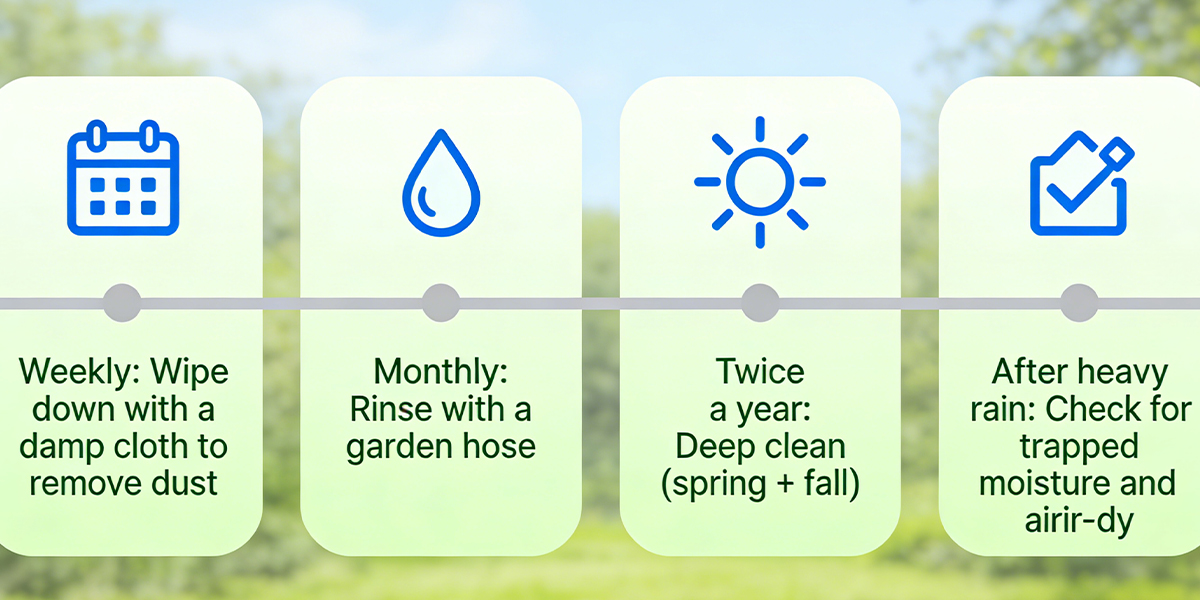
How to Keep Your Outdoor Cushions Clean Longer
Cleaning is easier when you're also preventing the problem. A few simple habits go a long way:
After cleaning, spray cushions with a fabric protector designed for outdoor use (such as a water and UV shield product). This helps repel moisture and stains.
Store cushions in a dry, ventilated space when not in use. Avoid plastic tarps that trap humidity — breathable storage bags or covers are much better.
Elevate cushions off the ground during rain to prevent pooling water.
Every few weeks, spritz cushions lightly with diluted white vinegar as a preventive treatment against mildew growth.
If you're also looking to upgrade the furniture underneath,
Kingmake's full product range includes outdoor sofas, dining sets, sun loungers, and daybeds built with aluminum frames, teak wood, and weather-resistant fabrics. Products designed from the ground up to handle real outdoor conditions.
When It's Time to Replace Instead of Clean
Sometimes, cushions are simply past the point of saving. If mildew stains persist after multiple thorough cleanings, or if the foam inside has broken down and no longer offers support, it's worth investing in replacements. When shopping, look for cushions made from solution-dyed acrylic, olefin, or polyester — fabrics that naturally resist moisture and mildew and hold up well to the elements.
Conclusion
Learning how to clean outdoor cushions doesn't have to be complicated. With the right tools and a bit of regular attention, you can keep your patio cushions looking fresh through every season. For everyday dirt, a simple soap and vinegar solution does the job well. For mildew, white vinegar or a diluted bleach mix gets results. And if your covers are removable, a gentle machine wash is one of the easiest options available.
The key is consistency. A quick wipe-down every week and a proper deep clean twice a year will extend the life of your cushions significantly and keep your outdoor space looking its best. Whether you're maintaining a cozy backyard patio or a large hospitality setup, the same principles apply: clean regularly, dry thoroughly, and store smartly.
Kingmake Outdoor Furniture has supported hospitality projects and homeowners across the globe for over 17 years with durable, beautifully designed outdoor pieces. Explore our collections at
cnkingmake.com and discover furniture built to last — and made to be enjoyed outdoors, season after season.


 Whatsapp
 sales@cnkingmake.com
 +8613925925021