
How to Build an Outdoor Kitchen: Layout, Materials, & Setup Expert Guide
Professional Design Strategies for High-End Hospitality Environments
Quick Summary / Key Takeaways
Start with a functional layout. Organize the kitchen into clear zones for cooking, preparation, cleaning, and storage. Separating hot, cold, wet, and dry areas improves workflow and keeps the space comfortable for both the cook and guests.
Choose weather-resistant materials designed for outdoor use. Durable materials such as powder-coated aluminum cabinetry, solid teak panels, and stone countertops like quartz or sintered stone maintain structural integrity and appearance even in humid or coastal environments.
Plan utilities carefully and install them professionally. Outdoor kitchens require properly routed gas or propane lines, potable water, drainage, and GFCI-protected electrical outlets. Ensuring these systems meet local building codes is essential for long-term safety and performance.
Use appliances built specifically for exterior environments. Outdoor grills, refrigeration units, and storage systems should be designed for open-air conditions, with corrosion-resistant components and consistent heat performance.
Create comfort through lighting and ventilation. Adequate task lighting and effective ventilation for grills help maintain a pleasant cooking environment, allowing the outdoor kitchen to function comfortably during evening gatherings and extended entertaining.
Introduction
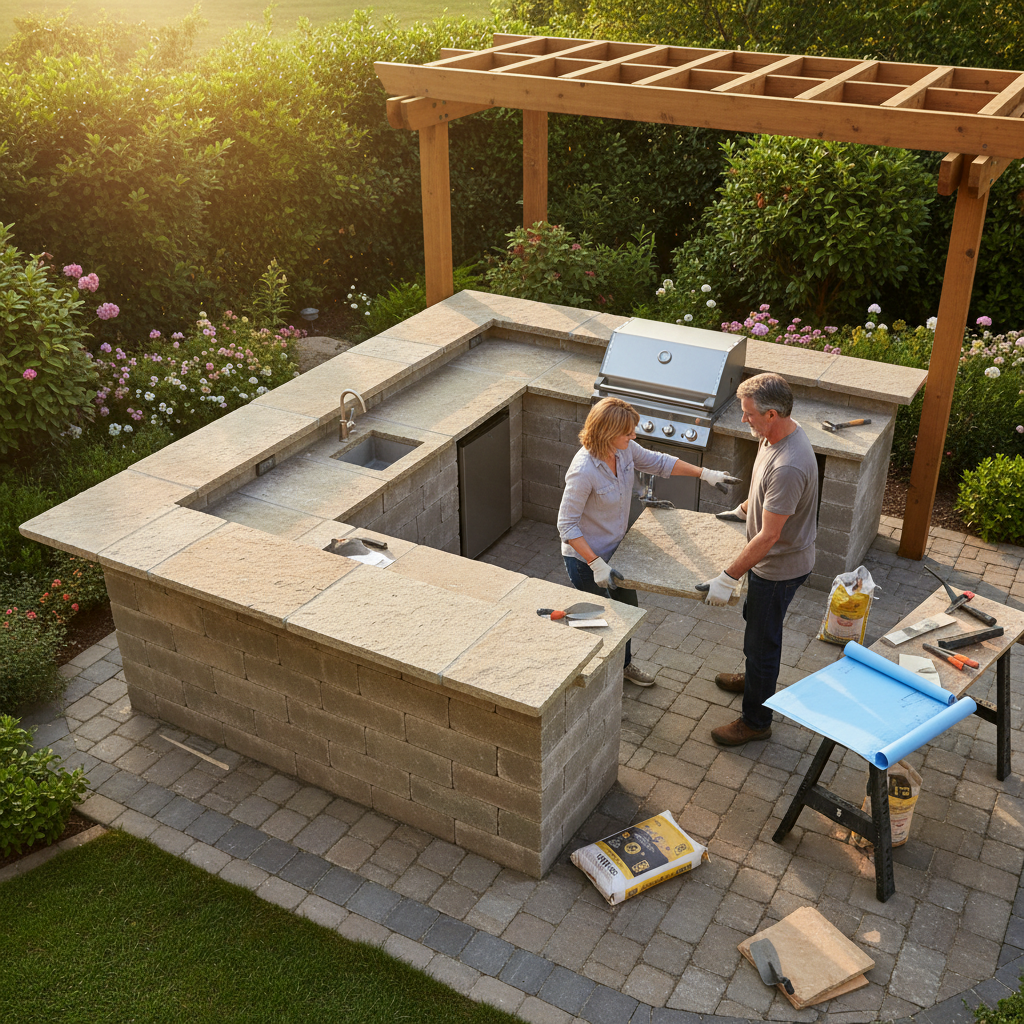
Creating an outdoor kitchen is about more than adding a grill to a patio. A thoughtfully designed outdoor kitchen defines a gathering space where cooking, dining, and social interaction come together in an open-air setting. Whether installed in a private garden, poolside terrace, or hospitality venue, a well-built outdoor kitchen combines practical workflow with durable materials that perform reliably in changing weather conditions.
Building an outdoor kitchen requires careful planning, from selecting the right location and layout to choosing materials that can withstand heat, moisture, and outdoor exposure. Cabinets constructed from powder-coated aluminum or solid teak, paired with weather-resistant stone countertops such as quartz or sintered stone, help maintain structural integrity and visual appeal over time. When combined with proper ventilation, safe utility connections, and efficient work zones, these materials support a kitchen environment that is both functional and refined.
This guide explains how to build an outdoor kitchen step by step, covering layout planning, durable material selection, and the infrastructure required for safe operation. Each section focuses on practical considerations that help create a kitchen capable of supporting daily use and outdoor entertaining. For projects that require professionally engineered cabinetry systems, modular layouts, or large-scale outdoor kitchens, Kingmake Outdoor Kitchens offers solutions designed for long-term durability, refined outdoor design, and reliable performance in hospitality and residential environments worldwide. Designed for hospitality. Built to perform outdoors.
Outdoor Kitchen Material Performance Comparison
| Material | Durability | Maintenance | Typical Application |
|---|---|---|---|
| Powder-Coated Aluminum | Very High | Low | Outdoor kitchen cabinet frames and modular structures |
| 304 Stainless Steel | High | Low | Cabinet doors, hardware, appliance components |
| Granite / Sintered Stone | High | Moderate | Outdoor kitchen countertops and food preparation surfaces |
| Solid Teak | High | Moderate | Premium cabinet panels and decorative outdoor kitchen finishes |
Typical Outdoor Kitchen Project Investment by Component
| Component | Entry-Level Setup | Mid-Range Setup | Premium Installation |
|---|---|---|---|
| Cabinet Framework | $1,500 – $3,000 | $4,000 – $7,000 | $10,000 – $15,000 |
| Stone Countertops | $1,000 – $2,500 | $3,000 – $6,000 | $7,000 – $12,000 |
| Appliances & Grill Systems | $2,500 – $5,000 | $6,000 – $12,000 | $15,000 – $25,000 |
| Professional Installation | $1,500 – $3,500 | $4,000 – $8,000 | $8,000 – $15,000 |
Outdoor Kitchen Installation Preparation Checklist
Confirm utility placement before installation. Verify that gas, water, drainage, and electrical lines are positioned according to the final outdoor kitchen layout and comply with local building and safety regulations.
Inspect the base structure or patio surface. Ensure the foundation, deck, or concrete slab can support the combined weight of cabinetry, appliances, and stone countertops used in the outdoor kitchen.
Check cabinet alignment and anchoring. Confirm that outdoor kitchen cabinets and structural frames are level and securely fixed before installing heavy countertop materials such as granite, quartz, or sintered stone.
Test gas and water connections. Inspect all gas fittings and water lines for leaks prior to completing the installation or finishing surrounding surfaces.
Outdoor Kitchen Maintenance and Operational Checklist After Installation
Clean stainless steel components regularly. Use a stainless-steel cleaner to remove grease, salt residue, and outdoor contaminants that may affect the finish of cabinet hardware or appliances.
Verify appliance performance. Check grills, refrigeration units, and cooking equipment to ensure they maintain proper temperatures for safe food preparation and storage.
Review maintenance procedures with staff or homeowners. Provide guidance on proper care for cabinetry materials, countertops, and outdoor appliances to ensure long-term durability.
Schedule seasonal inspections. Examine sealants, electrical connections, and exposed hardware periodically to identify weather-related wear and maintain safe operation of the outdoor kitchen.
Table of Contents
Section 1: OUTDOOR KITCHEN PLANNING AND LAYOUT DESIGN
Section 2: DURABLE MATERIALS FOR OUTDOOR KITCHEN CABINETS AND COUNTERTOPS
Section 3: UTILITIES, VENTILATION, AND INFRASTRUCTURE SETUP
Frequently Asked Questions
Section 1: OUTDOOR KITCHEN PLANNING AND LAYOUT DESIGN
FAQ 1: What is the first step in planning a professional outdoor kitchen layout?
The first step in planning a professional outdoor kitchen layout is defining the primary function of the space and the number of people it needs to serve comfortably. A residential patio kitchen designed for family gatherings requires a different layout than a hospitality installation used for frequent entertaining. At this stage, it is important to map the core kitchen zones: cold storage, preparation, cooking, and cleaning. Establishing these functional areas early helps create a logical workflow and ensures that cabinetry, appliances, and utilities are positioned efficiently from the beginning.
A well-organized layout also determines how outdoor kitchen cabinets, countertops, and appliances will be integrated into the space. Modular systems made from powder-coated aluminum or solid teak cabinetry with stone countertops provide flexibility during planning because modules can be arranged to support the workflow of each zone. Careful layout planning helps prevent costly structural adjustments later while ensuring the finished outdoor kitchen is practical, durable, and visually cohesive.
FAQ 2: How do you choose the best location for an outdoor culinary space?
The best location for an outdoor kitchen balances accessibility, ventilation, and comfort throughout the day. Position the kitchen close enough to the indoor pantry or main kitchen for convenient food transport, but far enough from seating areas and entryways to prevent smoke from drifting toward guests. Pay attention to prevailing wind direction and sun exposure, since these factors influence cooking comfort and how heat or odors move across the space. A location with partial natural shade or the option for overhead structures helps maintain a comfortable environment during peak cooking hours.
The layout should also support stable installation of outdoor kitchen cabinets, appliances, and utilities such as gas, water, and electricity. Placing the kitchen on a level patio, terrace, or reinforced outdoor surface ensures cabinetry systems and stone countertops remain properly aligned over time. Durable cabinetry materials such as powder-coated aluminum or solid teak, paired with weather-resistant stone countertops, help the kitchen perform reliably even in humid or coastal environments.
FAQ 3: Why is the work triangle concept important when building an outdoor kitchen?
The work triangle improves efficiency by positioning the sink, refrigerator, and grill within a triangular layout so the cook can move easily between preparation, storage, and cooking areas. This design principle reduces unnecessary movement and keeps the most frequently used stations within comfortable reach. In outdoor kitchens used for entertaining, it also helps prevent the chef from crossing paths with guests while food is being prepared and served.
A well-planned triangle also ensures there is adequate countertop space between each station for prep work and plating. Modular outdoor kitchen cabinets with integrated storage, stone countertops, and weather-resistant surfaces support this layout by keeping tools, ingredients, and appliances organized within each zone. When properly designed, the work triangle creates a balanced outdoor kitchen that is efficient, safe, and comfortable for both cooking and social gatherings.
Section 2: DURABLE MATERIALS FOR OUTDOOR KITCHEN CABINETS AND COUNTERTOPS
FAQ 4: Which materials are most durable for outdoor cabinetry in coastal areas?
In coastal environments, outdoor kitchen cabinets must withstand salt air, humidity, and constant UV exposure. Materials such as powder-coated aluminum, marine-grade stainless steel, and solid teak perform well in these conditions because they resist corrosion and moisture damage. Powder-coated aluminum frames are especially effective because the protective coating shields the metal from salt-induced oxidation, while teak naturally contains oils that help repel water and resist decay. These materials maintain structural integrity even in demanding seaside climates.
High-quality outdoor kitchen systems often combine aluminum or teak cabinetry with corrosion-resistant hardware and stone countertops such as quartz or sintered stone. This combination helps prevent rust, swelling, or surface deterioration while keeping the kitchen visually refined. Cabinets engineered for outdoor use also include sealed joints and waterproof construction to ensure reliable performance in environments exposed to ocean spray and seasonal temperature changes.
FAQ 5: What type of stone is recommended for high-traffic outdoor countertops?
For high-traffic outdoor kitchens, granite and quartzite are widely recommended because of their durability, heat resistance, and ability to withstand frequent use. Both stones are extremely dense and perform well in outdoor environments where surfaces may be exposed to hot cookware, food preparation, and natural debris. Compared with softer stones like marble, granite and quartzite are less likely to etch or stain when exposed to acidic ingredients such as citrus, vinegar, or wine.
Many modern outdoor kitchen systems also incorporate engineered materials such as quartz, sintered stone, or glass fiber reinforced concrete (GRC) for countertops. These surfaces provide strong resistance to UV exposure, temperature changes, and moisture while maintaining a refined appearance in outdoor dining areas. Choosing a honed or matte finish can further reduce glare in bright sunlight and help disguise minor surface marks from everyday use.
FAQ 6: How does 304-grade stainless steel compare to other metals for exterior use?
304-grade stainless steel is widely considered the standard for outdoor kitchen hardware and components because it provides a strong balance of corrosion resistance, durability, and clean appearance. The alloy contains a high percentage of chromium and nickel, which forms a protective oxide layer that helps prevent rust and surface deterioration when exposed to moisture and outdoor conditions. This makes it suitable for cabinet doors, drawer handles, and structural fittings used in outdoor kitchens that experience frequent temperature changes and humidity.
Lower-cost metals such as 430-grade stainless steel or untreated steel may appear similar at first but typically offer reduced corrosion resistance in exterior environments. Over time, these materials can discolor or develop surface rust when exposed to rain, salt air, or cooking moisture. Outdoor kitchen systems often combine powder-coated aluminum or solid teak cabinetry with 304 stainless steel hardware, creating a balanced structure that maintains durability, weather resistance, and a refined finish across long-term outdoor use.
Section 3: UTILITIES, VENTILATION, AND INFRASTRUCTURE SETUP
FAQ 7: What are the essential utility requirements for a fully functional outdoor kitchen?
A fully functional outdoor kitchen requires dedicated connections for gas, water, electricity, and drainage so cooking and preparation areas operate safely and efficiently. Gas or propane lines supply grills and cooktops, while potable water lines support sinks and food preparation. If a sink is installed, a proper drainage system must be included to handle wastewater. Electrical outlets should be GFCI-protected to prevent electrical hazards in outdoor environments and should be positioned strategically for appliances, lighting, and refrigeration.
Well-planned utility infrastructure also supports the performance of outdoor kitchen cabinetry and appliances. Modular outdoor kitchen cabinets built from powder-coated aluminum or solid teak often integrate spaces for grills, sinks, refrigeration units, and storage, allowing utilities to be routed neatly through the structure. Careful planning of these systems helps ensure the outdoor kitchen operates reliably while maintaining a clean and professional appearance in patios, garden kitchens, or hospitality dining areas.
FAQ 8: How do you ensure proper ventilation for outdoor grills under covered structures?
Proper ventilation for outdoor grills installed under pergolas, pavilions, or covered patios requires a high-capacity vent hood designed specifically for outdoor cooking. These ventilation systems typically require a higher CFM (cubic feet per minute) rating than indoor kitchen hoods, since outdoor grills generate more smoke, heat, and grease during high-temperature cooking. For effective smoke capture, the hood should extend at least 3–6 inches beyond the width of the grill on each side, ensuring that rising smoke and vapors are directed safely away from the cooking area.
Adequate ventilation protects both the cooking environment and surrounding structures. Without proper airflow, smoke and grease particles can accumulate under ceilings or pergolas, creating discomfort for guests and increasing maintenance on nearby surfaces. Outdoor kitchen layouts that incorporate durable cabinetry, stone countertops, and integrated grill modules benefit from well-planned ventilation, helping maintain a clean, comfortable space for open-air dining and entertaining.

 Whatsapp
 sales@cnkingmake.com
 +8613925925021