
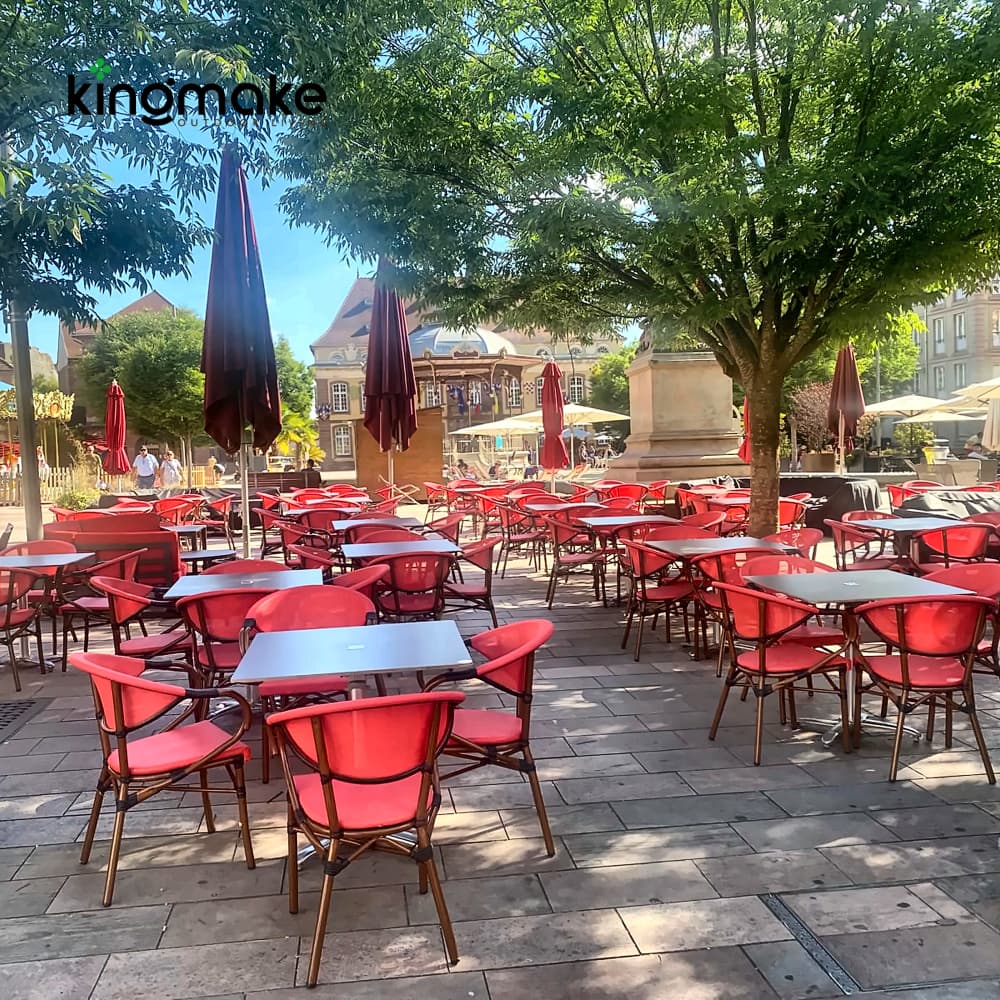
Restaurant Outdoor Furniture Project In A French City Center
A restaurant in a French city center recently completed an outdoor furniture upgrade with Kingmake Outdoor Furniture. The project covered bar seating, dining chairs, a teak sofa set, and offset umbrellas, all selected to handle daily outdoor service in a busy public square. Below is a record of how the order was discussed, produced, checked, and delivered, based on the actual project file.
How the Project Started
Out client first reached out with a general inquiry about outdoor seating for a restaurant terrace in the city center in France. From there, they worked directly with Kingmake sales representative Destiny to go through the project in detail. This stage covered the furniture styles that would suit the space, a full quotation, and then a long list of finishing choices: the powder coating color for every metal frame, the weaving material for the chairs and stools, the color of the dining chair mesh fabric, the size of the outdoor umbrellas, the color of the umbrella poles, and the paint color for the teak sofa set. Every one of these choices was confirmed with the client before production began, which is standard practice for a commercial order where consistency across dozens of pieces matters.
This planning phase, combined with production, quality checks, and packing, took about three months from the first inquiry to a finished, packed order ready for shipment.
Working through this many finishing decisions before production starts is a normal part of a commercial furniture order. A restaurant terrace is a single visual space, so the frame color, the weaving color, the seat fabric color, the umbrella pole color, and the sofa paint color all need to work together. Confirming each of these individually with the client, rather than assuming a standard combination, is what makes it possible to match the furniture to the restaurant's existing terrace design rather than the other way around.
What Was Supplied
The order included four main product lines, each matched to a different part of the restaurant's outdoor seating layout:
Bar sets (Zigold Collection KMD18010) — 15 sets. These are aluminum bar tables paired with wicker woven aluminum bar stools. The stools use a woven EQ-rope finish, which gives them a textured, natural look while keeping the frame lightweight and rust-resistant. Aluminum was chosen specifically because it holds up to repeated outdoor exposure without the maintenance that other metals need.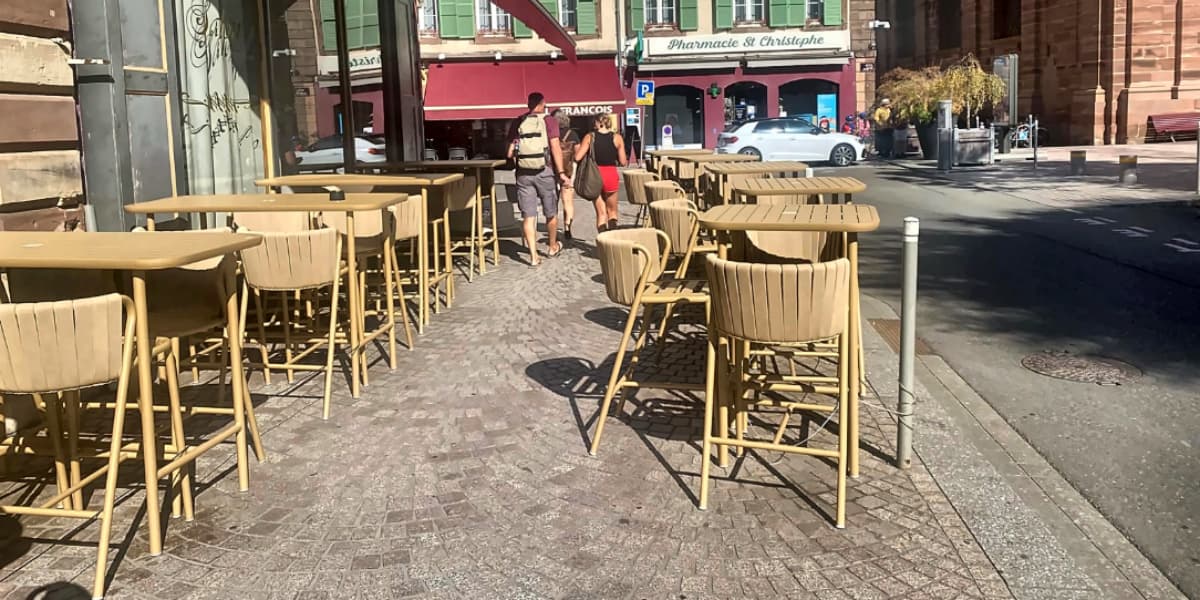
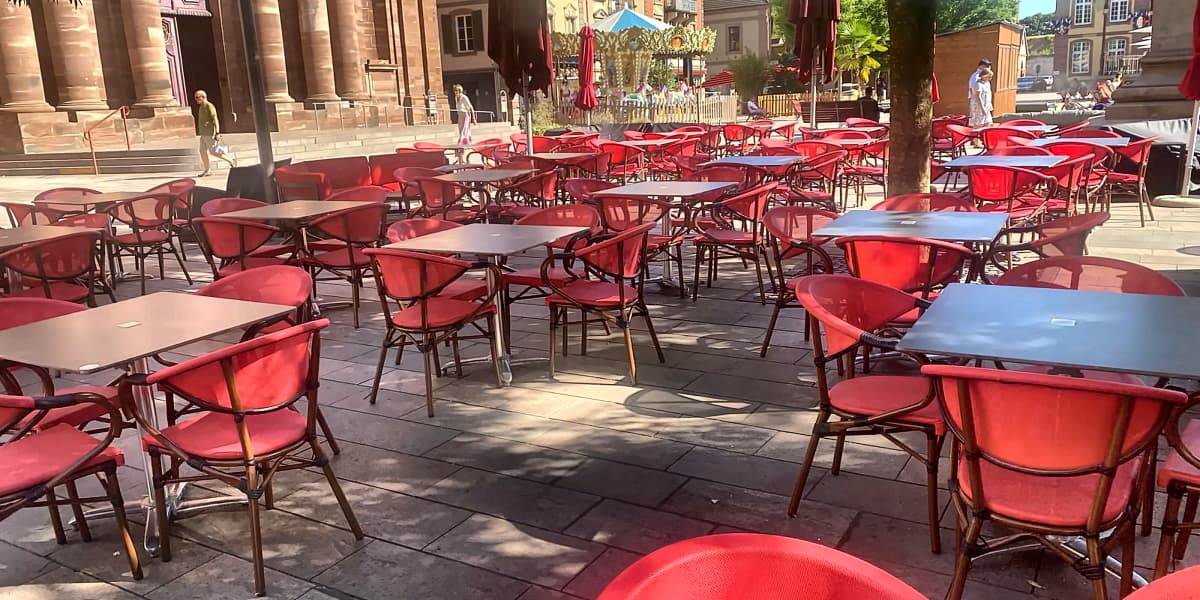
Dining chairs (model KM3116) — 120 pieces. This was the largest single item in the order by quantity, reflecting how many dining chairs a full-service restaurant terrace needs. The chairs use an aluminum frame paired with a mesh fabric seat and back, in a color confirmed with the client during the planning stage.
Teak sofa set (Kael series, model KM18027) — 2 sets. These sofa sets are made of premium solid teak wood framing, finished in a paint color the client selected to match the rest of the outdoor space. Teak was chosen for the lounge-style seating area because of its natural resistance to weather, which is a common reason teak is used for higher-end outdoor lounge furniture.
Offset umbrellas (model KM8204) — 20 pieces. These are 3-by-3-meter offset (side-pole) umbrellas, each fitted with a 100-kilogram water tank base for stability. An offset design was selected here because it lets the umbrella pole sit to the side of the seating area rather than through the middle of a table, which is a practical detail for restaurant terraces where guests need unobstructed table space.
Materials and Why They Were Chosen
The furniture in this order uses a mix of materials, each matched to the piece it was used on:
Aluminum frames for the bar tables, bar stools, and dining chairs. Aluminum does not rust, is lighter than steel, and holds a powder-coated finish well over time.
Woven rope detailing (EQ rope) on the bar stools, which adds a textured, café-style look without the maintenance issues of natural rattan.
Solid teak wood for the sofa set frames, chosen for the lounge furniture because of its natural durability outdoors.
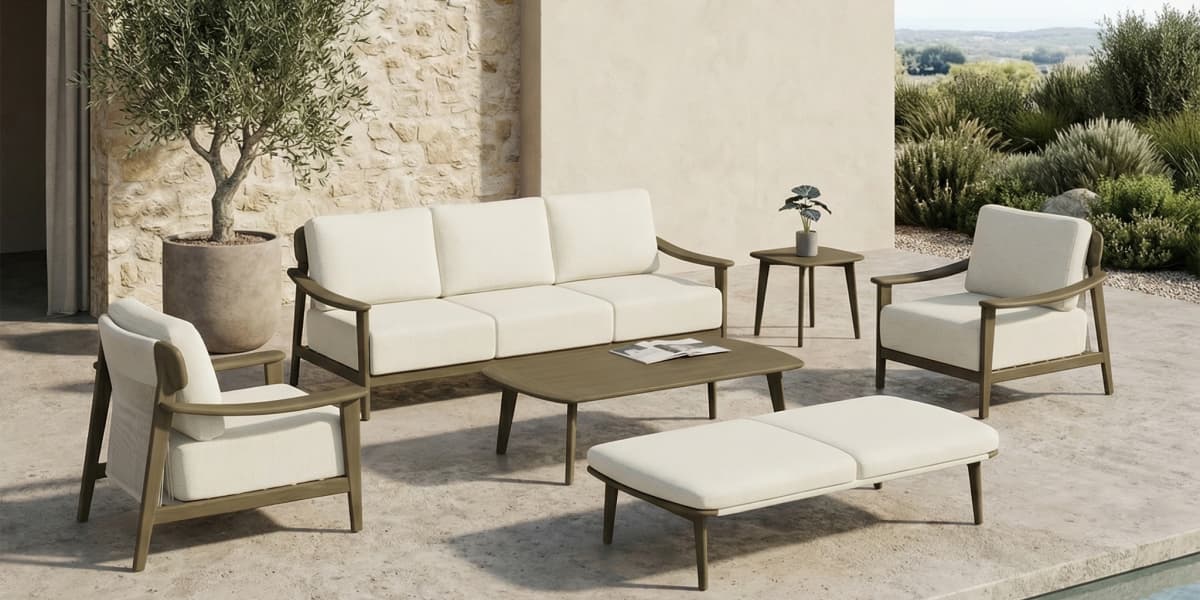
Mesh and fabric seating materials, including textilene mesh fabric and olefin fabric, both used for their resistance to sun and water exposure. A waterproof foam layer was added under the olefin fabric for extra comfort and moisture resistance.
Each material was matched to how that piece of furniture would actually be used. The bar stools and dining chairs are moved, stacked, and cleaned frequently during service, so their aluminum frames and mesh fabric were chosen for ease of cleaning and resistance to daily handling. The teak sofa set, by contrast, is a lounge piece that stays in place, so its solid wood frame and cushioned fabric were selected more for comfort and a warmer visual look, while still using a fabric and foam combination that can handle rain and sun.
Addressing Outdoor Use Challenges
A restaurant terrace in a public city-center square faces two main challenges: constant sun exposure and heavy day-to-day use from a high number of guests. Kingmake addressed both of these directly in the material choices:
For UV exposure, the powder-coated aluminum frames were paired with UV-resistant fabric on the seating surfaces. The powder coating itself was tested through a 1,000-hour salt spray test, which is a standard way to check how a coated metal surface holds up against corrosion over an extended period.
For daily commercial wear, the textilene mesh fabric was chosen specifically for its water and sun resistance, since restaurant seating gets used far more often than furniture in a private home. The olefin fabric and waterproof foam combination on the teak sofa set adds a layer of protection against both moisture and fading from repeated sun exposure.
These two issues — sun and heavy use — are the two most common reasons outdoor commercial furniture needs replacing early. A coating that holds up in a lab test but not in real conditions, or a fabric that looks good on day one but fades within a season, both end up costing a restaurant more in the long run through early replacement. Matching the coating and fabric choice to a public, high-traffic terrace, rather than to a lighter residential use case, is what this part of the project was built around.
Production and Quality Control Process
Once all the design details were confirmed, production moved through several stages, with a quality check built into each one:
Cutting and frame assembly. Aluminum and teak frame components were cut and assembled to the confirmed specifications.
First QC check. Frames were inspected before moving to the coating stage.
Powder coating. Metal frames received their confirmed color finish.
Second QC check. Coated frames were checked again after this stage.
Weaving. The rope weaving was applied to the bar stools.
Third QC check. Woven pieces were inspected after weaving was complete.
Throughout this process, the quality control team checked weight-bearing capacity, welding points, the evenness of the powder coating, the tightness of the weaving, screw and nail connection points, and the condition of the foot pads on each piece. Photos were taken at each QC stage and sent to the client for confirmation before the order moved to the next step. This kind of stage-by-stage photo confirmation is a practical way for an overseas client to track production progress without needing to visit the factory in person.
Checking these specific points matters for restaurant furniture in particular, because these pieces get moved and stacked daily by staff, not occasionally by a homeowner. A loose weld, an uneven coating, or a worn foot pad that would go unnoticed on furniture used a few times a month becomes a visible problem within weeks on a busy commercial terrace. Splitting the QC checks across three separate stages, rather than one final check at the end, makes it possible to catch an issue at the frame stage before it is coated or woven over, when it is still easy to fix.
Packing and Shipping
Once every piece passed final inspection, the furniture was packed with pearl foam on the inside and kraft paper on the outside. This two-layer method protects the powder-coated finish and woven surfaces from scuffing during transit, which matters for aluminum and teak furniture traveling by sea freight from China to France.
Project Outcome
The order was completed and shipped within the three-month project window described above. Since delivery, the client has been in contact with Kingmake again, this time discussing furniture details for a second restaurant location. A returning client working on a follow-up project is one of the more direct indicators that the first order met their expectations for quality and service, and it reflects the kind of ongoing relationship Kingmake aims to build with hospitality clients rather than a single one-time transaction.
Common Questions for Similar Restaurant Terrace Projects
How long does a project like this usually take? In this case, from the first inquiry to a packed, ready-to-ship order, the process took about three months. Most of that time was split between the design and finishing decisions at the start and the multi-stage production and QC process described above.
Why use different materials for different pieces instead of one material for everything? Because each piece is used differently. Bar stools and dining chairs are handled constantly, so a lighter, easy-to-clean aluminum frame works well. A sofa set that stays in one lounge area can use a heavier, more traditional material like teak without the same handling concerns.
Why does the umbrella use a water tank base instead of a fixed pole? A 100-kilogram water tank base allows the umbrella to be repositioned or removed without construction work, which is useful for a terrace layout that may need to change with the seasons or with different events.
What This Project Shows
This project is a useful reference for anyone sourcing outdoor furniture for a restaurant, café, or similar hospitality space that operates in a busy outdoor setting. A few points worth noting:
Mixing materials by furniture type — aluminum for high-use bar and dining seating, teak for lounge seating — lets a project balance cost, weight, and appearance across different parts of a space.
Offset umbrellas with a weighted base are a practical choice for table layouts where a center pole would get in the way of service.
A structured QC process, with photo confirmation at each stage, gives a client visibility into production even when they are sourcing furniture from overseas.
Salt spray testing and UV-resistant fabric selection are concrete, measurable ways to address the two biggest risks facing outdoor commercial furniture: corrosion and sun damage.
If you are planning outdoor furniture for a restaurant, hotel terrace, or similar commercial space and want to discuss materials, quantities, or finishing options, Kingmake's team can walk through the same kind of planning process described in this project — from initial styling and color decisions through to production, quality checks, and packing for shipment.
 Whatsapp
 sales@cnkingmake.com
 +8613925925021