
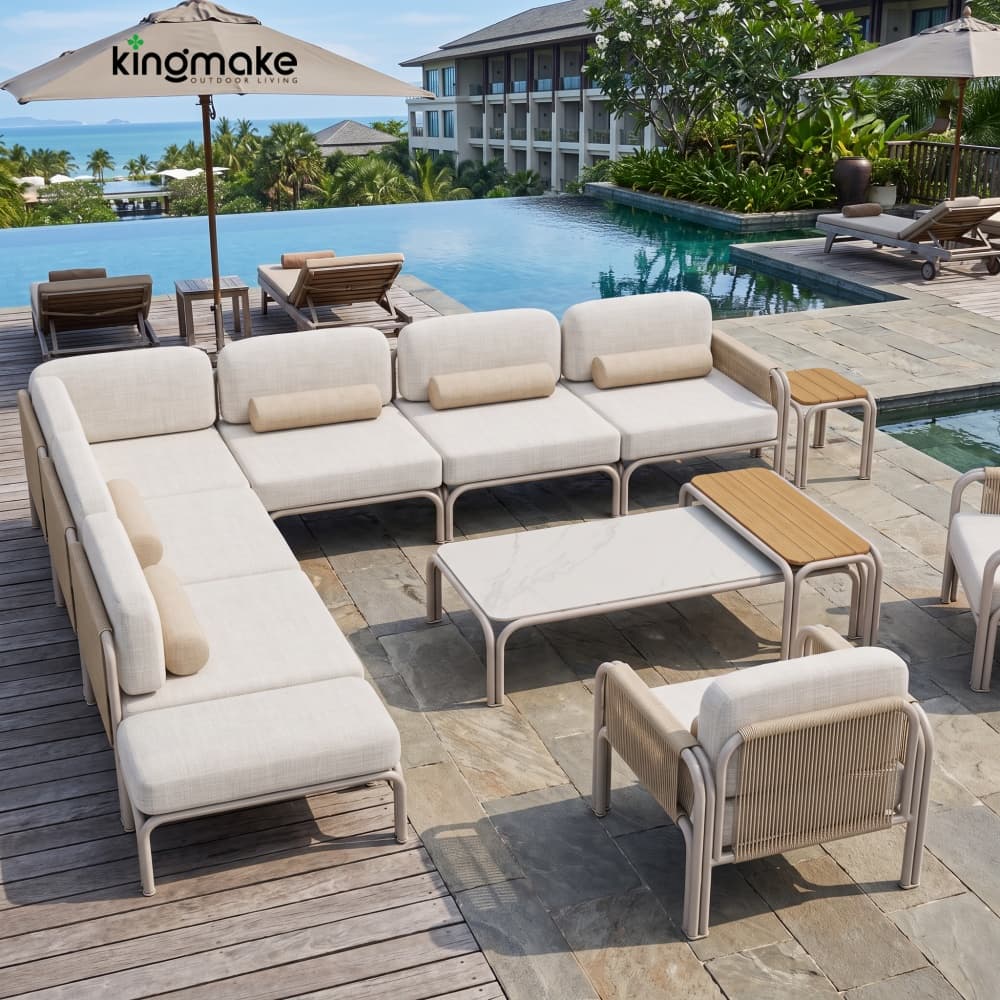
Patio, Deck & Pool Deck Furniture Ideas for Every Outdoor Space
Outdoor living space is no longer an afterthought in hospitality and residential design. Hotels are expanding rooftop lounges, resorts are upgrading poolside seating, and developers are treating patios and decks as revenue-generating amenities rather than empty concrete. For procurement managers and designers, this shift raises practical questions: which patio furniture ideas actually hold up under commercial use, how do you plan a deck layout that serves large guest volumes, and which materials balance upfront cost against years of weather exposure? This guide walks through patio, deck and pool deck furniture ideas by space and style, with the material and supplier considerations that matter most before you place an order.
Patio Furniture Ideas by Style — Modern, Coastal & Resort-Inspired
Patio furniture ideas generally fall into three commercial styles: modern minimalist, coastal, and resort-inspired. Each style signals a different guest experience, and each has practical implications for procurement.
Modern minimalist patios favor clean-lined aluminum frames, low-profile seating, and neutral fabric tones.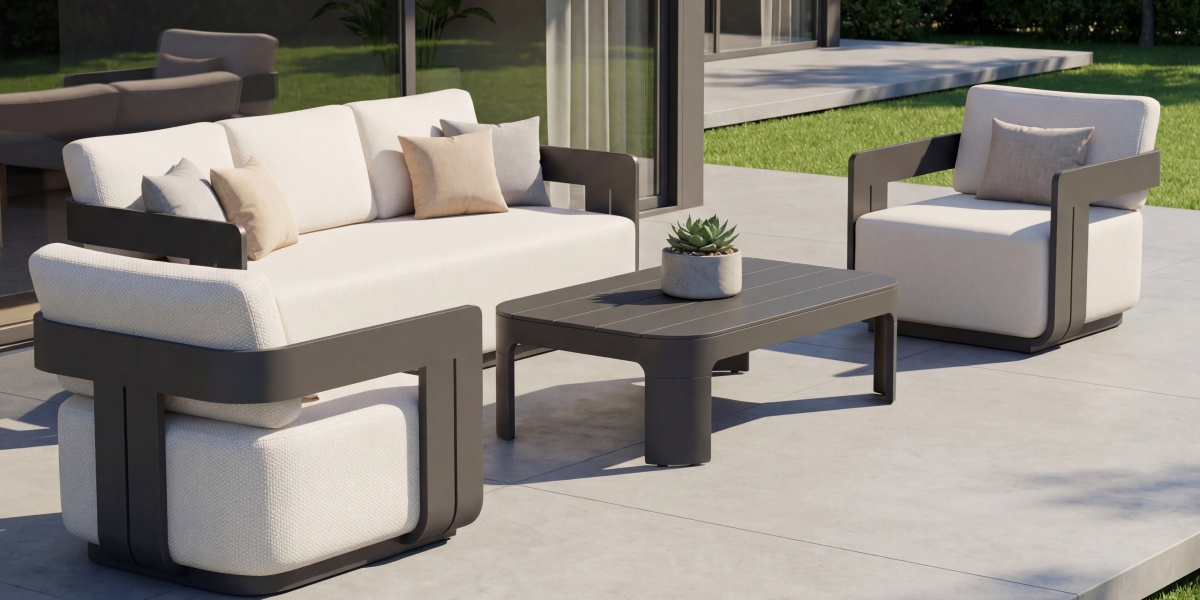 This style photographs well for marketing and suits boutique hotels and urban rooftop bars where space is limited. Coastal-style patios lean on lighter woven textures, whites and blues, and pieces that feel breezy without sacrificing durability — a good fit for beachfront properties and seaside restaurants. Resort-inspired patios combine deep-seating outdoor sofas, teak accents, and layered textiles to create a lounge-like atmosphere for guests staying longer.
This style photographs well for marketing and suits boutique hotels and urban rooftop bars where space is limited. Coastal-style patios lean on lighter woven textures, whites and blues, and pieces that feel breezy without sacrificing durability — a good fit for beachfront properties and seaside restaurants. Resort-inspired patios combine deep-seating outdoor sofas, teak accents, and layered textiles to create a lounge-like atmosphere for guests staying longer.For hospitality outdoor furniture programs, mixing an outdoor sofa collection with matching outdoor chairs keeps a cohesive look across lobby patios, restaurant terraces, and event lawns. Many operators reviewing broader hospitality outdoor furniture programs find that standardizing on one style family across properties simplifies future reordering and warranty management, which matters more to a procurement team than a single striking photo.
Outdoor Furniture Ideas for Balconies, Gardens & Rooftops
Beyond the traditional patio, outdoor furniture ideas need to scale down for balconies and up for gardens and rooftops, each with its own space and weight constraints.
Balconies call for compact, foldable, or stackable pieces that don't overwhelm a small footprint — think bistro-style seating or slim daybeds sized for one or two guests. Garden areas allow more flexibility, supporting modular sofa arrangements, dining sets for al fresco events, and shade structures like a patio umbrella to manage sun exposure across the day. Rooftops introduce a different challenge entirely: wind load, weight restrictions on the structural slab, and UV exposure that is often more intense than at ground level.
For rooftop and garden projects, the full Kingmake product range gives designers a single source for coordinated seating, umbrellas, and accessories, which reduces the number of vendors a procurement team needs to manage and helps keep warranty terms and lead times consistent across a project.
Deck Furniture Ideas — Layouts for Small & Large Decks
Deck furniture ideas depend heavily on the size and function of the deck itself. A small residential-style deck attached to a boutique guesthouse needs a different layout than a large hotel deck built for daily turnover of dozens of guests.
Small decks (under 200 sq ft) work best with a compact two- or three-seat arrangement, a low coffee table, and one or two accent chairs. Avoid oversized sectional pieces that block walking paths. Large decks (over 500 sq ft) support zoned layouts — separate lounge, dining, and shade areas — which allow a property to serve multiple guest groups at once without crowding. For large commercial decks, spacing furniture in clusters rather than rows also improves both flow and the perceived privacy of each seating group.
Material selection is just as important as layout on a deck, since decks are frequently exposed to standing water, foot traffic, and cleaning chemicals. For a deeper look at spacing, traffic flow, and zoning strategies, see our extended guide on deck furniture layout ideas, which builds directly on the material comparisons in this article. Projects with heavier daily use should also review our deck furniture case studies for real installation examples.
Pool Deck Furniture Ideas — Materials & Layouts for Poolside Areas
Pool deck furniture ideas carry the strictest material requirements of any outdoor category. Chlorine, saltwater, sunscreen residue, and constant moisture accelerate wear on furniture that isn't specifically built for poolside conditions.
For pool decks, HDPE (high-density polyethylene) lounge chairs and aluminum-framed loungers are the two most common commercial choices, since both resist moisture damage and require minimal upkeep between guest turnovers. Layout-wise, sun loungers are typically arranged in rows facing the water with clear walking aisles, 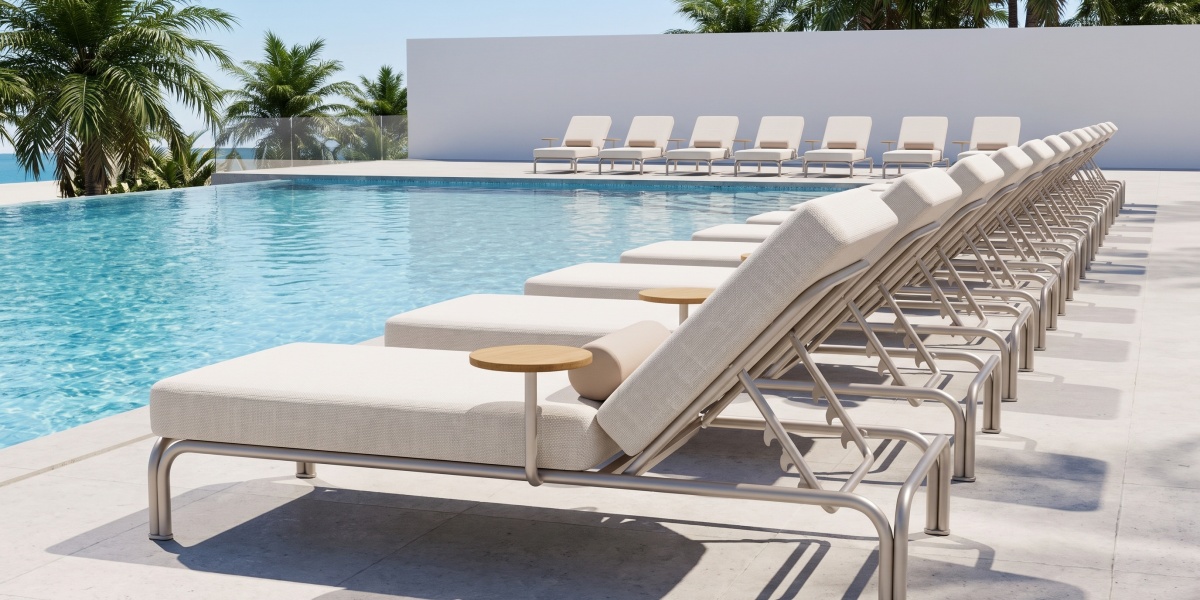 while a smaller cluster of shaded seating near the pool bar or cabana area gives guests a place to rest out of direct sun. Umbrella spacing should account for shadow movement across the day so seating stays shaded during peak hours.
while a smaller cluster of shaded seating near the pool bar or cabana area gives guests a place to rest out of direct sun. Umbrella spacing should account for shadow movement across the day so seating stays shaded during peak hours.Hotels and resorts managing high guest turnover often standardize on HDPE for poolside furniture specifically because it tolerates constant wet-dry cycles better than most woven materials. You can review poolside-specific projects through our deck furniture and HDPE outdoor furniture galleries for material and layout references from completed hospitality installations.
Mixing Materials — Combining Teak, Aluminum & Wicker on One Patio
One question procurement teams ask often: can teak, aluminum, and wicker furniture be combined on the same patio without looking mismatched? The answer is yes, and mixing materials is actually a common approach in resort-inspired design, as long as the combination is planned rather than accidental.
A practical approach is to anchor the space with one dominant material — teak dining tables, for example — and use aluminum or wicker seating as a complementary accent. Aluminum frames bring a lighter, more modern visual weight and require the least maintenance of the three. Teak ages into a natural silver-gray patina and offers exceptional strength for high-traffic dining areas. Wicker and rattan-style weaves add texture and a more relaxed, resort feel, and synthetic versions now perform well in humid or coastal climates.
| Material | Best For | Maintenance | Typical Lifespan (Commercial Use) |
| Teak Wood | Dining sets, high-traffic patios | Occasional oiling or allow natural graying | 15–25 years |
| Aluminum | Modern patios, rooftops, pool decks | Low; occasional cleaning | 10–20 years |
| Synthetic Wicker/Rattan | Lounge seating, resort-style patios | Low; wipe down regularly | 8–15 years |
| HDPE | Pool decks, high-moisture areas | Very low; hose-down cleaning | 10–20 years |
For sourcing guidance on each material, our project pages cover teak outdoor furniture, wicker and rattan patio furniture, and aluminum patio furniture in more detail, including finish options and OEM customization for each material category.
Kingmake Collections to Bring These Ideas to Life
Turning these patio, deck, and pool deck furniture ideas into an actual procurement plan is easier with a manufacturer that produces across material categories under one roof. Kingmake's collections are organized to match the layouts and styles described above, so a design concept can move directly into a bill of materials without switching suppliers mid-project.
For lounge and lobby patios, the outdoor sofa collection covers modular and fixed configurations in aluminum and teak frames. Dining and bar areas are supported by the outdoor chair range, available in stackable and fixed formats for restaurants and event lawns. Poolside programs typically draw from the sun loungers line, built in both aluminum and HDPE for high-turnover resort use, while resort-style relaxation areas are often finished with an outdoor daybed as a signature piece.
As a custom outdoor furniture and OEM outdoor furniture manufacturer, Kingmake also supports fabric, frame color, and dimension customization for distributors and hospitality brands ordering at wholesale outdoor furniture volumes, so a property's exact style — modern, coastal, or resort-inspired — can be matched consistently across multiple locations.
What to Evaluate Before Ordering Commercial Outdoor Furniture
Before finalizing a patio, deck, or pool deck furniture order, procurement teams should confirm the following:
Material suitability for the site's climate and moisture exposure (poolside, coastal, or covered patio)
Frame warranty terms and expected lifespan under daily commercial use, not residential estimates
Lead times against your project's construction or renovation schedule
Customization options for fabric, color, and dimensions to match brand standards
Minimum order quantities and pricing tiers for multi-property or distributor purchasing
Sample and quality control process before full production begins
Shipping and logistics support, including container loading and delivery documentation
After-sales support for replacement parts, covers, and reordering
Get a Custom Quote for Your Outdoor Furniture Project
Every patio, deck, and pool deck project comes with its own timeline, budget, and style requirements, and a manufacturer that understands commercial outdoor furniture can help translate a design concept into a realistic production plan. Kingmake works directly with hotel groups, resort operators, distributors, and developers on projects ranging from single-property refreshes to multi-site rollouts, supported by in-house R&D, customization, and quality control. To see how these capabilities apply to larger installations, review our commercial outdoor furniture project portfolio, or reach out with your space dimensions and style preferences for a tailored quote.
FAQ about Patio Furniture Ideas
What furniture works best for a small patio?
Compact, multi-functional pieces work best — stackable chairs, a small bistro-style dining set, or a slim two-seat sofa. Avoid bulky sectionals that restrict movement, and choose lighter aluminum frames if the furniture needs to be rearranged often.
How do I furnish a pool deck for a hotel or resort?
Prioritize moisture-resistant materials like HDPE or aluminum, arrange sun loungers in clear rows facing the water, and add shaded seating clusters near cabanas or the pool bar. Umbrella placement should account for sun movement throughout the day.
What's the difference between patio, deck and pool deck furniture?
Patio furniture generally sits on a ground-level paved or covered area and covers a wide range of styles. Deck furniture is designed for elevated wooden or composite platforms, often with more structural and weight considerations. Pool deck furniture is a specialized subset built specifically to resist chlorine, moisture, and frequent cleaning.
Can I mix materials like teak and aluminum on one deck?
Yes. A common approach is to use one material as the dominant tone, such as teak for dining tables, and a secondary material like aluminum or wicker for seating accents. This creates visual variety without looking mismatched.
How long does commercial outdoor furniture typically last?
Lifespan varies by material and use intensity. Aluminum and HDPE pieces generally last 10 to 20 years in commercial settings, while quality teak can last 15 to 25 years with minimal maintenance. Actual lifespan also depends on climate exposure and maintenance routines.
Does Kingmake offer OEM or custom outdoor furniture for distributors?
Yes. Kingmake provides OEM and ODM services including fabric, frame color, and dimension customization, along with wholesale pricing tiers for distributors, importers, and hospitality brands ordering across multiple properties.
Conclusion
Choosing the right patio, deck, or pool deck furniture comes down to matching material, layout, and style to how a space is actually used. Modern, coastal, and resort-inspired patios each call for different furniture choices, while decks and pool decks demand materials that hold up against moisture, sun, and heavy foot traffic. Mixing materials like teak, aluminum, and wicker can work well when planned deliberately rather than left to chance.
For hotel procurement teams, distributors, and developers, the real differentiator isn't a single furniture piece but a supplier who can deliver consistent quality, realistic lead times, and customization across an entire project or portfolio. With more than 18 years of experience across R&D, manufacturing, and global delivery, Kingmake Outdoor Furniture supports hospitality and commercial projects from initial concept through production, helping procurement teams turn patio, deck, and pool deck furniture ideas into finished, guest-ready spaces.
 Whatsapp
 sales@cnkingmake.com
 +8613925925021