For hotel procurement managers and resort developers sourcing wood patio furniture at scale, material selection is rarely just an aesthetic decision. It affects lifecycle cost, warranty claims, guest satisfaction, and how quickly a project can be furnished before opening day. Acacia wood has become one of the most requested materials for wooden outdoor furniture because it offers a warm, natural look at a lower price point than teak. But is it actually durable enough for commercial outdoor use? This guide breaks down the real pros, cons, and maintenance demands of acacia so buyers can make an informed sourcing decision.
What Is Acacia Wood?
Acacia is a dense hardwood harvested from fast-growing acacia trees, widely used today in wood outdoor furniture manufacturing across Asia. It has a tight grain, attractive color variation ranging from golden brown to deep amber, and a natural oil content that gives it some inherent resistance to moisture. Compared to slower-growing hardwoods, acacia reaches maturity relatively quickly, which keeps raw material costs more stable and supports consistent supply for large wholesale outdoor furniture orders. This makes it a practical option for buyers who need reliable volume without long lead-time fluctuations.
Pros of Acacia Wood Outdoor Furniture
Cost efficiency at scale. Acacia typically costs less than teak while still delivering a premium, natural-wood appearance, which helps hospitality buyers manage furnishing budgets across large room counts or outdoor common areas.
Strong natural density. As a hardwood, acacia resists dents and everyday wear better than softer wood alternatives, making it suitable for high-traffic hotel outdoor furniture applications such as lobbies, terraces, and pool decks.
Attractive grain and finish options. Acacia accepts stains and oil finishes well, giving architects and designers flexibility to match furniture tone to a property's overall design language.
Good availability for OEM and custom orders. Because acacia is widely cultivated, manufacturers can typically support OEM outdoor furniture and custom outdoor furniture programs without the extended sourcing delays sometimes seen with slower-growing hardwoods.
Cons & Maintenance Requirements
Acacia is not without trade-offs, and buyers should factor these into total cost of ownership rather than upfront price alone.
Requires periodic oiling. Left untreated, acacia can dry out, fade, or develop surface cracks under prolonged sun and moisture exposure.
Less naturally weather-resistant than teak. Acacia contains less natural oil than teak, so it depends more heavily on applied finishes for long-term protection.
Quality varies by grade and kiln-drying process. Poorly dried acacia is more prone to warping, so supplier quality control matters significantly.
Shorter expected lifespan in harsh climates compared to premium teak, particularly in coastal or high-humidity resort environments without regular upkeep.
For procurement teams, this means acacia furniture should come with a clear maintenance plan communicated to facilities staff, especially for large-scale commercial outdoor furniture deployments where consistent upkeep across hundreds of pieces can be operationally challenging.
Acacia vs Teak: Which Should You Choose?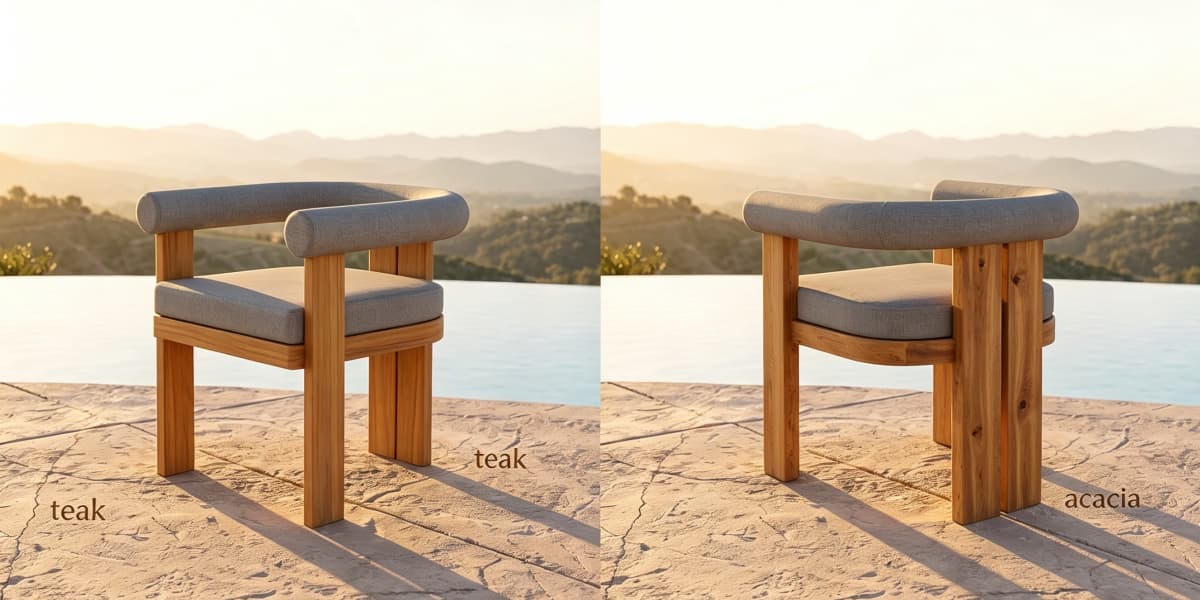
| Factor | Acacia Wood | Teak Wood |
| Upfront cost | Lower | Higher |
| Natural oil content | Moderate | High |
| Maintenance frequency | Annual oiling recommended | Can be left untreated or oiled less often |
| Weather resistance | Good with upkeep | Excellent, naturally weather-resistant |
| Expected outdoor lifespan | 5–10 years with care | 15–25+ years |
| Best fit | Budget-conscious projects, seasonal use | Long-term hospitality investments, coastal resorts |
If your project timeline favors lower upfront capital expenditure and furniture will receive regular maintenance, acacia is a sound choice. If the priority is minimizing long-term replacement cycles for teak wood outdoor furniture installations in demanding coastal or year-round climates, teak generally delivers stronger ROI. Many developers evaluating teak wood patio furniture for flagship properties choose to reserve teak for high-visibility areas and use acacia for secondary or seasonal spaces.
Best Uses for Acacia Wood Furniture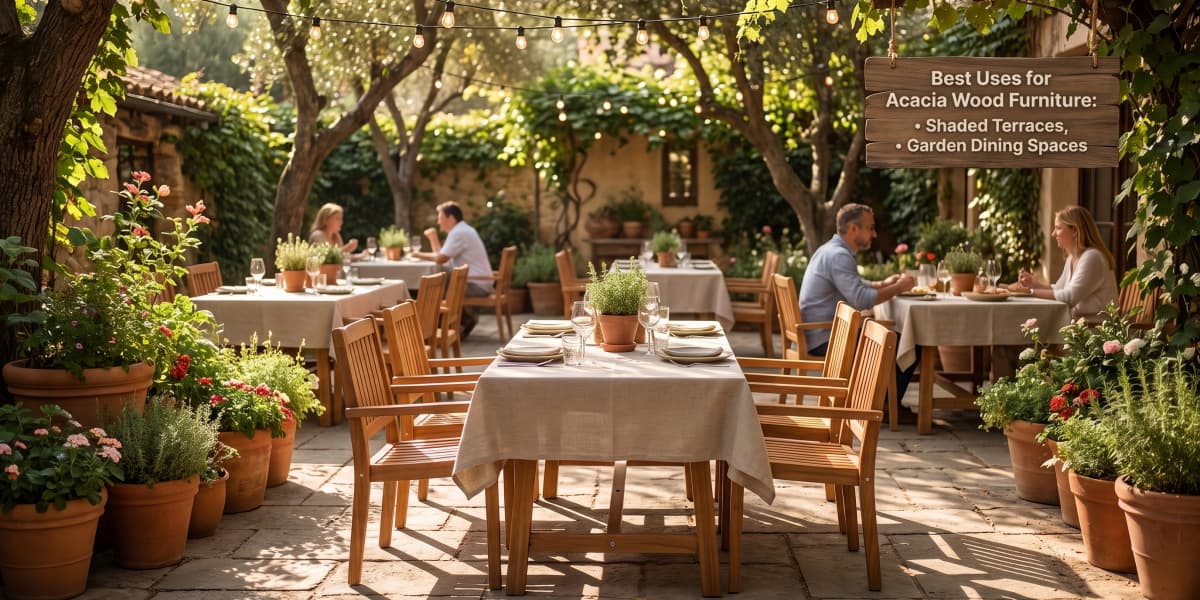
Acacia performs best in moderate climates and covered or semi-covered outdoor areas such as shaded terraces, garden dining spaces, and indoor-outdoor lounges. It is also a strong fit for resort furniture programs that refresh furniture on a shorter renovation cycle, since acacia's lower cost supports more frequent replacement without major budget strain. For restaurants and boutique hospitality venues, acacia dining sets and chairs offer an authentic wood aesthetic that aligns well with hospitality outdoor furniture design trends emphasizing natural, warm materials.
Checklist: What to Evaluate Before Ordering Commercial Outdoor Furniture
Before placing a bulk order, procurement teams should confirm:
Wood moisture content and kiln-drying certification from the manufacturer
Finish type and recommended maintenance schedule
Warranty terms covering cracking, warping, or fading
Whether the supplier offers acacia wood outdoor furniture alongside teak alternatives for mixed-material projects
Production capacity and lead times against your project's opening date
Sample approval process before full production
Packaging and shipping protection for long-distance delivery
Buyers sourcing across multiple product categories may also want to review options in
wicker and rattan patio furniture as a complementary material for mixed-material outdoor collections.
Working With an Experienced Manufacturer
Material performance ultimately depends on manufacturing quality as much as the wood species itself. Kingmake Outdoor Furniture has supplied
wood outdoor furniture and
outdoor wood furniture collections to hotels, resorts, and commercial developments for more than 18 years, offering both acacia and teak options with full OEM and ODM customization. Buyers evaluating suppliers for large-scale projects can review examples across
hospitality outdoor furniture projects,
hotel furniture installations, and
commercial outdoor furniture programs to understand how material choice is applied across different project types. Restaurant and food-service buyers can also explore
restaurant outdoor furniture solutions built for high-turnover, high-traffic environments.
Conclusion
Acacia wood offers hospitality buyers a practical balance of cost, appearance, and durability, making it a reasonable choice for many
wood patio furniture projects, particularly where budgets are tighter or renovation cycles are shorter. For long-term coastal installations or flagship properties, teak remains the stronger investment. The right decision depends on climate, maintenance capacity, and project lifespan expectations rather than price alone. With nearly two decades of manufacturing experience across
wooden patio furniture,
wood for outdoor furniture, and full OEM support, Kingmake helps procurement teams and developers match the right material to the right project, backed by consistent quality control and reliable global delivery. Explore the full
product range or visit
Kingmake Outdoor Furniture to discuss a custom sourcing plan.
FAQ
Does acacia wood furniture need yearly oiling?
Yes, most manufacturers recommend oiling acacia furniture at least once a year to prevent drying, fading, and surface cracking, especially in sunny or high-humidity climates.
Is acacia wood furniture waterproof?
No. Acacia is moisture-resistant to a degree but not fully waterproof. Proper sealing and finish maintenance are needed to protect it from prolonged water exposure.
How long does acacia outdoor furniture last?
With regular maintenance, acacia outdoor furniture typically lasts around 5 to 10 years, depending on climate exposure and finish quality, compared to 15 years or more for well-maintained teak.
Is acacia or teak better for coastal resorts?
Teak is generally better for coastal environments due to its higher natural oil content and superior long-term weather resistance, though acacia can still perform well in covered or shaded areas.
Can acacia wood furniture be customized for hotel branding?
Yes. Many manufacturers, including Kingmake, offer OEM and custom finishing options for acacia furniture, including stain color matching and design adjustments for hospitality branding requirements.
Is acacia wood furniture suitable for large hotel projects?
It can be, particularly for budget-tier properties or shaded outdoor areas. For high-exposure or long-term installations, many developers pair acacia with teak based on area-specific needs, as seen in various
teak outdoor furniture projects.


 Whatsapp
 sales@cnkingmake.com
 +8613925925021