
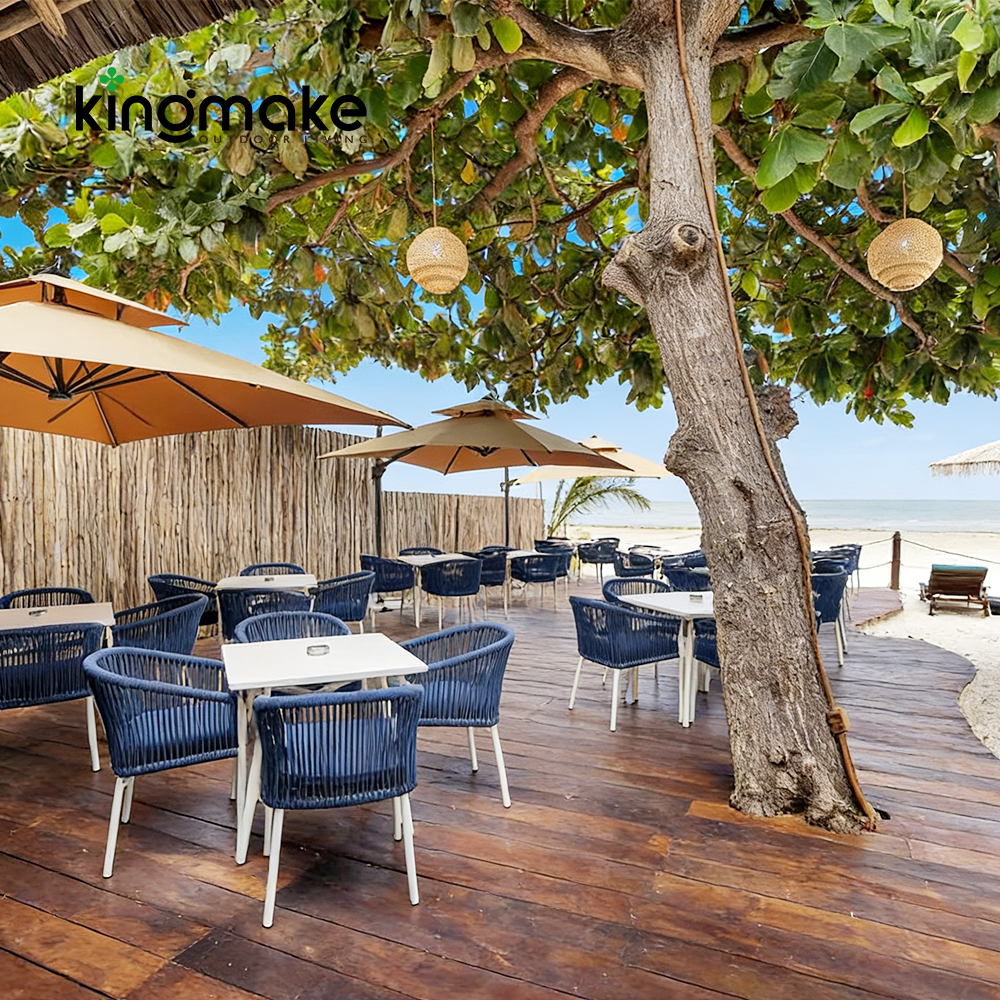
Wind-Resistant Patio Umbrellas for Coastal Hotels
Coastal patios look effortless when they’re done right—crisp shade over lounge seating, a clean pool deck layout, and umbrellas that stay steady even when the breeze picks up. But anyone who manages a beachside hotel, resort, or restaurant knows the truth: coastal wind is not “normal wind.” It’s persistent, it shifts quickly, and it can turn an under-specced umbrella into a safety risk in seconds.
A wind-resistant umbrella is not just a stronger canopy. It’s a system: the right canopy design, the right frame and ribs, the right base or anchoring strategy, and the right placement plan. In this guide, we’ll break down what actually makes umbrellas perform in coastal regions, how to spec shade for pool decks and beachside dining, and how to reduce breakage and replacement costs over time.
Why Coastal Wind Breaks “Normal” Umbrella Setups
Coastal wind can easily topple standard umbrellas, making them unreliable on breezy days.
Coastal gusts arrive fast and hit harder than you expect
At the coast, wind doesn’t come in gentle patterns. It rolls in off open water, accelerates across hardscapes, and spikes in gusts that catch the canopy like a sail. Even when the day feels calm, wind can shift suddenly in late afternoon or during weather changes. That’s why umbrellas that feel “fine” inland can fail quickly near the ocean.
Salt air speeds up wear at the weak points
Salt doesn’t just affect metal frames. It settles into joints, collars, screws, crank mechanisms, and the tiny moving parts that keep an umbrella tight and aligned. When salt and humidity combine, hardware loosens sooner, corrosion starts earlier, and the umbrella becomes more likely to wobble—wobble is often the first warning sign before a bigger failure.
In hospitality, stability is safety and brand perception
A wobbly umbrella makes guests uncomfortable. A tipped umbrella creates liability. And repeated canopy damage makes the space look tired. For hotels and resorts, this matters because the outdoor experience is part of the property’s identity. Wind-resistant shade keeps your patio looking premium and operating smoothly, especially in peak season when you cannot afford downtime.
Start With the Site, Not the Umbrella
Focus on building the foundation first—your site—before expanding under any umbrella. Strong roots make growth stable and lasting.
Read your “wind exposure” before you choose products
The fastest way to pick the right shade solution is to classify your space. Beachfront patios and ocean-facing terraces are high-exposure. Rooftops and elevated decks are high-exposure areas. Open pool decks with little landscaping are high exposure. Corners of buildings and the outer edges of patios also tend to funnel wind, creating sudden gust paths.
A simple rule: if your patio feels breezy even on warm days, you need commercial-grade wind planning. If napkins blow off tables regularly, treat the space as high wind and spec shade accordingly.
Placement rules that reduce wind load immediately
Wind-resistant umbrellas still perform better when placement is smart. Avoid putting umbrellas at the edge of an open deck where the wind hits first. Position them closer to structures, seating clusters, or landscape buffers when possible. If you must shade an open edge, use smaller canopies or anchored solutions rather than oversized umbrellas with basic bases.
Also, protect your service lanes. If staff are moving quickly with trays, carts, or cleaning equipment, you want umbrellas placed where bases and poles don’t become collision points. When an umbrella gets bumped repeatedly, the base loosens, the canopy shifts, and wind problems get worse.
What Makes an Umbrella Truly Wind-Resistant
A truly wind-resistant umbrella is designed with reinforced frames and flexible ribs that bend without breaking, ensuring it withstands strong gusts. Its aerodynamic structure prevents flipping, keeping you protected even in stormy conditions.
Vented canopies release pressure instead of catching it
The most important design feature for wind performance is venting. A vented canopy allows wind pressure to escape upward instead of building underneath the fabric. Without venting, the canopy becomes a sail. With venting, the umbrella “breathes,” which reduces lift and stress on the ribs.
Double-vent designs can be especially helpful for coastal patios because they release more pressure in shifting gusts. The key is that the canopy must remain properly tensioned. Loose fabric flaps, and flapping increases stress and tears over time.
Flexible ribs handle gusts better than rigid ribs
In coastal wind, flexibility protects the structure. Strong, flexible rib designs are less likely to snap or permanently bend when hit by a gust. Rigid ribs can feel solid in calm conditions, but sudden gusts can create concentrated force at the rib joints, pockets, and hub.
When evaluating umbrellas, pay attention to the rib connection points and the hub area. These are common failure zones in windy environments. A robust hub build plus ribs designed to flex can dramatically reduce breakage.
Coastal-safe frames need corrosion resistance and good finishes
For coastal regions, aluminum frames are popular because they resist corrosion better than many alternatives, especially when finished properly for outdoor use. Just as important is the quality of the protective coating. A well-finished frame holds up longer against salt air, while a poor finish can chip, exposing the metal beneath and accelerating wear.
Hardware matters too. Screws, bolts, collars, and crank assemblies are where problems usually begin. When small parts degrade, the umbrella loosens, wobbles increase, and wind performance drops. In coastal regions, these “small parts” deserve more attention than most buyers give them.
Fabric choice affects long-term wind readiness
Wind resistance isn’t just structure; it's also fabric durability. Coastal sun is intense, and UV exposure weakens fabric over time. Salt and humidity can also stress stitching. Look for outdoor fabrics built to resist fading, with reinforced seams and strong rib pockets. If the canopy stays tight and strong, the umbrella remains stable. If the canopy loosens or stretches, wind catches it more aggressively.
Choose the Right Umbrella Type for Coastal Use
Protect your outdoor space by selecting an umbrella designed specifically for coastal conditions. Choose materials and styles that withstand wind, salt, and sun for long-lasting performance.
Center-pole umbrellas: stable and operationally friendly
For coastal hotels and restaurants, center-pole umbrellas are often the most practical option. They provide reliable stability per square foot of shade, they’re easier to base correctly, and they fit naturally into dining layouts. They also tend to be simpler for staff to open, close, and manage during changing wind conditions.
Center-pole umbrellas are especially strong for outdoor dining zones and tighter patios where you want predictable placement and smoother operations.
Cantilever umbrellas: beautiful, but leverage-heavy
Cantilever umbrellas are popular for lounge areas because they shade wide zones without placing a pole in the seating area. They can look very luxury-forward on pool decks and daybed spaces. But in coastal wind, they require a stronger base system and stricter operating rules.
Because the canopy load sits off-center, gusts create leverage that can destabilize the structure faster than a center-pole umbrella. In high-exposure areas, cantilevers may need heavier ballast, anchored solutions, and clear staff protocols for closing during wind spikes.
In extreme wind, smaller canopies usually win
This is one of the most overlooked truths in coastal planning: smaller umbrellas are often safer and more reliable. When conditions are harsh, a smaller canopy catches less wind and reduces stress on the frame. Instead of installing one oversized umbrella, many hospitality spaces perform better using two smaller umbrellas placed strategically.
This approach often increases uptime. Your shade stays open more often because smaller canopies can tolerate higher wind windows without becoming unstable.
Bases and Anchoring: The Real Wind-Resistance System
Bases and Anchoring provide the ultimate wind-resistance, keeping structures stable and secure.
Base weight is your first stability tool
A wind-resistant umbrella still needs a base that matches its canopy size and exposure. In coastal environments, it’s smart to spec “one tier heavier” than inland patios. Even if the umbrella looks stable on a calm day, coastal gusts can quickly overwhelm a light base.
Through-table installs can add stability, but they don’t replace a properly weighted base. Freestanding umbrellas need the most ballast because nothing else is supporting the pole.
Cantilever bases must be engineered, not improvised
Cantilever umbrellas typically require a cross base plus heavy ballast systems. In commercial settings, plate systems and weighted base designs are common because they distribute weight evenly and reduce tipping risk. If you plan to relocate umbrellas seasonally, consider mobility features like wheels but never sacrifice stability just to make movement easier.
A well-designed cantilever base setup is the difference between a luxury lounge zone and a constant maintenance problem.
When anchoring is safer than “going heavier”
Some sites simply demand anchoring. Rooftops, beachfront edges, and open terraces can be too exposed for portable bases alone. In these cases, semi-permanent or permanent mounts can be a safer solution. Anchoring improves stability without requiring extremely heavy portable bases and can reduce daily wobble issues.
If your property experiences frequent wind spikes, anchoring often saves money over time because it prevents repeated canopy and frame damage.
Design the Shade Zone Like a Hospitality Space
Transform your outdoor area into a stylish retreat by designing the Shade Zone with a hospitality-inspired vibe.
Pool decks: shade without blocking flow
Pool decks need shade, but they also need clear circulation. Place umbrellas where they shade lounge seating and high-use zones without narrowing walkways. Avoid clustering bases where guests regularly pass, because traffic bumps the base and worsens stability.
For pool decks, a good layout pairs shade with seating zones so guests actually use it. That often means shade positioned deliberately above loungers rather than randomly placed “where it fits.”
Rooftops: reduce turbulence with smart planning
Rooftops can create wind tunnels, especially between tall structures. Placing umbrellas near the most exposed edges increases risk. When possible, locate shade within more protected zones created by parapets, screens, or structural buffers. Even small layout changes moving umbrellas away from corners, can reduce gust pressure significantly.
Beach clubs and coastal dining patios: plan for fast close-down
Coastal dining patios should plan for wind events as part of daily operations. Umbrellas should be easy to close quickly, and staff should have clear rules for when to close them. A good coastal setup is one that remains beautiful but can also be “secured fast” when conditions change.
Coastal Maintenance That Keeps Umbrellas Wind-Ready
Keep your outdoor umbrellas safe and strong with expert coastal maintenance.
Weekly care protects joints, hardware, and stability
Salt air maintenance is not complicated, but it must be consistent. Regular wipe-downs reduce salt buildup on frames and hardware. The goal is to keep moving parts clean and prevent corrosion from loosening collars or mechanisms.
This is also the best time to check stability. If an umbrella starts to wobble more than usual, it’s often a base fit issue, a loosened collar, or early wear at connection points.
Storage and protection when umbrellas aren’t in use
When umbrellas are closed for long periods overnight, during storms, or off-season, protecting the canopy and hardware helps preserve performance. The main mistake in humid coastal areas is trapping moisture. Covers should protect while still allowing airflow.
For hospitality teams that want consistent protection across multiple outdoor zones, explore Kingmake’s Furniture Cover category for breathable, fitted cover options designed for commercial outdoor use.
Kingmake Outdoor: What We Do
Kingmake Outdoor is a Foshan, China–based one-stop manufacturer of premium outdoor furniture and shade solutions for hotels, resorts, distributors, retailers, and project contractors across the U.S. and worldwide.
With 17+ years of experience, a 15,000㎡ self-owned factory, and end-to-end support from design and production to global shipping, we help hospitality buyers build outdoor spaces that stay durable in real weather.
For coastal properties, we can support wind-ready shade planning with commercial-grade Patio Umbrella options, plus protective strategies like breathable covers and fixed-shade solutions such as Pergola structures to reduce exposure and improve uptime in breezy environments.
Common Buying Mistakes (And How to Avoid Them)
Avoid costly errors when making purchases by learning the most common buying mistakes. Discover simple strategies to shop smarter and make confident decisions every time.
Buying by looks instead of exposure
An umbrella can look impressive in a catalog and fail quickly on a beachfront patio. Always choose based on wind exposure first, then aesthetics.
Underestimating cantilever leverage
Cantilevers deliver luxury visuals, but they demand serious base systems. If you choose an offset umbrella, commit to the correct ballast and placement strategy.
Ignoring operations and staff reality
Even the best umbrella fails if it’s handled inconsistently. Your shade plan should include simple operational rules: how to open, how to close, when to close, and how to check stability daily. Hospitality teams need systems that work during peak rush, not only when it’s quiet.
A Practical Spec Checklist for Coastal Projects
When you’re selecting umbrellas for a coastal project, focus on these performance areas:
Vented canopy design that releases pressure in gusts
Strong rib construction with flexibility to handle wind spikes
Coastal-ready frame materials and protected hardware
A base or anchoring plan matched to canopy size and site exposure
Clear operational guidelines for closing umbrellas during wind events
Availability of replacement parts so you can service rather than replace
This approach reduces downtime and helps umbrellas last longer in demanding locations.
Further Reading: Helpful Kingmake Guides
If you’re planning a complete shade strategy, these related reads can help you spec correctly and avoid common sizing mistakes:
Final Thoughts
Wind-resistant umbrellas for coastal regions are not a single product choice they’re a complete planning decision. Start by reading your site exposure, choose the right umbrella type, prioritize venting and robust construction, and match the base or anchoring strategy to real wind conditions. Add simple maintenance habits and storage protection, and your umbrellas will stay stable, safe, and visually premium through long coastal seasons.
FAQs: Wind-Resistant Umbrellas for Coastal Regions
What is the best wind-resistant umbrella for coastal regions?
The best choice is the umbrella type and setup that matches your exposure. In high wind areas, vented canopies, strong rib construction, and heavy bases or anchored solutions matter more than any single feature.
Are vented umbrellas actually better in wind?
Yes. Vented canopies release pressure and reduce uplift, which makes umbrellas more stable and reduces stress on ribs and hubs.
What frame material lasts longest near salt air?
Corrosion-resistant frames and well-protected hardware typically perform best in coastal environments. The finish quality and hardware protection often matter as much as the frame material itself.
How do I keep a patio umbrella from blowing over?
Use a base weight matched to canopy size and exposure, avoid edge placement, and consider anchoring in high-wind environments. Close umbrellas during gust windows.
Do I need a heavier base near the ocean?
In most cases, yes. Coastal wind is more persistent and unpredictable, so base weight should be heavier than standard inland patio assumptions.
Are cantilever umbrellas safe on windy patios?
They can be, but only when properly weighted and placed. Because of leverage, they need stronger base systems and clear close-down rules.
What size umbrella is safest in high wind?
Smaller umbrellas tend to be safer and easier to keep stable. Many coastal patios perform better with multiple smaller canopies rather than one oversized umbrella.
When should hotels close umbrellas for safety?
Close umbrellas when gusts increase, when the patio is unattended, during storms, or whenever stability becomes questionable. A clear staff SOP is essential.
How do you maintain umbrellas in salty, humid climates?
Wipe down frames and hardware regularly, keep bases tight, and use breathable covers during storage to avoid trapped moisture and corrosion.
 Whatsapp
 sales@cnkingmake.com
 +8613925925021