To measure a patio umbrella, first decide whether you need its open footprint, its advertised size, or measurements for a replacement canopy. These are different checks. Record the canopy shape and dimensions, then use the manufacturer's measuring diagram to confirm the size. For replacement fabric, also identify the frame model, rib count and rib lengths.
This guide from
Kingmake Outdoor Furniture explains what to measure before choosing an umbrella for a patio, restaurant terrace or hotel pool—and what to send a supplier when replacing an existing canopy.
Quick Answer: What Should You Measure?
Your task | Measurements to record | What to confirm |
Plan a new seating layout | Open canopy footprint, base footprint and operating space | Dimensions on the selected model's drawing |
Identify an existing umbrella's size | Shape, labeled size and dimensions using the maker's method | Whether the size follows the ribs or describes the horizontal span |
Order a replacement canopy | Frame model, rib count, individual rib lengths and fabric attachment details | Written compatibility confirmation for that frame |
Purchase umbrellas in bulk | Canopy dimensions, overall height, edge clearance, pole/base details and quantity | An approved specification for each model and configuration |
Use a tape measure, a helper and a phone for photographs. Work in calm conditions with the umbrella secured in its specified base. Open and lock it according to its instructions. Keep hands clear of moving joints, and do not climb on tables or tip a heavy cantilever assembly over to reach the canopy. If a dimension is inaccessible, request the model drawing.
Understand Canopy Size Before You Measure
Three measurements are easy to confuse:
Nominal size: the size used in the product name, such as 9 ft. The manufacturer's drawing explains how this is defined.
Open footprint: the horizontal area occupied by the open canopy, useful for positioning umbrellas above furniture.
Rib length: the length of a supporting canopy rib between specified endpoints, important when matching replacement fabric.
Some suppliers size round or octagonal umbrellas along the ribs over the canopy. That measurement is different from a horizontal tip-to-tip span. A tape following the sloping canopy travels farther than a level line between opposite edges.
Do not assume that one rib length multiplied by two equals the horizontal diameter. Hub dimensions and measuring endpoints can also affect the result. Label each measurement and compare it with the supplier's diagram rather than rounding it to the nearest advertised size.
How to Measure Each Umbrella Shape
Round or Octagonal Umbrellas
For layout planning, record the horizontal span between opposite outer tips through the canopy's center. For an octagonal canopy, also distinguish point-to-point from flat-to-flat dimensions: a span between opposite corners differs from a span between opposite straight edges.
For product identification, follow the manufacturer's stated measurement path. If the instructions show a measurement along the ribs, record that separately from the open footprint. Note the units and photograph where the tape starts and ends.
For example, a measured horizontal span of 108 inches is 9 feet. A measurement of 108 inches following the canopy's slope does not establish a 9-foot horizontal footprint.
Square Umbrellas
Record the open canopy's side length in both directions and label it as width × length. Do not substitute a corner-to-corner diagonal for a side measurement.
A square footprint measuring 8 × 8 ft has a horizontal diagonal of approximately 11.3 ft. That does not make it an 11-foot square umbrella. When ordering fabric, follow the frame-specific rib and attachment measurements as well.
Rectangular Umbrellas
Measure the open footprint's long side and short side separately. Write both dimensions—for example, 8 × 10 ft—rather than describing the canopy by a single diameter.
For a replacement, check all rib types shown in the manufacturer's diagram. A rectangular frame may have different rib lengths, so one rib measurement cannot describe the entire frame.
Cantilever or Offset Umbrellas
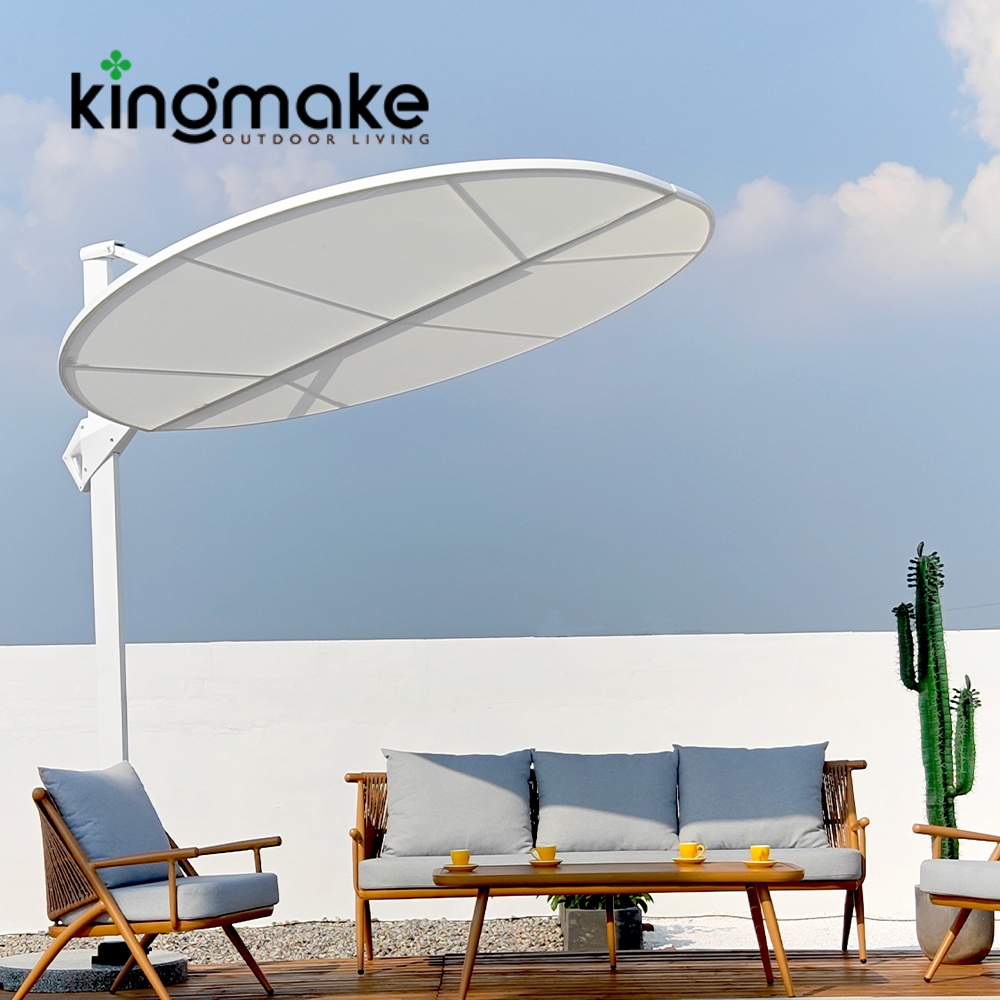
Measure the canopy according to its shape, then record the support system separately: base dimensions, mast position, arm reach and the space needed to rotate, tilt, open and close it.
How to Measure for a Replacement Umbrella Canopy
Start with the label on the frame, purchase record or original specification. Matching the existing model is more reliable than shopping by a size label alone.
Send the supplier the following details before ordering:
Brand and frame model: include a photograph of the label and any model or batch number.
Canopy shape and rib count: count the main ribs supporting the fabric, not the shorter support struts beneath them.
Rib lengths: use the supplier's specified endpoints; measure each distinct rib type and identify its position.
Attachment details: photograph rib pockets, clips, ties, sleeves and any special fittings.
Top and vent construction: show the center opening, finial connection, vent arrangement and any valance.
Condition and photographs: include the fully open umbrella and close-ups of the frame and fabric connections.
An old fabric cover can help identify its construction, but stretched, shrunken or damaged fabric should not be the only sizing reference. Do not remove the canopy unless the product instructions explain how to do so.
Ask the supplier to confirm compatibility with your exact frame. Two umbrellas marketed as 9 ft can have different rib lengths, canopy profiles or attachment systems. For Kingmake models, confirm model-specific replacement availability before placing an order; do not assume compatibility with another brand's frame.
Match Umbrella Size to the Table and Seating Area
Measure the furniture arrangement as guests actually use it. Include occupied chairs, loungers in their intended position and the clear routes staff need to serve tables.
For a first layout sketch, you can calculate a desired canopy width as:
Table width + desired overhang on both sides = target canopy width.
For example, a 48-inch-wide table with a planned 24-inch overhang on each side suggests a 96-inch, or 8-foot, canopy footprint. This is a layout example, not a guarantee of shaded seating. Chairs may extend beyond the table, and the sun's angle changes the shadow throughout the day.
Check the terrace during the hours it will be used. Compare the planned canopy footprint with the actual dimensions of your
outdoor dining sets, then confirm that the base, pole and opening mechanism do not obstruct seating or circulation.
Measurements Hotels and Restaurants Should Confirm
Before comparing quotations, give every supplier the same measurement schedule. Otherwise, similarly named umbrellas may occupy different amounts of space or require different installation arrangements.
Specification | What to request |
Canopy dimensions | Shape, nominal size, actual open dimensions and a labeled drawing |
Height | Overall height to the top and clearance beneath the lowest canopy edge, stated separately |
Pole or mast | Diameter or section dimensions, plus compatibility with the proposed table and base |
Base and mounting | Specified base or mounting system, footprint and site requirements |
Operating envelope | Space needed for opening, closing, tilting and rotation where applicable |
Fabric and replacement | Selected fabric, color, attachment system and model-specific spare-canopy availability |
Bulk order control | Model code, quantity by location and the specification approved for repeat orders |
For exposed terraces, confirm the selected model's operating limitations and the site's closure and storage procedure. Canopy size does not establish a suitable base weight or wind rating. Use the
umbrella base weight guide for hotels and restaurants to prepare supplier questions, then follow the instructions for the exact model and installation.
Frequently Asked Questions
Is Patio Umbrella Size the Width or the Height?
The advertised size generally describes the canopy, not the pole height. Check the manufacturer's drawing for the measurement method. Record overall height and clearance beneath the canopy as separate dimensions.
Can I Measure a Patio Umbrella While It Is Closed?
You can read its model label and take accessible frame measurements, but a closed umbrella does not reveal its open footprint. Use the manufacturer's drawing or measure it fully opened and secured according to its instructions.
Will Any 9-Foot Replacement Canopy Fit a 9-Foot Umbrella?
No. Match the frame model, rib count, rib lengths and attachment system. A shared nominal size is not confirmation that the fabric will fit.
Is a 3-Meter Umbrella Exactly 10 Feet Wide?
No. Three meters equals approximately 9.84 feet; 10 feet equals 3.048 meters. Keep the manufacturer's original units on your order and verify actual dimensions rather than treating rounded size names as interchangeable.
Does a Larger Canopy Always Provide Better Coverage?
A larger footprint can cover a wider area, but useful shade also depends on sun angle, canopy position and seating layout. Check the intended service hours and the space needed for the base and operating mechanism before choosing a larger model.
Plan Your Project with Kingmake
For a new project, send your layout, preferred canopy shape, required quantity, destination and target delivery date. For an existing umbrella, include the model label, measurements and photographs.
Contact Kingmake for a project quotation and ask the team to confirm the proposed model, base arrangement and available customization before ordering.


 Whatsapp
 sales@cnkingmake.com
 +8613925925021