
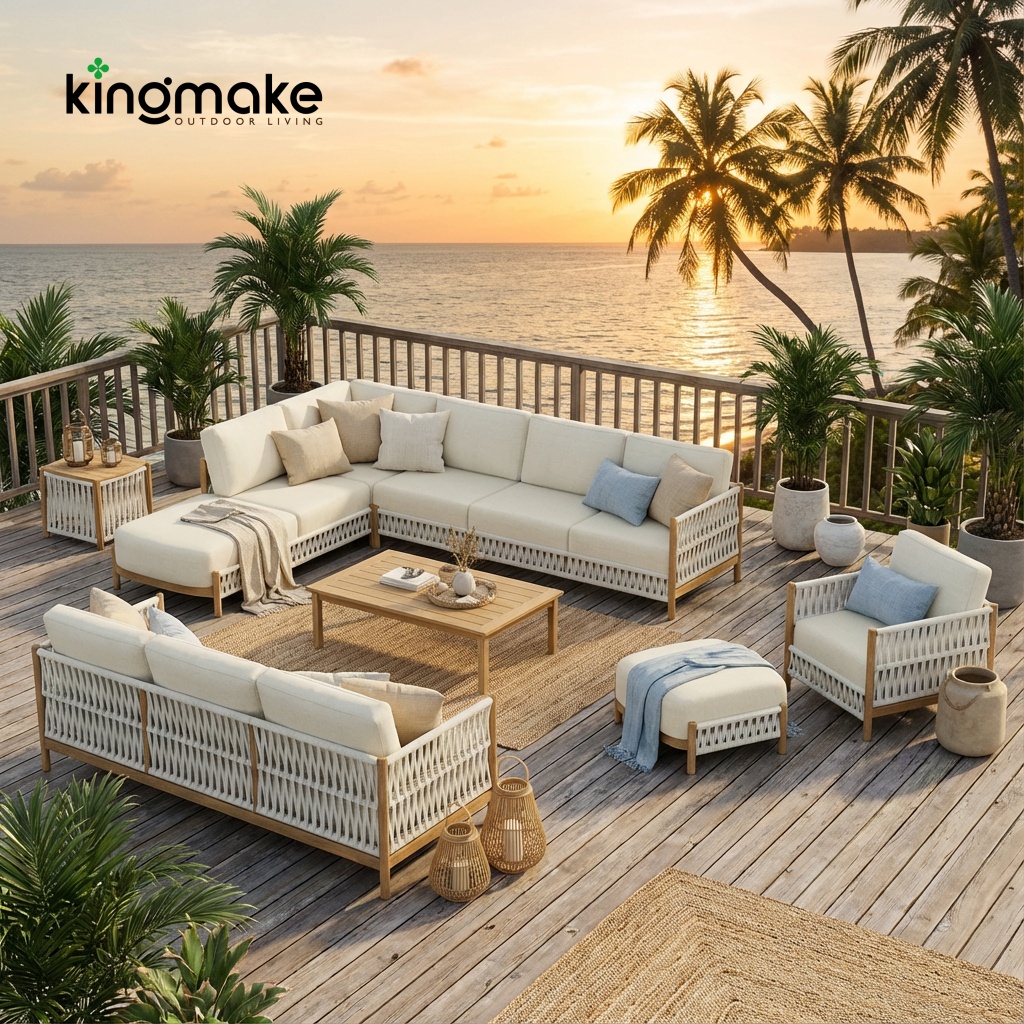
How To Choose The Best Outdoor Wicker Furniture
Outdoor wicker furniture is one of the most popular choices for patios, pool decks, rooftops, and resort lounges—especially across the USA, where buyers want the “woven” look without the maintenance problems of natural materials.
But not all wicker is created equal. Two sets can look similar in photos, yet perform very differently after one hot summer, a rainy season, or daily use in a commercial space.
If you’re buying for a hotel, resort, restaurant patio, multifamily property, or even a high-use home outdoor area, the best approach is to evaluate outdoor wicker like a specifier: material, frame, weave tension, cushion performance, and long-term support.
This guide walks you through exactly what to look for so you can buy once and avoid frequent replacements.
Wicker vs. Rattan vs. All-Weather Wicker
Before you compare products, it helps to clarify the terms. “Wicker” refers to the weaving style, not the actual material. Natural wicker and rattan can look beautiful, but they don’t hold up well when exposed to rain, constant sun, pool chemicals, or freeze-thaw cycles. They’re best reserved for indoor or covered spaces.
All-weather wicker is different. It’s usually made from synthetic resin designed to resist UV, moisture, and temperature swings. In commercial and hospitality environments, all-weather wicker is the only practical option if you want a woven look that’s built for the outdoors.
When a product claims “all-weather,” you should still verify what that really means. A truly outdoor-ready wicker set needs more than just resin strands—it needs the right type of resin, the right frame, and outdoor-rated cushions.
Step 1: Choose the Right Wicker Material (HDPE Is the Standard)
The number one factor that determines how long outdoor wicker furniture lasts is the resin quality. The best outdoor wicker furniture typically uses HDPE (High-Density Polyethylene) resin. HDPE is valued because it resists cracking, holds its flexibility, and performs better under UV exposure and moisture compared to cheaper alternatives.
HDPE wicker also tends to keep its shape and tension longer, meaning the furniture won’t start looking “baggy” or loose after months of sun and seating pressure. That’s important for hotels and commercial patios where furniture is used daily and guests expect a consistent, premium look.
Lower-cost sets often use cheaper PVC-based wicker. These can fade faster, become brittle, or crack over time—especially in intense heat. They can be fine for short-term use, but they rarely deliver the long service life that commercial buyers need.
A simple quality check is to examine the strand consistency. Higher-quality wicker typically looks uniform in color and thickness, bends slightly without feeling stiff, and wraps tightly around the frame without loose ends or uneven gaps.
Step 2: The Frame Matters More Than Most Buyers Realize
Wicker is the exterior. The frame is the structure. If the frame fails, the entire furniture piece becomes unstable—even if the wicker still looks intact.
For outdoor wicker furniture, especially in coastal or pool environments, the best internal frame is powder-coated aluminum. Aluminum is lightweight, strong, and rust-resistant. This makes it ideal for USA climates that include humidity, rain, and poolside exposure.
Steel frames can work if they are properly treated, but they are more vulnerable when coatings chip or when moisture finds a weak point. In hospitality settings, where furniture is moved, stacked, and cleaned frequently, small coating damage is common. Rust then becomes the long-term risk.
When comparing wicker furniture, look at frame thickness and stability. A good commercial piece should feel solid when you sit, with no rocking, twisting, or squeaking. Stress points like arm joints, seat rails, and leg junctions should be reinforced and well-finished.
If your outdoor environment is built around lounge seating, modular layouts, and long-term durability, you’ll typically find the best options in categories like Outdoor Sofa and Outdoor Chair where frames are engineered for commercial use.
Step 3: Weave Quality—Where Most “Wicker” Furniture Fails
Two furniture sets can use similar materials but perform differently due to weave tension and craftsmanship. In high-use environments, a loose weave will sag, shift, and collect dirt faster. Tight weave furniture maintains its shape, feels better to sit on, and stays visually sharp over time.
Quality outdoor wicker should have consistent spacing and tension across the entire piece. Corners should be clean and secure. Ends should be anchored properly so strands don’t loosen and unravel after repeated use.
Handwoven doesn’t automatically mean better, but it often allows for tighter finishing and more complex patterns. What matters most is the consistency: no gaps around stress areas, no exposed fasteners, and no uneven panels that look “stretched.”
Weave style also plays a role in both aesthetics and cleaning. Flat weave tends to look modern and is easier to wipe down. Round or half-round weaves can feel more traditional and textured, which many resorts prefer—but may require slightly more effort during cleaning because of crevices.
Step 4: Cushions and Fabric—Comfort Is the Differentiator
For guest experience, cushions matter as much as the frame. A beautiful wicker sofa that feels thin or uncomfortable won’t perform well in reviews, photos, or repeat usage. In hospitality settings, cushions are also a maintenance decision: they need to resist fading, clean easily, and dry quickly.
The best outdoor wicker furniture uses performance fabrics that are made for UV exposure and moisture. Solution-dyed fabrics (often used in premium outdoor textiles) typically hold color longer and handle sun exposure better than cheaper dyed fabrics.
Removable cushion covers are a major advantage for commercial use. They allow housekeeping teams to clean more efficiently and replace covers without replacing the entire cushion set. Zippers should feel sturdy, seams should be reinforced, and the fabric should be chosen with your climate in mind.
Foam quality also affects longevity. High-density foam retains shape longer and avoids the “flattening” that can happen after weeks of daily use. For poolside zones or humid climates, quick-dry cushion options reduce downtime and minimize mildew risk.
If your property has pool decks or beach areas, consider balancing wicker lounge sets with dedicated sun seating. Wicker can work beautifully in lounge zones, while sunbeds and chaise seating often perform best when designed specifically for that purpose. You can explore pool-ready options in Sun Loungers for a cohesive outdoor layout.
Step 5: Match the Furniture to the Space, Not Just the Style
Wicker furniture should look good, but it also has to fit the space and the way guests use it. The most common mistake is buying a set based on photos without planning circulation, clearances, and service flow.
If you’re furnishing a hotel terrace or restaurant patio, you need clearance for staff movement, tables being pulled out, guests walking through, and furniture being rearranged. Deep seating sets should allow comfortable legroom without blocking pathways. Dining chairs should tuck properly under tables without scraping.
Measurement matters even more for modular layouts. Modular wicker sofas are excellent for hospitality because they can adapt to group size, events, and seasonal layouts. Fixed sets can work well for permanent “signature” areas where the layout won’t change.
If your project includes multiple zones—entry, lounge, dining, pool—wicker can be one part of a larger system. Many hotels use wicker lounge seating for conversational areas and complement it with umbrellas, planters, dining sets, and daybeds to create a complete outdoor experience.
Step 6: USA Weather Reality Check
Outdoor furniture in the USA faces a wide range of climates. Choosing the “best” wicker furniture depends on what your environment will do to it over time.
In hot, sunny regions like the Southwest, UV exposure is the main challenge. HDPE wicker and solution-dyed fabrics help protect against fading, while lighter colors can reduce surface heat.
In freeze-thaw regions like the Northeast and Midwest, you want materials that remain stable through temperature swings. Quality resin and a strong aluminum frame are important. Covers can help, but breathable covers matter more than “sealed” plastic wraps that trap moisture.
In coastal regions and humid environments, corrosion resistance becomes the priority. Aluminum frames and corrosion-resistant hardware reduce rust risk, while quick-dry cushions can prevent mildew issues in high humidity.
Step 7: Maintenance That Works for Real Operations
Outdoor wicker is relatively easy to maintain when the materials are right. For most commercial settings, a simple routine keeps furniture looking fresh:
Light brushing and mild soap cleaning helps remove sunscreen residue, dust, and pollutants. A gentle rinse and air drying is usually enough. Avoid harsh chemicals or abrasive pads that can damage the wicker surface or strip protective finishes.
Cushions require a smarter strategy. If your environment is humid or poolside, store cushions when not in use or choose quick-dry foam that reduces moisture retention. Mold and mildew problems are usually caused by trapped moisture, not the wicker itself.
Furniture covers can help protect from UV and debris, but only if they’re breathable. Non-breathable covers can trap moisture and create mildew.
For high-use hospitality operations, having a reliable cover solution for off-hours is often worth it. Kingmake also offers cover options in Furniture Cover so operators can protect outdoor zones without complicating maintenance.
Step 8: Warranties and Value—Think Total Cost, Not Sticker Price
In commercial projects, the best outdoor wicker furniture is the set that performs for years with minimal intervention. That’s why warranty terms often reveal product confidence. Look for meaningful coverage on frames, weaving, and cushions, and confirm whether replacement parts and cushion covers are available.
The total cost of ownership includes replacement cycles, labor, guest perception, and downtime. Cheap sets that fade or loosen quickly can cost more over time than higher-quality furniture that maintains its look and comfort.
If you’re furnishing a hotel or resort, consistency matters too. When one piece wears faster than others, outdoor areas start to look uneven. Investing in commercial-grade wicker helps preserve a consistent brand look across guest-facing zones.
Why Kingmake Outdoor Wicker Works for Hospitality Projects
Kingmake Outdoor supports hotels, resorts, distributors, and contractors with premium outdoor furniture designed for real-world commercial use. Our approach is project-focused: material selection, engineering support, consistent finishes, and bulk production for multi-property needs.
We manufacture outdoor woven furniture with strong aluminum frames, durable all-weather weaving systems, and customizable cushion options. We also help buyers coordinate collections across lounge, dining, poolside, and accessory categories so the entire outdoor space feels unified.
To explore our full product range and start planning a cohesive furniture package, visit the Kingmake Outdoor
FAQs: Choosing Outdoor Wicker Furniture
What is the best material for outdoor wicker furniture?
The best outdoor wicker furniture typically uses HDPE resin wicker combined with a powder-coated aluminum frame for durability and rust resistance.
Is HDPE wicker better than PVC wicker?
In most outdoor and commercial conditions, yes. HDPE generally holds up better against UV exposure, cracking, and long-term flexibility, while cheaper PVC wicker may become brittle over time.
What frame is best for outdoor wicker—aluminum or steel?
Powder-coated aluminum is usually best because it’s lightweight, strong, and rust resistant—especially for poolside, humid, or coastal environments.
Does outdoor wicker fade in direct sun?
All outdoor materials can fade eventually, but HDPE wicker and solution-dyed performance fabrics are designed to slow fading significantly.
Can all-weather wicker stay outside year-round?
Yes, if it’s commercial-grade and designed for outdoor exposure. Using breathable covers and proper cushion care helps extend lifespan, especially in harsh climates.
What’s the best cushion fabric for outdoor wicker furniture?
Performance fabrics designed for outdoor use, especially solution-dyed options, tend to resist fading and moisture better than standard fabrics.
How do I prevent mold and mildew on outdoor cushions?
Choose quick-dry cushion options where needed, allow cushions to dry fully, and avoid trapping moisture under non-breathable covers.
How long does commercial-grade wicker furniture last?
With HDPE wicker, aluminum frames, and proper maintenance, commercial-grade wicker furniture can deliver years of reliable use in hospitality settings.
Is outdoor wicker good for pool areas and coastal hotels?
Yes, when the frame is rust-proof and the weaving system is designed for UV and moisture resistance. Quick-dry cushions are strongly recommended for these areas.
What’s the easiest way to clean resin wicker furniture?
Use a soft brush and mild soap with water, rinse gently, and allow it to air dry. Avoid harsh chemicals that can damage finishes.
 Whatsapp
 sales@cnkingmake.com
 +8613925925021