Introduction
Outdoor living is no longer an afterthought. In 2026, homeowners, hotel designers, and resort developers are investing heavily in creating outdoor spaces that feel as comfortable and polished as any interior room. Weather-resistant performance fabrics that feel soft but resist moisture and fading are now central to that vision — and the demand for them is growing fast.
But here is the challenge most buyers face: not all outdoor fabrics are created equal. Some fade after a single summer. Others trap moisture, grow mildew, or pill after a season of heavy use. Whether you are furnishing a private patio, a hotel poolside, or a resort terrace, choosing the wrong fabric for outdoor furniture can mean costly replacements and disappointed guests.
This guide breaks down everything you need to know about outdoor furniture fabric — what makes a fabric truly outdoor-ready, which types perform best, and how to match your fabric choice to your space and climate. If you are also evaluating furniture for a hospitality or residential project,
Kingmake Outdoor Furniture offers a comprehensive range built specifically for demanding outdoor environments.
What Makes a Fabric Suitable for Outdoor Furniture?
The Core Performance Requirements of Outdoor Patio Furniture Fabric
Not every fabric can handle life outside. Outdoor patio furniture fabric needs to meet a set of performance standards that standard upholstery simply cannot match. Here is what to look for:
| Feature | Why It Matters |
| UV Resistance | Prevents fading and color loss from sun exposure |
| Waterproof or Water-Resistant | Protects against rain, humidity, and spills |
| Mold and Mildew Resistance | Keeps fabric clean and hygienic over time |
| Breathability | Reduces heat buildup and improves seating comfort |
| Abrasion Resistance | Withstands regular use without pilling or tearing |
| Ease of Cleaning | Allows quick maintenance with minimal effort |
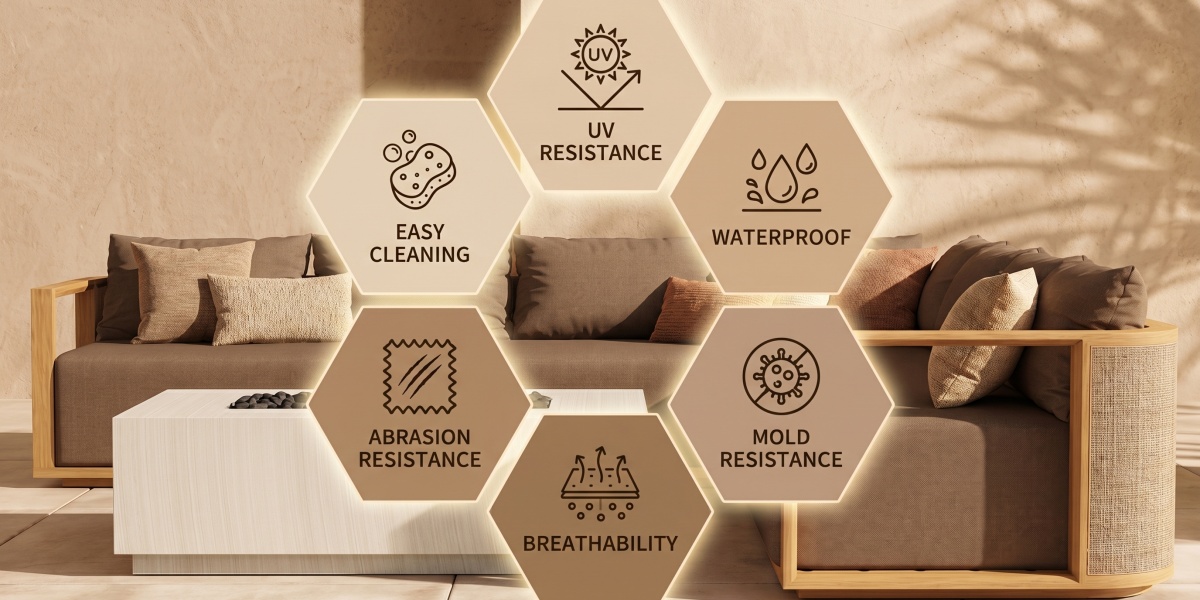
A fabric that checks all these boxes is considered a true performance fabric — and these are the only fabrics worth considering for serious outdoor use.
The Difference Between Water-Resistant and Waterproof Fabric for Outdoor Furniture
Many buyers use these terms interchangeably, but they are not the same.
Water-resistant fabrics repel light rain and minor spills. Moisture beads on the surface and rolls off before it soaks in. These fabrics work well in covered outdoor areas or mild climates where heavy rain is infrequent.
Waterproof fabric for outdoor furniture, on the other hand, forms a complete barrier against moisture. Even during sustained rainfall, water cannot penetrate the weave or backing. This level of protection is essential for uncovered patios, beachside settings, and tropical or rainy climates.
For commercial environments like hotels, resorts, and beach clubs, waterproof outdoor fabric is almost always the smarter investment. It extends product life, reduces replacement costs, and keeps cushions looking fresh through heavy seasonal use.
Best Outdoor Fabric for Furniture
Solution-Dyed Acrylic — The Gold Standard
Solution-dyed acrylic is widely regarded as the highest-performing outdoor fabric available. The color is baked into the fiber during the manufacturing process rather than applied afterward. This means the fabric resists fading even under years of intense sun exposure.
Key advantages:
Exceptional UV and color stability
High resistance to mold, mildew, and moisture
Soft, textile-like feel similar to indoor upholstery
Available in a wide range of colors and patterns
This type of outdoor patio furniture fabric is the preferred choice for luxury hospitality projects. Weather-resistant fabrics such as Sunbrella — one of the most well-known solution-dyed acrylic brands — are frequently cited as a top recommendation for high-end outdoor furniture.
Olefin (Polypropylene) — Value-Driven Performance
Olefin is a synthetic fabric made from polypropylene fibers. It is naturally resistant to moisture, staining, and fading, and it is typically more affordable than solution-dyed acrylic. For buyers working with larger budgets spread across many units — such as a resort outfitting hundreds of sun loungers — olefin offers reliable performance at a lower cost per yard.
It is slightly less soft than acrylic and may not carry colors quite as vibrantly over the long term, but for commercial-scale purchasing decisions, it is a strong contender.
Polyester — Versatile and Widely Used
Polyester is the most widely used outdoor fabric for furniture worldwide. It is affordable, readily available, and performs reasonably well in mild to moderate outdoor environments. Polyester and acrylic outdoor fabrics are both consistently recommended for their fade resistance, making them practical choices for a broad range of outdoor settings.
Standard polyester does need a waterproof coating or laminate backing to be fully rain-resistant. Look for high-denier polyester with a DWR (durable water repellent) finish for improved weather performance.
Textilene and PVC-Coated Mesh
Textilene is a PVC-coated polyester mesh fabric used primarily for sling chairs, sun loungers, and casual seating. It is fully waterproof, quick-drying, and extremely durable. Because it has no cushion component, it eliminates the mold and mildew risks associated with foam-filled cushions entirely.
This makes textilene particularly popular for poolside and beach environments where constant water exposure is a given. To see how these fabric types are applied across a full lineup of outdoor seating, loungers, and accessories, browse the
complete outdoor furniture product range from Kingmake.
How to Choose the Best Outdoor Furniture Fabric for Your Space
Match Fabric to Climate and Exposure
Your local climate is one of the most important factors in fabric selection. Here is a simple framework:
Full sun, dry climate: Solution-dyed acrylic or high-grade polyester with UV treatment
Humid, tropical, or rainy climate: Waterproof fabric for outdoor furniture with mold inhibitors; textilene for loungers
Covered patios or shaded areas: Standard performance polyester or olefin fabrics work well
Coastal or saltwater environments: Marine-grade fabrics with high salt and moisture resistance
Consider the Use Case — Residential vs. Commercial
Residential and commercial buyers have very different needs when it comes to fabric for outdoor furniture.
For homeowners, comfort and aesthetics tend to be the priority. A plush solution-dyed acrylic cushion that feels great to sit on and matches the garden design is usually the right answer.
For commercial buyers — including hospitality brands, resort developers, and hotel procurement teams — durability, ease of maintenance, and consistency across large volumes matter more. Fabrics need to withstand dozens of uses per day, frequent cleaning cycles, and replacement schedules that are measured in years rather than months.
Think About Maintenance and Longevity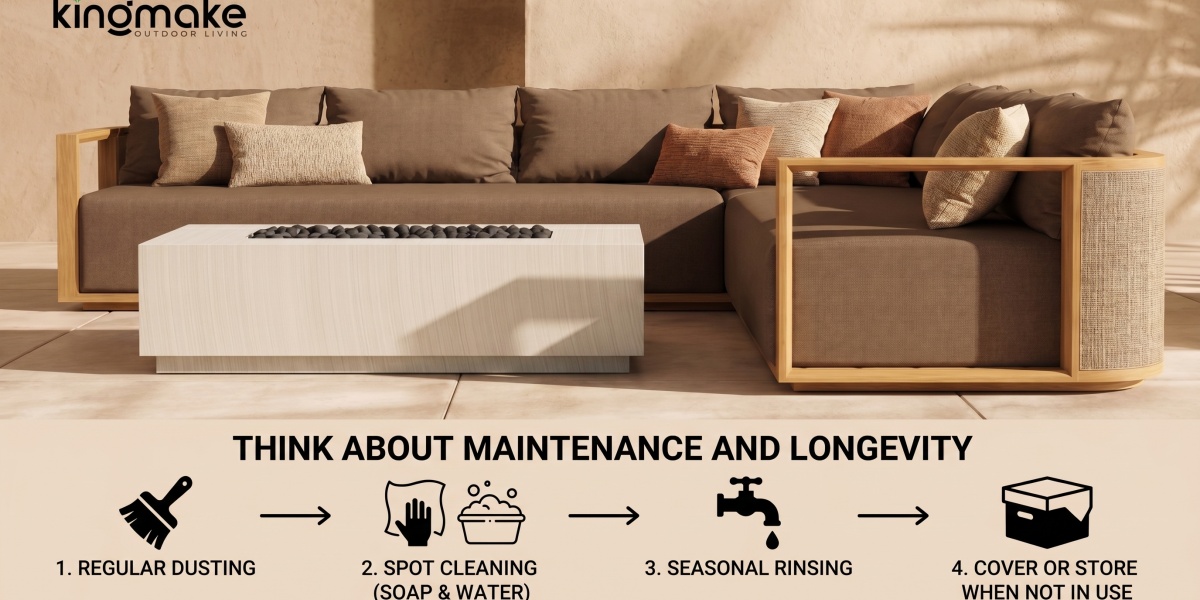
Even the best outdoor patio furniture fabric requires some care. Here are the maintenance habits that make the biggest difference:
Regular brushing: Removes dust and debris before they work into the weave
Spot cleaning: Address spills quickly with mild soap and water
Deep cleaning: Rinse cushions thoroughly at least once per season
Storage: Store cushions indoors or use furniture covers during long off-seasons
Storing cushions and fabric components indoors when not in use prevents mildew and fading
A fabric's care requirements should always be weighed against the effort available to maintain it. In high-turnover commercial settings, fabrics with removable, machine-washable covers save significant time and labor.
Color and Design Trends for Outdoor Furniture Fabric in 2026
Earthy Tones and Textured Weaves Are Leading the Market
Earthy, grounded hues like terracotta, olive green, warm taupe, and sandy beige are everywhere in 2026. These tones complement natural outdoor landscapes while keeping the overall look grounded and timeless. For cushion fabrics, this palette works across residential gardens, hotel terraces, and resort pools without feeling dated.
Multi-textured materials are adding depth and visual interest to outdoor living spaces in 2026, with intricately woven jacquards and plush cushions creating layered comfort and luxury. This is a shift away from flat, utilitarian outdoor fabrics toward textiles that feel genuinely designed.
Performance Fabrics Are Becoming Softer and More Refined
The gap between indoor upholstery and outdoor fabric for furniture is closing. Advancements in performance textiles have made them softer and more visually appealing, ensuring that practicality does not come at the expense of style.
For buyers who have struggled with stiff, rough-feeling outdoor cushions in the past, the current generation of performance fabrics offers a noticeably better experience. Waterproof and stain-resistant textiles are increasingly valued for combining functionality with aesthetics — a combination that was once difficult to achieve.
Kingmake Outdoor Furniture — Quality Fabrics Built for Real-World Performance
With over 17 years of experience manufacturing outdoor furniture for hotels, resorts, villas, and residential projects worldwide, Kingmake Outdoor Furniture understands what it takes for fabric to perform in real commercial environments.
Every cushion and upholstered product in the Kingmake range is built with weather-resistant fabrics selected for durability, color retention, and comfort. From outdoor sofas and dining chairs to daybeds, sun loungers, and swing chairs, Kingmake pairs premium aluminum frames and teak wood structures with high-performance fabric choices that hold up season after season.
For project buyers,
Kingmake also offers OEM and ODM customization — meaning you can specify the fabric type, color, pattern, and finish that matches your brand or project requirements exactly. Whether you need a specific Sunbrella-style acrylic for a beachfront resort or a textilene mesh for a pool deck with hundreds of loungers, Kingmake's team can source and produce to your specifications.
Conclusion
The fabric you choose for your outdoor furniture has a direct impact on how long your investment lasts, how comfortable your space feels, and how easy it is to maintain over time. Waterproof fabric for outdoor furniture protects against the elements. Solution-dyed acrylic keeps colors vivid through years of sun exposure. The right outdoor patio furniture fabric turns a functional purchase into a long-term asset.
Whether you are a homeowner designing a garden retreat or a procurement manager outfitting a resort, the principles are the same: match your fabric to your climate, prioritize performance alongside aesthetics, and work with a supplier who understands both.
Kingmake Outdoor Furniture brings together design expertise, manufacturing precision, and a genuine understanding of what outdoor environments demand. Explore the full range of outdoor furniture collections and customization options at
www.cnkingmake.com to find the right fabric solution for your next project.

 Whatsapp
 sales@cnkingmake.com
 +8613925925021