
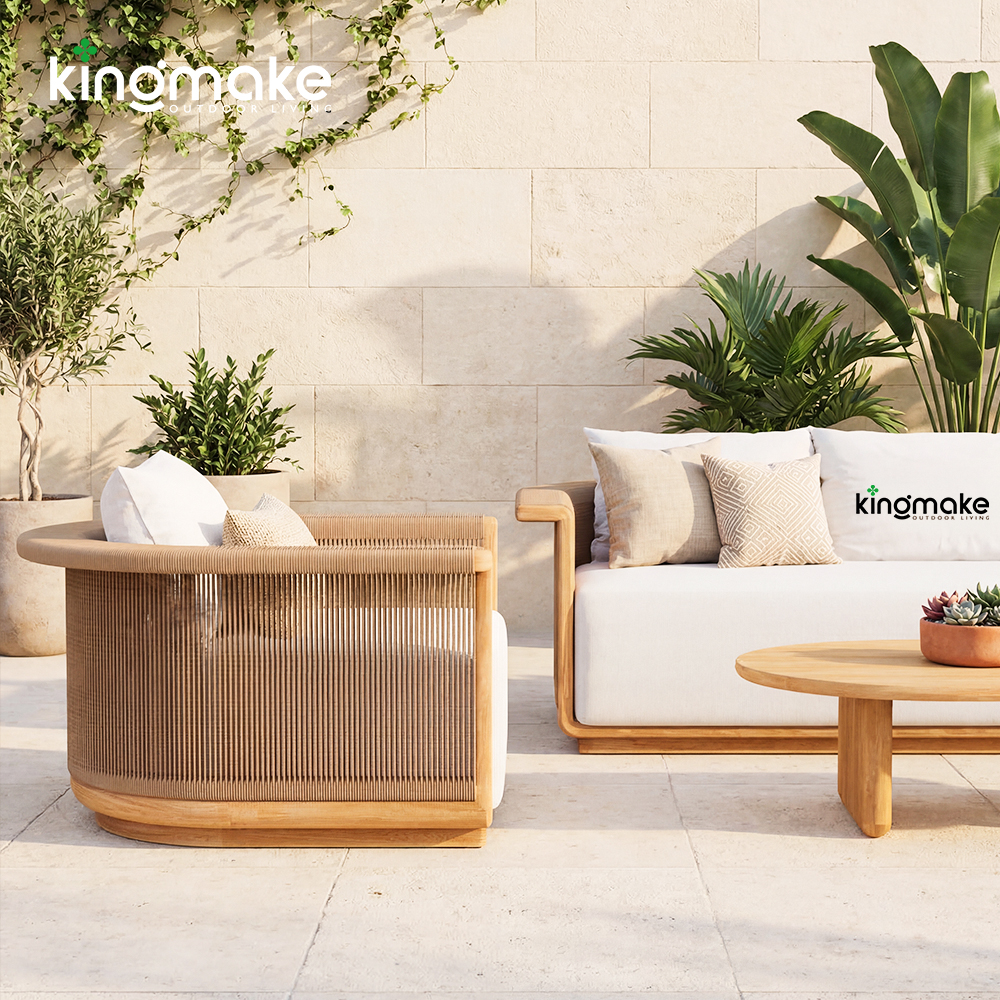
What Is the Best Material for Outdoor Furniture?
Introduction
Outdoor living has grown into a serious design priority. According to recent industry reports heading into 2026, global demand for premium outdoor furniture continues to climb, driven by homeowners and hospitality brands investing more than ever in patios, resort terraces, and garden spaces. But a beautiful setup only holds its value if it's built from the right materials. Rain, UV exposure, wind, and salt air all take a toll — and choosing the wrong material can mean faded cushions and rusting frames within a single season. Whether you're furnishing a private villa or outfitting a hotel poolside, understanding the best material for outdoor furniture is the most important decision you'll make.
Why Material Choice Matters for the Best Outdoor Furniture
Before diving into specific materials, it helps to understand what outdoor furniture actually has to survive. Unlike indoor pieces, outdoor furniture is exposed year-round to:
Sunlight and UV rays that fade colors and weaken certain plastics or fabrics
Rain and humidity that promote rust, mold, and wood rot
Wind and physical stress that can topple lightweight pieces or crack brittle ones
Temperature swings from hot summer afternoons to cold winter nights
The best outdoor furniture holds up against all of these without demanding constant upkeep. That said, no single material is perfect for every situation — which is why understanding each option matters.
The Best Outdoor Furniture Materials Compared
Aluminum — The Best Outdoor Furniture Material for Low Maintenance
If you're looking for the single most practical frame material available, aluminum is hard to beat. It's lightweight, completely rust-proof, and requires almost no maintenance beyond an occasional wipe-down. Powder-coating gives it a wide range of color and finish options, from matte black to warm bronze, so it adapts easily to different design styles.
Aluminum works especially well for outdoor dining sets, outdoor chairs, and modular sofa frames. Its lighter weight makes it easy to rearrange on a terrace or poolside deck, and it won't corrode even in coastal environments where salt air is a problem for other metals.
The one drawback: aluminum can dent or scratch more easily than heavier metals. For high-traffic commercial environments, look for thicker-gauge aluminum with a quality powder coat finish.
Best for: Poolside furniture, hotel terraces, coastal environments, anyone who prefers low-maintenance outdoor living.
Teak Wood — The Classic Best Outdoor Furniture Material for Full Sun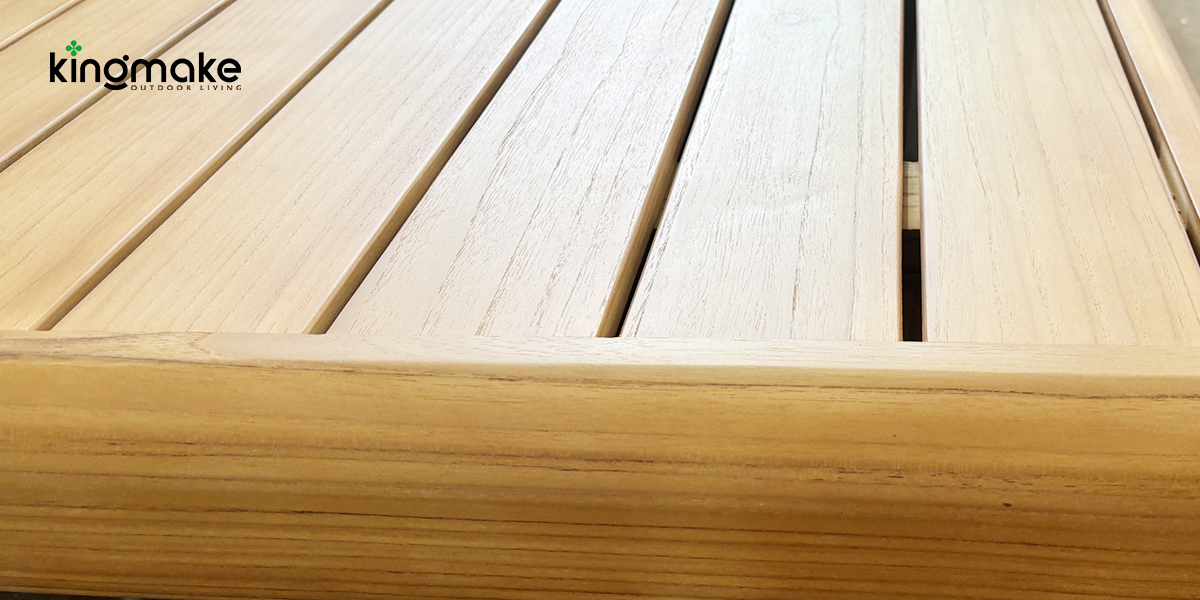
Teak has been used in outdoor furniture for centuries, and for good reason. It is a dense, oily hardwood that naturally resists water, insects, warping, and cracking. Left untreated, teak ages to a silver-grey patina that many people find attractive. With periodic oiling, it retains its warm honey-brown color almost indefinitely.
For spaces with heavy sun exposure, teak is arguably the best outdoor furniture material for full sun. Its natural oils act as a built-in barrier against UV damage, unlike many synthetic materials that will fade or become brittle over time. Teak does require some maintenance — annual oiling and occasional cleaning — but it rewards that care with decades of reliable performance.
It's worth noting that teak is one of the heavier and more expensive materials on this list. For projects where budget and portability matter, aluminum may be a more practical choice for the frame, with teak used as an accent element.
At Kingmake Outdoor, teak is a core part of many collections. Their outdoor sofas and sun loungers built from solid teak are specifically designed for resort and hospitality environments where durability and visual impact are equally important.
Best for: Full-sun patios, beachfront resorts, high-end residential gardens, long-term investment pieces.
All-Weather Wicker (Resin Wicker) — Best Outdoor Furniture Material for Style and Comfort
Natural rattan and wicker look beautiful but don't hold up well outdoors on their own. They tend to crack, fade, and absorb moisture over time. The better option for outdoor use is all-weather wicker, also called resin wicker. This is a synthetic material woven over an aluminum or steel frame, designed to mimic the warmth of natural wicker while being genuinely weather-resistant.
Resin wicker handles UV exposure well, resists moisture and mold, and is easy to clean. It's also comfortable — the woven texture offers natural airflow, which makes it pleasant to sit on in warm weather. For homeowners who want an inviting, relaxed aesthetic without constant maintenance, it's one of the best outdoor furniture material choices available.
Kingmake's woven outdoor daybed collections and swing chairs use this approach — pairing aluminum frames with rope or resin weaving to combine structural durability with a comfortable, lifestyle-oriented look.
Best for: Covered patios, garden lounge areas, resort relaxation zones, anyone who wants the wicker aesthetic without the upkeep.
Steel and Stainless Steel — Strength for Structural Elements
Steel is extremely dense and strong, making it a common choice for structural outdoor furniture components like table bases and sofa frames that need to carry significant weight. Stainless steel, in particular, is resistant to rust and corrosion and performs well in coastal environments where standard steel would degrade quickly.
The main limitation of steel is heat. In full sun, steel surfaces can become uncomfortably hot to the touch, which makes it better suited to structural roles than seat surfaces or armrests. For patio dining tables and commercial bar stools, it's a reliable choice — especially when combined with teak wood tops or woven seating surfaces.
Best for: Frame structures, commercial dining tables, bar stools, high-load applications.
Outdoor Fabrics — Choosing the Best Material for Cushions and Upholstery
The frame is only half the equation. For any upholstered outdoor piece — sofas, daybeds, or lounge chairs — the fabric matters just as much. The best outdoor furniture material for cushions and covers should offer:
UV resistance to prevent fading after prolonged sun exposure
Water resistance that allows rain to bead off without soaking into the foam
Mold and mildew resistance for humid climates
Quick-dry properties so cushions don't stay damp after rain
Solution-dyed acrylic fabrics (such as Sunbrella) are widely regarded as the best outdoor fabric option. The color is embedded throughout the fiber rather than printed on top, which means it resists fading far longer than standard outdoor textiles. Olefin is another strong option — it's inherently UV-stable, moisture-resistant, and relatively affordable. High-density polyester is used in many mid-range applications and performs well when properly treated.
For full-sun environments specifically, solution-dyed acrylic is the top choice. It holds color better under intense UV exposure than almost any other outdoor fabric. For patio umbrellas, the same UV-resistant fabrics apply, as umbrella canopies take the most direct sun exposure of any outdoor textile.
Best for: Outdoor cushions, sofa upholstery, patio umbrella canopies, any fabric in direct sun.
Best Outdoor Furniture Options at a Glance
| Material | Durability | Maintenance | Best For | Sun Performance |
| Aluminum | High | Very Low | All settings, coastal | Excellent |
| Teak Wood | Very High | Low–Moderate | Full sun, premium setups | Excellent |
| Resin Wicker | High | Low | Lounge areas, covered patios | Good |
| Steel / Stainless | Very High | Low–Moderate | Structural frames, commercial | Fair (heats up) |
| Solution-Dyed Acrylic | High | Low | Cushions, umbrella fabric | Excellent |
| Olefin | Moderate–High | Low | Cushions, upholstery | Good |
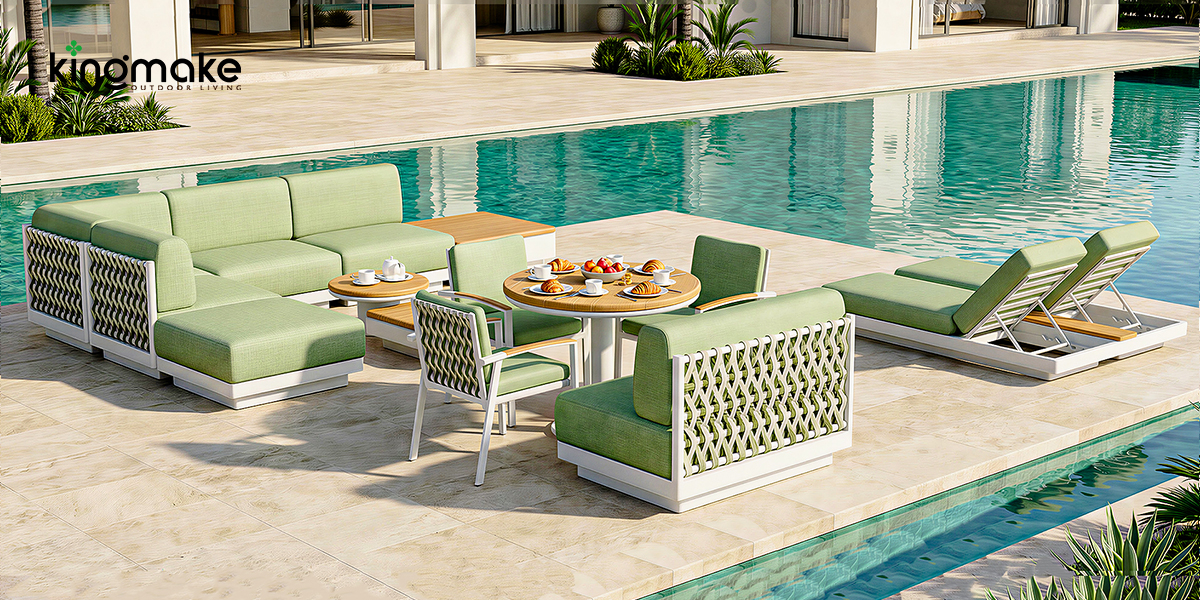
What Is the Best Outdoor Furniture Material for Full Sun Environments?
If your space gets hours of direct sun every day — a rooftop terrace, a poolside deck, a beachside resort — material selection becomes more critical. Here's what works best:
For frames: Aluminum or teak. Both resist UV-related degradation. Aluminum won't warp or fade; teak's natural oils protect it from sun damage over the long term.
For cushion fabric: Solution-dyed acrylic is the clear frontrunner. Unlike fabrics that are surface-dyed, solution-dyed fibers won't bleach out under intense UV exposure. Olefin performs similarly and costs less, though it can be sensitive to very high heat.
For table surfaces: Teak wood tops or powder-coated aluminum are reliable choices. Avoid untreated wood, painted surfaces without UV protection, or plastic surfaces that may yellow and become brittle.
One often-overlooked element: a good patio umbrella with a UV-rated canopy can dramatically extend the life of all your other furniture by reducing direct sun exposure. And for times when your space isn't in use, high-quality outdoor furniture covers add another layer of protection against both sun and rain.
How Kingmake Outdoor Builds the Best Outdoor Furniture for Commercial and Residential Projects
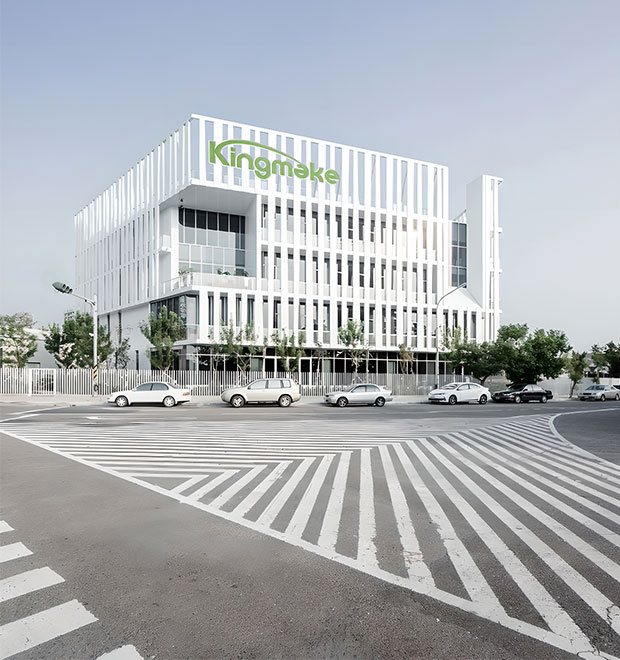
With over 18 years of manufacturing experience, Kingmake is a specialist in producing furniture that survives real-world outdoor conditions. Based in Foshan, China, with an 18,000㎡ self-owned facility, Kingmake supplies hotels, resorts, and residential developers worldwide — from Caribbean beachfronts and European resort terraces to luxury U.S. resort properties.
Every product in the Kingmake range is built around material integrity. Their outdoor sofa collections use powder-coated aluminum frames and solid teak, paired with quick-dry cushions in UV-resistant fabrics. The outdoor dining sets combine teak and aluminum for both visual warmth and structural reliability.
Kingmake also offers full OEM and ODM services, which means clients — whether a hospitality brand or a design firm — can customize materials, finishes, dimensions, and colors to fit a specific project. Their process includes strict quality control, TÜV SÜD certifications on key product lines, and global DDP shipping, making them a dependable partner for large-scale outdoor furniture projects.
Conclusion
Choosing the best outdoor furniture material comes down to your climate, your usage, and how much maintenance you're willing to handle. Aluminum offers unmatched practicality, teak delivers premium durability and looks, resin wicker brings warmth and comfort, and UV-stable fabrics are essential for any upholstered piece in the sun. For full-sun environments in particular, prioritizing aluminum or teak frames paired with solution-dyed acrylic cushions gives you the most reliable long-term setup.
The best outdoor furniture isn't just about good looks on day one — it's about how well a piece holds up over years of real use. Getting the materials right from the start saves money, maintenance time, and the frustration of replacing furniture season after season. Whether you're a homeowner designing a garden retreat or a hospitality brand outfitting hundreds of poolside loungers, the material decision is always worth taking seriously.
For more on their full product range, visit the Kingmake products page or read the latest outdoor furniture guides and news on their website.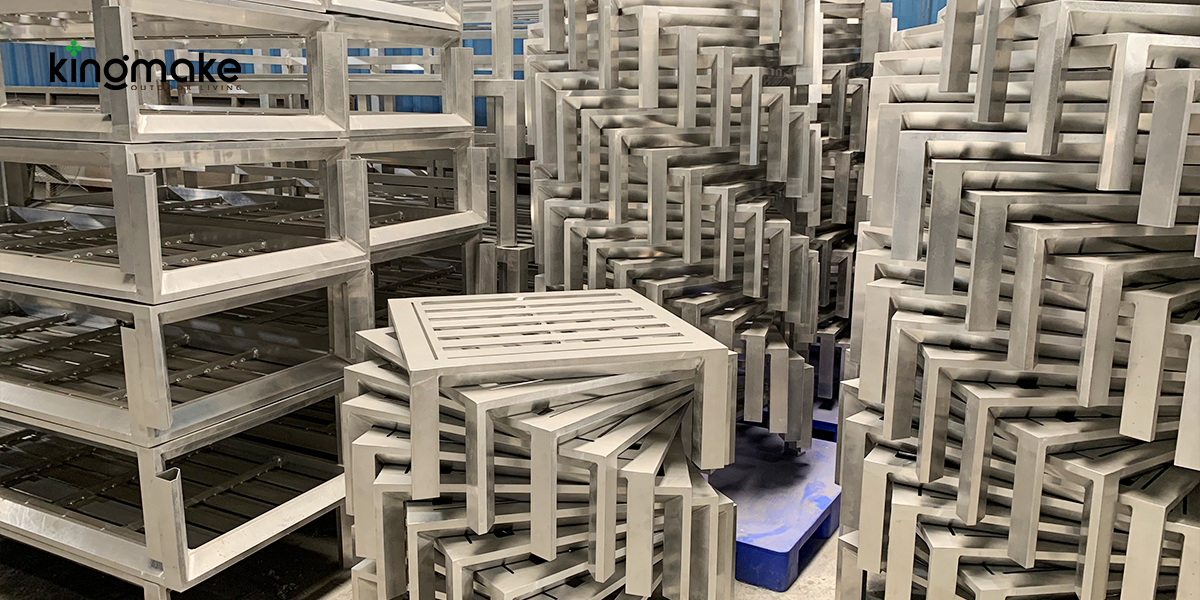
 Whatsapp
 sales@cnkingmake.com
 +8613925925021