
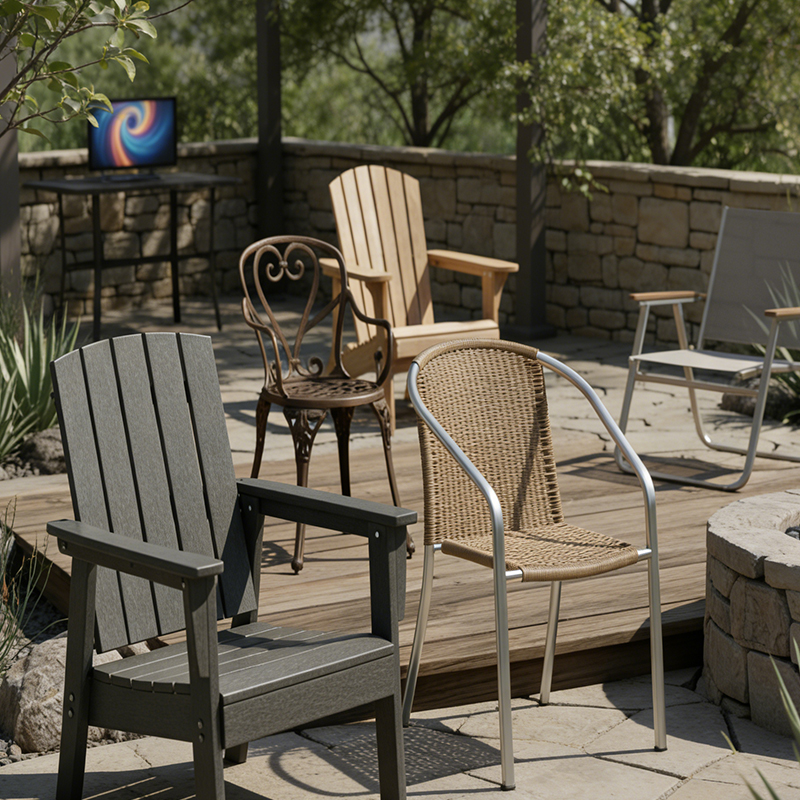
Most Durable Outdoor Chairs: Buying Guide | Kingmake
What Are the Most Durable Chairs for Outdoor Use?
Powder-coated aluminum, well-made teak and outdoor-grade HDPE chairs are strong options for long-term outdoor use. The right choice depends on your climate, how often the chairs are moved and cleaned, and the maintenance your team can provide. For restaurant terraces and hotel dining areas, start by comparing the complete chair: frame, joints, seating surface, finish and replaceable parts.
This guide from Kingmake Outdoor Furniture helps hospitality buyers, distributors and homeowners compare durable outdoor chairs and decide what to verify before ordering.
Which Outdoor Chair Material Should You Choose?
No material makes every chair equally durable. A strong frame can still need early repairs if its joints loosen, its woven seat deteriorates or its foot glides cannot be replaced. Use this comparison to build a shortlist, then assess the actual model.
Material or construction | Reasons to consider it | What to check before buying |
Powder-coated aluminum | Practical for seating moved frequently; does not develop iron rust | Frame construction, coating preparation, hardware, drainage and care requirements near salt or pool water |
Solid teak | Natural timber appearance and resistance to decay; suitable for projects that accept weathering | Timber specification, joinery, surface condition and the maintenance needed for the desired color |
Outdoor-grade HDPE | Low-maintenance alternative to timber; does not require the same refinishing routine | UV formulation, section design, fasteners, commercial-use suitability and handling weight |
Stainless steel | Useful where strength and a metal finish suit the design | Specified grade, weld finishing and cleaning requirements for the actual exposure |
Coated steel or wrought iron | Can suit traditional designs and locations where frequent moving is unnecessary | Coating condition, corrosion at joints and chips, handling weight and touch-up requirements |
Synthetic rope, wicker or sling over a frame | Offers different seating textures and comfort options | Both the underlying frame and the seating material; UV performance, attachment points and replacement options |
Rope and wicker describe the seating or wrapping material, not the whole structure. Ask what supports the weave and what the fibers are made from. A weather-resistant seat does not compensate for an unsuitable frame.
Aluminum, Teak or HDPE: The Practical Trade-Offs
Powder-Coated Aluminum for Frequently Moved Seating
Aluminum is worth shortlisting when staff rearrange tables, clean floors or store chairs each day. Look beyond the material name: check how the legs connect to the seat, whether the finish covers joints evenly and whether stacking contact points are protected.
Aluminum does not develop red iron rust, but it can corrode. Salt deposits, damaged finishes and incompatible hardware still deserve attention. For coastal or poolside use, request the specified finish, care instructions and applicable warranty terms rather than relying on a generic “rustproof” claim.
Teak for Projects That Value a Timber Finish
Teak can be a durable choice when the chair has sound joinery and timber suited to exterior use. Its appearance changes outdoors, commonly developing a silver-gray patina. Decide whether your project accepts that change or requires a maintained timber color before comparing maintenance costs.
Check smoothness at armrests and seat edges, joint fit and the treatment recommended for the selected finish. If responsible timber sourcing is required, request the relevant FSC documentation for the supplied product. FSC certification concerns responsible sourcing and chain of custody; it is not a chair-strength test or service-life guarantee.
HDPE for a Low-Maintenance Alternative
Outdoor-grade HDPE furniture can be useful where buyers want to avoid a timber refinishing routine. However, the polymer formulation, component design and assembly still matter. Confirm suitability for the site's temperature range and intended use, and handle a sample to assess its weight and comfort.
Treat HDPE as a material option to compare across the market. Confirm availability with your chosen supplier rather than assuming every outdoor furniture collection includes it.
Match Durable Outdoor Chairs to Your Site
Restaurant Terraces and Cafés
Prioritize stable seating, easy cleaning and manageable handling weight. If chairs will be stacked nightly, request the approved stack quantity and demonstrate stacking with a sample. Check whether armrests fit beneath the table and whether the chair can move comfortably within the planned layout.
For a concrete configuration to review, the Albert rope-weave aluminum dining chair combines aluminum, teak detailing and rope weaving with removable cushion covers. Its listed seat and back specification uses standard foam. If rain exposure makes drying time important, confirm the offered cushion configuration before ordering.
Hotels, Resorts and Poolside Areas
Assess how quickly seating needs to return to service after rain or cleaning. A chair without loose cushions may simplify daily handling; cushioned seating may better suit longer stays, provided staff have a drying and storage routine.
Check the entire cushion assembly: fabric, seams, foam, drainage and cover removal. A water-repellent fabric does not make the complete cushion waterproof, and quick-draining foam does not eliminate cleaning or drying requirements.
Coastal Properties and Exposed Terraces
Ask about the exact metal, finish and hardware, plus the cleaning needed to remove salt deposits. Confirm whether the warranty covers the proposed environment. Do not assume that “marine-grade” describes a tested complete chair unless the supplier provides a clear specification.
Wind exposure requires a separate operational assessment. Chair weight and material alone do not establish a wind rating. Include a storage or closure procedure appropriate to the site.
Residential Patios and Gardens
Apply the same construction checks, then weigh them against how the chairs will be used. A home dining area may favor easy handling and simple cleaning, while a garden seating area may place greater value on timber appearance and relaxed comfort. Storage space and willingness to maintain finishes should influence the choice.
Six Checks Before a Commercial Outdoor Chair Order
1. Review Evidence for the Exact Model
Request any relevant strength, durability and stability test reports, and confirm that they cover the proposed model and intended use. Ask which test method was used, what configuration was tested and whether custom changes affect its applicability. A marketing description such as “commercial grade” is not a substitute for this information.
2. Inspect Joints, Legs and Contact Points
Place a sample on a level surface and check for rocking, visible defects, rough edges and loose connections. Examine the underside as well as the visible finish. A sample inspection helps identify workmanship issues; it does not replace mechanical testing.
3. Check the Finish and Seating Surface
Review coating consistency around welds, corners and concealed areas. Inspect weave tension, sling attachment and fabric seams. Where UV or corrosion performance is important, request supporting information for the selected materials and finish. Do not convert laboratory exposure hours into promised years outdoors.
4. Test Everyday Handling
Have staff move, lift and, where approved, stack sample chairs. Look for areas where frames rub, cushions obstruct stacking or armrests collide with tables. Record the handling procedure and storage footprint before placing a large order.
5. Confirm Serviceable Parts
Ask which glides, fasteners, cushions, covers or seating components can be replaced, whether replacement requires specialist work and how parts are ordered. Obtain part references and availability terms instead of assuming that a damaged woven seat can be repaired on site.
6. Approve a Written Specification
Record the model, dimensions, materials, finish, fabric, cushion construction and permitted stacking arrangement. Use an approved sample and specification for production checks and repeat orders.
Kingmake's French city-center restaurant furniture project included 120 KM3116 dining chairs with aluminum frames and mesh seating. The project describes confirming finishes before production—a useful example of coordinating a commercial order. It is a supply reference, not a measured lifespan study.
Compare Cost Over the Same Service Period
The lowest purchase price may not give the lowest operating cost. Compare shortlisted chairs over the same planning period and with the same assumptions about use, maintenance and replacement.
Estimated cost per usable chair-year = total ownership cost ÷ total usable chair-years.
Include landed purchase cost, cleaning labor, maintenance, replacement components and expected chair replacements. If service-life data is unavailable, compare several scenarios and label the assumptions rather than presenting a single precise forecast.
Cost item | Question for the supplier or operations team |
Initial supply | What is included in the quotation, packing and delivery arrangement? |
Routine care | What cleaning products, labor and storage are required? |
Repairs | Which parts are replaceable, at what cost and with what lead time? |
Warranty | Does coverage apply to commercial use and the intended environment? |
Repeat orders | How will model and finish continuity be handled? |
Care That Helps Outdoor Chairs Stay in Service
Remove food, dirt and other deposits regularly using the cleaning method specified for each material.
Follow the supplier's rinsing schedule for coastal and poolside settings.
Inspect joints, glides, coating damage and seating attachments; remove unstable or damaged chairs from service pending assessment.
Let cushions dry before enclosed storage, and follow the fabric and foam care instructions.
Lift chairs rather than dragging them, and stay within the approved stacking arrangement.
For timber seating, use the teak outdoor chair care guide alongside the instructions for your specific finish. Avoid applying one cleaning chemical or treatment to every material on a mixed-material chair.
Frequently Asked Questions
What Is the Most Durable Outdoor Chair Material?
There is no universal winner. Powder-coated aluminum, teak and outdoor-grade HDPE are useful starting points, but model construction, exposure and care determine whether a chair suits your project. Compare complete products and supporting evidence.
Are Rope or Wicker Chairs Durable Enough for Restaurants?
They can be, if the frame and seating material are specified for the intended use. Check fiber composition, attachment quality, care requirements and replacement options. Do not treat natural rattan and outdoor synthetic wicker as interchangeable.
Can Outdoor Chairs Stay Outside All Year?
Only where the product's instructions and local conditions allow it. Consider freeze-thaw exposure, trapped water, storms and cushion storage. “Outdoor use” does not mean every component can remain exposed indefinitely without care.
How Many Years Should Commercial Outdoor Chairs Last?
A reliable estimate needs model-specific evidence and realistic use conditions. Ask about warranty scope, service history and replacement parts. Avoid accepting a fixed lifespan based only on the frame material.
Specify Outdoor Seating with Kingmake
As an outdoor furniture manufacturer, Kingmake supplies seating for hospitality, commercial and residential projects, with customization available for project requirements.
Explore the outdoor chair collection, then send your location, exposure conditions, quantity, preferred materials, stacking needs and target delivery date. Request an outdoor seating quotation with the model specification, available supporting documentation and sample options needed for your purchasing decision.
 Whatsapp
 sales@cnkingmake.com
 +8613925925021