
Outdoor Sectional Furniture: How to Choose the Right Layout, Size, and Style
Introduction for Commercial Hospitality Planning
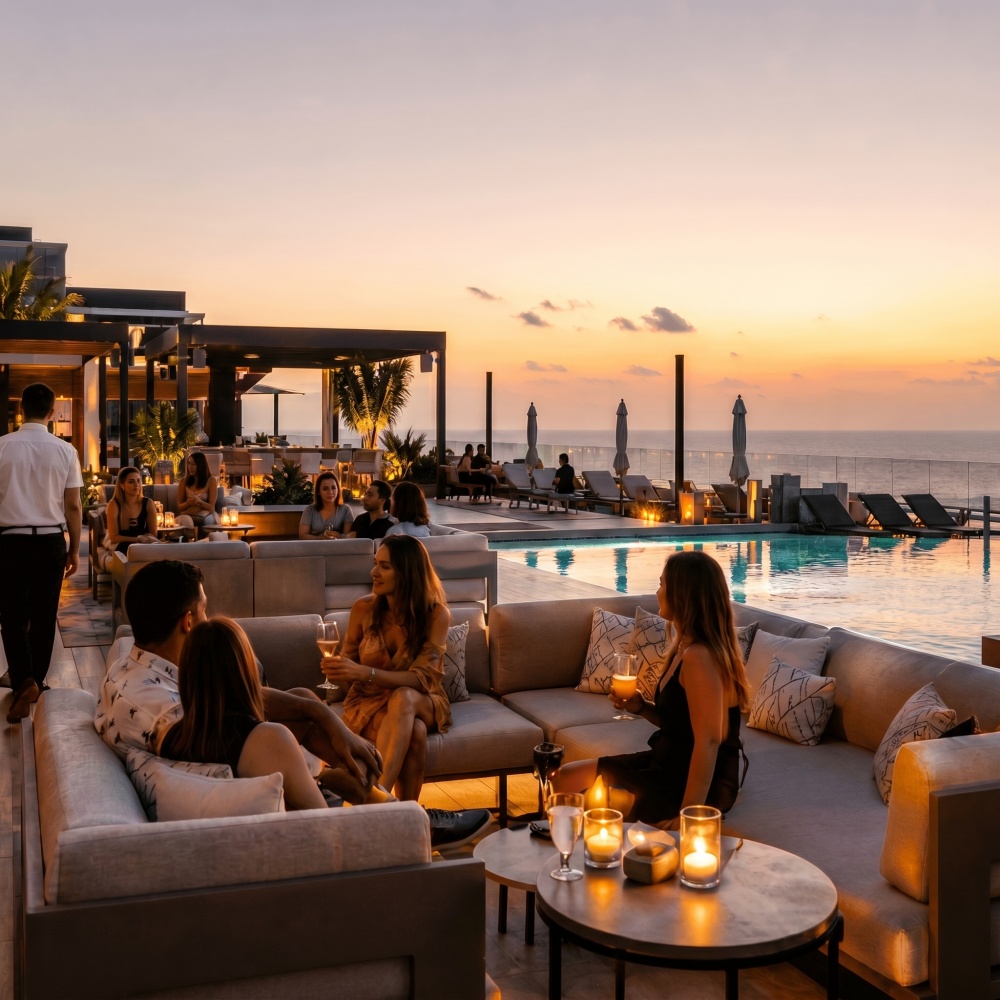
Outdoor sectional furniture helps shape how guests use and experience a space. On a hotel pool deck, a rooftop bar, or a resort terrace, it creates a comfortable, organized setting for gathering and relaxation. The right configuration supports longer, more comfortable use while keeping staff circulation and service flow smooth.
However, specifying outdoor sectional furniture for commercial use is very different from choosing a set for a private home. Hospitality environments involve constant movement, guests arriving and leaving, staff navigating between tables, and layouts shifting for events. Each sectional piece must support clear pathways while remaining comfortable and easy to maintain.
Durability is just as important. Sectional outdoor furniture in these settings must handle daily use, frequent cleaning, and exposure to sun, moisture, and wind. Materials, layout, and sizing all need to work together from the start.
This guide is designed for FF&E buyers, designers, and project teams planning outdoor spaces where long-term performance matters as much as appearance.
Sectional Layouts for Commercial Outdoor Spaces
The first step in specifying sectional outdoor furniture is choosing a layout that supports both guest comfort and staff circulation in high-use hospitality environments.
L-Shaped Sectionals
L-shaped configurations are widely used in hospitality. They fit well into corners on terraces and pool decks and typically seat 4 to 6 guests. Paired with a central table, they create defined seating zones without disrupting circulation.
U-Shaped Sectionals
U-shaped layouts work well in larger lounge areas, especially around fire features. They can seat 6 to 10 guests, creating a more defined social setting. This makes them well-suited for resort lounges and evening gathering spaces.
Modular Sectionals
Modular designs are widely used in commercial outdoor sectional furniture for hotels and resorts. Individual pieces can be rearranged into different configurations based on daily operations or special events. This flexibility allows operators to adapt layouts without replacing furniture.
Chaise Configurations
Chaise-style sectionals are common on pool decks and spa terraces. They support relaxed, extended seating and can be arranged in pairs or small clusters for a more private guest experience.
Circular and Curved Layouts
Circular outdoor sectional furniture is often used in upscale rooftop lounges and lobby terraces. Curved seating improves sightlines and creates a more natural flow for conversation in open spaces.
Each layout should be selected with both guest experience and operational flow in mind. A well-planned arrangement makes the space feel comfortable, intuitive, and easy to navigate.
Sizing Outdoor Sectionals for Hospitality Spaces
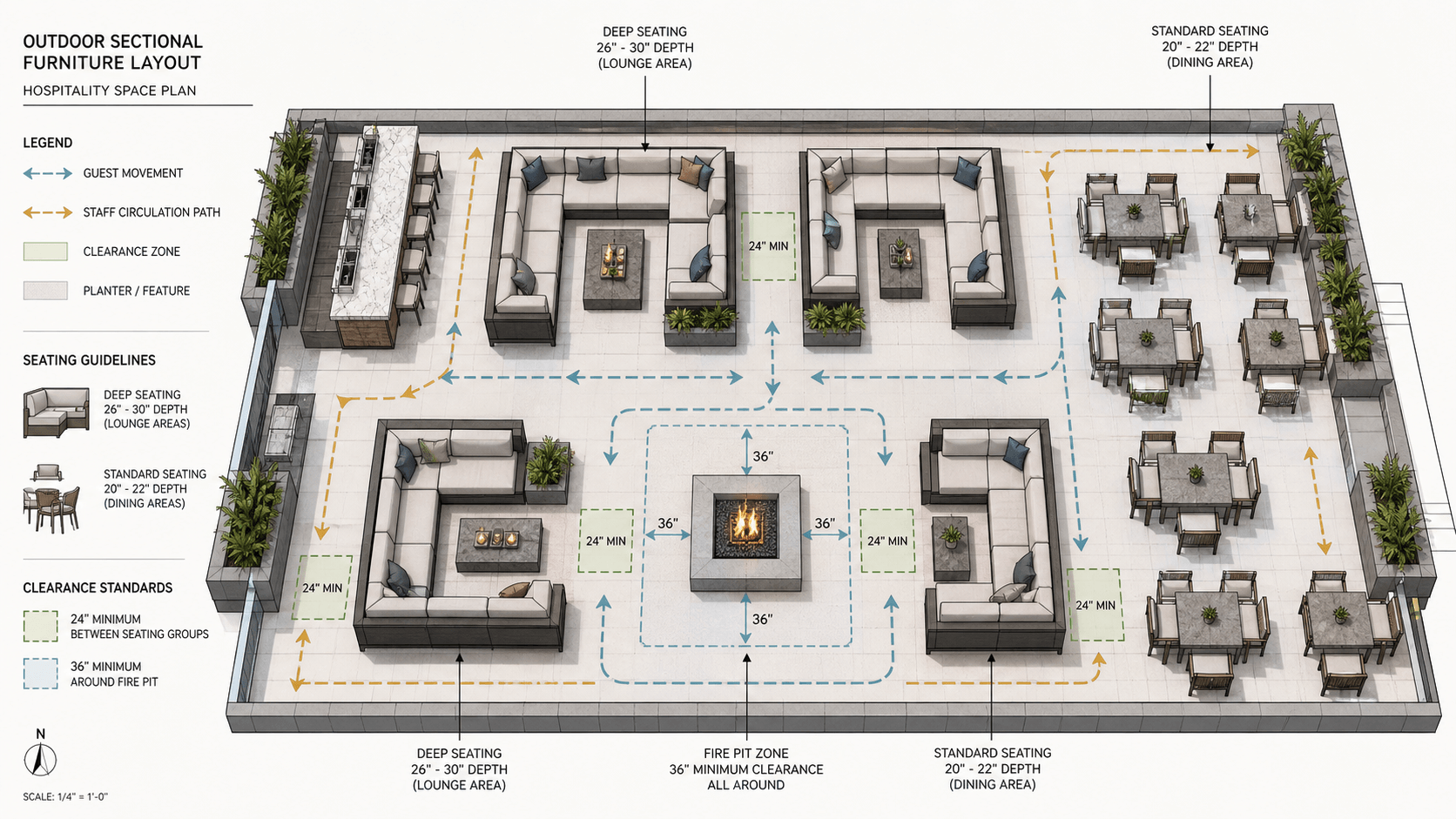
Once the layout is defined, sizing becomes the next priority. In commercial settings, spacing affects both comfort and day-to-day operational efficiency.
A minimum of 24 inches of clearance between seating groups helps staff move freely and supports guest accessibility. Around fire features, maintain at least 36 inches of space to support safer circulation and service access.
Seat depth also plays a key role.
Deep-seating sectional outdoor furniture (26–30 inches) is well-suited to lounge areas where guests spend more time.
Standard depth (20–22 inches) is better suited to dining-adjacent seating where posture is more upright.
On larger pool decks, oversized modular pieces give guests more personal space, especially during peak hours. In covered terraces, the scale of the sectional should match the architecture, large enough to anchor the space, but not so large that it restricts movement.
Before placing an order, project teams often create outdoor sectional furniture plans using CAD layouts or simple tape mockups on-site. This step helps confirm spacing, proportions, and guest flow before final decisions are made.
Materials for Commercial Outdoor Sectionals
Material selection determines how well outdoor sectional furniture performs over time. In hospitality settings, durability and ease of maintenance are just as important as appearance.
Frame Materials
Powder-coated aluminum is widely used because it is lightweight, corrosion-resistant, and easy for staff to reposition. It performs well in both coastal and urban environments.
FSC-certified Grade A teak is often chosen for premium applications. It provides natural weight and stability, especially in windy locations, but requires routine care to preserve its original tone and surface appearance.
Handwoven PE rattan or technical rope details are also common in resort settings, especially when paired with aluminum frames for added structural support and long-term outdoor performance. These woven materials should be UV-resistant and selected for commercial exposure to help maintain appearance under sun, moisture, and frequent guest use.
Cushion Construction
Cushions should use solution-dyed outdoor performance fabrics, which help resist fading under constant sun exposure. Inside, quick-dry foam cores help prevent moisture buildup, especially in poolside areas.
Zippered covers are important for commercial use. They allow for regular cleaning or replacement without needing to replace the entire cushion.
Long-Term Performance
In modern outdoor sectional furniture for commercial projects, clean aluminum frames paired with neutral cushions are a common choice. This combination balances durability, ease of maintenance, and a consistent visual style across multiple properties.
Materials should always be selected with daily cleaning cycles, weather exposure, and long-term replacement planning in mind.
Matching Sectional Configuration to Commercial Use Cases
Once layout, size, and materials are defined, the next step is aligning the configuration with how the space is used throughout daily hospitality operations.
Hotel Pool Deck
Modular sectionals with deep seating work well for poolside areas. Arranged in clusters of 4 to 6 seats, they support small groups while allowing flexibility during busy periods. Quick-dry cushions are especially important in splash-prone environments.
Resort Fire Pit Lounge
For spaces centered around a fire feature, U-shaped or large L-shaped configurations are often appropriate. Maintain at least 36 inches of clearance and consider stable frame construction or secured configurations for stable, consistent placement.
Rooftop Bar Lounge
Low-profile sectionals help preserve views while keeping the space open. Wind stability is important, so weighted or secured configurations are often used. Modular setups allow for efficient transitions between regular service and private events.
Restaurant Outdoor Waiting Area
Compact L-shaped or two-piece modular sectionals are practical for high-turnover areas. They should be easy to clean and durable enough for frequent use between seatings.
Each configuration should reflect how guests move through the space and how staff interact with it throughout the day to support comfort, service flow, and long-term performance.
Procurement Considerations for Commercial Buyers
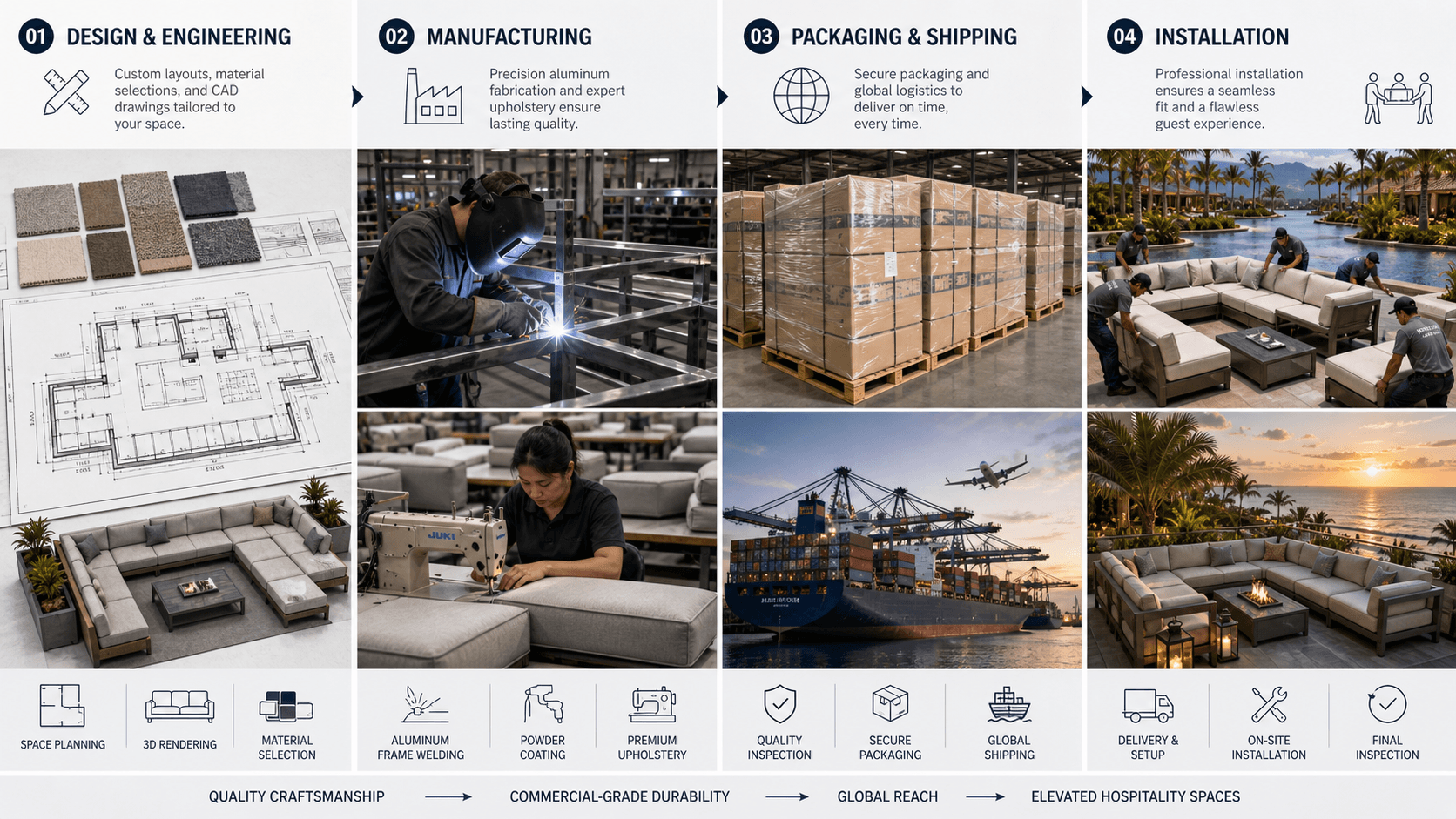
With layout and specifications defined, procurement becomes the next step. For commercial projects, this involves more than selecting a product.
Bulk ordering often comes with lead times that need to align with project schedules. Early planning helps reduce scheduling pressure and potential delays, especially for larger installations.
Customization is also important. Matching finishes, fabrics, and dimensions across multiple locations supports brand consistency and a cohesive guest experience. Many projects use OEM or ODM options to achieve this.
Warranty coverage should be reviewed carefully. Frames, cushions, and fabrics may have different terms, and understanding these details helps with long-term planning. Replacement cycles for cushions and covers should also be considered from the start.
Logistics play a key role in multi-unit projects. Freight coordination, site receiving, installation planning, and phased deliveries all need to be managed with clear timing and project requirements.
Kingmake manufactures custom outdoor sectional furniture for hotels, resorts, and commercial hospitality spaces worldwide, supporting bulk orders, approved specifications, material execution, and production requirements aligned with each project.
FAQs
What is the best outdoor sectional for hotels and resorts?
The best outdoor sectional furniture for hospitality is modular, durable, and built for frequent commercial use. Powder-coated aluminum frames and commercial-grade outdoor cushions support long-term outdoor performance, easier maintenance, and consistent guest comfort. Modular layouts allow hospitality teams to adjust seating for daily use or events. Deep seating (26–30 inches) is typically preferred for lounge areas where guests spend longer periods relaxing.
How do you choose the right size outdoor sectional for a commercial space?
Allow at least 24 inches between seating groups to support guest access and staff circulation, and 36 inches from fire features to maintain safer movement around heat sources. Choose a 26–30 inch seat depth for lounge areas and 20–22 inches for dining-adjacent seating. Planning with CAD layouts or on-site mockups helps confirm spacing, proportions, and service flow before final production or order approval.
What is a modular outdoor sectional and why is it used in hospitality?
A modular outdoor sectional is made of separate pieces that can be rearranged into different layouts to suit changing outdoor space requirements. It is widely used in hospitality environments because outdoor spaces often need to adapt for events, service needs, or changing guest flow. This flexibility supports both daily operations and special occasions while helping maintain a comfortable, organized outdoor guest experience.
Can commercial outdoor sectionals stay outside year-round?
Yes, commercial outdoor sectionals can remain outside year-round when they are built with outdoor-rated materials such as powder-coated aluminum, FSC-certified Grade A teak, UV-resistant PE rattan or technical rope, and solution-dyed performance fabrics. Quick-dry foam cushions help manage moisture in poolside, coastal, and high-humidity hospitality settings. In extreme weather, protective covers or seasonal cushion storage can help extend service life and maintain a guest-ready appearance over time.
What cushion fabric is best for hotel pool deck sectionals?
Solution-dyed outdoor performance fabrics are often specified because they help resist fading and support frequent cleaning cycles in poolside hospitality environments. Cushions should include quick-dry foam and removable covers to support moisture management, easier maintenance, and consistent guest-ready presentation in high-use areas.
What is deep seating outdoor sectional furniture?
Deep seating sectional outdoor furniture has a seat depth of approximately 26 to 30 inches and is designed for relaxed, extended guest use. It is commonly used in commercial poolside, resort lounge, and terrace settings where guests spend longer periods seated or reclining.
Conclusion
Choosing the right outdoor sectional furniture starts with a clear plan, one that considers layout, sizing, materials, and how the space will be used in daily hospitality operations. When these decisions are made early, outdoor areas are easier to manage, more comfortable for guests, and more visually consistent across hospitality properties.
Kingmake manufactures outdoor sectional furniture for hotels, resorts, and commercial hospitality projects worldwide, supporting standard models and custom sectional production for bulk orders. For new projects or updates to existing outdoor areas, Kingmake can produce sectional furniture based on approved specifications, material requirements, and project layouts.
 Whatsapp
 sales@cnkingmake.com
 +8613925925021