
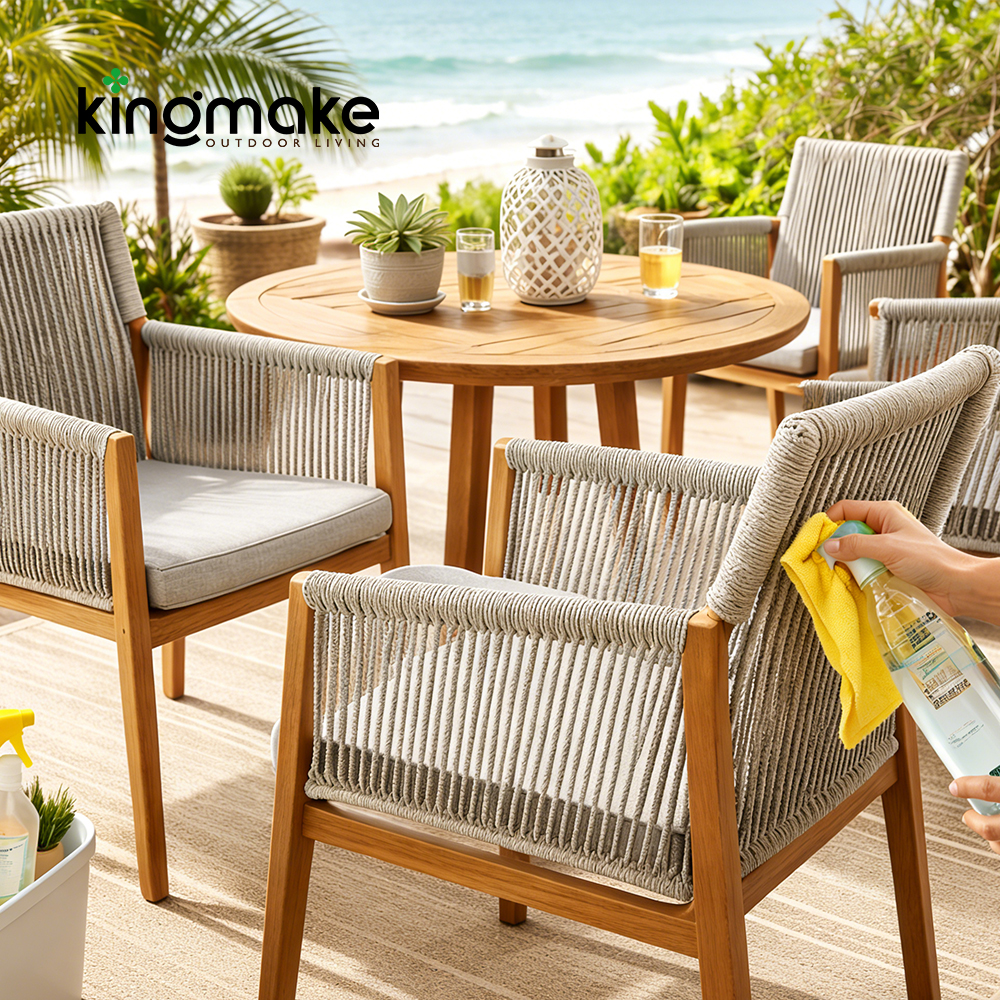
Maintain Outdoor Rope Chairs in Coastal Humid Climates
Rope outdoor chairs are a favourite in modern hospitality design for a reason. They look light and elegant, they add texture without feeling heavy, and they can make a pool deck or terrace feel more " resort instantly.” But in humid and coastal environments, rope seating also needs a smarter maintenance routine than a typical patio chair. Salt air leaves a film that dulls surfaces and stresses hardware. Humidity increases mildew risk, especially where airflow is poor. Intense sun fades colour and dries materials unevenly over time.
The good news is that rope chairs can stay beautiful for years in coastal regions when you follow a simple approach: remove salt regularly, keep the weave dry, protect from harsh UV exposure, and inspect small issues early. This guide explains exactly how to do that with realistic routines that hotels, resorts, and homeowners can actually maintain.
Why Rope Chairs Need Special Care Near the Ocean
Coastal and humid climates create a “double threat.” Salt spray and airborne salt settle on surfaces even when the weather feels calm. At the same time, humidity traps moisture inside tight weaves and corners, creating conditions where mildew can appear if chairs are not dried fully.
Rope seating also has more surface area than a smooth metal chair. That’s part of what makes it attractive, but it also means it can hold dust, pollen, sunscreen residue, and salt film more easily. If that build-up is left in place, it becomes harder to remove and can accelerate discoloration.
In high-traffic hospitality spaces, the issue isn’t only weather. Guests sit with wet towels, dripping swimsuits, and pool chemicals on their skin. That’s normal use—but it means rope chairs should be cleaned lightly and consistently, rather than waiting for visible staining.
Know Your Rope: Synthetic vs Natural (Maintenance Changes)
Not all rope furniture is the same. Understanding what you’re working with helps you choose the right care routine.
Synthetic outdoor rope
Most commercial rope chairs use synthetic rope designed for outdoor use. This rope is typically more resistant to moisture, easier to clean, and less likely to absorb water compared to natural fibres. For coastal hospitality seating, synthetic rope is usually the most practical option because it handles humidity and frequent cleaning better.
Natural fibre rope
Natural rope can look beautiful but requires more caution in humid environments. It tends to absorb moisture faster and can be more sensitive to aggressive cleaning. If you’re using natural fibres, drying becomes more urgent after rain, and you’ll want to avoid any routine that keeps the rope damp for long periods.
If you’re unsure which rope you have, a quick clue is feel and behaviour after rain: synthetic rope typically dries faster and feels less absorbent, while natural fibres can stay damp longer and feel more “textile-like.”
The Maintenance Priorities That Matter Most
In humid and coastal environments, rope-chair maintenance is less about heavy scrubbing and more about controlling three consistent risks.
Priority 1: Remove salt film before it “sets”
Salt doesn’t always look dramatic. It often appears as a slight dulling of the finish or a faint gritty feeling on the surface. If you wipe it regularly, it stays manageable. If you ignore it, it bonds with grime and becomes harder to clean.
Priority 2: Keep rope fully dry after rain
Mildew thrives when moisture is trapped in shade. Rope weaves, especially in tight patterns, can hold moisture longer than flat surfaces. Drying completely after rain or deep cleaning is one of the biggest factors that prevents mildew.
Priority 3: Reduce UV stress
Sun is not just a colour issue. UV exposure can weaken materials and accelerate fading. In coastal settings, UV plus salt plus humidity adds up faster than most people expect. Smart shade planning extends the life of rope colour and keeps seating more comfortable for guests.
A Simple Maintenance Schedule (Hotel-Friendly)
The best maintenance routine is the one staff can actually follow. Here’s a schedule that works for most coastal and humid locations.
Weekly: quick salt control
A quick weekly routine focuses on salt film and high-touch areas. Wipe the rope surface lightly and pay attention to armrests, seat edges, and top rails where hands and sunscreen residue collect. If the chair sits near the ocean or the pool edge, weekly is the minimum.
Monthly: gentle wash and full dry
Once a month, do a light clean with mild soap and water. The key is gentle brushing, thorough rinsing, and full drying. This monthly reset prevents grime and salt from building up in the weave.
Seasonal or quarterly: inspection and tightening
Every season (or every quarter for hotels), inspect for loose rope wraps, fraying, sagging, and hardware loosening. Most rope-chair problems become expensive only when they’re ignored. Small adjustments early can prevent major repairs later.
How to Clean Rope Chairs Safely (Step-by-Step)
Cleaning rope chairs correctly is simple, but the details matter. The goal is to lift residue without damaging the rope fibres or pushing grime deeper into the weave.
Use mild soap and a soft brush
Mix mild soap with water and use a soft cloth or soft-bristle brush. Gently scrub the rope in the direction of the weave. Avoid aggressive scrubbing that can fuzz fibres or roughen the rope surface.
Rinse thoroughly
Rinsing is just as important as washing. Soap residue left inside the rope can attract more dirt and create a sticky feel. Rinse until the water runs clear.
Dry completely before covering or stacking
After cleaning, let the chair dry fully. Sun and airflow help. The most common mistake in humid climates is cleaning and then covering too soon. A cover traps moisture and can create mildew conditions even after a “good clean.”
What to avoid
Avoid harsh chemical cleaners, solvents, and aggressive abrasive pads. These can damage rope fibres, weaken protective coatings, and make fading worse over time.
Mildew and “Green Spots”: What to Do in Humidity
Even with good routines, mildew can appear in humid environments—especially in shaded corners or after long rainy periods.
Don’t spread the problem
If you see mildew spots, avoid dry brushing in a way that spreads debris into the air and onto other chairs. Instead, take the chair into a well-ventilated area and handle cleaning with controlled wiping and rinsing.
Use a gentle spot-treatment approach
For light mildew, a gentle cleaning solution and soft brushing usually works. The key is not just removing the visible spot—it’s eliminating the conditions that caused it. If mildew returns quickly, the root cause is almost always trapped moisture, poor airflow, or chairs being covered while damp.
Fix the root causes
If mildew returns repeatedly, check:
Are chairs placed too close together, blocking airflow?
Are covers trapping humidity overnight?
Are chairs staying wet after rain because they’re in deep shade?
Is there organic residue (pollen, food spills) feeding mildew growth?
Once you adjust these conditions, mildew becomes much easier to prevent long-term.
Drying, Airflow, and Placement (The Hidden Difference)
Many outdoor furniture problems aren’t caused by cleaning—they’re caused by drying.
Give rope time and space to dry
After rain or cleaning, rope chairs need airflow. If chairs are packed tightly together or against a wall, they dry more slowly. In coastal environments, where humidity stays high, slow drying increases mildew risk.
Avoid permanent “shade traps”
Shaded patios are great for guest comfort, but deep shade combined with humidity can slow drying significantly. If your seating area stays shaded all day, consider shifting chair placement periodically or increasing airflow in the zone.
Covers: Protect Without Trapping Moisture
Cover strategy makes a big difference in humid and coastal climates. The goal is protection from salt spray and UV exposure without turning the chair into a sealed moisture container.
Breathable covers beat plastic tarps
Plastic traps humidity. In coastal air, that can accelerate mildew and cause hardware corrosion. A breathable cover helps protect surfaces while still allowing airflow.
Cover only when chairs are dry
This is the rule that prevents most mildew issues. If chairs are damp—even slightly—dry them before covering. In hospitality settings, it can be helpful to schedule covering after a short drying window at the end of the day.
If your property needs consistent protection in harsh environments, a fitted, breathable solution from the Furniture Cover range can reduce daily cleaning time while helping rope chairs stay fresh-looking through peak season.
Inspect and Repair Early (Stops Replacement Costs)
Rope chairs usually fail slowly. Catching problems early makes them easy to fix.
Rope checks
Check arm edges and seat edges first. These are the areas that experience the most friction and body contact. Look for fraying, loosening wraps, sagging sections, or abrasion points that are getting worse over time.
Frame and hardware checks
In coastal environments, small hardware parts can loosen or corrode first. Check screws, joints, and any moving parts. If the chair feels slightly wobbly, tighten it early. Wobble often creates extra stress on the rope and can lead to premature wear.
What Hotels Should Spec Differently for Coastal Projects
Maintenance becomes easier when the furniture is chosen correctly at the start.
Rope quality and weave density
A well-made rope weave holds shape better and resists sagging longer. Tighter weave and consistent tension generally perform better in heavy-use hospitality environments.
Frame materials and finishes
Coastal projects usually perform best with corrosion-resistant frames and durable finishes. The frame is the backbone—if it weakens, the rope structure suffers too.
Shade strategy to extend life
Shade isn’t only for comfort. It reduces UV stress and helps rope colour stay vibrant longer. In hospitality layouts, pairing rope seating zones with a flexible shade plan can significantly improve longevity and comfort. A high-quality Patio Umbrella setup over rope chairs helps guests stay longer while reducing direct sun exposure on the rope weave.
About Kingmake Outdoor
Kingmake Outdoor is a Foshan, China–based one-stop manufacturer supplying hospitality-grade outdoor furniture to hotels, resorts, and commercial projects worldwide, with end-to-end support across design, production, and global shipping. For coastal properties, we help buyers select rope seating that’s practical to maintain and consistent in finish across larger outdoor layouts, so replacement and expansion stays simple over time. Many projects pair our rope Outdoor Chair collections in dining and lounge zones with breathable protection from the Furniture Cover range, creating a cleaner, longer-lasting setup that stands up to salt air, humidity, and daily guest use.
Common Mistakes (and Fast Fixes)
Covering chairs while damp
This is the fastest way to create mildew problems. Dry first, then cover.
Cleaning too aggressively
Harsh chemicals and abrasive tools can damage rope fibres and accelerate fading. Gentle cleaning more often is better than heavy scrubbing rarely.
Ignoring airflow
If chairs are packed too tightly or placed in a shaded corner that never dries, mildew risk rises. Adjust placement, increase spacing, and let chairs dry after rain.
Final Thoughts
Rope chairs can be a long-lasting, high-impact design choice in coastal and humid environments—if you manage salt film, moisture, and sun exposure with simple routines. Clean gently but consistently, dry fully before covering, and inspect small issues early. With the right maintenance habits and a smart protection plan, rope seating stays crisp, comfortable, and photo-ready through long seasons of real hospitality use
FAQs: Maintaining Rope Chairs in Humid and Coastal Environments
How often should I clean rope outdoor chairs near the ocean?
A light weekly wipe is ideal for salt control, with a gentle monthly wash to prevent grime build-up in the weave.
Can outdoor rope furniture get wet?
Yes, but it should be dried fully afterward. Leaving rope damp in shade for long periods increases mildew risk.
How do I remove mildew from outdoor rope chairs?
Start with gentle cleaning and thorough rinsing, then dry completely in a well-ventilated area. If mildew returns, address airflow and cover habits.
What should I avoid cleaning rope chairs with?
Avoid harsh chemicals, bleach-heavy routines, strong solvents, and abrasive scrubbing tools that can damage rope fibres and finishes.
Do I need furniture covers for rope chairs in humid climates?
Covers help when they are breathable and used correctly. Always cover only after chairs are fully dry to prevent trapped moisture.
Why does outdoor rope furniture fade?
UV exposure is the main driver. Shade planning and reducing constant direct sun helps extend colour life.
How do I stop rope from sagging over time?
Prevent wobble, tighten hardware early, avoid dragging chairs, and keep the weave clean. Proper construction and routine inspections make the biggest difference.
Are synthetic ropes better than natural rope for coastal regions?
In most hospitality projects, synthetic rope is easier to maintain and more resistant to moisture and mildew compared to natural fibre rope.
 Whatsapp
 sales@cnkingmake.com
 +8613925925021