
Outdoor Furniture Warranty Guide: What Commercial Buyers Should Check Before Ordering
Introduction
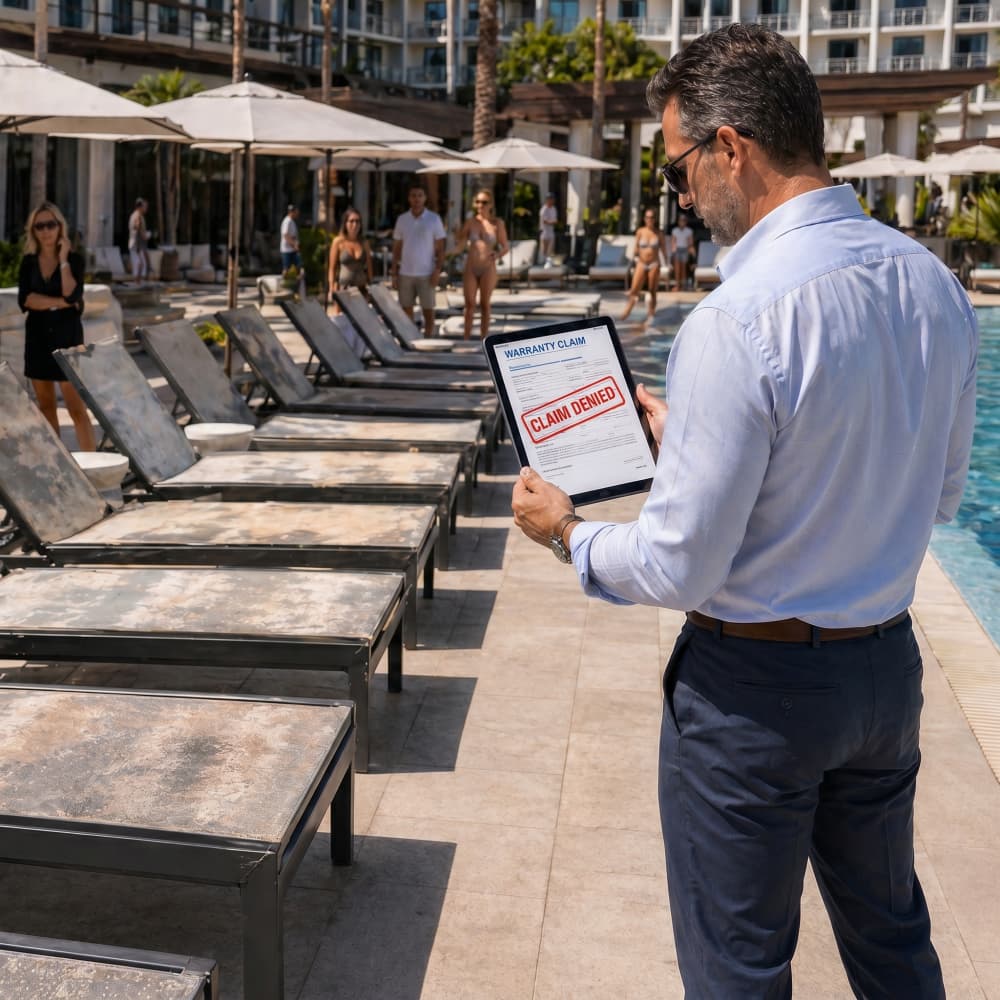
A hotel property manager notices that poolside loungers have faded unevenly after 18 months. Guests begin to notice, and the space no longer reflects the brand. A warranty claim is filed, but it is denied. The finish warranty covers manufacturer defects, not UV fading.
Situations like this are common in hospitality. The issue is not just the product. It is a misunderstanding of what an outdoor furniture warranty actually covers. When specifying 100 or more pieces, small details in warranty terms can lead to significant costs.
This guide explains what commercial outdoor furniture warranties include, what to check, and what red flags to identify before placing a large order.
Why Outdoor Furniture Warranties Matter More for Commercial Buyers?
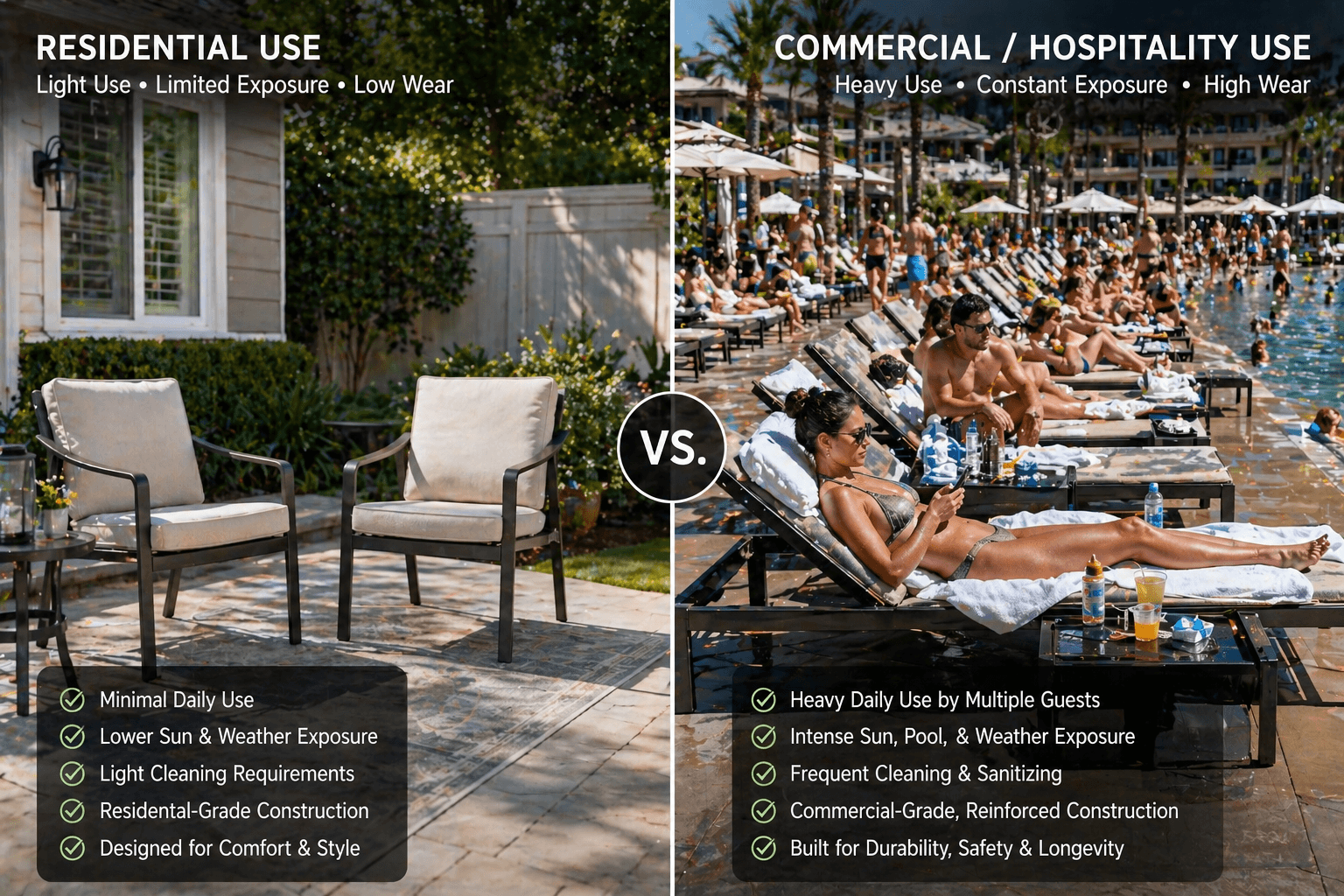
Outdoor furniture in hospitality settings faces constant, high-volume use. A poolside lounger in a resort may be used by dozens of guests each day, along with exposure to UV rays, chlorine, salt air, and regular cleaning. In practice, this can mean 8 to 10 times the use of residential furniture.
At a commercial scale, the impact is significant. Replacing four chairs is manageable. Replacing 100 loungers mid-season affects budgets, operations, and guest experience. A partially furnished pool deck or mismatched replacements can disrupt the visual consistency of the space.
This is where an outdoor furniture warranty becomes a key part of the procurement decision. It is not only about protection. It directly affects total cost of ownership. Reviewing commercial outdoor furniture warranty length alongside durability and design helps ensure the investment performs over time.
For commercial buyers, understanding what a furniture warranty covers helps avoid gaps in protection and unexpected replacement costs.
To assess this properly, it helps to break the warranty into its core components.
The Three Parts of an Outdoor Furniture Warranty
An outdoor furniture warranty is not a single, uniform term. Coverage is divided into separate components, each with its own conditions. Commercial buyers should review each part individually, not as one combined promise.
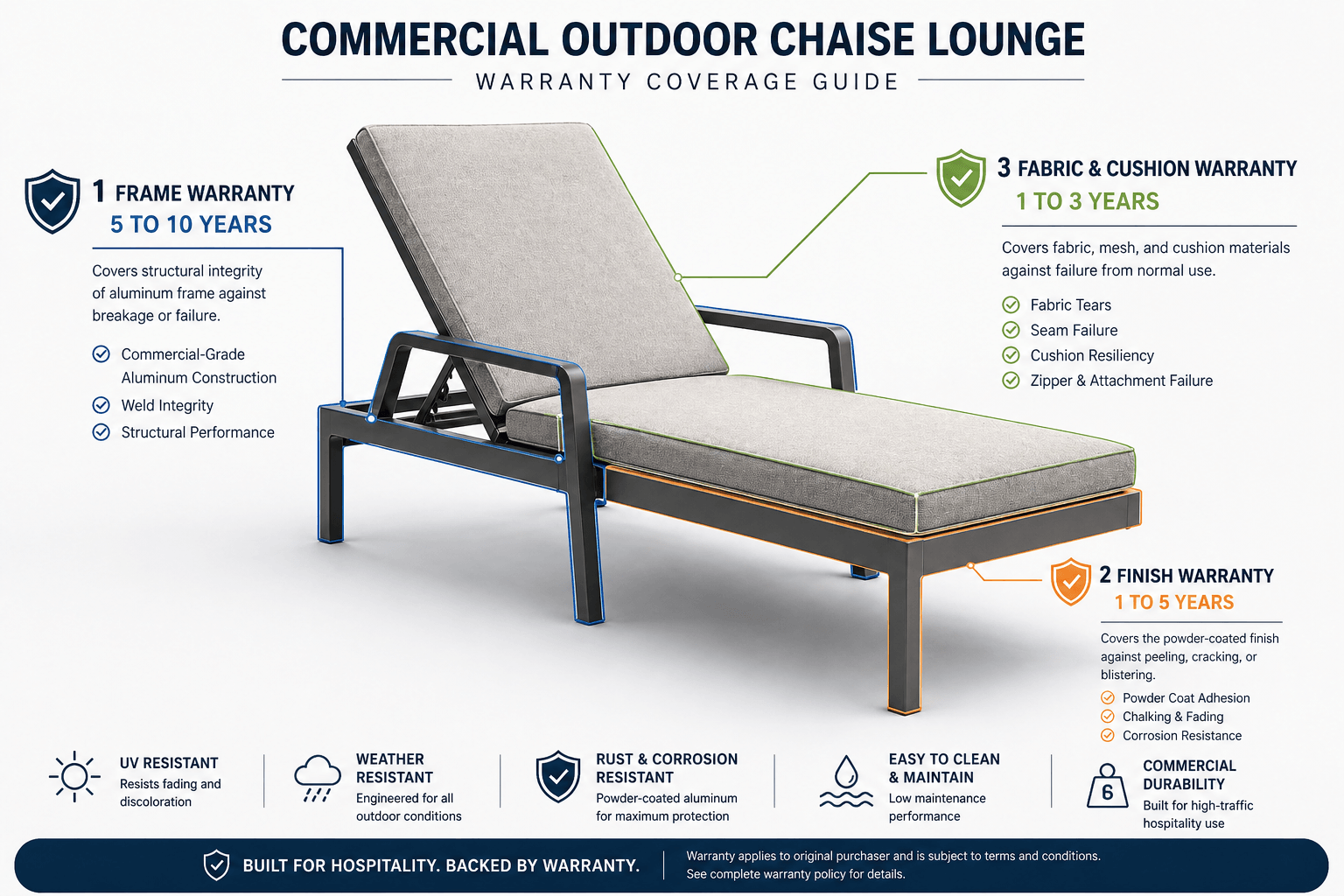
Frame Warranty (Structural Integrity)
The frame warranty covers structural elements such as welds, joints, and overall stability. This is usually the strongest part of the warranty.
For contract-grade furniture, coverage typically ranges from 5 to 10 years. Aluminum frames are often used in coastal or humid environments due to corrosion resistance, while steel frames may require protective treatments.
When reviewing commercial outdoor furniture warranty length, the frame typically offers the longest coverage.
Finish Warranty (Surface Protection)
The finish warranty applies to powder coating, paint, or surface treatments. This is where most issues arise.
Coverage usually ranges from 1 to 5 years. UV fading is often excluded or only partially covered. Even UV-resistant finishes may not maintain color under constant sun exposure, especially on pool decks or rooftop spaces.
This is a key part of understanding what a furniture warranty covers. Visual wear is often the first issue noticed, but it is not always protected.
Fabric & Cushion Warranty
Fabric and cushion warranties cover outdoor textiles, seams, and foam performance. Coverage typically ranges from 1 to 3 years.
In hospitality settings, cushions are exposed to sunscreen, moisture, and frequent cleaning. While many materials resist mold and mildew, gradual wear may fall outside warranty terms.
For any commercial patio furniture warranty, fabric coverage should be reviewed separately from frame and finish.
Key Insight: A stated warranty period, such as 5 years, often applies only to the frame. It does not cover the entire product. Each component has its own terms, which is important when comparing options, including claims of lifetime warranty outdoor furniture.
Common Warranty Exclusions to Watch For
Understanding what an outdoor furniture warranty does not cover is as important as knowing what it includes. Most issues arise from exclusions that are easy to overlook.
Focus on these common exclusions:
Normal wear and tear: This is the most common and broadest exclusion. It may include fading, minor corrosion, or gradual material degradation. In high-use hospitality settings, this is often where claims are denied.
UV fading: UV fade is frequently excluded, even on materials described as UV-resistant. In areas with constant sun exposure, such as beachfront or rooftop spaces, this can lead to visible wear within a short time.
Damage from cleaning chemicals: Commercial cleaning products, especially poolside sanitizers, can affect finishes and fabrics. Damage caused by these chemicals is often not covered under warranty terms.
Acts of nature: Environmental factors such as wind, flooding, hail, and salt air are typically excluded. This is critical for coastal or high-exposure properties.
Commercial use exclusion: Some warranties apply only to residential use. If furniture is used in a hospitality setting, the warranty may be void. This is a key check in any commercial patio furniture warranty.
Stacking damage: Furniture may be designed for stacking, but damage from stacking is sometimes excluded. If stacking is part of daily operations, confirm coverage in writing.
These exclusions define the real value of a warranty. Reviewing them carefully helps avoid gaps in protection and unexpected replacement costs.
What “Lifetime Warranty” Actually Means?
The term “lifetime warranty” does not have a universal definition. In an outdoor furniture warranty, it can refer to the lifetime of the product, the original purchaser, or the company itself. Each definition leads to different levels of coverage.
For commercial buyers, this distinction matters. A warranty tied to the original purchaser may not apply if a hotel changes ownership or management. This can limit long-term protection, especially for properties with evolving operational structures.
The claims process also varies. Some warranties offer repair, others replacement, and some provide credit. Many commercial outdoor furniture lifetime warranty terms are prorated, meaning coverage decreases over time rather than remaining fixed.
Key factors to confirm:
What “lifetime” refers to: product, purchaser, or company
Whether the warranty transfers with ownership or management changes
What the claims process includes: repair, replacement, or credit
Whether coverage is prorated over time
The label itself does not define quality. The best outdoor furniture warranty is based on clear terms, not marketing language. Always review the full warranty document, not just the summary.
Questions to Ask Your Supplier Before Ordering
Before placing an order, a few focused questions can clarify warranty terms and reduce risk. An outdoor furniture warranty should be reviewed in detail, especially for commercial projects where usage is high and replacement costs are significant.
Start by confirming that the warranty is designed for commercial use. Some suppliers offer only residential coverage, which may not apply in hospitality environments. This is a critical check in any commercial patio furniture warranty.
Finish coverage should also be reviewed carefully. UV exposure is one of the most common causes of visible wear, yet it is often excluded or limited in warranty terms.
Key questions to ask:
Is the warranty valid for commercial use
What is excluded from the finish warranty, especially UV-related issues
Does the warranty transfer if ownership or management changes
What is the claims process, including documentation and timelines
Who covers shipping costs for warranty claims
Are replacement parts available after five or more years
How long has the supplier been operating
Clear answers to these questions make it easier to compare suppliers and evaluate overall risk. Warranty terms should support long-term use, not just initial purchase decisions.
Comparing Warranty Terms Across Suppliers

When evaluating multiple suppliers, a simple comparison matrix helps clarify differences. An outdoor furniture warranty should be assessed across consistent categories for accurate comparison.
Focus on these core areas:
Frame warranty length
Finish warranty length
Fabric warranty length
Key exclusions
Transferability
A strong commercial warranty typically includes a 10-year frame warranty, 3 to 5 years on the finish, and 2 to 3 years on fabric. It supports commercial use and allows transfer if ownership changes.
A weaker warranty may appear as a single “1-year limited warranty” with no breakdown by component. Exclusions may be unclear, and coverage may apply only to residential use.
Comparing commercial outdoor furniture warranty length across these categories helps identify long-term value and determine what qualifies as the best outdoor furniture warranty for a project.
Warranty as a Strategic Investment
Warranty terms are a procurement decision, not an afterthought. For hotels and resorts, a well-defined outdoor furniture warranty reduces total cost of ownership and helps avoid operational disruption.
When projects range from $50,000 to $500,000 or more, details matter. Review the full warranty document, not just the summary. Ask clear questions about coverage, exclusions, and claims. Compare suppliers based on warranty quality alongside price and lead time.
At Kingmake Outdoor, this approach guides how commercial projects are evaluated and specified for long-term performance.
A strong warranty supports consistent property standards and reliable outcomes over time.
Frequently Asked Questions
What does a commercial outdoor furniture warranty typically cover?
A commercial outdoor furniture warranty usually covers three parts: the frame, the finish, and the fabric or cushions. Frame warranties often range from 5 to 10 years, while finish coverage is typically 1 to 5 years and fabric 1 to 3 years. Each component has separate terms, so it is important to review them individually to understand what a furniture warranty covers in practice.
What is excluded from most outdoor furniture warranties?
Most warranties exclude normal wear and tear, which may include fading, minor corrosion, or gradual material breakdown. UV fading is often excluded, even on UV-resistant materials, along with damage from cleaning chemicals, salt air, and extreme weather. In some cases, commercial use may void a residential warranty. These exclusions often determine whether a claim is approved.
What does lifetime warranty mean for outdoor furniture?
A lifetime warranty may refer to the lifespan of the product, the original purchaser, or the company. There is no single definition. Many lifetime warranty outdoor furniture terms are prorated, meaning coverage decreases over time. For example, a 10-year warranty may offer full coverage early on and partial coverage later. Always review the full terms.
How long should commercial outdoor furniture warranty coverage be?
A strong commercial outdoor furniture warranty length typically includes around 10 years for the frame, 3 to 5 years for the finish, and 2 to 3 years for fabric. These ranges reflect high-use environments such as hotels and resorts. Shorter or unclear warranties may indicate limited protection.
Does an outdoor furniture warranty transfer when a hotel changes ownership or management?
Not all warranties transfer. Some remain valid for new owners or operators, while others apply only to the original purchaser. For hospitality properties, this can affect long-term value. Confirm transferability in writing before finalizing the order.
 Whatsapp
 sales@cnkingmake.com
 +8613925925021