
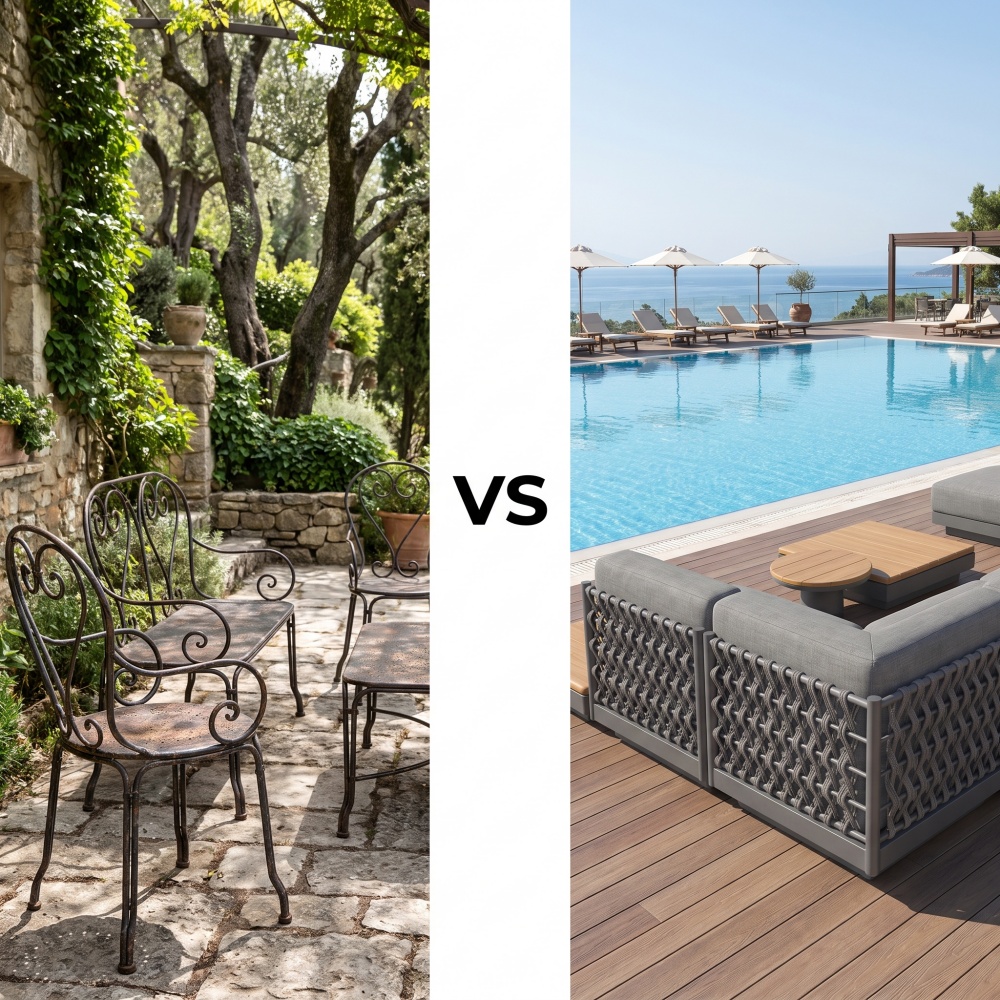
Wrought Iron vs Aluminum Outdoor Furniture
Hospitality outdoor spaces are under more pressure than ever to perform. Guests expect resort-quality poolside lounges, hotels want outdoor lobbies and terraces that photograph well for marketing, and developers need furniture that survives years of sun, salt air, and heavy daily use without constant repair. For procurement managers and designers sourcing at scale, the decision between wrought iron patio furniture and aluminum outdoor furniture is rarely about looks alone. It affects shipping costs, installation labor, long-term maintenance budgets, and how quickly a project can open on schedule. This guide breaks down the practical differences so you can match the right material to your project's climate, budget, and design brief.
Weight & Portability Comparison
Weight is often the first practical factor procurement teams overlook until furniture arrives on site. Wrought iron patio furniture is dense and solid, which gives it a stable, grounded feel that resists tipping in windy coastal locations. That same weight, however, makes it harder to move for daily cleaning, event reconfiguration, or seasonal storage, and it increases freight costs on large hotel or resort orders.
Aluminum outdoor furniture is significantly lighter, 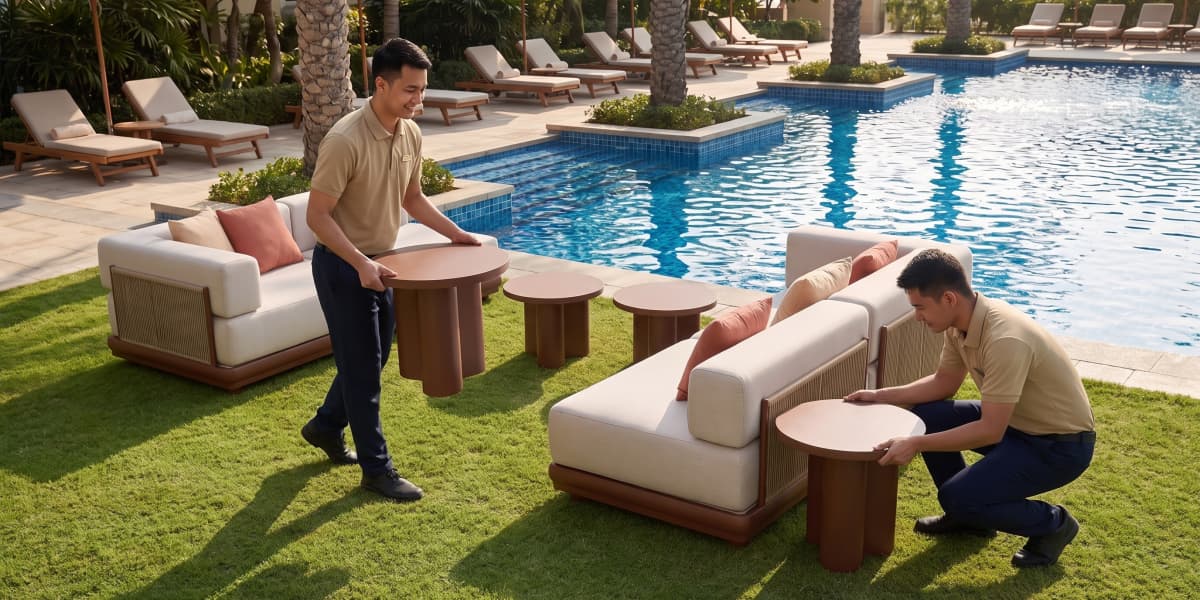 typically less than half the weight of comparable wrought iron pieces. This makes it easier for housekeeping and grounds staff to rearrange for events, banquets, or poolside layout changes, and it reduces shipping and handling costs on bulk commercial outdoor furniture orders. For properties that frequently reconfigure their outdoor floor plans, this is a meaningful operational advantage.
typically less than half the weight of comparable wrought iron pieces. This makes it easier for housekeeping and grounds staff to rearrange for events, banquets, or poolside layout changes, and it reduces shipping and handling costs on bulk commercial outdoor furniture orders. For properties that frequently reconfigure their outdoor floor plans, this is a meaningful operational advantage.Procurement tip: For fixed lounge areas or wind-exposed terraces, wrought iron's weight can be an asset. For banquet lawns, rooftop bars, or spaces that need flexible layouts, aluminum's portability usually wins.
Cost Comparison: Upfront & Long-Term
Upfront pricing depends heavily on order volume, finish quality, and customization, but as a general rule, wrought iron patio furniture carries a higher raw material and labor cost due to the forging and welding process. Aluminum outdoor furniture, particularly when produced through efficient extrusion or casting methods, tends to offer a more competitive unit price at scale, which matters for distributors and importers working with tight per-unit budgets.
Long-term cost tells a different story that project owners often underestimate at the sourcing stage. Wrought iron requires periodic recoating or touch-up painting to prevent rust from forming at joints and welds, which adds ongoing labor and material costs over a furniture lifecycle of five to ten years. Aluminum, especially when powder-coated correctly, generally needs less frequent maintenance, lowering total cost of ownership even if the initial unit price is similar.
| Factor | Wrought Iron Patio Furniture | Aluminum Outdoor Furniture |
| Typical unit weight | Heavy | Light to moderate |
| Upfront cost (bulk order) | Moderate to high | Moderate |
| Long-term maintenance cost | Higher (repainting, rust checks) | Lower |
| Shipping cost per container | Higher | Lower |
| Lifespan with proper care | 8–15+ years | 10–20+ years |
| Best climate fit | Dry, moderate coastal | Coastal, humid, high-UV |
Weather & Rust Resistance
This is usually the deciding factor for resort and beachfront projects. Wrought iron is prone to rust if the protective coating is scratched or worn, and salt air accelerates this process considerably. Untreated or poorly coated wrought iron can develop surface corrosion within a single humid season, which is a real risk for hotel outdoor furniture positioned near pools or oceanfront terraces.
Aluminum naturally forms a protective oxide layer and does not rust the way iron does, making it a preferred material for coastal resort furniture and high-humidity climates. When properly powder-coated, aluminum outdoor furniture holds up well against UV exposure, rain, and salt spray with minimal degradation, which is why many commercial outdoor furniture specifications for beach resorts default to aluminum frames.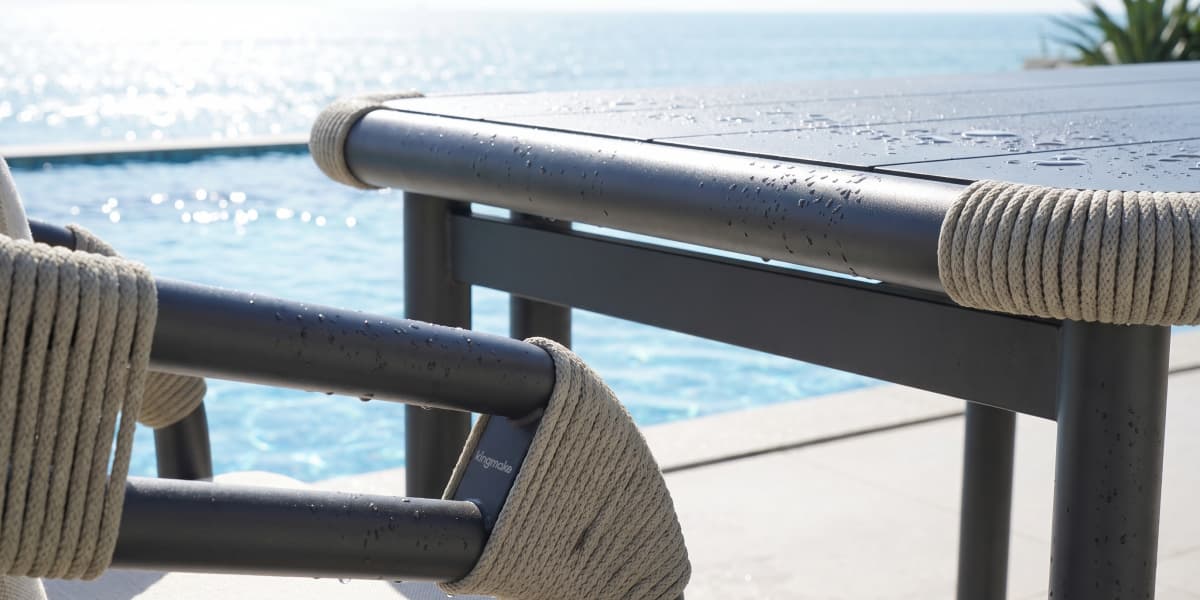 Wrought iron can still perform well in drier, more moderate climates when it is properly primed, coated, and maintained on a regular schedule.
Wrought iron can still perform well in drier, more moderate climates when it is properly primed, coated, and maintained on a regular schedule.Style & Design Differences
Wrought iron patio furniture has a distinctive, ornamental character. Scrollwork, curved silhouettes, and a substantial visual weight give it a classic, traditional aesthetic that suits heritage hotels, formal gardens, and villa-style properties looking for a timeless look.
Aluminum outdoor furniture offers more design flexibility for contemporary hospitality projects. It can be shaped into slim, modern profiles or cast into more decorative forms, giving architects and designers a wider range for minimalist resort lounges, rooftop bars, or modern outdoor kitchens. Many hospitality brands pair aluminum frames with woven rope, teak accents, or performance fabrics to achieve a refined, custom outdoor furniture look without the weight penalty of iron. Explore examples across luxury outdoor furniture collections to see how frame material shapes overall design language.
Which One Fits Hospitality Projects Better?
There is no single correct answer. The right choice depends on the property's climate, layout flexibility needs, and brand aesthetic. Coastal resorts and high-humidity destinations generally lean toward aluminum outdoor furniture for its rust resistance and lighter logistics footprint. Inland properties, boutique hotels with a traditional design brief, or gardens with a formal aesthetic may still prefer the character of wrought iron, provided a strong maintenance plan is in place.
Many hospitality projects use both materials strategically, aluminum for pool decks and high-traffic areas, wrought iron for accent seating in gardens or lobbies. This kind of mixed-material planning is common across hospitality outdoor furniture programs, where different zones of a property carry different functional demands. Reviewing completed hotel outdoor furniture projects can help procurement teams see how material choices play out across real properties before committing to a full order.
For teams comparing more material categories beyond these two, it's worth also reviewing options like teak outdoor furniture and wicker and rattan patio furniture, since many hospitality specifications blend frame materials with natural or woven elements for texture and warmth.
What to Evaluate Before Ordering Commercial Outdoor Furniture
Before finalizing a bulk order, procurement and design teams should walk through this checklist:
Climate exposure: Is the site coastal, humid, or high-UV? This affects rust risk and coating requirements.
Layout flexibility: Will furniture need to be moved often for events or seasonal changes?
Maintenance capacity: Does the property have staff or budget for periodic recoating and upkeep?
Order volume and timeline: Can the supplier meet production and shipping deadlines for the project opening date?
Customization needs: Are custom colors, finishes, or branded design elements required?
Warranty and quality control: What inspection standards and warranty terms does the manufacturer offer?
Total cost of ownership: Does the quote account for long-term maintenance, not just unit price?
Working through this list early prevents costly mid-project changes and helps align expectations between designers, procurement teams, and the manufacturer.
Sourcing Wrought Iron and Aluminum Outdoor Furniture Reliably
For distributors, importers, and hospitality brands, material choice is only part of the equation. Supplier reliability determines whether a project stays on schedule and whether the furniture performs as specified once installed. Below is a general comparison of sourcing approaches available to commercial buyers.
| Sourcing Option | Customization | Lead Time Control | Quality Consistency | Best For |
| Local retail suppliers | Limited | Low | Variable | Small, urgent orders |
| Trading companies | Moderate | Moderate | Depends on factory oversight | Mid-size distributors |
| Direct factory / OEM-ODM manufacturer | High | High | High, with in-house QC | Hotels, resorts, large projects |
Working directly with an OEM outdoor furniture manufacturer generally gives project teams more control over specifications, finishes, and delivery timelines, which matters most for large-scale developments with fixed opening dates. Reviewing a manufacturer's product range and past commercial outdoor furniture projects is a practical way to assess whether their production capacity and quality control processes match your project's scale.
For projects specifically centered on either material, it also helps to review dedicated collections such as wrought iron patio furniture and aluminum patio furniture to compare finish options, frame profiles, and customization capabilities side by side.
FAQ
Is wrought iron heavier than aluminum outdoor furniture? Yes. Wrought iron is significantly denser and heavier than aluminum, which is why it feels more stable outdoors but is harder and more costly to ship and rearrange.
Which rusts less, wrought iron or aluminum? Aluminum resists rust far better than wrought iron because it forms a natural protective oxide layer. Wrought iron requires ongoing coating maintenance to prevent corrosion, especially in coastal or humid climates.
Which material costs more upfront? Wrought iron patio furniture generally has a higher upfront cost due to the forging and finishing process, though final pricing depends on design complexity, order volume, and finish quality.
Which material is better for coastal resorts? Aluminum outdoor furniture is typically the better choice for coastal and high-humidity properties because of its superior rust resistance and lighter logistics profile.
Can wrought iron and aluminum furniture be used together on the same property? Yes. Many hospitality projects use aluminum in high-traffic or humid zones and wrought iron in gardens or lobby areas where its ornamental style adds character.
How long does commercial outdoor furniture typically last? With proper maintenance, aluminum outdoor furniture can last 10 to 20 years, while wrought iron typically lasts 8 to 15 years depending on coating quality and climate exposure.
Conclusion
Choosing between wrought iron patio furniture and aluminum outdoor furniture ultimately comes down to climate, maintenance capacity, layout needs, and design intent. Aluminum offers lighter logistics, stronger rust resistance, and lower long-term upkeep, making it a common choice for coastal and high-traffic hospitality projects. Wrought iron brings a classic, substantial aesthetic well suited to formal or heritage-style properties, provided a proper maintenance plan is budgeted from the start.
For hotel procurement teams, resort owners, distributors, and designers, the most reliable path forward is working with a manufacturer that understands both materials and can guide specification decisions based on real project requirements. With over 18 years of experience supplying custom outdoor furniture for hospitality and commercial developments worldwide, Kingmake Outdoor Furniture supports procurement teams through material selection, OEM and ODM customization, quality control, and global delivery, helping projects launch on time and perform reliably for years to come.
 Whatsapp
 sales@cnkingmake.com
 +8613925925021