
Best Sun Lounger Material for Easy Maintenance (2026 Guide)
Updated October 2026 · About a 8-minute read
The frame is only half the story, though. Thick cushions add more cleaning, drying and storage work than any frame material, so the seat you choose matters just as much. Below we compare seven common sun lounger materials on how easy they are to clean, how fast they dry and how they cope with sun and damp weather. We also include selection tables by region and site zone, and care notes for specific models.
Sun Lounger Materials Compared
We haven't put a number of years against each material. How long a lounger lasts depends far more on build quality, exposure and care than on the material name, and a single figure would hide that. The last column instead shows what actually decides whether a lounger ages well or badly.
| Material | Cleaning effort | Dries after rain | Sun and fading | What decides how long it lasts | Best for |
|---|---|---|---|---|---|
| Powder-coated aluminium frame | Very low | Minutes | Good with outdoor-grade powder | Tube wall thickness, weld quality, pretreatment before coating, stainless fixings | Gardens, pools, hotels, coast |
| Textilene / mesh sling | Very low | Minutes | Good | Fabric weight and UV rating, sling tension, whether the sling can be replaced | Poolside, beach clubs, damp gardens |
| Outdoor rope weave | Low | Under an hour | Good if solution-dyed | Rope type (olefin or polyester), weave tightness, how ends are fixed | Comfort without cushions |
| Synthetic rattan (PE) | Medium | Fast (cushions slower) | Good (PE), poor (PVC) | PE vs PVC strand, UV stabiliser, aluminium vs steel frame underneath | Gardens and terraces, away from sand |
| Teak | Low to medium | A few hours | Turns silver-grey unless treated | Heartwood vs sapwood, joinery, kiln drying, whether it's cleaned of mildew | Luxury pools, resorts, long-term buys |
| Moulded plastic / resin | Very low | Minutes | Fades and goes brittle | Wall thickness, UV stabilisers, hours of direct sun per year | Budget, occasional use |
| Cushioned fabric lounger | High | Hours to days (quick-dry foam: much faster) | Depends on fabric | Solution-dyed vs printed fabric, foam type, whether cushions are stored when not in use | Maximum comfort, covered areas |
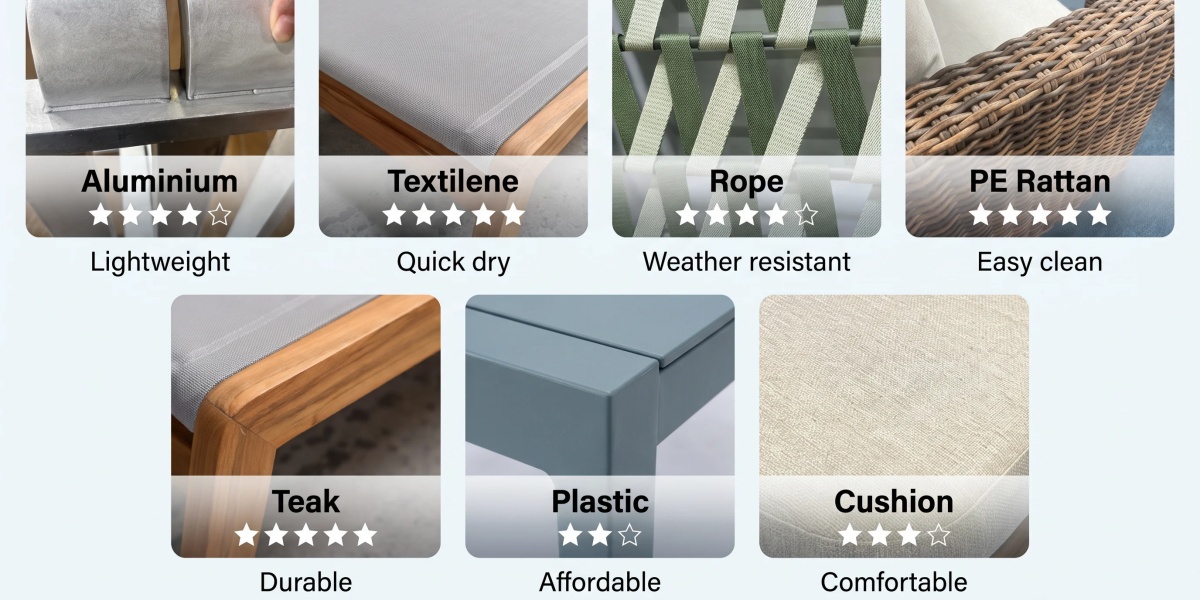 If you only take one thing from the table: an aluminium frame with a seat that water can drain straight through is the lowest-effort combination. That's why it turns up on so many hotel pool decks.
Aluminium Sun Loungers: The Easiest Frame to Look After
Aluminium doesn't rust, which removes the biggest headache with outdoor metal. A good powder coat on top protects it from UV, rain and salty air, and the frame stays light enough to drag into the shade at the end of the day.
You'll come across two main types. Cast aluminium sun loungers are poured into moulds, so they're heavier and often decorative, with a lot of detail that can collect dirt. Extruded (tubular) aluminium is used for most modern loungers: cleaner lines, lighter weight, and fewer places for grime to hide. Both are low maintenance. The bigger difference is the coating. A thin coat chalks and peels, especially near the coast, while proper pretreatment and an outdoor-grade powder hold their colour much better. We go into what separates a good finish from a poor one in our piece on powder-coated aluminium finishes.
How to clean an aluminium sun lounger
Brush off leaves and dust, then wash with warm water and a squirt of washing-up liquid on a soft cloth or sponge.
Rinse with a hose and let it air dry. No need to towel it off.
Skip abrasive pads, scouring powders and solvents. They scratch or dull the powder coat.
Near the sea or a chlorinated pool, rinse with fresh water every couple of weeks to wash off salt and chemicals.
Touch up any chips with a matching paint pen before moisture gets under the coating.
One thing to watch: bare aluminium warms up in full sun. A sling, rope seat or cushion makes a big difference to comfort, and lighter frame colours stay cooler than black or charcoal.
Textilene and Mesh Sling Loungers
Textilene is a woven polyester fabric coated in PVC, stretched tight across the frame. You'll also see it sold as mesh, sling or batyline-type fabric. For pure ease of care, it's hard to beat. Water runs straight through, nothing soaks in, and the seat is usually dry before you've finished your coffee after a shower. That's why sling loungers are so common at beach clubs and busy hotel pools.
The trade-offs are comfort and wear. A sling is firmer than a cushion, and after several seasons of strong sun the fabric can start to sag or stiffen. Thin, lightweight slings get there much sooner. On a well-designed lounger the sling can be swapped without changing the frame, so ask whether replacement slings are available before you buy.
How to clean textilene
Scrub with a soft brush and mild soapy water, working with the weave.
Rinse thoroughly so no soap residue is left to attract dirt.
For sun cream marks or mildew spots, a diluted mix of water and white vinegar usually lifts them.
Avoid bleach and pressure washers, which weaken the coating over time.
Outdoor Rope Weave Loungers
Hand-woven rope has become the go-to look for modern sun loungers, and it's surprisingly practical. Olefin or polyester outdoor rope is soft, breathable and quick to drain, so you can use it without a cushion or with just a thin pad. A tight, even weave keeps its shape; a loose one starts to sag within a season or two.
Rope weave sun lounger care and maintenance
Vacuum or brush out sand, crumbs and leaves from between the strands every week or two in summer.
Wash with mild soap and a soft brush, then rinse well. Don't leave soapy water sitting in the weave.
Let the rope dry fully in the sun before covering or stacking the lounger.
Check for loose or fraying strands at the end of each season. Catching them early keeps the weave tight.
Spot-treat sun cream and oil marks quickly. They're much harder to shift once they've baked in.
Synthetic Rattan and Wicker Sun Loungers
"Wicker" describes the weave, not the material, and this is where a lot of buyers get caught out. Natural rattan is really an indoor material. Left outside, it dries out, splits and grows mould. PVC wicker is cheaper but goes stiff and brittle in sun and cold, so strands start snapping. PE (polyethylene) rattan is the one you want: UV-stabilised, flexible, and coloured all the way through so scratches don't show.
Even good PE rattan takes more looking after than a sling, simply because the weave catches dust, pollen, sand and sun cream. For a beach club or a pool where people walk up with sandy feet, test how easily sand comes out of a sample before you commit. Rattan loungers also usually come with cushions, which brings its own maintenance (more on that below).
How to clean synthetic rattan
Vacuum with a brush attachment, or use a soft-bristled brush to get between the strands.
Wash with warm soapy water, then rinse with a hose on a gentle setting.
Tip the lounger on its side so water drains out of the weave, and let it dry in the sun.
Make sure the frame underneath is aluminium. Wicker over a painted steel frame will eventually show rust stains bleeding through.
Teak Sun Loungers
Teak is the classic wood for sun loungers because its heartwood is full of natural oils that keep out water, rot and insects. It doesn't need a finish to survive outdoors, and it stays cooler to the touch than metal on a hot afternoon. How well it ages depends on the grade: dense heartwood (often sold as Grade A) with solid joinery holds up far better than paler sapwood, which is why a surprisingly cheap "teak" lounger rarely performs like the real thing.
The maintenance question with teak comes down to one decision you should make early: do you want to keep the honey colour, or let it weather? Left alone, teak turns a soft silver-grey. That's a surface change, not damage, and it's the lowest-effort option. Keeping the original colour means cleaning and applying a teak protector once or twice a year. Hotels with dozens of loungers often go for the silver patina for exactly that reason.
How to clean teak
Wash every month or two in season with mild soapy water and a soft brush, following the grain.
Rinse and let it dry fully before covering.
Don't use a pressure washer. It strips the soft grain and leaves a furry surface.
Don't use interior varnish or yacht varnish on outdoor teak. It peels and makes future care harder.
For the full routine, including how to deal with mildew spots and what to do before winter, see our teak sun lounger care guide.
Plastic and Resin Sun Loungers
Moulded plastic loungers, usually polypropylene or resin, are the cheapest to buy and the simplest to clean. Hose them down and you're done. They're light, they usually stack, and they don't mind rain.
The catch is UV. Sunlight slowly fades the colour and makes the plastic brittle, and thin models without UV stabilisers show it first: chalky surfaces, cracks around the legs, or a seat that flexes more than it should. White plastic also shows stains from sun cream and leaves. If you need a heavy-duty plastic sun lounger, look for thicker walls, UV stabilisers listed in the spec and a stated weight limit. HDPE lumber loungers are far sturdier than thin moulded ones, but they're heavy and get hot in direct sun.
How to clean a plastic sun lounger
Wash with warm soapy water. For stubborn grime, a paste of bicarbonate of soda and water works well on white plastic.
For green mould, a diluted vinegar solution is gentler than bleach.
Store them out of direct sun in winter to slow down fading.
Fabric and Cushions: Where Most of the Maintenance Hides
Whatever frame you pick, cushions are usually the part that takes the most time. Standard foam acts like a sponge: after a downpour it can stay wet for a day or more, and damp foam is where mildew starts. A few things make cushioned sun loungers far easier to live with:
Solution-dyed acrylic or olefin fabric. The colour goes right through the fibre, so it fades much more slowly than printed polyester and copes better with spot cleaning.
Quick-dry (reticulated) foam. Its open-cell structure lets water drain through in minutes rather than hours.
Removable, zipped covers. Covers you can take off and wash are a must if you want washable sun lounger cushions for poolside use.
Somewhere to put them. Bringing cushions in at night, or keeping them in a storage box, is the single biggest thing you can do to keep them in good shape.
"Water-repellent" fabric doesn't mean a waterproof cushion. Rain still gets in through the seams and zip, so drainage and drying matter more than the label on the fabric.
Which Sun Loungers Are Easiest to Keep Clean in UK Weather?
British gardens rarely deal with extreme heat. The real problem is frequent rain, damp mornings and long periods where nothing quite dries out. That shifts the priorities:
Choose a seat that drains. A textilene sling or rope weave on an aluminium frame is usable again shortly after a shower. A thick standard cushion isn't.
Pick stain-resistant surfaces. Powder-coated aluminium, textilene and solution-dyed fabrics resist staining from leaves, bird droppings and algae better than painted wood or light-coloured plastic.
Keep air moving. Don't leave loungers pushed against a damp fence or under trees that drip for hours. Green algae builds up fastest in shade.
Cover them in winter, but use a breathable cover. A non-breathable cover traps condensation and can do more harm than leaving the lounger uncovered. A fitted, vented furniture cover is the safer bet.
If you want a garden lounger that stays comfortable and dries quickly after rain, aluminium with a rope or sling seat plus a thin quick-dry pad is the most practical setup for a typical UK garden.
Teak vs Aluminium Sun Loungers: Longevity and Maintenance
This is the comparison most people end up making, so here's how the two stack up:
Longevity: both can give many seasons of service, under different conditions. Teak depends on heartwood quality and joinery; aluminium depends on tube thickness, welds and coating. A poor version of either won't last, whatever the material.
Day-to-day care: aluminium wins. A wash and rinse is all it needs, while teak needs a choice between oiling and accepting the grey patina.
Weight: aluminium is much lighter, which matters when staff or guests move loungers around a pool several times a day.
Comfort and feel: teak stays cooler in strong sun and feels warmer to the touch in cooler weather.
Cost: teak usually costs more up front.
You can see the difference on a single design: the Laguna teak sun lounger and the Laguna aluminium sun lounger share the same hand-woven rope seat, but one brings the warmth of wood and the other is lighter and comes with rear wheels.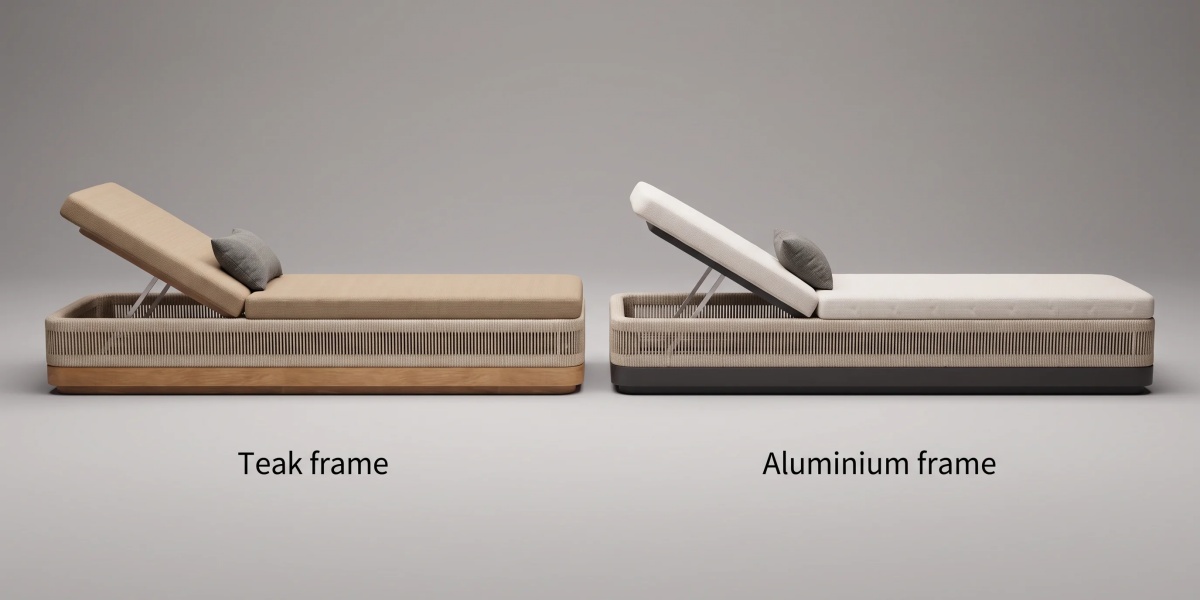
Best Sun Lounger Material by Region
Climate changes which weakness shows up first. Use this as a starting point, then adjust for how exposed the actual site is.
| Region / climate | Main challenge | Frame | Seat | Cushions | Avoid |
|---|---|---|---|---|---|
| UK, Ireland, Northern Europe | Frequent rain, damp, algae in shade | Powder-coated aluminium, teak | Sling or rope | Thin quick-dry pads, stored indoors | Standard foam left outside, untreated softwood |
| Mediterranean (Spain, Italy, Greece) | Strong summer UV, salt air on the coast | Aluminium with outdoor-grade powder, teak | Rope, sling, PE rattan | Solution-dyed fabric, quick-dry foam | Dark bare metal, printed polyester |
| Middle East / Gulf | Extreme heat, intense UV, sand and dust | Light-coloured aluminium, teak | Sling or open rope weave | Solution-dyed, removable covers | Dark frames, PVC wicker, dense weaves that trap sand |
| Tropics (Southeast Asia, Caribbean, Indian Ocean) | Humidity, heavy rain, mould, salt | Aluminium, teak | Sling or rope | Quick-dry foam is essential | Standard foam, natural rattan |
| Continental climates with cold winters | Freeze-thaw, snow load | Aluminium, teak, HDPE | Sling or rope | Bring in for winter | Thin plastic, PVC wicker (brittle in cold) |
Best Sun Lounger Setup by Site Zone
Within the same property, a lounger on the pool deck and one on the beach face very different conditions. This matters most for hotels and resorts buying in volume.
| Zone | Recommended build | Moving and stacking | Extra care |
|---|---|---|---|
| Pool deck | Aluminium with sling or rope, quick-dry cushions | Rear wheels work well on tiles and decking; stack at closing only if the model is designed for it | Rinse off chlorine weekly, wipe sun cream daily |
| Beach and sand | Aluminium with reinforced legs, sling or rope | Wheels sink in sand, so plan to carry; two people for heavier frames | Rinse salt and sand off often, check feet and fixings |
| Rooftop and windy terraces | Heavier frames or teak; secure light aluminium | Stack and strap, or bring in, when strong wind is forecast | Check bolts and recline mechanism regularly |
| Covered terrace or cabana | Any frame; thicker cushions and rattan are fine here | Usually stays in place | Keep air flowing so cushions don't stay damp |
| Garden lawn | Aluminium or teak with sling or rope | Wheels struggle on grass, so lift rather than drag | Don't leave feet sitting on wet ground for weeks |
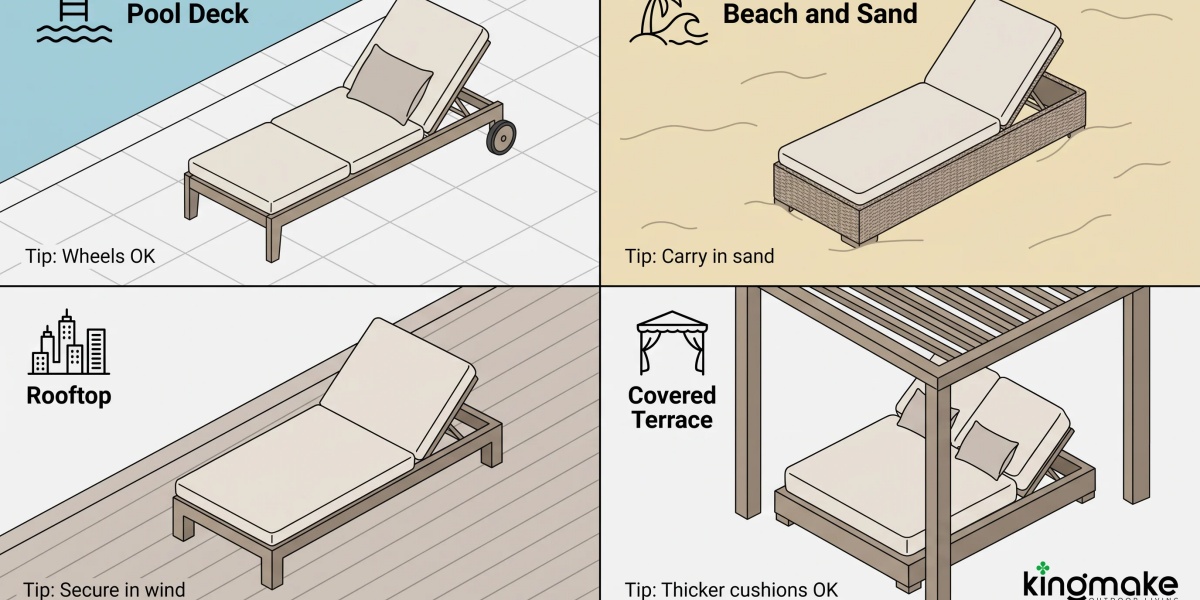 For hotels, cleaning time adds up fast. Ten minutes per lounger across 80 loungers is more than 13 staff hours for one full clean. Before placing a bulk order, test a sample: time a full clean, check how fast it dries, work the recline mechanism repeatedly, and ask which parts can be ordered as spares. For the wider picture on what survives harsh conditions, see what outdoor furniture holds up the best.
Moving and Stacking Sun Loungers Without Damage
A lot of wear on commercial loungers comes from handling, not weather. A few rules keep frames and finishes intact:
Use wheels only on hard, level ground. Tiles, decking and concrete are fine. On sand, gravel or grass, lift the lounger instead of dragging it, or the wheels and feet wear quickly.
Lock the backrest flat before moving, and never lift by the backrest. Lift from the frame or the handles.
Only stack models designed to stack. Stacking a rope or rattan lounger that isn't built for it presses the frame above into the weave and leaves permanent dents.
Before stacking, take the cushions off and make sure everything is dry. Water trapped between stacked units leaves marks on the coating and mildew on the seat.
Put soft pads or spacers between stacked units to stop the powder coat rubbing through, and keep stacks on level ground at the height the manufacturer recommends.
Plan storage space for teak. Solid teak loungers are heavier and usually don't stack, so they need floor space or two people to move.
Kingmake Sun Lounger Models: Care, Spare Parts and Handling
Here's how the advice above applies to four of our own models. Specs are taken from each product page; where a page doesn't state something, we've said so rather than guess.
| Model | Build | Moving and stacking | Routine care | Wear parts to plan spares for |
|---|---|---|---|---|
| Albert rope weave aluminium | 6063 aluminium, standard or wood-effect powder coat; PL rope weave; olefin or Sunbrella cushions with standard or quick-dry foam, removable covers; multi-position backrest; frame rated over 300 kg | Built-in wheels plus teak side handles. Stacking not listed | Rinse frame; brush or vacuum the rope; wash covers between seasons; clean teak handles with mild soap | Wheels, cushion covers and foam, backrest adjuster, feet caps; rope repair if strands are cut |
| Laguna aluminium | 6063 aluminium, standard or wood-effect powder coat; hand-woven OL rope on base and side skirt; quick-dry foam cushions, removable covers; adjustable backrest; L200 × W70 × H35 cm; frame rated over 300 kg | Rear wheels. Stacking not listed | Rinse frame; vacuum sand from the rope skirt; wipe covers after rain | Wheels, cushion covers and foam, backrest adjuster, feet caps |
| Laguna teak | Solid teak frame; hand-woven OL rope (colour retention stated by the product page as 3+ years); standard or quick-dry foam, removable covers, bolster included; backrest set by a teak support bar; L200 × W70 × H35 cm | Wheels not listed: lift to move, two people on sand or lawn. Stacking not listed | Wash teak every month or two in season; decide early on patina vs oiling; check the support bar notches each season | Cushion covers, foam and bolster, teak support bar, feet pads |
| Cenxi adjustable aluminium | 6063 aluminium, wood-look or standard powder coat; teak accents on the arms; aluminium mesh back panel; fabric cushion with standard foam (quick-dry optional), removable covers; frame rated over 300 kg | Rear wheels; listed as stackable. Remove cushions and pad between units before stacking | Wipe the mesh back; rinse frame; clean teak arms; dry cushions before storing | Wheels, cushions and covers, backrest adjuster, stacking pads, feet caps |
For project orders, it's worth agreeing a spares list (cushion covers, wheels, feet caps) at the same time as the main order, so a worn part doesn't take a lounger out of service for a whole season.
A Simple Seasonal Cleaning Routine for Sun Loungers
Start of the season: wash the frame and seat, tighten bolts, check the recline mechanism and wheels, and touch up any chips in the coating.
During summer: brush off debris weekly, rinse after pool or beach use, and wipe off sun cream marks before they set.
After heavy rain: stand cushions on their edge to drain, and tilt woven loungers so water runs out.
End of the season: give everything a full clean, let it dry completely, replace worn wheels or caps, bring cushions indoors and use a breathable cover.
The same routine works for most outdoor pieces, from loungers to an outdoor daybed.
How Kingmake Outdoor Builds Low-Maintenance Sun Loungers
Kingmake Outdoor is an outdoor furniture manufacturer that has been making furniture in its own 18,000 m² factory in Shunde, Foshan, since 2008. We supply hotel groups, resort developers, contractors and distributors, mainly in Europe and the Americas. A lot of the low-maintenance advice above comes down to how a lounger is made, so here's what goes into ours:
Frames: 6063 aluminium with full-penetration TIG welds, so there are no hidden gaps at the joints for water to sit in.
Coating: degreasing and phosphate pretreatment before an electrostatic, UV- and salt-resistant powder coat, oven-cured and checked with coating adhesion tests. That pretreatment step is what keeps the finish from peeling near the sea.
Wood: FSC-certified teak for frames, armrests and handles.
Seats and cushions: hand-woven outdoor rope, with olefin or Sunbrella fabric and standard or quick-dry foam on removable covers.
Quality: ISO 9001 quality management, with our sun loungers tested by TÜV SÜD. Every batch gets dimensional, weld and coating checks before it ships.
You can browse the full range of sun loungers, from aluminium and rope designs to solid teak. For project orders, frame colour, fabric, foam and dimensions can be adjusted through our customisation service, and if you'd like to compare materials on a sample before ordering, get in touch with our team.
FAQs
What is the best sun lounger material for easy maintenance?
Powder-coated aluminium with a textilene sling or rope seat. It doesn't rust, dries quickly after rain and only needs mild soap and water to clean.
Which sun lounger material lasts the longest?
It depends more on quality than material. Dense heartwood teak with good joinery and well-made powder-coated aluminium both hold up for many seasons with basic care. Thin plastic and PVC wicker are the most likely to fail early.
Are aluminium sun loungers good?
Yes. They're light, rust-free and easy to clean. Check the quality of the powder coating and the wall thickness of the frame, as these decide how well it ages.
Is textilene or rattan easier to clean?
Textilene. Water and dirt run straight through a sling, while rattan's weave traps dust and sand and usually comes with cushions that need extra care.
How do you clean a rope weave sun lounger?
Brush or vacuum out debris, wash with mild soapy water and a soft brush, rinse well, then let it dry fully in the sun before covering or stacking.
Can sun loungers be left outside all year in the UK?
Aluminium, teak and PE rattan frames can stay out if they're covered with a breathable cover. Bring cushions indoors for winter, and avoid leaving thin plastic in full sun year-round.
Can you stack sun loungers?
Only if the model is designed to stack. Remove cushions, make sure the loungers are dry and put pads between units so the coating doesn't rub. Rope, rattan and teak loungers usually shouldn't be stacked.
What parts of a sun lounger wear out first?
Usually the cushions and covers, wheels, feet caps and the backrest adjuster, long before the frame. On sling loungers, the sling itself is the main wear part.
What's the best material for a beach or pool lounger?
An aluminium frame with a textilene sling or rope seat. It handles salt, chlorine and wet swimwear, and it's light enough to move around.
Are plastic sun loungers worth buying?
For occasional use on a budget, yes. Expect fading and brittleness if they sit in full sun all summer, especially on thin models. Heavy-duty, UV-stabilised versions cope much better.
 Whatsapp
 sales@cnkingmake.com
 +8613925925021