
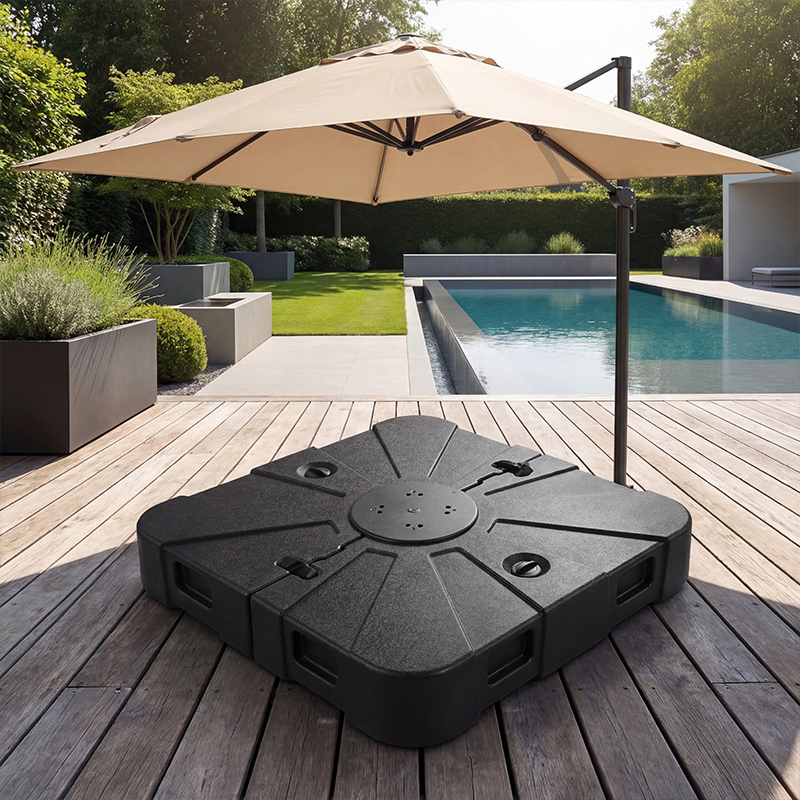
umbrella base weight guide for hotels & restaurants
A patio umbrella can instantly upgrade a hotel pool deck, restaurant patio, or rooftop lounge, but only if it’s stable. When the base is too light, umbrellas wobble, lean, or tip during gusts. That creates obvious safety risks, damages canopies and frames, and turns a premium outdoor setup into a daily operational headache.
This guide explains how to choose the right umbrella base weight for commercial and hospitality settings in the U.S. We’ll cover practical weight ranges by canopy size, the big differences between center-pole and cantilever umbrellas, and the real-world factors that change the calculation, like rooftops, coastal wind, and high-traffic dining layouts.
Why Umbrella Base Weight Matters in Hospitality
Umbrella stability isn’t just a product choice; it’s a guest safety decision. A toppling umbrella can injure guests, damage surrounding furniture, and create liability concerns. Even when it doesn’t tip, a wobbly umbrella feels cheap and distracting. That matters in hospitality, where the outdoor experience often drives photos, reviews, and repeat business.
Base weight also affects operational efficiency. If your team is constantly repositioning umbrellas or dealing with loose setups, you lose time every day. The right base weight reduces maintenance, makes setup predictable, and protects your investment.
The Fast Rule-of-Thumb (Start Here)
A simple baseline rule used across the industry is this: plan for roughly 10 pounds of base weight for every 1 foot of canopy diameter—then adjust upward for wind exposure and umbrella type.
That baseline works best for standard center-pole umbrellas in average conditions. If you’re in a windy area, on a rooftop, near the coast, or using a cantilever design, you’ll typically need more weight than the basic rule suggests.
The safest approach for hospitality is to treat the baseline as a minimum, not the final answer.
Step 1: Identify Your Umbrella Type
Determine the style and size of umbrella you need to ensure proper coverage and functionality for your space. Choose between patio, market, or cantilever types based on your area and usage.
Center-Pole Umbrellas (Market Umbrellas)
Center-pole umbrellas are generally more stable for their size because the canopy load is centered directly above the pole. When properly weighted, they resist wobble and tilt better than offset designs.
In commercial settings, center-pole umbrellas are common around dining tables and seating clusters. They can be either freestanding or supported through a table, and that difference matters.
Cantilever / Offset Umbrellas
Cantilever umbrellas look sleek and provide shade without a center pole in the seating area—but they require significantly heavier bases. The canopy load is off-center, which creates leverage. Think of it like holding a weight at arm’s length instead of holding it close to your body. The base must counterbalance that leverage to stay safe.
For hotels and restaurants, cantilever umbrellas can be a great choice for lounge zones or daybed areas because they shade wider spaces. But they must be paired with serious ballast or engineered anchoring methods.
Step 2: Choose Base Weight by Canopy Size
The next step is matching canopy size to base weight. Here are practical ranges that work well as planning targets in commercial environments.
Center-Pole Umbrella Base Weight (Typical Ranges)
For smaller umbrellas under roughly 7.5 feet, base weights commonly fall into the 20–30 pound range for basic applications. These are best for low-exposure patios and smaller setups.
For umbrellas in the 7.5–9 foot range, a base around 30–50 pounds is often a realistic minimum. This is the range many dining setups use.
For larger umbrellas in the 9–11 foot range, plan for roughly 50–100 pounds, depending on wind exposure and whether the umbrella is freestanding.
For umbrellas 11 feet and up, commercial installations typically move into 100+ pound base territory. At this size, even a “normal breeze” can create a significant force on the canopy.
Cantilever Umbrella Base Weight (Typical Ranges)
Cantilever umbrellas need more ballast than center-pole umbrellas, even when the canopy size looks similar. For umbrellas in the 10-foot class (around 3 meters), hotels commonly use heavier base systems that land around the 150–180+ pound range, depending on exposure.
For larger cantilever umbrellas in the 11–12 foot class, base systems can move into the 200+ pound range, especially in open or elevated spaces.
The key takeaway is simple: offset shade looks effortless, but the base should never be lightweight.
Step 3: Table-Through vs Freestanding
Table-through designs are integrated directly into the countertop for a seamless look, while freestanding units stand independently, offering more flexibility in placement.
Through-Table Umbrellas
When a center-pole umbrella is installed through a table, the table adds lateral stability. That means the base doesn’t have to do all the work. However, the base still matters. The table is not an anchor it’s a stabilizer. If the base is too light, the umbrella can still tip, especially if guests lean on it or wind hits from an angle.
Through-table setups are popular for commercial dining because they keep shade right where guests sit. But they also require you to choose bases that don’t create trip hazards around chair lanes.
Freestanding Umbrellas
Freestanding umbrellas need the most base weight because there is no secondary support. They’re exposed from all sides, and the canopy can catch wind like a sail. This is especially true in open pool decks, wide patios, and rooftop environments.
If you’re deciding between freestanding and through-table, assume freestanding requires heavier base choices in almost every case.
Step 4: Adjust for Wind Exposure (Where Most Mistakes Happen)
Wind can seriously affect stability and accuracy, which is why this step is where most people go wrong. Always adjust positioning and materials to account for wind pressure and avoid long-term damage or failure.
Pool Decks and Open Hardscapes
Pool decks are often wide open with smooth surfaces. That means more wind exposure and more movement around the umbrella base. Guests walk quickly, kids run, staff push carts, and chairs get rearranged.
In this environment, stability should be prioritized even if it costs more. A heavier base protects against tipping and reduces wobble when the umbrella is bumped.
Rooftops and High-Elevation Patios
Rooftops behave differently from ground-level patios. Wind can funnel between buildings and shift direction quickly. Sudden gusts are common, and umbrellas can become dangerous if they’re under-weighted.
On rooftops, treat your base weight as a “level up” compared to ground level. Even if the canopy size is the same, you often need heavier bases due to increased exposure and unpredictable gusts.
Coastal Locations
Coastal patios face wind and salt exposure. Wind calls for heavier base choices, and salt exposure means you should also think about corrosion-resistant base materials and hardware.
If your property is in a coastal region, stability isn’t the only goal. Durability matters too. Your base should hold up to moisture and salt air without degrading quickly.
Step 5: Base Style and Material Choices
Choose the right base style and materials to match your home’s design, durability needs, and budget. High-quality material selection ensures long-lasting performance, better aesthetics, and low maintenance.
Concrete and Stone Bases
Concrete or stone bases are popular because they deliver real weight with a stable footprint. They’re often a good option for center-pole umbrellas in fixed seating areas where the base won’t be moved frequently.
Metal Bases (Steel or Cast Iron)
Metal bases can deliver weight in a smaller footprint. That’s useful when space is tight. The tradeoff is that metal requires good protective finishes to prevent rust, especially in coastal environments.
Fillable Bases (Sand or Water)
Fillable bases are common for larger weights. They can be practical when moving a fully weighted base would be impossible. The idea is to position the base, then fill it onsite.
In hospitality, the main advantage of fillable bases is flexibility. The limitation is that not all fillable bases are equal—some are designed for light-duty use and won’t perform well in open wind exposure.
Step 6: Operations: Wheels, Movement, and Staff Reality
Once base weight enters commercial territory, you need to think about daily operations. Heavy bases are safer, but they’re not easy to move. If your staff has to shift umbrellas daily for events, cleaning, or layout changes, mobility becomes part of the buying decision.
For heavier setups, look for bases designed with wheels or movement handles. This can reduce staff strain, speed up transitions, and prevent accidental damage caused by dragging heavy bases across decking.
A smart hospitality setup balances stability and mobility. You want the umbrella safe in wind, but also manageable for your team when layouts change.
Step 7: Compatibility Checklist (Avoid Costly Fit Mistakes)
Double-check measurements, materials, and site conditions to ensure everything fits perfectly before installation. A quick compatibility review helps prevent delays, rework, and unnecessary expenses.
Pole Diameter and Collar Fit
Not every base fits every umbrella. The pole diameter must match the base collar or tube size, and the locking system must secure it firmly. If the collar fit is loose, you’ll see wobble even if the base is heavy enough.
Footprint and Trip Hazards
In restaurants and hotels, bases sit in walking lanes. A wide or tall base can become a trip hazard. Low-profile designs often work better in dining zones because they keep chair lanes cleaner.
Before purchasing, measure chair spacing, service lanes, and the “push back zone” behind seats. You want the base stable without interfering with guest movement.
When a Base Isn’t Enough: Safer Alternatives
Some environments are simply too windy or too exposed to rely on base weight alone. Rooftops, beachfront properties, and open event terraces may require a different approach.
For these settings, consider semi-permanent or permanent solutions such as deck mounts, in-ground sleeves, or engineered anchoring systems. These options can provide stronger stability than any portable base.
Cantilever umbrellas also often use a cross-base plus plate system or heavy ballast. This approach spreads weight and improves stability, which can be a safer solution for large canopies.
Company Overview & Outdoor Hospitality Solutions
Kingmake Outdoor is a Foshan, China–based one-stop manufacturer supplying hospitality-grade outdoor solutions to hotels, resorts, distributors, retailers, and project contractors across the U.S. and worldwide. With 17+ years of experience, a 15,000㎡ self-owned factory, and end-to-end support from design to global shipping, we help buyers create cohesive outdoor spaces that perform in real commercial conditions.
Along with premium Patio Umbrellas, we can help you spec stable base options suited for pool decks, rooftops, and coastal environments and complete the setup with matching Outdoor Dining Sets for shaded dining zones and protective Furniture Covers to extend the life of umbrellas and outdoor furnishings.
FAQs: Umbrella Base Weight
How heavy should an umbrella base be?
A practical baseline is about 10 pounds per 1 foot of canopy diameter, then increase weight for freestanding use, wind exposure, and cantilever umbrellas.
How much weight do you need for an umbrella in windy areas?
Windy areas often require a heavier base than standard guides suggest. Rooftops and coastal patios frequently need “one tier heavier” bases than ground-level sheltered patios.
What weight base for a 3 metre parasol?
A 3-metre umbrella (about 10 feet) typically needs a heavier base, especially if it’s cantilever. For center-pole setups, aim higher if freestanding or exposed.
Is a table enough to hold an umbrella securely?
No. A table adds stability, but the base still provides primary weight and tipping resistance.
Do you need a heavier base on a rooftop?
Yes. Rooftops often experience stronger and less predictable gusts, so heavier bases or anchored solutions are recommended.
Sand vs water—what should you fill a base with?
Sand generally provides more stable weight because it doesn’t slosh. Water is convenient but can shift during movement. For commercial stability, sand is often preferred.
What’s safer: a heavy base or a permanent mount?
Permanent mounts are often safer in high-wind environments. Heavy bases work well when placement flexibility is required and wind exposure is moderate.
How do I stop umbrellas from wobbling?
Check collar fit and pole diameter first, then ensure the base weight matches the canopy size and exposure. Wobble is often a fit issue, not only a weight issue.
Final Thoughts
Choosing an umbrella base weight is about more than canopy size. Umbrella type, freestanding vs table-through setups, and wind exposure can easily change what “enough” looks like. In hospitality, the safest strategy is to plan for heavier bases, reduce exposure where possible, and choose bases designed for commercial operations.
If you want a shade setup that looks premium and stays stable in real-world conditions, spec the umbrella and base as a system—not as separate purchases. That’s how hotels and restaurants avoid wobble, reduce damage, and create outdoor spaces guests actually want to stay in.

 Whatsapp
 sales@cnkingmake.com
 +8613925925021