
Rooftop Furniture Ideas: How to Choose Outdoor Pieces for Rooftops and Terraces
Introduction
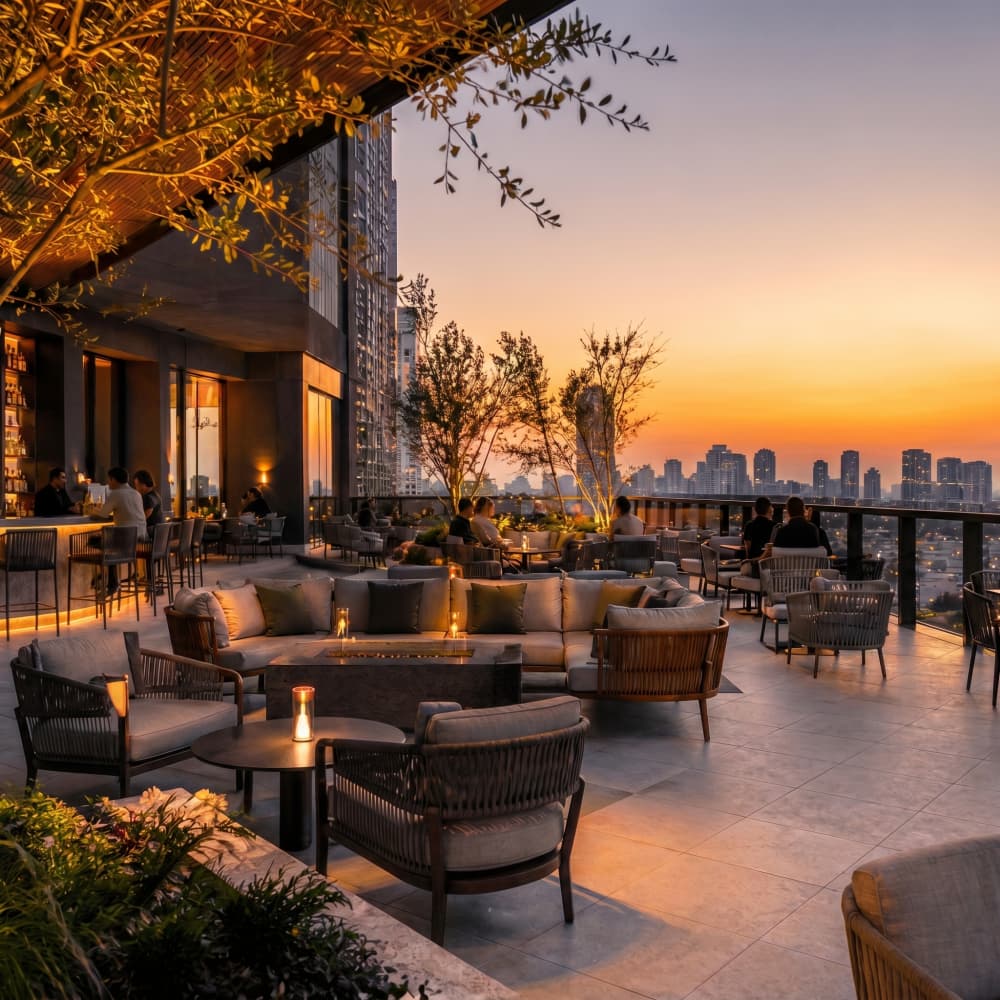
Rooftop venues are important commercial outdoor spaces in hospitality. From hotel sky bars to restaurant terraces and resort lounges, they help create comfortable, memorable guest experiences while supporting stronger use of commercial outdoor space. Choosing the right rooftop furniture requires more than visual planning; it is about how each piece performs in an exposed, elevated environment.
Unlike ground-level patios, rooftops come with specific planning constraints. Wind exposure is higher, structural load limits must be respected, and access is often restricted by elevators or stairwells. These factors mean outdoor rooftop furniture needs to be carefully specified, not simply selected.
While many rooftop furniture guides focus on design inspiration, this guide focuses on practical specifications. It is designed for hotel operators, restaurant owners, and FF&E buyers who need durable, guest-ready rooftop patio furniture ideas that support durability, guest comfort, and daily hospitality operations in real conditions.
Why Rooftop Furniture Requires a Different Approach
Furnishing a rooftop starts with understanding the environment. Conditions change significantly at elevated levels, and those changes directly affect furniture performance.
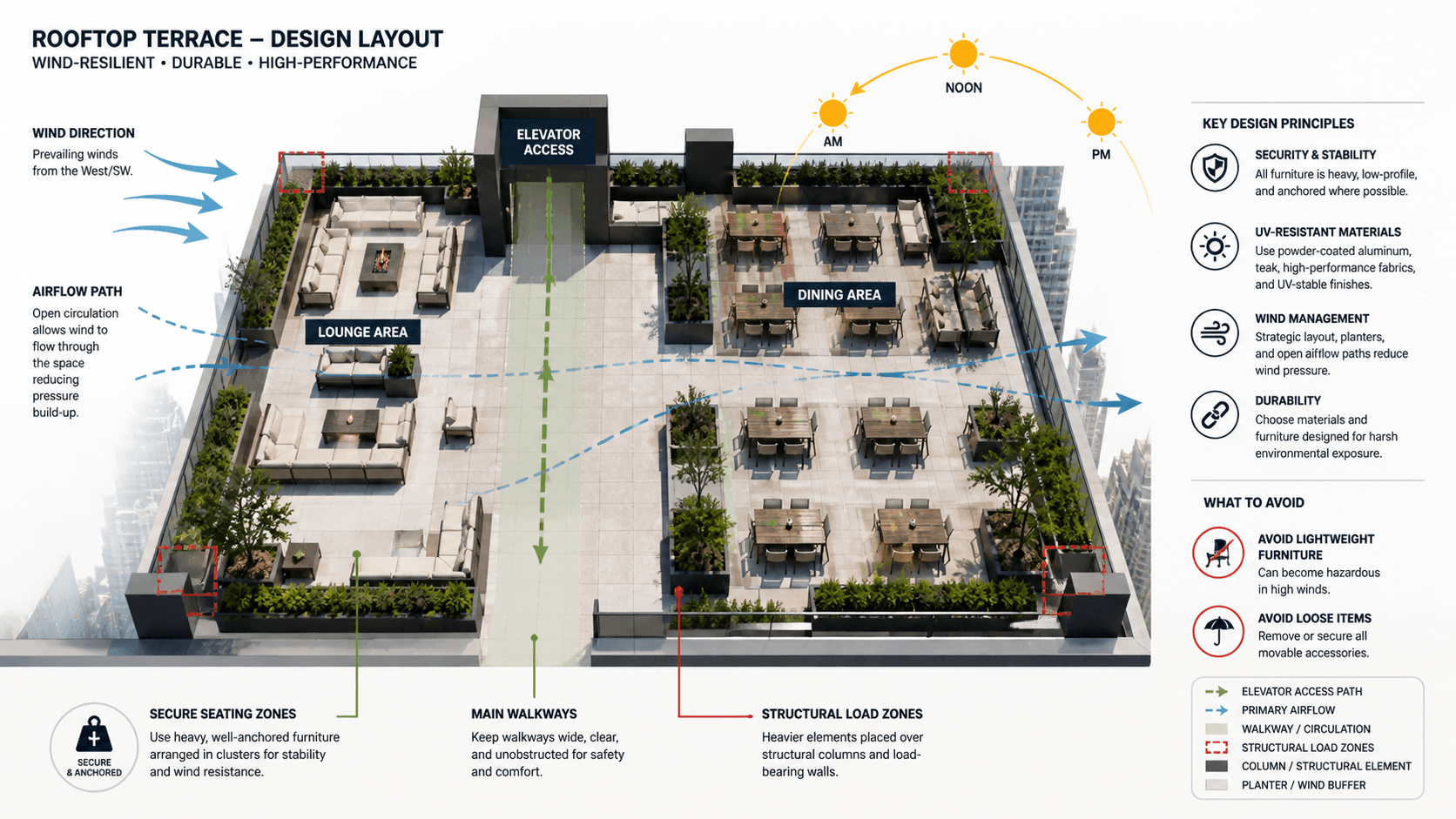
Wind is one of the primary factors. At higher elevations, wind speeds can be noticeably stronger than at street level, especially on open rooftops. Lightweight pieces that work well on a patio can shift, tip, or create safety concerns if they are not properly weighted or secured.
Structural load is another key consideration. Every building has a defined load capacity, and furniture weight must be calculated alongside guests, planters, and equipment. This is why coordination with structural engineers is important before specifying heavier materials like steel or stone.
Access also shapes what can be specified and installed. Many rooftops are reached through elevators with clear openings around 1.2 to 2 meters, which limits the size of furniture that can be transported. Larger pieces may need to be modular or assembled on-site, while oversized items sometimes require crane lifts.
UV exposure adds another layer. At higher levels, materials face prolonged sunlight throughout the day, accelerating fading, drying, and surface wear. Furniture for rooftop patios must be selected with this long-term exposure in mind.
These constraints are not limitations; they are project parameters. Understanding them early helps support safety, durability, and reliable performance over time.
Suitable Materials for Commercial Rooftop Furniture
Material selection is a key decision in any rooftop project. The right choice balances weight, strength, weather resistance, and maintenance requirements while supporting long-term use.
Powder-Coated Aluminum Frames
Powder-coated aluminum is widely used in outdoor rooftop furniture because it offers a practical balance of durability, weight control, and ease of maintenance. It is lightweight, which helps manage structural load, yet stable enough for frequent commercial use.
It also resists corrosion and requires routine maintenance. Many designs are stackable, making them well-suited to venues that regularly reconfigure layouts for events or peak service hours.
Marine-Grade Aluminum Frames
Marine-grade aluminum is widely used in commercial rooftop furniture because it offers a practical balance of corrosion resistance, structural strength, and controlled weight. It is well suited to elevated hospitality spaces exposed to wind, sun, humidity, or coastal air.
When finished with outdoor-grade powder coating, marine-grade aluminum helps protect the frame surface while maintaining a clean, refined appearance over time. Its lighter weight also helps manage rooftop load considerations and makes furniture easier to reposition for events, service adjustments, or seasonal layouts.
Many rooftop furniture designs using marine-grade aluminum can be specified as stackable or modular, making them well suited to hotels, restaurants, and rooftop lounges that require both durability and layout flexibility.
FSC-Certified Grade A Teak
FSC-certified Grade A teak brings a warm, natural look that works well in upscale rooftop terrace settings. Its density gives it a solid, stable feel and supports outdoor durability, but it does require a maintenance plan.
Over time, teak can weather to a silver-gray finish or be maintained with oiling to preserve its original tone. It's best suited for projects where appearance and longevity are equally important.
PE Rattan or Technical Rope Over Aluminum Frames
UV-resistant PE rattan and technical rope combine visual softness with practical outdoor performance. When woven over aluminum frames, these materials support lightweight construction, comfort, and modular flexibility.
They perform well in rooftop lounge furniture setups, particularly in hospitality spaces where relaxed seating, airflow, and reconfigurable layouts support daily operations.
Cast Iron and Steel (Limited Use)
Heavier metals like cast iron and steel provide added stability, especially in windy environments. However, their weight can significantly impact structural load, so they are typically used only in anchored or fixed installations.
These materials are often seen in bolted bar tables or perimeter seating where movement is not required.
What to Avoid on Rooftops
Not all materials are suitable for elevated spaces. Lightweight plastic furniture may shift in strong winds, while residential-grade frames are not built for continuous commercial use.
Cushions that are not UV-rated may fade more quickly under direct sunlight. Choosing materials designed for high-traffic outdoor use helps avoid early replacement and unnecessary maintenance.
Rooftop Furniture Ideas by Venue Type
Different rooftop environments require different furniture planning considerations. The way a space is used, whether for dining, socializing, or lounging, directly affects what should be specified.
Hotel Rooftop Bars
Rooftop bar furniture needs to support high turnover and flexible layouts. Bar-height tables and stools are common, often paired with pedestal bases that can be weighted or bolted for stability.
Seating should be stackable or easy to move, allowing the space to shift between daytime service and evening events. With frequent use throughout the day, materials must be specified for repeated commercial use and easy cleaning.
Restaurant Terraces
Dining-focused rooftops require furniture designed for both comfort and efficiency. Tables and chairs must fit commercial spacing standards, supporting smooth service flow while maintaining guest comfort.
Chairs in these settings may be used many times each week, so strength and finish quality are important. Surfaces must also withstand regular cleaning while maintaining surface quality over time.
Resort Rooftop Lounges
Rooftop lounge furniture in resorts often focuses on relaxation and a refined outdoor presentation. Modular sectionals, daybeds, and lounge chairs allow for flexible layouts that can adapt to different guest needs.
Low-profile designs help preserve skyline views while helping manage wind exposure. Cushions should be UV-resistant, quick-drying, and designed for prolonged sun exposure, supporting both comfort and long-term performance.
Specification and Procurement Checklist
Before placing an order, it is important to align furniture selection with both engineering requirements and operational needs. A clear checklist helps support accurate specification, smoother procurement, and a better project fit from the start.
Key questions to consider include:
What is the building's structural load rating?
What wind conditions will the rooftop experience?
How will furniture be transported: through elevators, stairs, or by crane?
Are anchoring or ballasting solutions required for safety?
What level of guest turnover will the furniture need to handle?
Do finishes need to match existing brand or design standards?
What warranty terms are offered for commercial use?
Freight access is often a deciding factor. If elevator openings are limited to around 1.2–2 meters, furniture must be sized or designed accordingly. Modular designs can simplify both delivery and installation.
It is also worth considering lifecycle costs. Lower upfront pricing can lead to more frequent replacements, especially in high-use environments. Selecting materials and construction suited to rooftop conditions can support better long-term value and more consistent performance over time.
Layout and Design Considerations for Rooftop Venues
Once materials and specifications are set, layout planning brings everything together. A well-designed rooftop balances visual appeal with safety and operational efficiency.
Low-profile seating helps maintain open views while helping manage wind exposure. This is especially important for rooftop terrace furniture placed near edges or open areas.
Planters, partitions, and screens can act as practical wind buffers, creating more comfortable seating zones. These elements also help define spaces without blocking the overall view.
Flexibility is key. Modular furniture allows operators to adjust layouts for daily service, private events, or seasonal changes. Integrated lighting, such as LED tables or accent pieces, can support evening ambiance without requiring additional fixtures.
Maintenance for High-Traffic Rooftop Environments
Ongoing maintenance helps preserve both appearance and performance. Rooftop environments expose furniture to ongoing sun, wind, and frequent commercial use, making regular care important for long-term outdoor performance.
A structured maintenance plan typically includes:
Quarterly inspections of frames, joints, and fasteners.
Seasonal cleaning or replacement of cushions.
Annual checks for corrosion, especially on metal components.
Protective covers can extend service life during off-season periods, particularly in climates with heavy rain or strong sun. Stackable or easy-to-store designs also help reduce wear when furniture is not in use.
Consistent upkeep supports long-term value and helps ensure the space continues to reflect the intended guest experience.
FAQs
What is the most suitable furniture for a rooftop bar or restaurant?
The most suitable rooftop bar furniture combines stability, durability, and flexibility for elevated, high-traffic hospitality settings. Bar-height tables with weighted or bolt-down bases and commercial-grade seating work well in high-turnover environments where furniture may be used frequently throughout daily service. Materials like powder-coated marine-grade aluminum frames, FSC-certified Grade A teak, and 316 stainless steel hardware offer reliable performance under frequent commercial use, wind exposure, and changing outdoor conditions.
How do you secure furniture on a commercial rooftop?
Furniture on a commercial rooftop is typically secured through anchoring, ballasting, or properly weighted frame designs. At higher elevations where wind exposure is stronger, lightweight pieces can shift, so bases are often bolted down or reinforced to support stable placement. Some projects may also need to meet local safety codes or engineering requirements that require fixed installations in exposed areas or high-wind conditions.
What is the weight limit for rooftop furniture?
Weight limits vary depending on the building's structural design and should be confirmed with a qualified structural engineer. Furniture weight is calculated alongside guest occupancy, planters, fixtures, equipment, and other rooftop elements. This is why lightweight materials such as marine-grade aluminum with powder-coated finishes are commonly used; they help manage rooftop load requirements while still providing the strength and durability needed for commercial hospitality use.
Can you put sectional seating on a hotel rooftop?
Yes, sectional seating is widely used in rooftop lounge furniture, especially in hotels and resorts. Modular designs with lightweight frames make it easier to move and reconfigure layouts as needed. Low-profile sectionals also help reduce wind exposure and maintain open views.
What materials work best for high-traffic rooftop venues?
Marine-grade aluminum with a powder-coated finish is often specified for high-traffic rooftop venues due to its balance of weight, strength, corrosion resistance, and low maintenance. 316 stainless steel hardware or fixed components are well-suited to secured or exposed connection points, while FSC-certified Grade A teak adds a refined natural finish when properly maintained. UV-resistant PE rattan or technical rope over aluminum frames is also a practical option for lounge areas where comfort, texture, and layout flexibility are important for daily hospitality use.
How do you get furniture to a rooftop during installation?
Most rooftop furniture for commercial hospitality projects must fit within elevator openings, typically around 1.2 to 2 meters, or be carried through stairwells in smaller components. For this reason, modular furniture designs are often preferred for rooftop hospitality projects, especially where access is limited. For larger pieces, crane lifts may be required depending on the building setup, site access, and logistics.
Conclusion
Thoughtful rooftop furniture planning brings together structure, safety, and design in a way that supports both daily operations and long-term performance. From material selection to layout planning, preparation ensures that every piece works with the environment rather than against it.
Kingmake manufactures rooftop outdoor furniture for hotels, restaurants, and commercial hospitality projects worldwide, supporting custom sizing, finish matching, and bulk production for elevated spaces. For rooftop projects, early specification planning helps align materials, dimensions, finishes, and production requirements from the beginning.
 Whatsapp
 sales@cnkingmake.com
 +8613925925021