
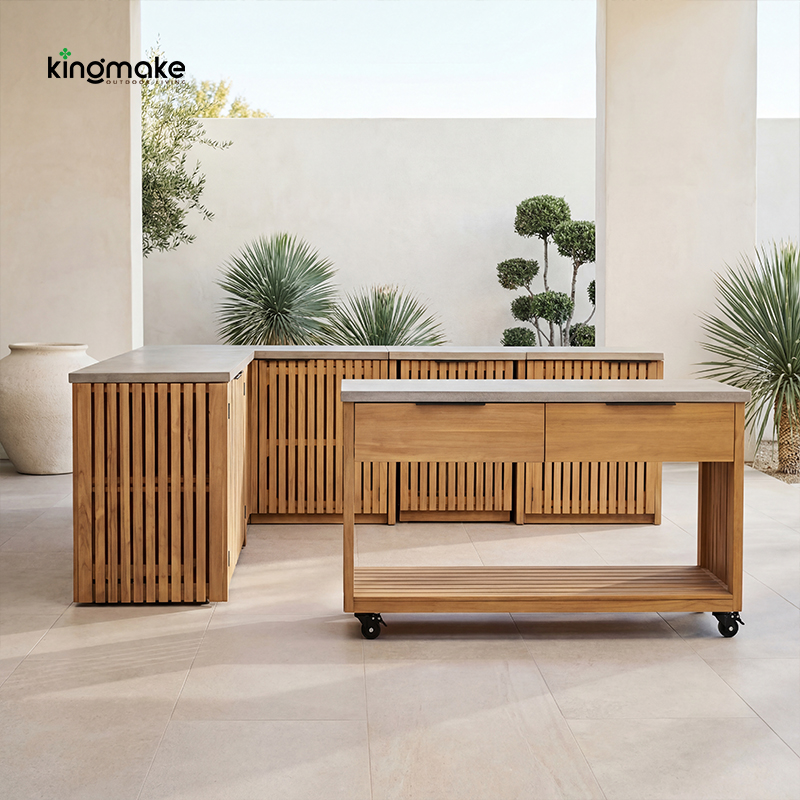
Outdoor Kitchen Layouts for Pools, Rooftops & Resort Bars
An outdoor kitchen can be the most profitable and memorable “zone” in a hospitality space if the layout is planned for real guest flow. The right design does more than look good in photos. It keeps lines moving, prevents crowding, protects equipment from weather, and helps staff serve efficiently during peak hours.
Whether you’re designing a pool deck, a rooftop lounge, or a resort bar, layout decisions should come before choosing appliances, finishes, or décor.
Below is a practical guide to outdoor kitchen layouts that work especially well for U.S. hotels, resorts, and commercial projects.
We’ll break down the most common configurations, how to adapt them by location, and the key sizing and comfort details that separate a “nice idea” from a high-performing space.
Start With the Site: Pool Deck vs Rooftop vs Resort Bar
Even the best layout can fail if it ignores the site. Pools, rooftops, and resort bars all behave differently because guests move differently, weather conditions change, and operational demands are not the same.
Pool decks have wet traffic, barefoot circulation, and constant movement between water, seating, and service points. Heat zones should be kept away from the busiest wet walkways, and the kitchen should not block sightlines for lifeguards or staff. Smoke direction matters more than people expect, especially during busy weekends when guests are close together.
Rooftops often have tighter footprints and more exposure. Wind, sun, and temperature swings can be extreme in many U.S. markets.
The layout must preserve open lounge space and keep the service line protected. Rooftops also require careful thinking around noise, lighting, and late-night operations, because your neighbors and building rules may not be flexible.
Resort bars are service-first environments. You’re designing for throughput, not just comfort. The layout needs a clear “production line” for drinks and food, plus space for staff to move without crossing guest traffic. In a resort setting, the kitchen often becomes a stage, so the design should support both performance and speed.
The Core Layouts Hotels Use Most
Most successful outdoor kitchens fall into four layout families. The right choice depends on available space, how many guests you serve at once, and whether the goal is a cooking station, a social bar, or a full-service destination.
U-Shaped Outdoor Kitchens
U-shaped layouts are ideal for high-volume use. They naturally create defined work zones and allow multiple staff members to work without bumping into each other. In hospitality, a U-shape is often paired with a raised bar counter on the guest-facing side, so the chef or bartender can interact with guests while staying protected within the service zone. This layout works best when you have enough deck space to maintain comfortable clearances behind the line.
L-Shaped Outdoor Kitchens
L-shaped kitchens are the most versatile option for compact projects. They use corner space efficiently and create a natural separation between the hot zone and the serving or prep zone.
For pool decks and smaller rooftops, an L-shape often feels “built-in” without overpowering the space. If you’re researching small outdoor kitchen layouts for pools or rooftops, this is usually the best starting point.
Island and Peninsula Layouts
Island layouts are designed for social energy. They allow 360-degree interaction, which is why they’re popular for resort bars and entertainment settings. The island becomes the centerpiece, with guests gathering around it.
Peninsula layouts deliver a similar effect but can also act as a divider in smaller footprints. If you want a “destination bar” feel, island and peninsula designs often deliver the strongest guest experience, especially when paired with proper bar seating.
Straight Run + Bar
A straight run is the most space-efficient layout. It’s perfect for narrow rooftops or long pool decks where you want to keep open space for seating and circulation. The key is to include enough counter space for prep and landing zones, rather than filling the run with appliances.
A linear layout can perform extremely well in hospitality when it supports fast service and avoids creating bottlenecks.
Pool-Specific Layout Ideas That Actually Work
Outdoor kitchens near pools must balance fun and functionality. You want the kitchen close enough to feel convenient, but not so close that heat, smoke, and traffic create a safety or comfort issue.
One of the most popular pool concepts is the swim-up or walk-up bar connection. When done well, it creates a resort-style experience and increases beverage sales.
The most important layout decision is where the service face sits. You want guests to access the bar without blocking pathways, and you want staff to have a protected, dry service spine behind the counter.
Another strong model is the pool house with an outdoor kitchen plan. This can be a pass-through concept where prep happens inside while serving and bar seating happen outside. It reduces clutter on the deck and keeps operations cleaner.
For busy hotels, this hybrid approach is often easier to maintain while still delivering the “open-air” experience guests want.
In general, the best pool kitchen layouts keep the cooking line slightly back from the splash zone, preserve clear walkways, and integrate shade so guests can sit comfortably in the serving area throughout the day.
Rooftop Layout Strategies for High-Wind, Limited Space
Rooftop kitchens succeed when they respect two realities: space is precious and the environment is harsh. A minimalist linear layout is often the smartest choice because it keeps the terrace open for seating, views, and circulation.
Instead of building deep islands that crowd the deck, rooftops often perform better with a clean back line that includes storage, refrigeration, and prep space.
A powerful rooftop strategy is the “back bar + front bar” approach. The back bar holds the working equipment ice, refrigerators, storage, and prep zones while the front bar becomes the guest-facing counter with seating. This creates a natural separation between operations and experience. It also helps staff move efficiently while maintaining a clean presentation.
Rooftops also benefit from thoughtful shelter planning. Even if you don’t build a full roof structure, shade solutions should protect both guests and equipment during peak sun hours. That’s where flexible shade zoning becomes valuable.
Resort Bar Layouts Designed for Throughput and Revenue
Resort bars are where layout can directly impact revenue. If guests can order easily and staff can serve quickly, the bar becomes the center of the property’s social energy. If the layout forces congestion, guests leave sooner and spending drops.
The best resort bar kitchens are designed around a “service spine.” This means you build a clear flow that moves from storage to prep to cooking to pass-through and serving.
It prevents staff from crossing paths and reduces the time spent walking. When events happen, weddings, pool parties, live music, the service spine is what keeps operations stable.
Many properties also benefit from two-sided serving. One side can be dedicated to drinks and guest-facing service, while the other side remains a working zone for prep and cooking. This helps avoid crowding, especially during peak hours.
Bar Seating: The Comfort Details Hotels Should Get Right
Bar seating is one of the fastest ways to turn an outdoor kitchen into a social and profitable hub. But comfort depends on getting the dimensions right. A typical bar counter height is higher than a standard dining counter, and stools need to match that height for guests to sit comfortably.
Spacing also matters more than most people think. If stools are placed too close together, service becomes difficult and guests feel crowded. If stools are too far apart, the bar feels empty even when it’s in use. Good spacing supports both comfort and efficient staff movement behind the counter.
When planning a bar-facing outdoor kitchen, it’s also important to consider shade and heat. Guests sitting at a bar for 30–60 minutes need protection from direct sun. A shaded bar zone often increases dwell time, which directly increases beverage and food sales.
Shade Planning: Flexible Comfort for Pool Decks and Rooftops
Shade is not just a design detail, it's a usage multiplier. Even a beautifully built outdoor kitchen will sit empty during high sun hours if guests cannot stay comfortable. In many U.S. markets, shade also protects surfaces from UV wear and reduces long-term maintenance costs.
For hospitality projects, flexible shade is often the best approach because layouts change seasonally. Patio umbrellas allow hotels to shift shade coverage as guest traffic changes, events happen, or furniture is rearranged. Umbrellas are especially effective for pool decks and rooftop bars where permanent structures are expensive or restricted.
Shade should be planned as part of the layout itself, not added after the kitchen is built. When umbrellas are placed intentionally over bar seating, dining zones, or waiting areas the entire outdoor experience becomes more inviting.
Materials and Finish Choices for Pool, Rooftop, and Coastal Environments
Outdoor kitchens face different types of exposure depending on location. Pool areas introduce moisture and chemicals. Coastal sites introduce salt air and wind. Rooftops introduce high UV exposure and temperature swings. The right materials help reduce maintenance and keep the kitchen looking premium for years.
In hospitality, low-maintenance finishes matter because cleaning is frequent and staff turnover is real. Surfaces should wipe clean easily, resist corrosion, and handle consistent use without looking worn. Hardware and connections should also be built for long-term performance, not short-term showroom appeal.
Your Partner for Hospitality-Grade Outdoor Furniture
Kingmake Outdoor is a Foshan, China–based one-stop premium outdoor furniture manufacturer serving hotels, resorts, distributors, retailers, and project contractors across the U.S. and worldwide.
With 17+ years of experience and a 15,000㎡ self-owned factory, we handle the full process R&D, design, production, quality control, and global shipping so buyers can source confidently from a single partner.
Our product range includes Outdoor Sofas, Outdoor Dining Sets, Outdoor Chairs, Outdoor Daybeds, Sun Loungers, Swing Chairs, Bar Stools, Patio Umbrellas, Outdoor Planters, Furniture Covers, and Outdoor Kitchens, all engineered for all-weather performance in high-traffic hospitality environments.
We also offer OEM/ODM customization, bulk production for wholesale, fast delivery (7–35 days), and a 5-year warranty, helping projects stay on schedule while maintaining a consistent, premium look across every outdoor space.
Design the “Complete Zone”: Kitchen + Seating + Shade
The most successful outdoor kitchens are not standalone. They work best when they connect seamlessly to the surrounding environment. For example, bar seating turns the kitchen into a social center. Shade increases comfort and dwell time. Lounge seating nearby extends the experience beyond dining.
That’s why many hotels pair the kitchen zone with supporting categories like Bar Stools, Patio Umbrellas, and Outdoor Dining Sets. Dining sets provide structured seating for meals and events, while bar stools create an interactive social edge. Umbrellas keep the area usable all day and help protect both guests and furniture from harsh sun.
When these elements are planned together, the outdoor kitchen becomes a true destination not just an appliance station.
Final Thoughts
Outdoor kitchens for pools, rooftops, and resort bars should be designed like a hospitality experience, not a backyard add-on. Start with the site, choose a layout that supports flow and service, and then build comfort into the plan through seating and shade. When done properly, an outdoor kitchen becomes a revenue driver, a guest favorite, and a centerpiece for photography and brand perception.
If you’re planning a project and want a layout recommendation based on your space and use case, Kingmake Outdoor can help you plan the full outdoor zone from the kitchen configuration to bar seating and shade so everything works together seamlessly.
FAQs: Outdoor Kitchen Layouts for Pools, Rooftops & Resort Bars
1) What is the best outdoor kitchen layout for a pool deck?
Most pool decks perform best with an L-shape, a straight run, or a peninsula design that preserves circulation and keeps heat zones away from wet traffic paths.
2) What layout works best for small rooftops?
A straight run or compact L-shape typically works best because it maintains open lounge space and keeps the terrace from feeling guaranteed or overcrowded.
3) U-shaped vs L-shaped outdoor kitchens—what’s better for hotels?
U-shapes are ideal for high-volume service and multiple staff. L-shapes are more flexible for smaller spaces and still support strong workflow.
4) How close should an outdoor kitchen be to the pool?
Close enough to feel convenient, but far enough to avoid splash exposure, heavy wet traffic, and chemical impact on equipment and surfaces.
5) Should an outdoor kitchen face the pool or face the bar seating area?
For social spaces, facing the bar seating area often delivers better guest interaction. For service-first setups, orienting toward the service flow is usually more efficient.
6) What is the best layout for a resort bar that serves high volume?
An island or U-shaped kitchen with a clear service spine typically performs best because it supports throughput and keeps guest-facing areas clean.
7) How do I add shade without building a permanent structure?
Patio umbrellas are one of the most flexible shade options for pool decks and rooftops, especially when layouts change seasonally.
8) What’s the biggest layout mistake hotels make?
Designing the kitchen without planning guest flow and seating zones. Layout should serve circulation and service first, then appliances.
9) Can I use free outdoor kitchen layouts as a starting point?
Free layouts can help visualize concepts, but commercial-grade projects still require professional planning for utilities, safety, and real-world operation.
10) What furniture should be planned with an outdoor kitchen for the best results?
Bar stools for interactive seating, patio umbrellas for shade,
 Whatsapp
 sales@cnkingmake.com
 +8613925925021