
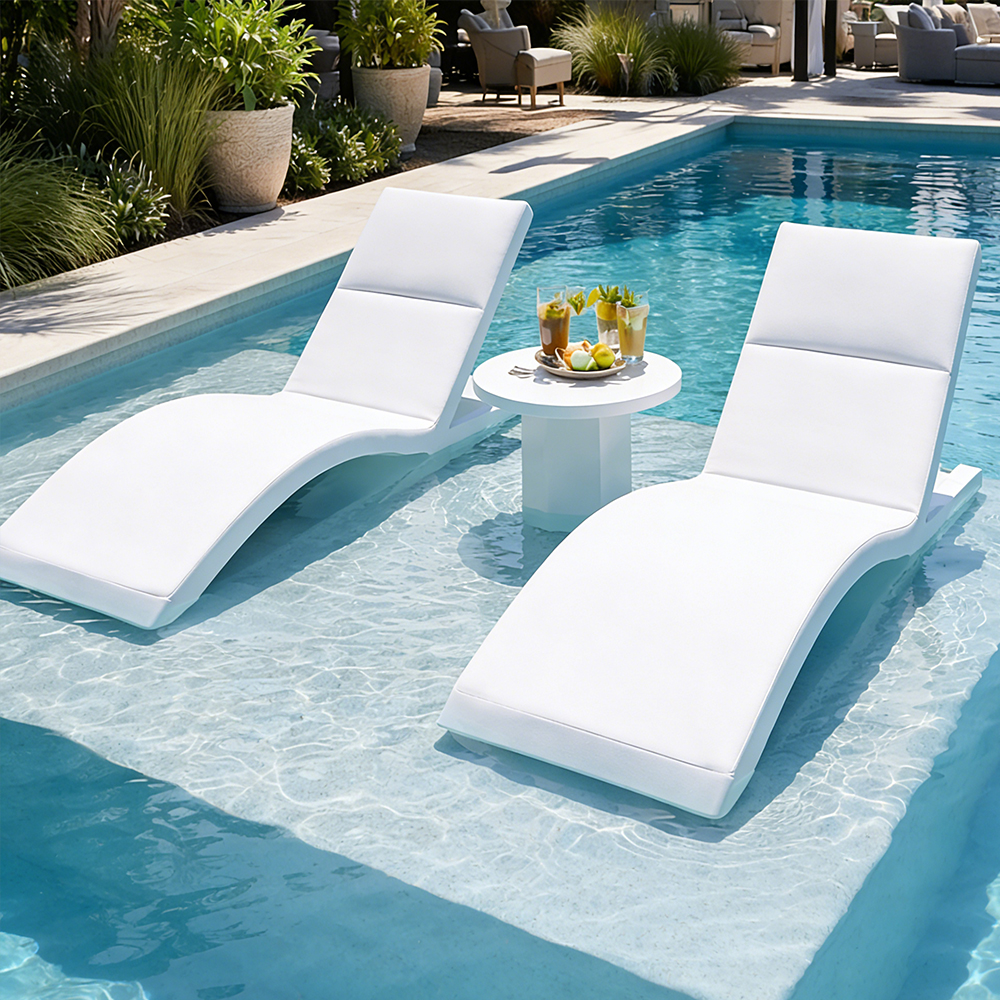
In-Pool Loungers for Baja Shelves
Baja shelves—also called sun shelves or tanning ledges—have become a signature feature in modern resort pools. They create a shallow-water zone where guests can cool off without fully swimming, relax with a drink, and enjoy the pool experience in a more social, photo-friendly way. The right in-pool loungers make that zone feel intentional and premium. The wrong loungers float, shift, scratch surfaces, or turn the shelf into a cluttered bottleneck. This guide explains how hotels and resorts should choose in-pool loungers for Baja shelves, including depth compatibility, sizing, materials, stability, shade planning, and practical layout tips that keep the shelf comfortable and operationally easy. A Baja shelf is a shallow extension of the pool designed for lounging. It usually sits near the steps or entry, creating a “walk-in” feel that’s appealing to families, older guests, and anyone who wants a relaxed pool experience. In hospitality, it’s also one of the most photographed pool features because it looks resort-like and invites guests to linger. From a buying perspective, the shelf changes the furniture decision. On a standard deck, loungers rely on friction and weight. In water, buoyancy and water depth affect stability. A lounger that works on one shelf can fail on another if the depth is off by just a few inches. High-intent search terms guests and planners use include in-pool loungers, baja shelf loungers, tanning ledge loungers, and sun shelf furniture. In a hotel context, the goal is not just to “add furniture,” but to create a premium, safe, consistent experience across daily turnover. Before you browse styles, measure. The two measurements that matter most are water depth and usable shelf area. Many buyers assume shelves are perfectly level. In reality, shelves can have slight slopes, and depth can change from one end to the other—especially near steps. Measure depth at multiple points, not just one. A difference of 2–3 inches can change how stable a lounger feels and whether it starts to float or rock. If the shelf is deeper than the lounger is designed for, the lounger may not sit correctly and can shift as guests get on and off. Measure the usable rectangle after removing “traffic zones.” Steps, handrails, and walking paths are not furniture zones. Guests need space to enter and exit the pool without squeezing around loungers. In hotels, this is non-negotiable because safety and flow matter more than squeezing in one extra chair. Plaster, pebble finishes, and tile behave differently. Some surfaces show scuffs more easily. Some textures improve grip. This matters because in-water furniture is moved often—by guests, by staff, and sometimes by water movement during cleaning cycles. Most in-pool lounger issues come down to depth mismatch. A lounger built for shallow shelves may become unstable on deeper ledges. A lounger built for deeper ledges can feel awkward or too high on shallow shelves. Matching depth is the foundation of comfort and safety. These are designed for typical tanning ledges and produce a “half-submerged” cooling effect. Guests like the feeling of water on their legs while still being able to recline comfortably. These loungers work best when the shelf depth matches the intended waterline, so they don’t float or tilt. Some shelves are deeper by design, especially in larger resort pools. Deeper-rated loungers sit more securely in those conditions and are less likely to shift. If your shelf depth varies, it’s often better to choose loungers that are stable across the deepest points rather than perfect at the shallowest. Chaise loungers are best for relaxing and sunbathing. Upright chairs are better for social areas, conversation, and guests who want a more active posture. Many resorts do well with a mixed shelf layout—one or two chaise loungers plus one or two upright chairs—especially when the shelf is designed as a social zone near the pool bar or main seating area. Some products use risers or adjustable feet systems. These can work, but hotels should prioritize stability and simplicity. The more moving parts, the more maintenance and the higher the risk of mismatch across batches. For hospitality operations, consistency is a real asset. In-pool furniture lives in a harsh environment: chlorine or salt systems, constant UV exposure, sunscreen oils, and waterline buildup. The best material is one that stays stable, doesn’t corrode, and is easy to clean without special care. Many in-water loungers are made from durable polymer-style materials designed for long-term water exposure. For hotels, what matters is UV stability and colorfastness. A product that looks great in the first month but chalks or fades by mid-season will undermine the premium look of the pool area. Any metal components must resist corrosion. Poor-quality hardware can stain, seize, or fail early. In coastal environments, salt in the air accelerates corrosion risks, so the material choices need to be conservative, not optimistic. Dark colors can get hotter in full sun. Light colors are often more comfortable and show a cleaner “resort look,” but they may show scuffs more easily depending on surface texture. The best approach is to choose a finish that balances heat comfort with practical cleaning and visual longevity. In-pool loungers are not just a design choice—they are part of guest safety. Stability is essential because guests step onto furniture with wet feet, sometimes while carrying drinks or towels. The lounger must feel planted. If a lounger can float or drift, it becomes a liability and a daily operational headache. This usually happens when the shelf is too deep for the product or when the furniture doesn’t have adequate weight and water compatibility. Even minor shifting creates guest discomfort because the lounger feels unreliable. The shelf should feel open and easy to walk through. Leave clearance near steps and handrails, and avoid blocking the natural path guests take when entering the pool. On a resort shelf, comfort comes from “space to breathe,” not from maximum chair density. Guests will recline, sit sideways, chat, and use the shelf for extended periods. Look for designs with a comfortable back angle and enough support under the legs. Comfort matters even more in shallow water because guests stay longer when the posture feels right. Hotels often ask for a universal number. The truth is that shelf design varies, so the best answer is a method. First, define the “usable shelf rectangle.” Remove the area near steps and any walking path you want to preserve. Then decide whether the shelf is a relaxation zone, a social zone, or a mixed zone. A relaxation zone needs chaise loungers and space. A social zone may include upright chairs. A simple pattern that works well is symmetry: two chaise loungers side-by-side with a clean gap between them, positioned so they face the view and don’t block entry. If the shelf is larger, add one or two upright chairs placed closer to the edge where guests naturally talk. Avoid the common mistake of crowding the shelf. When shelves are overloaded with furniture, guests bump into pieces, staff struggles to clean, and the shelf loses its premium, spa-like feel. Sun shelves are shallow, bright, and reflective. That means guests feel heat faster than they do on the deck. If you want shelf loungers to be used all day, shade planning is part of the strategy. Most shade for shelves comes from deck-mounted umbrellas or nearby structures. The goal is to provide predictable shade without cluttering the pool’s visual lines or blocking traffic lanes. A good approach is to shade the shelf indirectly rather than trying to “cover it completely.” Position shade so it helps during peak sun hours while keeping the pool looking open and clean. If the shelf is meant to be a luxury feature, you want it to look intentional, not crowded with poles and bases. This is where coordinated shade planning matters. Hotels often pair shelf lounging with nearby Patio Umbrellas that align with the deck layout and provide comfortable shade zones without disrupting circulation. In-pool loungers will collect sunscreen film, mineral scale, and waterline buildup. If cleaning is difficult, staff will avoid it or rush it, and the furniture will look tired quickly. Daily or frequent rinsing and wiping helps keep surfaces clean and reduces buildup. The goal is to remove film before it hardens. A gentle cleaning routine protects the finish and keeps the furniture looking consistent across the season. Storm and storage procedures are also important. In certain markets, hotels remove in-water furniture for storms, deep cleaning, or off-season storage. Your team should be able to lift, move, and store pieces without scratching surfaces or damaging the furniture. Consistency matters in hospitality. If one lounger is damaged and replaced with a different model, the shelf looks mismatched immediately. Plan for replacement ability and visual continuity when selecting your models. Residential buyers often prioritize a single piece’s style. Hotels should prioritize systems: durability, standardization, ease of cleaning, safety, and the ability to reorder. A resort shelf is not “one and done.” It’s a repeating, high-visibility zone that must look great every day. Hotels should also consider how in-pool loungers integrate with the rest of the pool deck. If your shelf looks modern but your deck furniture looks traditional, the space can feel disjointed. Coordinated collections across zones make the entire pool area feel more premium. The best resort pools feel cohesive from the moment guests arrive: a stylish sun shelf, a comfortable deck layout, and premium anchors that elevate the experience. Kingmake Outdoor helps hotels build that complete pool environment by coordinating in-water lounging zones with commercial Sun Loungers on deck, shade-forward comfort using Patio Umbrellas, and premium relaxation areas anchored by Outdoor Daybeds. Because we manufacture hospitality-grade outdoor furniture for large-scale projects, we support consistent finishes, durable materials that fit real pool operations, and bulk order planning that keeps the pool deck unified, functional, and “photo-ready” throughout the season. The best depth depends on the lounger type. The key is matching the lounger’s intended depth range to your shelf depth so it sits stable, comfortable, and doesn’t float or rock. Yes, it can. If the water depth exceeds what the lounger is designed for, buoyancy and instability can cause shifting or floating behavior, especially when guests get on and off. It depends on usable shelf space after preserving entry paths and clearance. Many resorts aim for a clean, symmetrical layout rather than maximizing the count. They can be, if they are stable, matched to shelf depth, and placed with proper clearance around steps and traffic lanes. Stability is the most important safety factor. Water-safe, UV-stable materials designed for in-water use perform best. In coastal regions, corrosion-resistant components are essential for long-term appearance. Yes, typically as a deck-mounted shade solution. The best placements provide comfort without blocking pool access or creating clutter around high-traffic areas. Frequent light cleaning prevents buildup. Avoid harsh abrasion and focus on removing sunscreen film and mineral scale before it hardens. Yes, but salt environments can accelerate corrosion on poor hardware. Choose materials and components that resist salt exposure and maintain a consistent cleaning routine.Baja Shelf Basics: What You’re Designing For
Step 1: Measure Your Baja Shelf Like a Pro
Water depth is the #1 compatibility factor
Shelf dimensions determine how many pieces fit
Surface type affects scuffing and grip
Step 2: Choose the Right Lounger Type for Your Shelf Depth
Shallow ledge loungers
Deeper ledge loungers
Upright in-pool chairs vs chaise-style loungers
Adjustable solutions: what to be careful about
Step 3: Materials That Hold Up in Chlorine, Sun, and Salt Air
Resin and roto-molded styles
Hardware and inserts
Color and heat considerations
Step 4: Safety, Stability, and Guest Comfort Standards
Anti-float and anti-shift matters
Spacing rules for a premium feel
Ergonomics for real guest behavior
Step 5: How Many In-Pool Loungers Fit on a Baja Shelf?
Step 6: Shade Planning for Sun Shelves (Often Overlooked)
Step 7: Maintenance and Operations for In-Water Furniture
Hotel vs Home: What Hotels Should Prioritize
Kingmake’s Poolside Strategy: “In-Water + On-Deck” Comfort
FAQs: In-Pool Loungers for Baja Shelves
What is the best water depth for Baja shelf loungers?
Will a tanning ledge lounger float if my shelf is too deep?
How many in-pool loungers fit on a Baja shelf?
Are in-pool loungers safe for hotels and resorts?
What material is best for in-pool furniture in chlorine water?
Can you put an umbrella near a Baja shelf for shade?
How do you clean in-pool loungers without damaging the finish?
Do in-pool loungers work in saltwater pools?
 Whatsapp
 sales@cnkingmake.com
 +8613925925021