
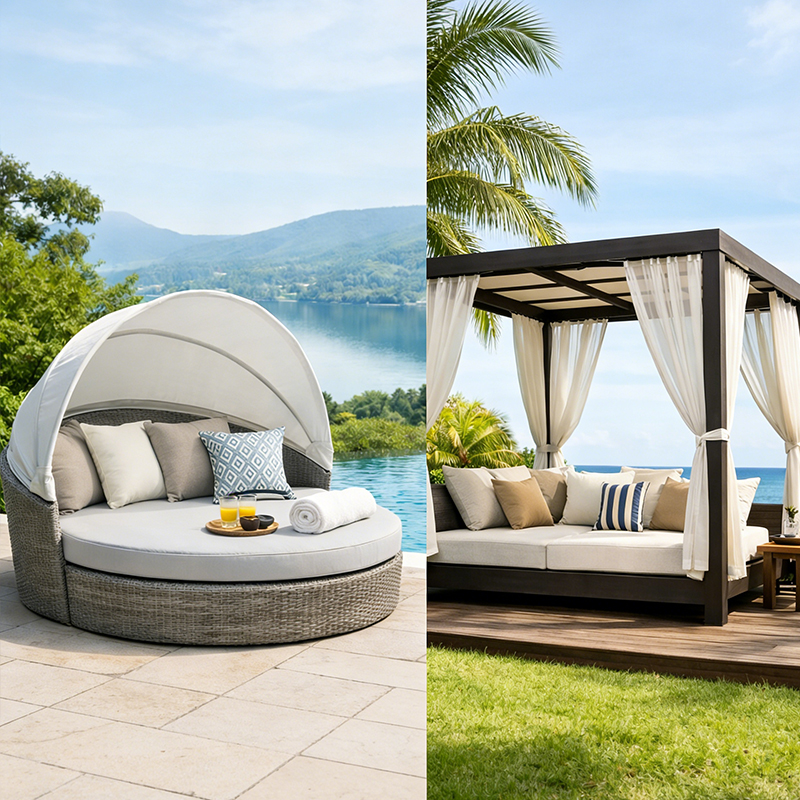
Daybeds Vs Cabanas: What Hotels Should Provide (Guide)
Hotels don’t add premium pool seating just to fill space. They add it to shape the guest experience, reduce friction on busy days, and create inventory that can be reserved, upgraded, and photographed. That’s why the “daybeds vs cabanas” decision matters more than style—it affects flow, shade comfort, staffing, and revenue.
The best properties don’t pick one and ignore the other. They build a mix that matches the guest profile, the climate, and the pool deck’s actual operating reality. Here’s how to decide what to provide, where to place it, and how to make it pay off season after season.
Quick Definitions: Same Words, Different Meanings
Before you compare options, align on what each term means in a hotel setting. In practice, properties use the words differently, which can create mismatched expectations for guests and planners.
What A Pool Daybed Is
A pool daybed is a plush lounging piece, typically designed for one or two people. It’s made for reclining, sunbathing, and relaxing close to the water. Some models include a canopy for shade, while others rely on umbrellas or nearby structures.
What A Cabana Is
A cabana is a more private, room-like setup. It’s usually a covered structure or semi-enclosed space designed for groups, often with living-room style seating and a dedicated service zone. Depending on the property, a cabana may include upgraded amenities like a fan, storage, or a more protected feeling.
Why Hotels Should Clarify In Writing
Some venues call a canopied daybed a “cabana,” while others reserve “cabana” for larger, enclosed structures. For operations and guest satisfaction, your spec sheet and booking descriptions should define capacity, shade, and included amenities clearly.
Daybeds Vs Cabanas At A Glance: What’s Actually Different
At a high level, daybeds and cabanas solve different needs. One is designed for proximity and lounging. The other is designed for privacy and group comfort.
Capacity And Dwell Time
Daybeds usually serve couples or solo guests who want a premium seat without committing to a full “basecamp.” Guests come and go more frequently, and the setup supports a relaxed, sun-forward vibe.
Cabanas hold groups more naturally. They encourage longer stays because guests feel like they have a private zone, especially when shade is consistent and seating supports sitting up as well as reclining.
Privacy Vs Proximity
Daybeds typically sit closer to the pool edge because that’s part of their value. Guests pay for the feeling of being in the action, close to the water, and in a premium location.
Cabanas usually sit slightly back from the edge or along the perimeter to protect privacy and reduce foot traffic. The experience is less about being seen and more about comfort, shade, and separation.
Amenities And Service Model
Daybeds can work with standard pool service, especially if they’re part of a larger seating plan with umbrellas and tables. They become more premium when they include shade, storage, or an easy way for guests to order.
Cabanas often justify higher pricing when they include stronger service support. They also need a dedicated service lane so staff can deliver efficiently without cutting through guest traffic.
Where Each Wins: Pool, Beach, Rooftop, And Quiet Zones
Daybeds and cabanas aren’t only a product decision. They’re a zone decision. The same item can perform very differently depending on placement and the surrounding environment.
Pool Decks
Pool decks benefit from daybeds because they create premium “front-row” inventory. They also look strong in photos and elevate the perceived quality of the pool area without taking over the entire deck.
Cabanas work best on pool decks when shade demand is high or when your guest profile includes families and groups. A cabana zone can reduce pressure on loungers by giving groups a place to gather without spreading across multiple chairs.
Beach Clubs And Waterfront Areas
Wind and sun intensity change the equation. Cabanas often win here because they provide better protection and a more controlled experience for guests who may stay all day.
Daybeds can still be valuable at the waterfront, especially in prime “waterline” placements. They work best when shade is handled intentionally and when the area isn’t exposed to constant strong gusts.
Rooftops
Rooftops are visually powerful but operationally tricky. Wind, glare, and limited storage can create problems.
Daybeds can work on rooftops if you keep layouts clean and shade solutions secure. Cabanas often perform even better when they act as wind buffers and privacy anchors, especially for groups and VIP bookings.
Quiet Luxury Pools
At adult-only or quiet pools, daybeds often deliver the perfect balance. They feel premium, they don’t require heavy infrastructure, and they support a calm vibe.
Cabanas still have a role, but fewer are often needed. In quiet settings, the best cabanas feel refined rather than oversized, and they should not visually dominate the space.
Space Planning Rules Hotels Should Use Before Buying
A daybed or cabana looks simple in a catalog. On a real pool deck, the footprint includes circulation, service access, and guest behavior.
Footprint Is Bigger Than You Think
Daybeds require room around them. Guests step off barefoot, place towels and bags, and move around the piece. If the daybed is too close to a walkway, it becomes a traffic obstacle.
Cabanas require even more planning. You need a clean approach path, a service lane, and enough separation so the privacy promise feels real. If guests feel exposed or crowded, the cabana loses its value.
Create A “Best Seat” Hierarchy
Hotels perform better when the pool deck has clear seating tiers. Standard loungers serve volume. Daybeds serve premium couples and small parties. Cabanas serve groups and VIPs.
When the hierarchy is clear, guests understand why pricing differs. It also reduces conflict because the “best seats” are clearly defined and reservable.
Shade Planning Changes Everything
Daybeds without reliable shade are often a half-day product in hot climates. Guests use them early, then abandon them when the sun becomes harsh.
Cabanas usually provide shade by design, but you still need to ensure shade doesn’t block sightlines, create safety issues, or clutter the deck. Shade should feel intentional, not improvised.
Revenue Strategy: How Hotels Make Daybeds And Cabanas Pay
Premium seating should not be treated like a random add-on. It’s inventory, and inventory needs a pricing structure that fits guest expectations and staff operations.
Tiered Pricing By Location
Guests will pay more for front-row, corner, and best-view placements. Build tiers that match the natural desirability of your deck.
This also makes the booking experience feel fair. When only one price exists, guests feel disappointed if they get a weaker location. Tiering prevents that frustration.
Rental Fee Vs Minimum Spend
A flat rental fee is simple and predictable. It works well when your pool service is lighter or when you want an easy booking funnel.
Minimum spend works best when service is fast and the pool bar is a major revenue driver. Guests commit to spend, and the property gains stronger food and beverage performance.
Some hotels use a hybrid model for their most premium cabanas or best daybeds, but it must be explained clearly. Guests should never feel like they are paying twice without a clear value upgrade.
Bundles That Increase Conversion
Bundling makes premium seating easier to buy because it feels like an experience, not a fee.
Daybed bundles often work best when they focus on comfort. Think water, towels, and shade assurance. Cabana bundles can justify higher pricing when they include group-friendly items and upgrades that feel meaningful.
Durability And Maintenance: The Part Most Buyers Underestimate
Premium seating isn’t premium if it looks tired mid-season. Hospitality seating gets constant use, harsh sun, and frequent cleaning.
What Fails First
The first failures usually come from surfaces and soft goods. Cushions that hold moisture, fabrics that fade quickly, and hardware that corrodes will show wear faster than most hotel teams expect.
Canopies and curtains also need attention. If mechanisms jam or fabric looks worn, the entire cabana zone drops in perceived value. Simple, commercial-grade solutions often outperform complex designs in real operations.
Cleaning And Reset Time
Hotels should think about how fast staff can reset a seat. Faster reset means higher usable inventory and a better guest impression.
Daybeds must be easy to wipe and quick to return to a clean, aligned look. Cabanas need a workflow for cleaning, trash, towel replacement, and quick inspection so the space feels “private and fresh” for each new booking.
Climate Reality
Coastal air and humidity accelerate wear. Chlorine and sunscreen oils create buildup. If your property operates year-round, durability matters even more because you don’t get a true “off-season” to recover.
Guest Experience Design: What Guests Actually Care About
Guests rarely talk about frames or materials. They talk about comfort, shade, privacy, and whether the experience felt worth it.
Shade Quality
Shade is not just a yes/no feature. It’s about how reliable shade is through peak sun hours.
Daybeds need a consistent shade plan to stay valuable all day. Cabanas need shade that feels comfortable, not overly enclosed or hot. Airflow matters when shade structures become too dense.
Comfort For Sitting Up
Many daybeds are designed for reclining but not for sitting upright. If your guests want to talk, eat, or work poolside, sitting comfort matters.
Cabanas typically perform better here because they support a living-room posture. But if the seating is too soft, too low, or poorly arranged, guests still won’t feel comfortable for long stays.
Storage And Clutter Control
Groups bring stuff. Bags, shoes, toys, and towels create clutter.
Cabanas tend to win when they provide a place for items to live without spreading across walkways. Daybeds need side tables and spacing so guests can keep their belongings organized.
Kingmake’s Approach To Daybeds Vs Cabanas For Resorts
The most successful hotel pool decks don’t treat seating as individual pieces. They treat seating as a coordinated system that supports comfort, shade, and profitable zones.
Build A Balanced Mix That Matches Demand
A strong baseline usually starts with a core lounger inventory, then adds daybeds as premium “waterline” seating, and cabana-style zones where privacy and group amenities justify higher value.
Hotels can improve guest satisfaction by ensuring every guest has an option that fits their mood. Sun-focused guests choose daybeds. Group guests choose cabanas. Everyone else uses loungers and shaded seating.
Keep The Look Consistent Across The Deck
Consistency matters in hospitality branding. When finishes, fabrics, and silhouettes coordinate, the pool deck looks intentional and high-end.
This is where a manufacturer’s breadth matters. When you can source premium seating and supporting pieces together, you reduce mismatches and simplify future replacements or expansions.
A Note On Kingmake Outdoor
Kingmake Outdoor is a one-stop manufacturer of hospitality outdoor furniture for hotels, resorts, and commercial projects worldwide. We produce coordinated premium seating—especially Outdoor Daybeds designed for high-traffic pool environments—along with supporting shade and layout pieces such as Patio Umbrellas and Pergolas that help create a more private, resort-style experience. With in-house design support, high-volume production, and global shipping, we make it easier for properties to build cohesive pool zones that look consistent, perform in real weather, and stay guest-ready through long seasons.
Decision Checklist: What To Decide Before You Buy
Choosing between daybeds and cabanas becomes simple when you answer a few operational questions.
Guest Mix
Are you serving couples, families, groups, or event-driven crowds? Couples and solo travelers often use daybeds well. Groups and families often benefit from cabanas.
Staffing Model
Do you have enough staff to deliver premium service? Cabanas perform best when service is smooth and consistent. Daybeds can work with standard pool service if the layout supports it.
Climate And Exposure
Hot sun and limited shade increase the value of cabanas and canopied daybeds. Wind exposure may influence where cabanas work best and how shade structures are engineered.
Storage And Reset
Where does furniture go during storms? How fast can staff reset between bookings? If reset is slow, premium inventory becomes less usable.
FAQs: Daybeds Vs Cabanas
What’s The Difference Between A Daybed And A Cabana At A Hotel Pool?
A daybed is a premium lounging piece for one or two people, often near the water. A cabana is a private, shaded setup designed for groups with more of a “room-like” feel.
Are Cabanas Worth It For Families Or Groups?
They can be, especially when shade is needed all day and when the group wants a basecamp for comfort, storage, and service. For longer stays, cabanas often feel more valuable.
Do Daybeds Usually Include Shade?
Not always. Some daybeds have canopies, while others rely on umbrellas or nearby structures. Hotels should plan shade intentionally so daybeds stay useful during peak sun hours.
How Many People Fit On A Pool Daybed Vs A Cabana?
Most daybeds are best for one to two guests. Cabanas typically support larger groups and can feel comfortable for four to six or more depending on the setup.
Is Cabana Pricing Usually A Minimum Spend Or A Rental Fee?
Hotels use both. Minimum spend models can drive food and beverage revenue, while rental fees simplify booking. The best option depends on service speed and operational capacity.
Where Should Hotels Place Daybeds For Best Utilization?
Daybeds perform best in prime locations with easy pool access and a clear shade plan. They should not block high-traffic walkways or create bottlenecks near steps.
What Are The Best Materials For Coastal Resorts?
Coastal resorts should prioritize corrosion-resistant materials, commercial-grade fabrics, and designs that are easy to clean and quick to reset. Durability protects the premium look.
How Do You Keep Premium Seating From Feeling Crowded?
Use zoning and spacing. Create tiers of seating, preserve walkways, and avoid packing the deck. Premium seating feels premium when guests have room to move and relax.
 Whatsapp
 sales@cnkingmake.com
 +8613925925021