
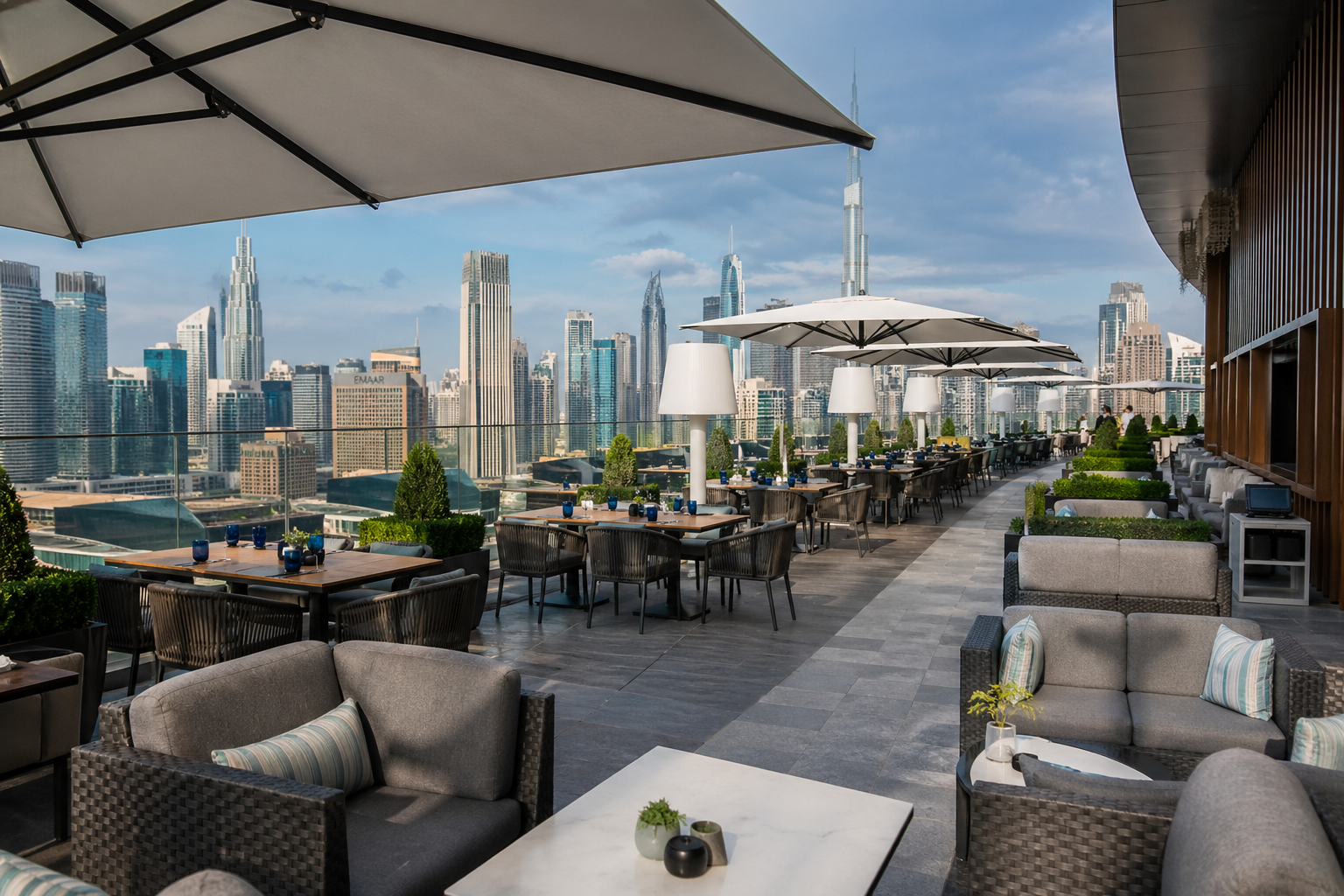
Commercial Outdoor Patio Furniture: What to Look for Before You Buy
Introduction
Selecting commercial outdoor patio furniture is different from choosing pieces for a home. In hospitality settings such as hotel pool decks, rooftop bars, and resort terraces, furniture must handle constant use, changing weather, and strict brand standards. A single chair may serve hundreds of guests each week, making durability and consistency essential.
For this reason, commercial patio furniture should be approached as a specification process, not a simple purchase. Materials, construction, and layout affect daily operations and long-term performance. This guide explains how to evaluate outdoor commercial patio furniture by category, material, and use case, and what to check before committing to a large order.
Phase 1: Define the Right Furniture for Your Space
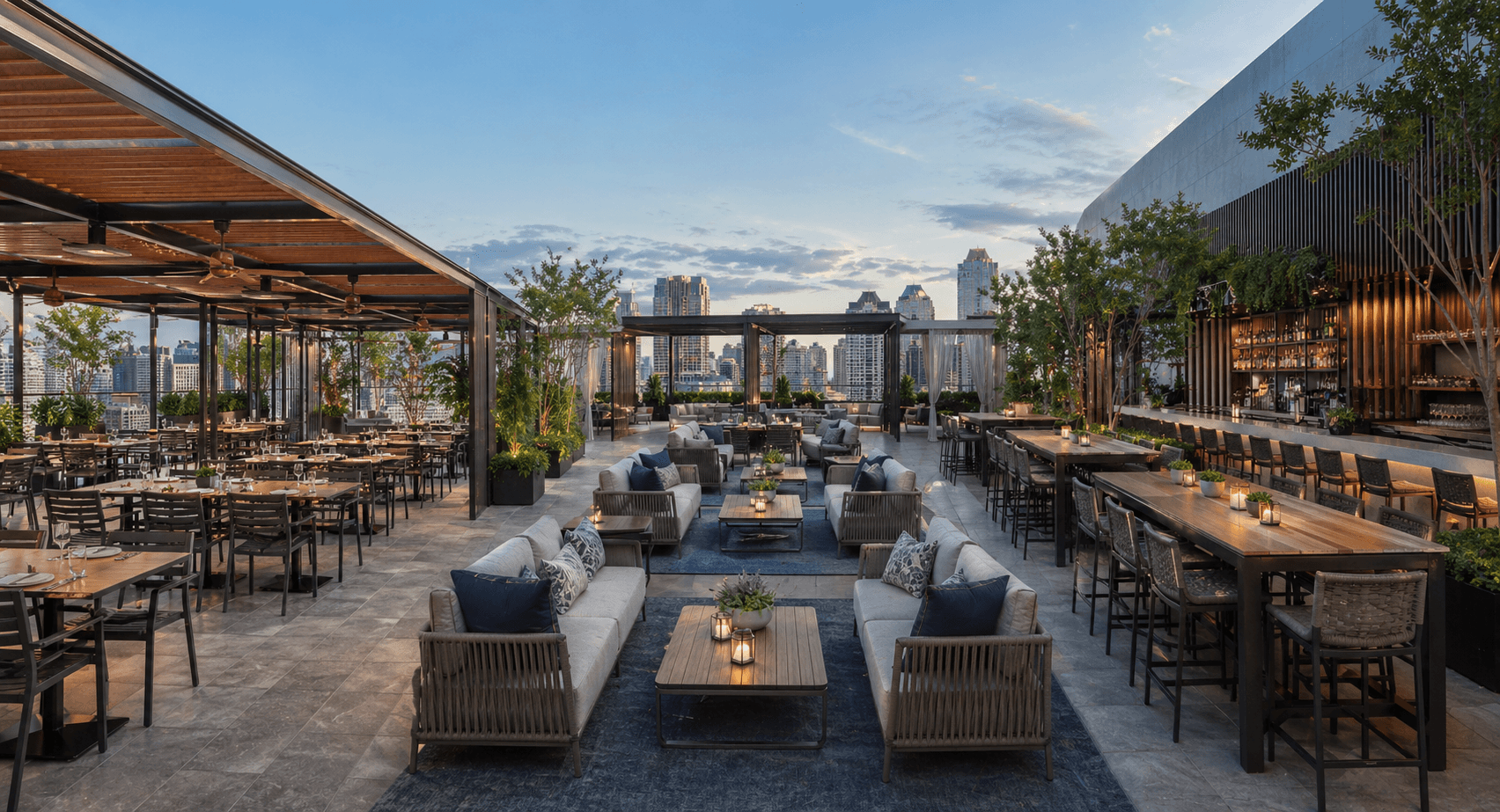
Commercial Patio Furniture Categories — Matching Pieces to Use Cases
Every outdoor area serves a purpose. The right commercial outdoor patio furniture should match how the space is used. Dining areas prioritize efficiency, lounge zones focus on comfort, and bar settings support movement and interaction. Selecting furniture based on function, not just appearance, helps operations run smoothly for both guests and staff.
Well-selected outdoor hospitality commercial patio furniture also supports revenue. It can increase seating capacity and improve guest experience. Many properties choose modern commercial patio furniture that maintains a consistent look across different zones.
Dining Sets (Restaurants, Rooftops, Pool Bars)
Dining sets are designed for efficiency and turnover. In high-traffic environments, chairs should be stackable for quick resets and storage.
Surfaces should clean easily between guests and resist stains. Weather-resistant finishes help maintain performance under daily sun and moisture exposure.
Lounge and Deep Seating (Pools, Terraces, Spas)
Lounge seating is built for extended use, so comfort and durability are essential. Pieces should support higher weight capacity and remain stable over time.
Quick-dry foam and performance fabrics allow cushions to recover after rain or cleaning. Strong frames ensure consistent support in high-use environments.
Bar-Height Seating (Outdoor Bars, Cabanas)
Bar seating must balance stability and flexibility. Footrests take constant pressure and should be reinforced.
Frames should handle frequent movement while staying balanced. Seating should be easy to reposition without sacrificing durability.
Chaise Lounges (Pool Decks, Beach Clubs)
Chaise lounges are standard in pool and beach environments. Adjustable backrests should move smoothly and lock securely.
Sling materials provide easy maintenance and fast drying. Cushioned options offer added comfort. Stackable designs simplify cleaning and storage.
Shade Structures and Umbrellas
Shade improves comfort and usability. Commercial umbrellas should be selected based on coverage and stability.
Cantilever umbrellas allow flexible positioning without blocking tables. Center pole designs work well in compact layouts. Wind rating and base weight should match the environment for safety.
Phase 2: Choose Materials That Match Climate and Brand Positioning
Material Comparison for Commercial Outdoor Patio Furniture
Materials determine how commercial outdoor patio furniture performs over time. They affect durability, maintenance, and overall appearance. For commercial grade patio furniture, the right choice depends on climate, exposure, and design requirements.
Marine-grade aluminum: Lightweight, corrosion-resistant, and suitable for powder coating. Strong welds provide durability in high-use environments.
Best for: coastal resorts, rooftops, pool decksTeak: Premium appearance with natural weather resistance. Requires maintenance or will develop a weathered finish over time. Heavier than most materials.
Best for: luxury resort terraces, spa areasHDPE resin / synthetic wicker: Low maintenance, UV-stable, and resistant to moisture. Offers flexibility in color and style.
Best for: poolside areas, humid environments, budget-conscious projectsStainless steel: Clean, modern appearance with strong structural support. Requires 316 grade for coastal environments. May require more upkeep in chlorine-heavy settings.
Best for: modern hotel terraces, structured seating areasConcrete / stone: Heavy, durable materials used for fixed installations. Provides a strong visual anchor in outdoor spaces.
Best for: permanent features, ground-level installations
Phase 3: Evaluate Contract-Grade Specifications
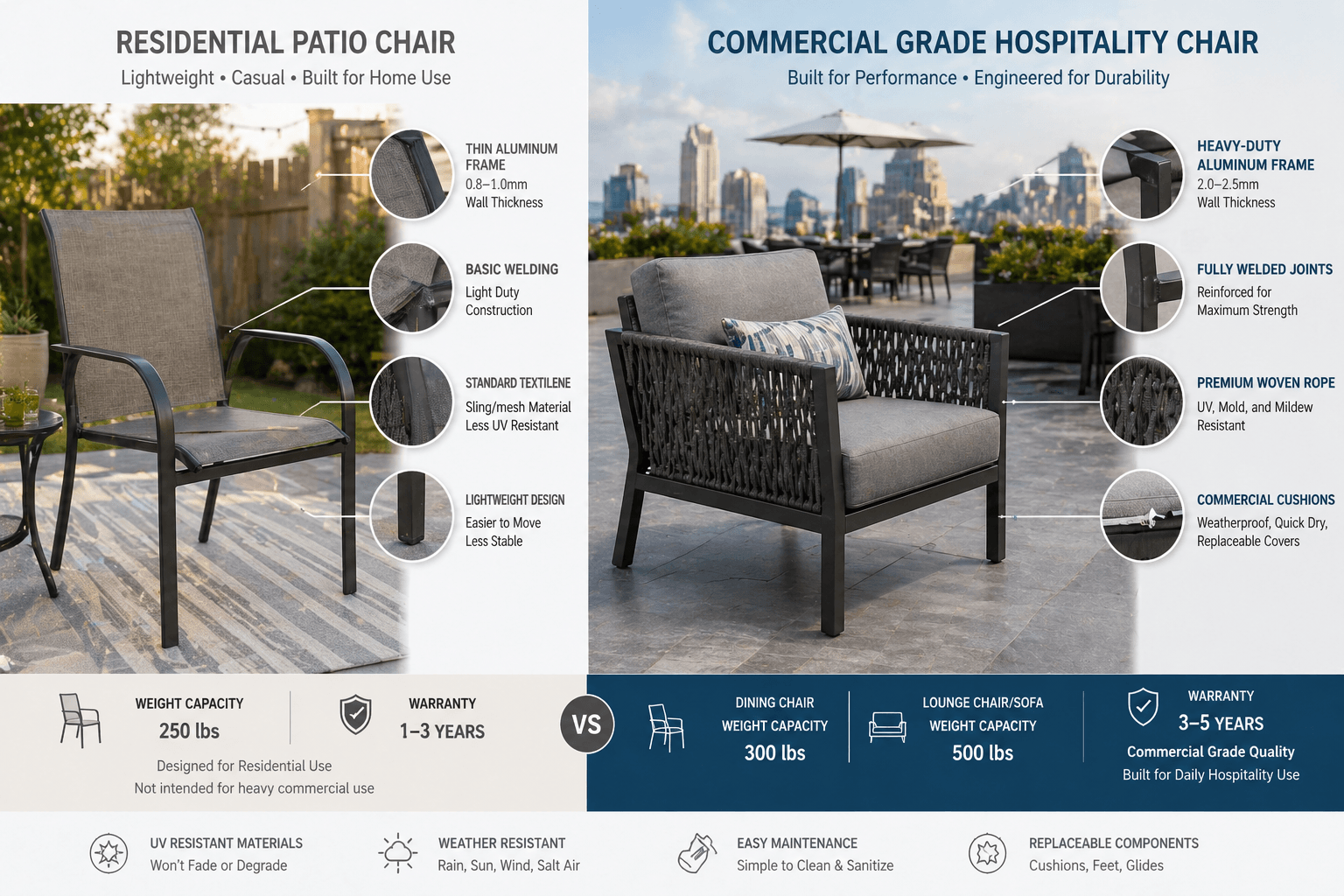
Key Specifications for Hospitality Procurement
Commercial outdoor patio furniture is defined by performance under daily use. For hospitality projects, specifications matter more than appearance. Each detail affects safety, durability, and long-term maintenance.
Focus on these key specifications:
Weight capacity: Minimum 300 lbs for dining chairs and 500 lbs for lounge seating in high-traffic environments. This ensures safe use across a wide range of guests.
UV resistance: Both powder-coated frames and fabrics should have UV resistance suited to the climate. This helps prevent fading and surface breakdown over time.
Stackability: Stackable designs support storage and operational efficiency, especially for pool decks, events, and seasonal use.
Glide material: Non-marking feet protect tile, wood, and pool decking surfaces. They also reduce noise and surface wear.
Chemical resistance: Furniture used in pool areas must resist chlorine, sunscreen, and commercial cleaning agents. This affects both finish and material lifespan.
Welding quality: Aluminum frames should use smooth, fully sealed welds. Poor welds create weak points that fail under repeated use.
Frame gauge: Aluminum tubing should have a minimum wall thickness of 1.5 mm for contract-grade performance. Thinner frames are more prone to bending or fatigue.
Phase 4: Plan Layout for Guest Experience and Revenue
Layout Planning for Commercial Outdoor Spaces
Layout affects both guest experience and operational flow. With commercial outdoor patio furniture, spacing and positioning determine how efficiently a space functions and how comfortable it feels.
Focus on these layout principles:
Standard spacing guidelines: Allow 24 to 30 inches between dining chairs for comfort. Maintain at least 36 inches for service paths and 48 inches for ADA-accessible walkways. These clearances support both guest movement and staff efficiency.
Pool deck layout: Space chaise lounges to allow easy movement and access to amenities. Ensure clear paths to towel stations and service areas. Distribute shade coverage evenly to maintain usability throughout the day.
Rooftop and elevated spaces: Consider wind exposure and structural load limits. Heavier furniture may improve stability, but weight must align with building requirements. Keep emergency egress paths clear at all times.
Density vs. revenue balance: Increasing seating capacity can improve revenue, but overcrowding reduces comfort. Adequate spacing supports longer guest stays and a better overall experience.
A well-planned layout ensures that outdoor commercial patio furniture supports both operational needs and guest satisfaction.
Phase 5: Choose the Right Supplier
Evaluating Commercial Patio Furniture Suppliers
Selecting a supplier is as important as choosing the furniture itself. A reliable partner ensures consistent quality, clear communication, and long-term support.
When evaluating a commercial patio furniture manufacturer, focus on factors that affect delivery, customization, and ongoing maintenance.
Manufacturer vs. distributor
Manufacturers offer greater customization and better pricing on larger orders
Distributors may provide faster access to in-stock items
The right choice depends on project size, timeline, and design requirements
Minimum order quantities and sampling
MOQ requirements vary, especially for custom pieces
Request samples before placing large orders to confirm quality and finish
Sampling reduces risk and improves decision accuracy
Project experience and references
Request at least three references from hotels or resorts with similar use cases
Review how products perform over time in real hospitality environments
Proven experience indicates reliability at scale
Lead times and logistics
Custom orders require longer production timelines
Quick-ship options support tighter schedules when needed
Confirm realistic delivery windows based on project deadlines
After-sales support
Confirm availability of replacement parts for future maintenance
Review warranty coverage and claims process
Ensure the supplier can support reorders for property expansions
Choosing the right supplier helps ensure that commercial outdoor patio furniture performs consistently over time. Strong support and clear processes reduce risk across large hospitality projects.
Bringing It All Together
Commercial patio furniture procurement is a specification process, not a simple purchase. The right decision comes from matching materials and construction to your property’s climate and level of use, and confirming that each piece meets contract-grade standards.
Review specifications carefully, compare suppliers, and use a clear checklist when evaluating options. These steps help ensure that commercial outdoor patio furniture performs consistently over time.
At Kingmake Outdoor, this approach guides how hospitality projects are specified and delivered.
Frequently Asked Questions
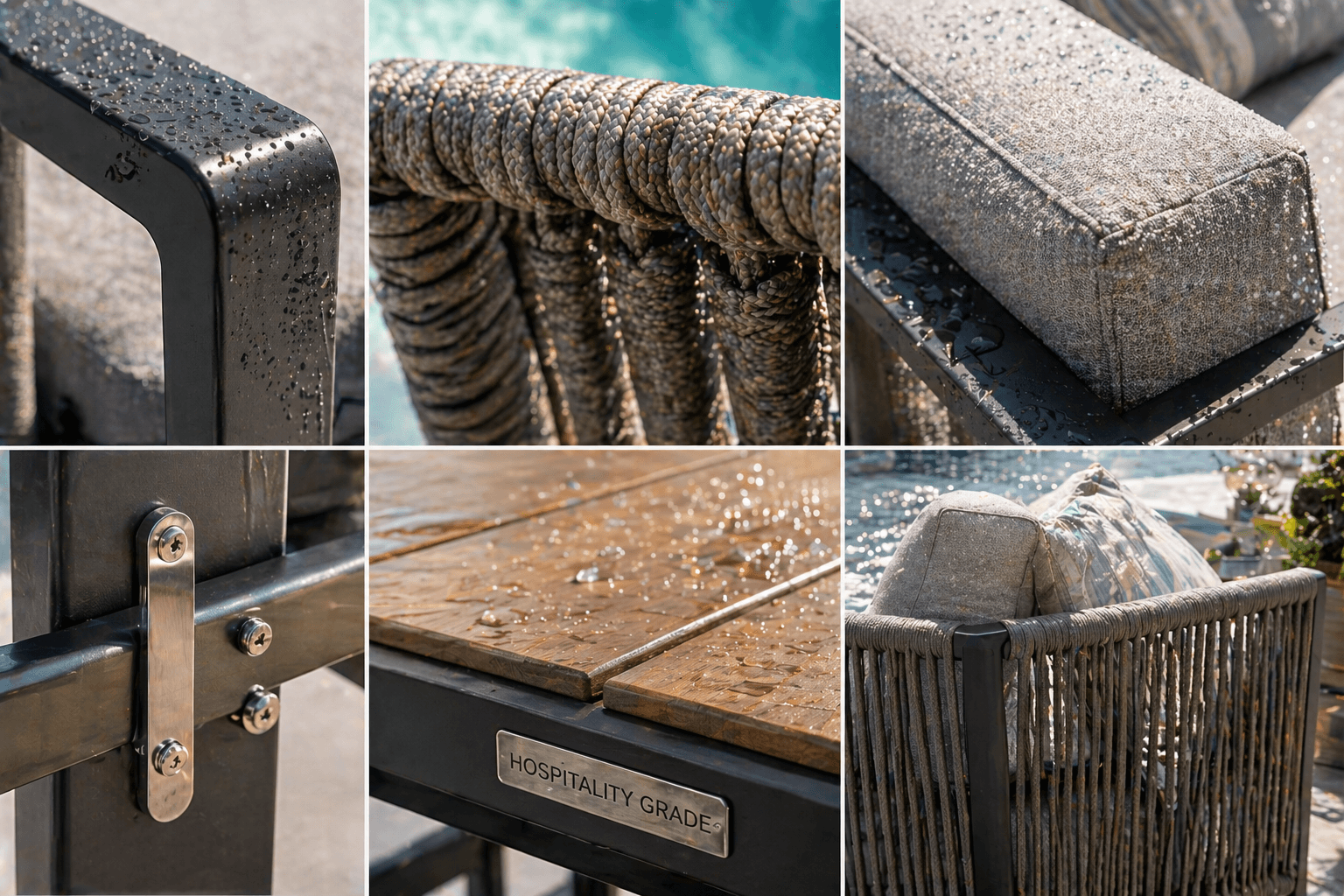
What is commercial grade outdoor patio furniture?
Commercial grade outdoor patio furniture is designed for high-use environments like hotels, resorts, and restaurants. It’s built with stronger materials and construction standards, including weight capacities of around 300 lbs for dining chairs and 500 lbs for lounge seating, along with thicker frames (typically ≥1.5mm aluminum tubing). Unlike residential furniture, it’s made to handle daily use, weather exposure, and long-term wear.
What materials are best for commercial patio furniture?
The best material depends on your setting and priorities. Marine-grade aluminum is a reliable all-around option for its corrosion resistance and low maintenance, while teak offers a more refined look for upscale spaces but requires upkeep. HDPE and synthetic wicker perform well in humid or poolside areas, and stainless steel works best in modern designs when properly specified for the environment.
How much does commercial outdoor patio furniture cost?
Costs vary based on material, order size, and customization. Aluminum and HDPE pieces are generally more cost-efficient, while teak and stainless steel come at a higher price point. Large hotel projects often benefit from bulk pricing, while smaller properties may see higher per-unit costs due to lower volumes and shipping considerations.
Where can I buy commercial patio furniture for a hotel or resort?
You can source furniture through a commercial patio furniture manufacturer or a distributor. Working directly with a manufacturer often provides more flexibility in customization and better pricing for large orders. Distributors can be useful for faster delivery or smaller projects where ready stock is available.
How long does commercial outdoor patio furniture last?
With proper materials and maintenance, commercial outdoor patio furniture typically lasts between 5 and 15 years or more. Aluminum and HDPE require minimal upkeep, while teak and stainless steel may need periodic care to maintain their appearance. Lifespan depends on usage levels, climate conditions, and how well the furniture is maintained over time.
 Whatsapp
 sales@cnkingmake.com
 +8613925925021