
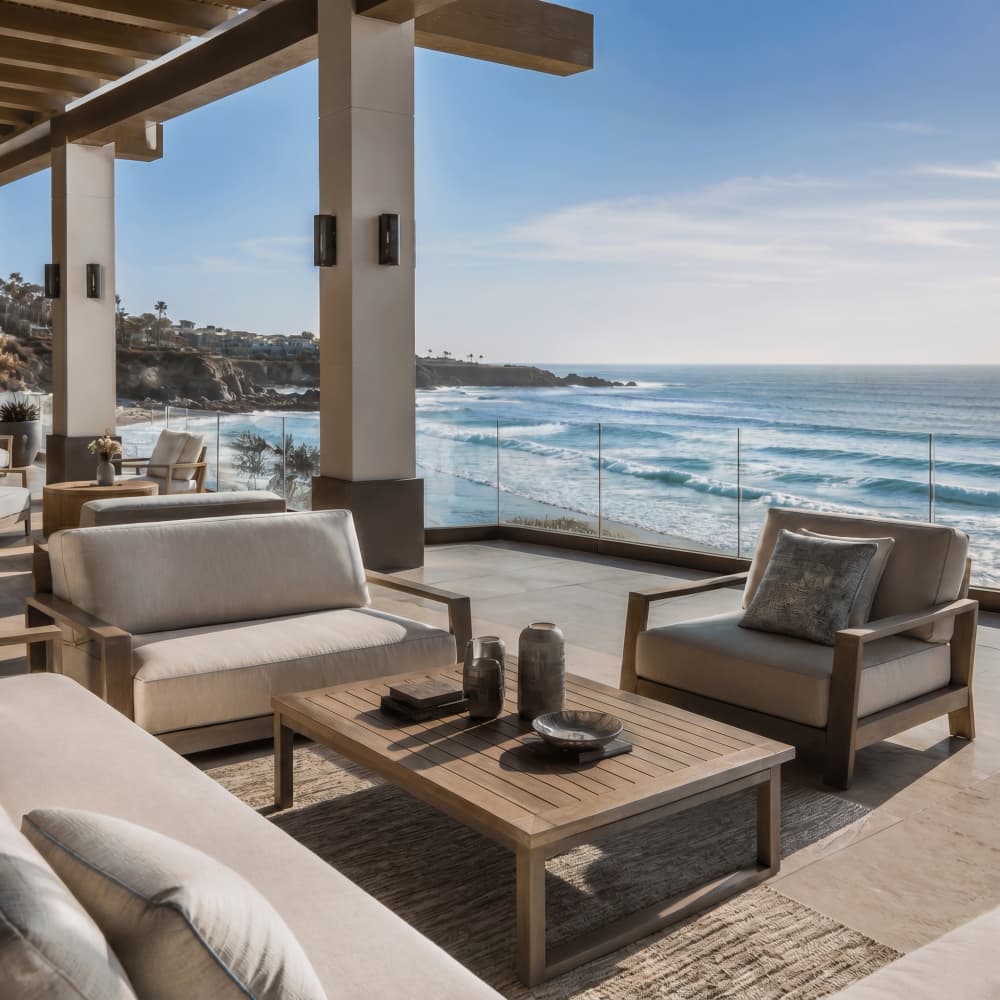
Coastal Outdoor Furniture: Suitable Materials for Salt Air, Sun, and Humidity
Introduction: Coastal Outdoor Furniture for Commercial Environments
Coastal properties present demanding conditions for outdoor furnishings. Salt-laden air can accelerate corrosion, intense UV exposure can affect finishes, and constant humidity can contribute to mold growth and material breakdown. Add in frequent guest use, and material performance becomes even more important.
For properties located near the shoreline, furniture may experience faster wear than inland installations. This is where the difference between standard "weather-resistant" products and coastal-ready outdoor furniture becomes clear. This guide is designed to help hotel operators, resort buyers, and project teams choose materials and specifications that support long-term performance in coastal hospitality environments.
How Coastal Environments Affect Commercial Outdoor Furniture
Coastal climates introduce a combination of factors that can affect long-term outdoor furniture performance.
Salt air carries airborne chlorides that settle on surfaces and can gradually weaken protective finishes. Even stainless steel can be affected; standard grades may show staining or corrosion over time in beachfront environments without appropriate specification and care. For this reason, durable outdoor furniture for coastal climates should prioritize materials and finishes designed for salt air, moisture, and frequent outdoor exposure.
UV exposure is equally important to consider. In tropical and coastal regions, sunlight can fade pigments and degrade low-quality resins more quickly than in protected inland settings. This is why solution-dyed fabrics, where color runs through the fiber rather than sitting on the surface, are often specified for long-term outdoor color stability.
Humidity adds another layer of stress. Moisture can contribute to mold growth inside cushions, warp untreated wood, and weaken adhesives in composite materials. In coastal outdoor furniture environments, this constant moisture exposure is a key performance concern.
At a commercial level, these factors are amplified. Furniture is used daily, cleaned frequently, and exposed continuously, making durability not just a benefit, but a core specification priority for hotels, resorts, and other hospitality properties.
Best Materials for Coastal Commercial Furniture
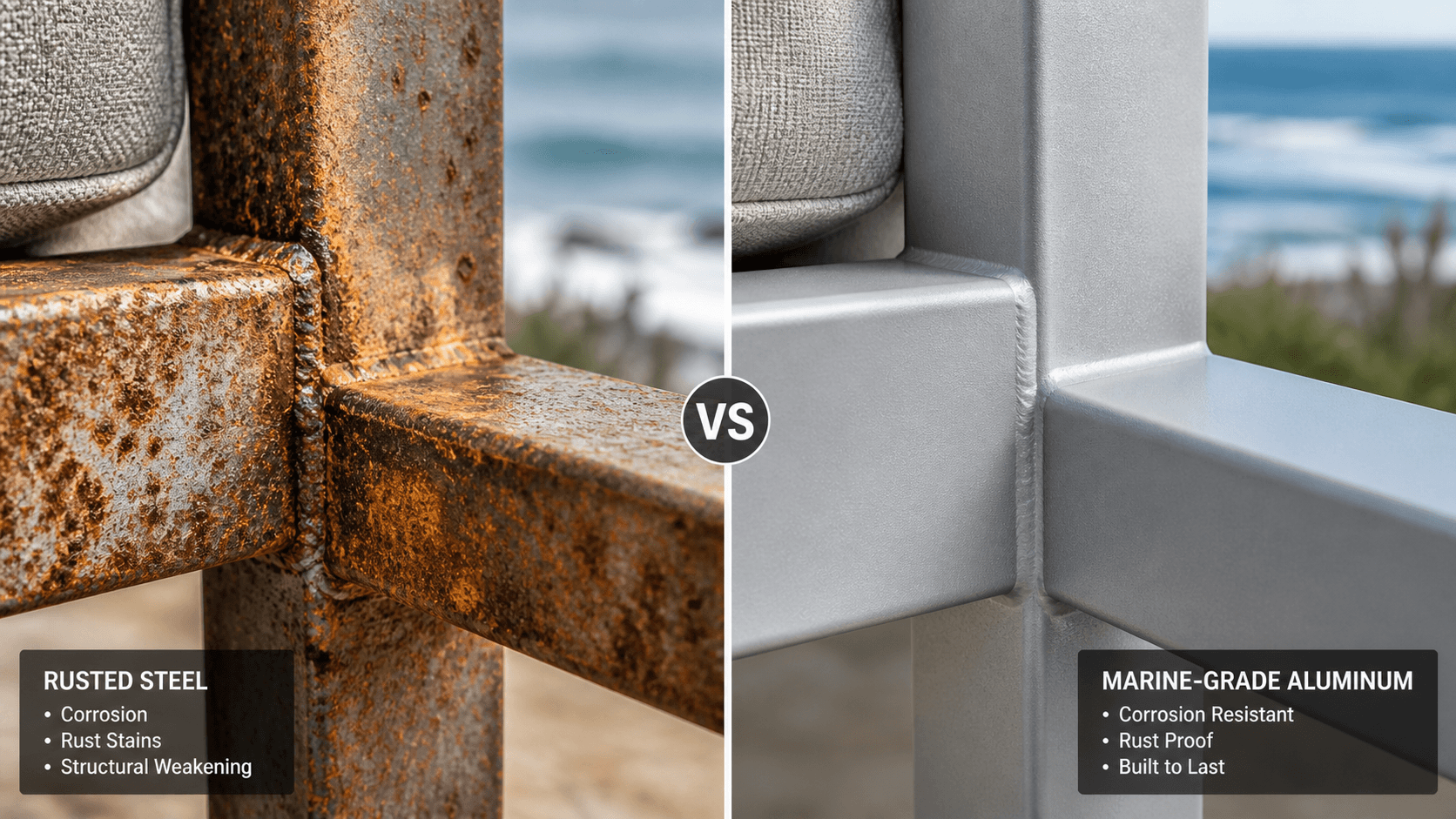
Choosing the right materials is the foundation of long-lasting coastal outdoor furniture. Each option has a place, depending on usage, maintenance expectations, and design goals.
Powder-Coated Aluminum
Powder-coated aluminum is widely used across resorts and hotels because it combines corrosion resistance, structural stability, and practical handling for commercial outdoor spaces. It resists rust and surface degradation, and when paired with proper surface treatment and outdoor-grade powder coating, it performs reliably in salt air, humidity, and frequent guest-use environments.
Its lightweight nature also makes it practical for high-use areas such as pool decks and terraces, where furniture is moved regularly. For many commercial projects, this is a balanced option for durability, maintenance efficiency, and layout flexibility.
PE Rattan and Technical Rope
UV-resistant PE rattan and technical rope are often used in coastal hospitality furniture because they provide texture, comfort, and visual warmth while supporting outdoor performance. These materials are designed to resist moisture exposure, sun exposure, and regular cleaning when properly specified for commercial use.
When paired with corrosion-resistant aluminum frames, handwoven PE rattan or technical rope supports a refined coastal appearance while maintaining structural reliability for resorts, hotels, and poolside environments.
FSC-Certified Grade A Teak
FSC-certified Grade A teak remains a strong material choice for high-end coastal properties. Its dense grain and natural oils provide resistance to moisture and decay, even in humid environments.
However, teak requires a clear maintenance approach. Without regular oiling, it will gradually weather to a silver-gray patina. In coastal outdoor furniture, teak is best suited for areas where routine care can be maintained to preserve its original tone and surface appearance.
316 Stainless Steel Hardware
Hardware plays a critical role in long-term performance. While frames may resist corrosion, joints and fasteners can become vulnerable points if not specified correctly.
316 stainless steel is commonly specified for coastal use due to its enhanced resistance to chlorides. In contrast, lower-grade stainless steel may show staining or corrosion over time in beachfront conditions without consistent maintenance. For coastal commercial outdoor furniture, 316-grade hardware should be carefully considered for exposed fasteners and connection points.
Handwoven Outdoor Materials
Synthetic wicker remains popular in resort settings for its texture and visual warmth. For coastal use, it should be made from UV-resistant PE rattan and applied over a corrosion-resistant aluminum frame.
Natural rattan and low-grade wicker materials can deteriorate faster in humid, salty environments. Properly specified, handwoven PE rattan or technical rope supports modern coastal outdoor furniture designs without sacrificing durability.
Materials to Avoid in Coastal Commercial Projects
Some materials consistently underperform in coastal environments and are generally avoided in commercial applications.
Wrought iron and standard steel are highly susceptible to corrosion. Untreated wood and MDF absorb moisture, leading to swelling and structural damage. Lower-grade hardware often fails early, even when the frame appears intact.
In many beachfront settings, these materials can show premature deterioration, higher maintenance demands, and reduced service life, making them unsuitable for long-term use in coastal hospitality outdoor furniture projects.
Specification Checklist for Coastal Hospitality Furniture
Material selection is only part of the process. For procurement teams, clear and detailed specifications help support consistent performance across coastal hospitality installations.
Key requirements to verify include:
316 stainless steel hardware for exposed or structural connection points.
UV inhibitors in both coatings and fabrics.
Solution-dyed outdoor performance fabrics for long-term color stability.
Quick-dry, open-cell foam with proper drainage design.
Powder coating with verified thickness and adhesion.
Anti-corrosion pre-treatment before finishing.
Commercial warranty terms that address coastal exposure.
Commercial-use testing to confirm performance under frequent use.
This level of detail helps distinguish coastal-ready commercial outdoor furniture from products designed for lighter residential use.
Coastal Furniture for Different Hospitality Settings
Different areas within a property experience different levels of exposure. Matching materials to each setting supports both performance and longevity.
Beachfront Pool Decks
Pool decks are among the most demanding environments, with direct sun, salt exposure, and constant guest use. Furniture should be lightweight, easy to clean, and highly resistant to corrosion.
Powder-coated aluminum frames, quick-dry cushions, and UV-resistant PE rattan or technical rope details are commonly used for sun loungers and daybeds in coastal hospitality applications.
Coastal Dining Terraces
Dining areas require stability and durability, with added exposure to spills and frequent movement. Corrosion-resistant frames and secure hardware are important.
Aluminum structures combined with 316 stainless steel hardware support reliable performance for coastal outdoor furniture in these settings.
Oceanfront Bars & Lounges
Bar and lounge areas experience frequent guest turnover and exposure to sand and salt spray. Furniture must maintain both appearance and structural integrity under continuous use.
Handwoven PE rattan or technical rope over powder-coated aluminum frames is a practical solution for modern coastal outdoor furniture in these spaces.
Covered Verandas & Porches
While partially protected, these areas still experience humidity and indirect exposure to salt air. Materials can be more flexible but must still handle moisture.
FSC-certified Grade A teak, powder-coated aluminum, and mixed-material designs are often used in covered coastal hospitality spaces, balancing durability with a refined appearance.
Maintenance Programs for Coastal Commercial Properties
Even coastal-ready materials benefit from consistent maintenance. A structured program helps extend service life and maintain a guest-ready appearance.
Typical schedules include:
Weekly freshwater rinsing to remove salt buildup.
Monthly inspections of hardware for early signs of corrosion or loosening.
Quarterly deep cleaning of fabrics and cushions.
Annual teak oiling, where applicable.
Seasonal cushion rotation or replacement in high-use areas.
With proper care, coastal outdoor furniture can maintain reliable performance, appearance, and usability across longer service cycles. Maintenance plays a key role in supporting long-term durability for outdoor furniture in coastal hospitality environments.
FAQs: Coastal Outdoor Furniture for Commercial Use
What is the most suitable outdoor furniture for beachfront hotels?
A suitable choice is coastal outdoor furniture built with powder-coated aluminum frames, coastal-grade corrosion-resistant hardware, quick-dry cushions, and solution-dyed outdoor performance fabrics. These materials support long-term performance in salt air, UV exposure, humidity, and daily hospitality use. For properties near the ocean, careful material and hardware specification is important because coastal conditions can accelerate wear compared with inland environments.
Does aluminum furniture rust in salt air?
Aluminum does not rust, but it can corrode over time in salt-air environments if the finish is not properly treated. Commercial-grade outdoor furniture uses anti-corrosion pre-treatment and outdoor-rated protective coatings to help prevent surface damage. In many coastal installations, hardware and connection points require the same level of careful specification as the frame, since lower-grade fasteners may show wear before the aluminum structure itself.
What is marine-grade patio furniture?
Marine-grade patio furniture refers to commercial outdoor furniture specified for high-salt, high-moisture coastal environments. For hospitality use, it may include powder-coated aluminum frames, corrosion-resistant hardware, quick-dry cushions, solution-dyed outdoor fabrics, and UV-resistant PE rattan or technical rope. These features help support long-term performance, easier maintenance, and consistent presentation in coastal hospitality conditions.
How do resorts maintain outdoor furniture in coastal climates?
Resorts typically follow a structured maintenance routine that includes weekly rinsing, monthly inspections, and periodic deep cleaning. This helps remove salt buildup and detect early signs of wear. With consistent care, furniture lifespan can often improve from 2–3 years to 8–10+ years, depending on materials, exposure level, and maintenance quality.
What hardware grade is commonly specified for coastal commercial furniture?
316 stainless steel hardware is commonly specified for coastal commercial furniture because it offers stronger resistance to salt-related corrosion than 304 stainless steel. In beachfront or high-salt environments, 304 stainless steel may show staining or corrosion within 12–18 months without consistent maintenance. For long-term durability, 316-grade hardware is typically used for exposed fasteners, joints, and connection points in coastal commercial furniture.
How long does commercial outdoor furniture last at the beach?
Lower-quality furniture may show significant wear or require replacement in under two years in beachfront conditions. Properly specified coastal outdoor furniture, combined with consistent maintenance, can often support a service life of 8–10 years or more. The difference comes down to material specification, construction quality, exposure level, and ongoing care.
Conclusion: Coastal Furniture as a Long-Term Investment
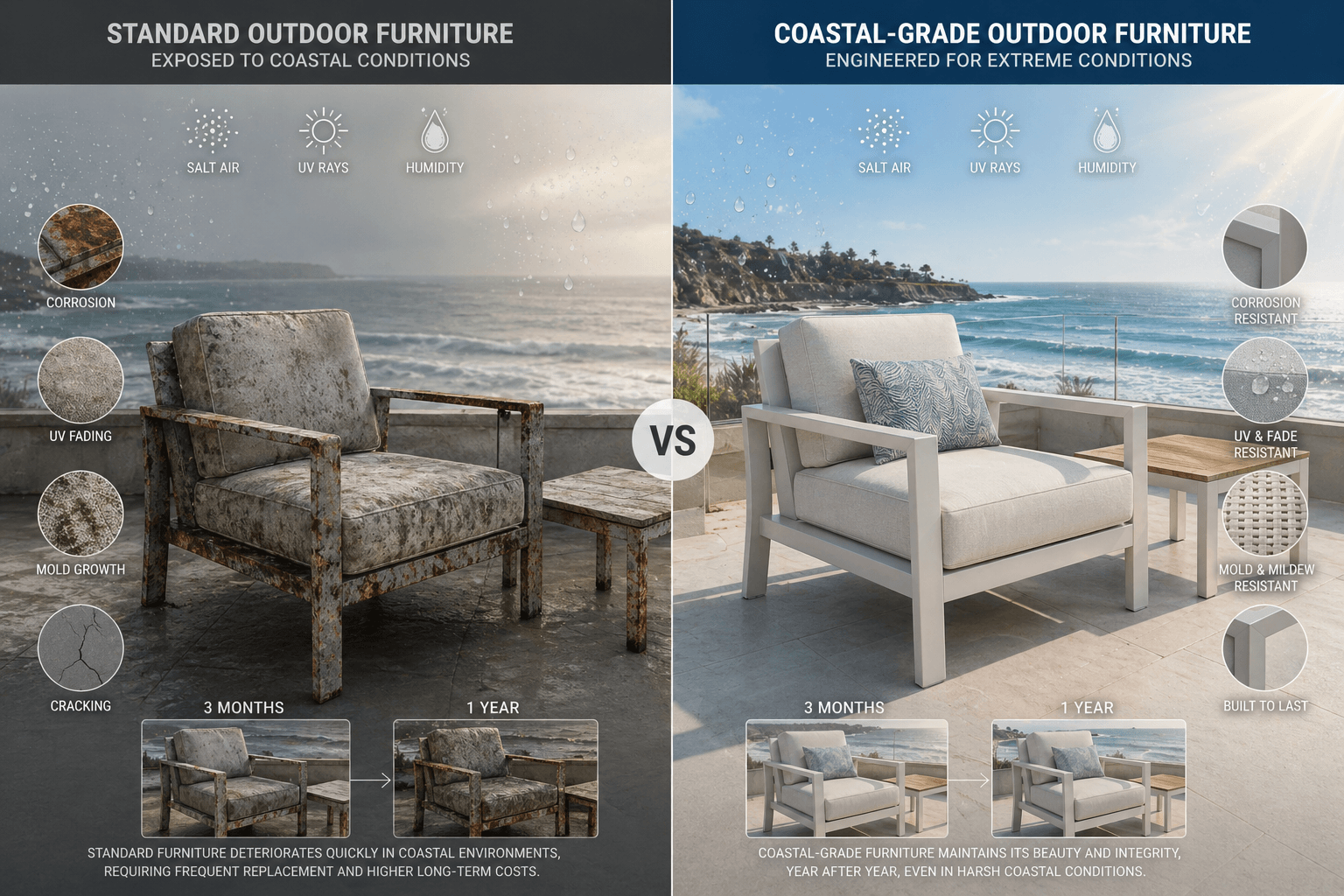
Choosing the right coastal outdoor furniture is not only about style; it also requires careful material planning and a clear understanding of how salt, sun, and humidity affect performance over time. With appropriate specifications, properties can reduce premature replacement cycles and maintain a consistent guest experience over long-term coastal use.
Kingmake manufactures coastal outdoor furniture for hotels, resorts, and commercial hospitality projects worldwide, using materials and finishes designed for coastal outdoor exposure and frequent guest use. If you're planning a beachfront or ocean-facing space, early material and specification planning helps align the frame, finish, cushion, and hardware details with project requirements from the beginning.
 Whatsapp
 sales@cnkingmake.com
 +8613925925021