
How to Clean Teak Outdoor Furniture Without Damaging the Wood
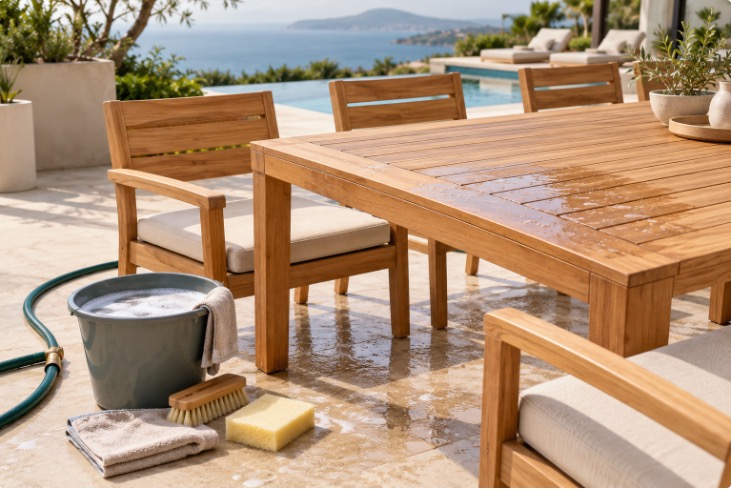
The best way to clean teak outdoor furniture is with water, a small amount of mild dish soap and a soft bristle brush. Wet the wood first, scrub gently in the direction of the grain, rinse thoroughly and allow the teak to dry completely.
For normal dirt, pollen and everyday outdoor exposure, this simple method is usually enough. Weathered teak, mildew and stubborn stains may require a dedicated teak cleaner or light sanding after the wood has dried.
Avoid pressure washers, steel wool and aggressive cleaners. They can roughen, scratch or discolor the wood instead of simply removing dirt.
The 5 Step Method at a Glance
Remove loose dirt and wet the teak with a gentle hose spray.
Mix warm water with a small amount of mild dish soap.
Scrub gently with a soft brush in the direction of the grain.
Rinse thoroughly until no soap remains.
Let the furniture dry completely before replacing cushions, using a cover or applying a protector.
This method works for most teak outdoor furniture, including chairs, sofas, dining tables and sun loungers.
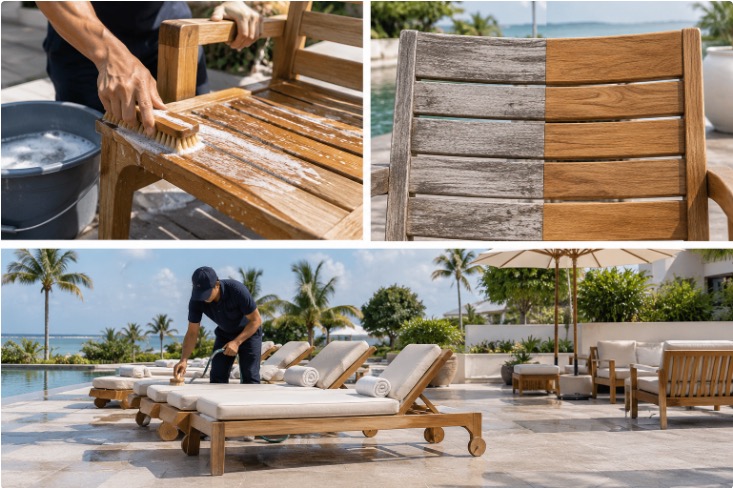
Before choosing a more intensive treatment, look at the condition of the wood. Silver grey teak is not necessarily dirty or damaged. It may simply have developed its natural outdoor patina.
What You Need to Clean Outdoor Teak Furniture
Routine cleaning requires only a few basic supplies.
For routine cleaning
• Garden hose with a gentle spray nozzle
• Bucket of warm water
• Mild liquid dish soap
• Soft nylon or soft bristle brush
• Clean cloth or microfiber towel
A practical starting mixture is approximately 2 tablespoons of mild liquid dish soap in 1 gallon of water. The solution only needs enough soap to loosen surface dirt. More soap does not necessarily improve cleaning and creates more residue to rinse from the grain.
For deeper cleaning or restoration
You may also need:
• A cleaner specifically formulated for teak
• Fine sandpaper, around 220 grit, for smoothing raised fibers
• Medium fine sandpaper, around 120 to 150 grit, if a heavily weathered surface needs restoration
• Protective gloves and eye protection according to the cleaner instructions
• A drop cloth or tarp to protect nearby paving, stone or plants
Use stronger products only when the condition of the furniture requires them. Routine maintenance should remain as gentle as possible.
How to Clean Teak Outdoor Furniture in 5 Steps
1. Remove Loose Dirt and Wet the Teak
Remove cushions, covers and accessories before cleaning.
Brush away leaves, dust and loose debris. Pay particular attention to gaps between slats, joints, table aprons and areas underneath seats, where organic material can collect.
Then wet the entire surface with clean water from a garden hose.
Wetting the teak first helps loosen surface grime and prevents the cleaning solution from drying too quickly while you work.
A normal garden hose is enough. High pressure water is unnecessary and can damage the wood fibers.
2. Mix a Mild Cleaning Solution
Add a small amount of mild liquid dish soap to a bucket of warm water.
The solution should create light suds rather than a thick layer of foam.
Avoid strong degreasers, solvents and aggressive household cleaners. They can remove existing surface treatments, dry the wood or leave uneven discoloration.
If ordinary soap cannot remove deep staining, weathering or mildew, switch to a cleaner formulated specifically for teak rather than making the soap mixture increasingly concentrated.
Always follow the product instructions for specialty teak cleaners.
3. Scrub With the Grain Using a Soft Brush
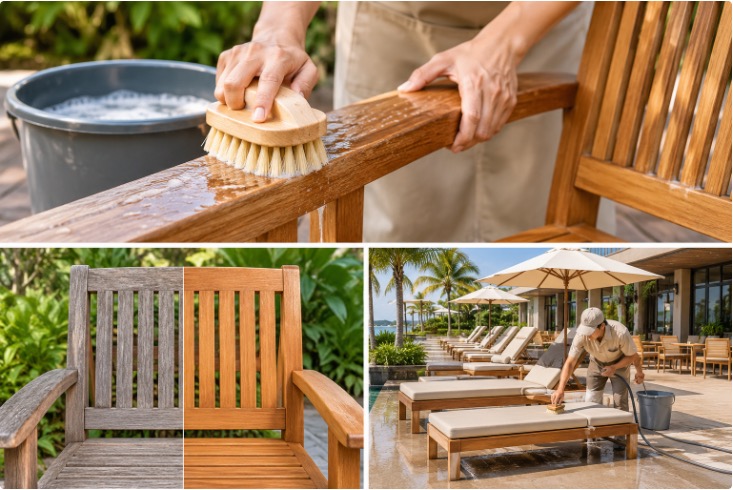
Apply the solution with a soft nylon brush.
Work in small sections and move the brush in the direction of the grain.
Avoid scrubbing across the grain or using excessive force. Teak contains denser and softer wood fibers. Aggressive scrubbing can disturb the softer fibers and leave a rough surface once the wood dries.
For narrow areas between slats or around joints, use a smaller soft brush instead of a harder abrasive.
The objective is to lift dirt from the surface, not remove a layer of wood.
4. Rinse Thoroughly
Rinse each section with clean water until no cleaning solution remains.
Check:
• Slat edges
• Joints
• Undersides of armrests
• Table aprons
• Corners and recesses
Soap left on the surface can dry into a dull film and attract additional dirt.
If a clean cloth wiped across the wet teak still feels slippery, rinse again.
5. Let the Furniture Dry Completely
Allow the teak to air dry in a well ventilated area.
Do not immediately replace cushions, fit a cover or apply a sealer. Covering damp wood can trap moisture and encourage mildew.
Once the teak is completely dry, run your hand over the surface.
If it feels smooth, no sanding is required.
If some fibers feel slightly raised or fuzzy, sand the affected area lightly with fine sandpaper in the direction of the grain.
Routine cleaning should not normally require sanding.
Which Cleaning Method Does Your Teak Need?
Use the least aggressive method that solves the problem.
| What you see | Likely cause | Recommended method | Avoid |
|---|---|---|---|
| Dust, pollen or light dirt | Normal outdoor exposure | Soap, water and a soft brush | Pressure washing |
| Even silver grey color with a smooth surface | Natural weathering | Gentle cleaning if you want to keep the patina | Treating grey teak as damaged wood |
| Grey teak that you want golden again | Weathered surface layer | Teak cleaner, drying and light sanding if required | Aggressive sanding before cleaning |
| Black or green spots | Mold or mildew | Routine wash followed by a teak appropriate mildew treatment if needed | Undiluted household bleach |
| Food, drink, sunscreen or grease marks | Spills absorbed into the grain | Prompt soap wash, then teak cleaner for set stains | Kitchen degreasers and solvents |
| Fuzzy surface after cleaning | Raised wood fibers | Light hand sanding with fine paper | Coarse sanding or aggressive power tools |
How to Clean Weathered or Grey Teak Furniture
Silver grey teak is usually weathered, not damaged.
Exposure to sunlight and rain gradually changes the surface from golden brown to a silver grey patina. You can either keep this appearance or restore a lighter golden color.
If You Want to Keep the Silver Grey Patina
Use the standard soap and water method.
Clean gently with a soft brush and avoid unnecessary sanding or aggressive teak cleaners.
This removes dirt while preserving the weathered surface.
If You Want to Restore the Golden Color
Use a more intensive process:
Wash the furniture with mild soap and water.
Apply a teak cleaner according to the product instructions.
Scrub gently along the grain.
Rinse thoroughly.
Allow the teak to dry completely.
Lightly sand remaining grey or rough areas if necessary.
Remove all sanding dust.
Apply an appropriate teak protector if you want to slow future greying.
Sanding should come after cleaning, not before it.
A teak cleaner may remove enough weathering that extensive sanding becomes unnecessary.
For heavily weathered flat surfaces, approximately 120 to 150 grit paper can be used carefully to remove the weathered layer. Finish with finer paper, such as 220 grit, if a smoother surface is required.
Always sand in the direction of the grain.
How to Remove Mold, Mildew and Stubborn Stains From Teak
Start with soap and water before moving to stronger treatments.
Mold and Mildew
Wash the furniture using the normal 5 step method and pay particular attention to shaded or damp areas.
Common problem zones include:
• Undersides of seats
• Table aprons
• Areas beneath cushions
• Furniture that stays under covers for long periods
• Pieces positioned permanently in deep shade
If visible spots remain, use a product suitable for treating mildew on teak or outdoor wood and follow the instructions carefully.
Some teak care methods also use diluted white vinegar for light surface mildew. Test any unfamiliar treatment in an inconspicuous area before applying it across the furniture.
After cleaning, allow the furniture to dry properly and correct the conditions that caused the problem where possible.
Food, Drinks and Bird Droppings
Rinse spills as soon as practical and clean the area with mild soapy water.
Fresh stains are generally easier to remove than stains that have penetrated the grain.
Sunscreen and Body Oils
These stains are particularly relevant to teak sun loungers, pool furniture and resort seating.
Start with soap and water. If the mark remains after drying, use a teak cleaner rather than a strong household degreaser.
Grease
Blot fresh grease rather than rubbing it deeper into the wood.
Clean with soapy water and move to a teak appropriate cleaner if the mark remains.
Persistent Stains
If a stain remains after appropriate cleaning, light sanding may be the final option.
Sand only the affected area, work along the grain and avoid removing more material than necessary.
What Not to Use on Teak Furniture
The biggest risk is using an aggressive method because it appears faster.
Do Not Pressure Wash Teak
Pressure washing is not recommended for teak furniture.
The concentrated water jet can remove softer fibers between the denser grain, creating a rough, ridged or striped surface.
Repeated pressure washing can make the effect more pronounced.
Use a normal hose, soapy water and a soft brush instead.
Avoid Steel Wool
Steel wool can scratch the grain.
Small metal particles may also remain embedded in the wood and later rust, creating dark marks.
Use a soft nylon brush for cleaning and sandpaper only when the dry surface genuinely requires correction.
Be Careful With Bleach
Strong household bleach should not be the default cleaner for teak.
It can lighten the wood unevenly and may affect nearby fabrics, plants and paving.
For persistent mildew, use a product specifically intended for teak or outdoor wood.
Avoid Strong Degreasers and Solvents
Kitchen degreasers, automotive cleaners and strong solvents may remove finishes or discolor the wood.
Use products designed for teak when routine cleaning is insufficient.
Should You Oil or Seal Teak After Cleaning?
You do not have to oil or seal outdoor teak after cleaning.
Untreated teak can remain outdoors and gradually develop its natural silver grey appearance.
The decision should be based mainly on the appearance you want to maintain.
| Option | Appearance | Maintenance | Best suited to |
|---|---|---|---|
| Leave untreated | Gradually becomes silver grey | Routine cleaning | Natural appearance and lower maintenance |
| Teak protector or sealer | Helps preserve the golden tone longer | Cleaning plus periodic reapplication | Projects where a consistent golden appearance is required |
| Teak oil | Deepens color initially | Usually requires more frequent maintenance | Generally less suitable for outdoor commercial teak |
If the goal is to maintain a golden appearance, a suitable outdoor teak protector or sealer is generally a more practical approach than repeatedly applying oil.
Apply any protector only when the furniture is completely clean and dry.
If you prefer the natural silver appearance, leave the teak untreated and focus on regular cleaning.
How Often Should Outdoor Teak Furniture Be Cleaned?
Cleaning frequency depends on exposure and use.
Home Patios and Gardens
A thorough clean around 1 or 2 times during the outdoor season is often sufficient, combined with prompt cleaning after spills.
Coastal or Humid Locations
Furniture may benefit from more frequent fresh water rinsing to remove salt, pollen and organic residue.
Inspect shaded areas for mildew.
Hotels, Resorts and Restaurants
Commercial furniture needs more frequent inspection because sunscreen, food, drinks, moisture and daily guest use build up faster.
A practical routine can include:
• Regular wiping of tables and armrests
• Prompt spot cleaning after visible spills
• Light cleaning of heavily used pieces during peak periods
• Periodic full cleaning of the furniture collection
• Seasonal inspection for deeper staining, weathering or finish maintenance
Clean according to the actual condition of the furniture rather than using aggressive treatments automatically.
Cleaning Teak Furniture in Hotels, Resorts and Commercial Spaces
Commercial teak requires the same basic cleaning method as residential furniture, but consistency becomes much more important.
A hotel may have dozens or hundreds of matching chairs, loungers, sofas and dining tables. If different teams use different cleaning products or finishing methods, the property can quickly develop visibly different shades of teak.
The first decision should therefore be the desired finish standard:
Natural silver teak: Allow the furniture to weather naturally and use gentle routine cleaning.
Maintained golden teak: Establish a documented cleaning and protector schedule so the furniture ages consistently.
A practical maintenance program can include:
Daily or during routine housekeeping: Remove visible dirt and clean spills before they set.
During peak use periods: Inspect armrests, tabletops, sun loungers and dining furniture for sunscreen, food and drink residue.
Periodic full cleaning: Wash the complete piece with mild soap and water and inspect the grain, joints, hardware and feet.
Seasonal maintenance: Deep clean only where necessary. If the property standard requires golden teak, inspect whether the protector needs renewal.
Avoid allowing individual maintenance teams to choose their own oils, cleaners or aggressive equipment.
A well meaning pressure wash can create more maintenance work than it saves.
For coastal properties, more frequent fresh water rinsing can also help remove salt deposits from furniture surfaces.
Kingmake supplies outdoor furniture for hotels, resorts and other commercial projects, including teak dining furniture, sofas, chairs and sun loungers. For larger projects, material choice, finish standard and maintenance requirements should be planned together so the furniture can be maintained consistently across the property.
FAQ
What Is the Best Thing to Clean Teak Furniture With?
For routine cleaning, use warm water, mild liquid dish soap and a soft bristle brush. Scrub in the direction of the grain, rinse thoroughly and let the teak dry completely.
Use a dedicated teak cleaner only for weathering, deeper stains or mildew that routine cleaning cannot remove.
Can I Use Dish Soap on Teak Furniture?
Yes. Mild liquid dish soap diluted in water is suitable for routine teak cleaning.
Use only enough to create light suds and rinse the furniture thoroughly afterward.
Avoid dish products containing strong bleach or aggressive degreasers.
How Do I Get Teak Back to Its Original Golden Color?
Clean the furniture first, then use a teak cleaner designed to remove the weathered surface.
Allow the wood to dry and lightly sand remaining grey or rough areas if necessary.
If you want the golden color to last longer, apply an appropriate outdoor teak protector once the wood is completely clean and dry.
Without protection, outdoor teak will naturally begin weathering again.
How Do I Clean Teak Without Removing the Silver Grey Patina?
Use water, mild dish soap and a soft brush.
Scrub gently with the grain and avoid aggressive teak cleaners or sanding.
This removes surface dirt while leaving the naturally weathered grey layer largely intact.
Do I Need to Sand Teak After Cleaning?
Usually not.
Sand only when the dry surface feels rough, raised fibers remain, a persistent stain requires correction or you are restoring heavily weathered grey teak to a lighter appearance.
Use fine sandpaper and always work with the grain.
Can You Pressure Wash Teak Furniture?
It is better not to.
Pressure washing can erode softer wood fibers and leave a rough or uneven surface. A garden hose, mild soap and a soft brush provide more control without unnecessarily removing wood.
Should I Oil Teak Outdoor Furniture?
Teak oil is not necessary for the outdoor durability of teak.
If your goal is a low maintenance natural finish, leave the furniture untreated and allow it to develop a silver grey patina.
If you want to maintain more of the original golden appearance, consider an outdoor teak protector or sealer instead and follow the product instructions.
Can Teak Furniture Stay Outside Year Round?
Quality teak furniture is designed for outdoor exposure and can generally remain outside throughout the year.
The wood will naturally weather over time. Cushions, covers, hardware and specific finishes may have separate care requirements, so follow the instructions supplied with the furniture.
If covers are used, make sure the furniture is dry first and use a design that allows adequate ventilation.
Keep Teak Clean Without Overmaintaining It
Teak does not need aggressive maintenance to perform well outdoors.
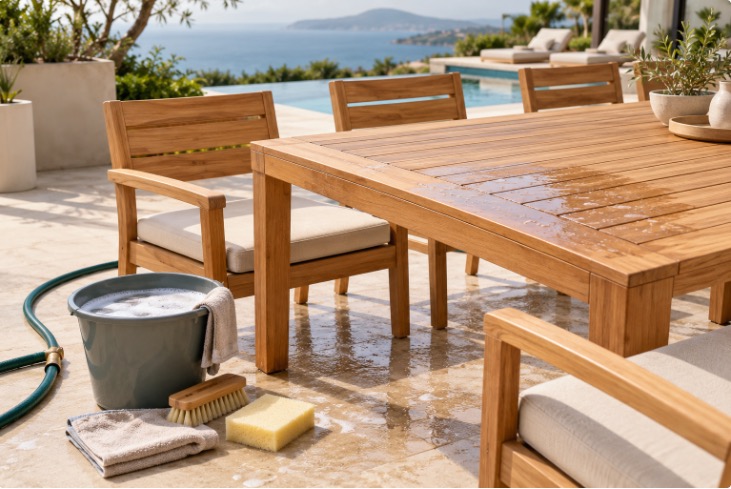
For most furniture, the correct routine is simple: remove debris, wash with mild soap and water, scrub gently with the grain, rinse thoroughly and let the wood dry.
Use deeper cleaning, sanding or a protector only when the condition of the furniture or the desired appearance requires it.
For hotels, resorts and commercial outdoor areas, consistency matters as much as the cleaning method itself. Decide whether the property should maintain golden teak or allow a natural silver grey patina, then use the same maintenance standard across the furniture collection.
Explore Kingmake teak outdoor furniture for hotel and resort projects, or contact the Kingmake team to discuss furniture materials, finishes and maintenance requirements for your project.

 Whatsapp
 sales@cnkingmake.com
 +8613925925021