
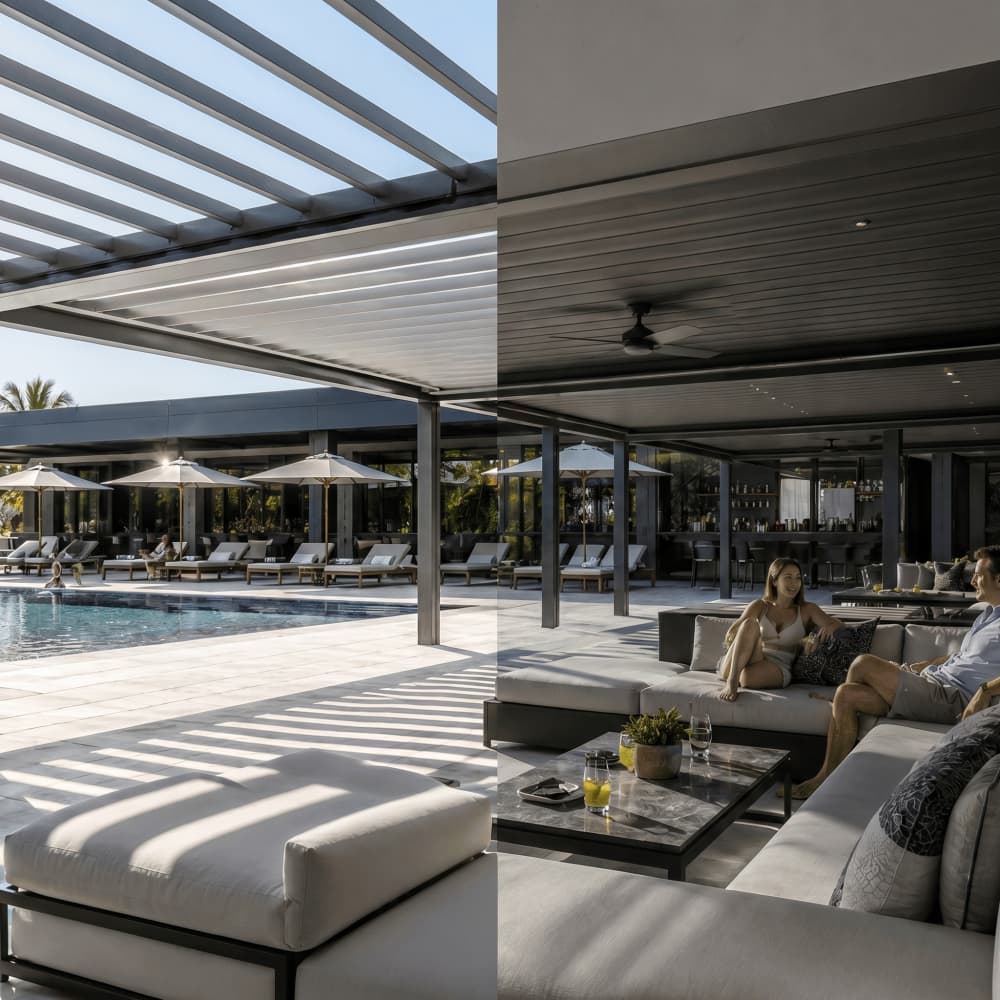
What is a Louvered Pergola? Key Features, Benefits, and Buying Considerations
Introduction
A louvered pergola is an outdoor structure with adjustable slats that help manage sunlight, shade, and airflow across commercial outdoor spaces. For hotels, resorts, and restaurants, it's a practical design element that helps keep outdoor spaces usable as weather conditions and guest needs change.
From pool decks to rooftop lounges, a well-planned outdoor louvered pergola helps support more consistent outdoor use and improve guest comfort. This guide explains how it works, which features to evaluate, and how to assess it for long-term commercial value.
What Are Louvered Pergolas and How Do They Work?
A louvered pergola roof uses pivoting aluminum slats that rotate along a central axis. When the louvers are fully open, the structure allows sunlight and airflow to pass through. When closed, they form a solid surface that helps block direct sun and guide rainwater into integrated drainage channels.
This design gives hotel, resort, and restaurant operators greater control over outdoor conditions throughout the day. Morning light can be welcomed, midday heat can be reduced, and sudden rain can be managed with less disruption to outdoor service areas.
There are two main types of operation. A manual pergola with a louvered roof uses a hand crank or lever, making it a practical choice for smaller outdoor areas or installations without power access. A motorized adjustable louvered pergola uses remote controls, wall switches, or mobile apps. Many commercial systems also include rain and wind sensors that automatically close the louvers when conditions change, helping support guest comfort and reduce weather exposure for outdoor furniture.
Commercial Applications for Louvered Pergolas
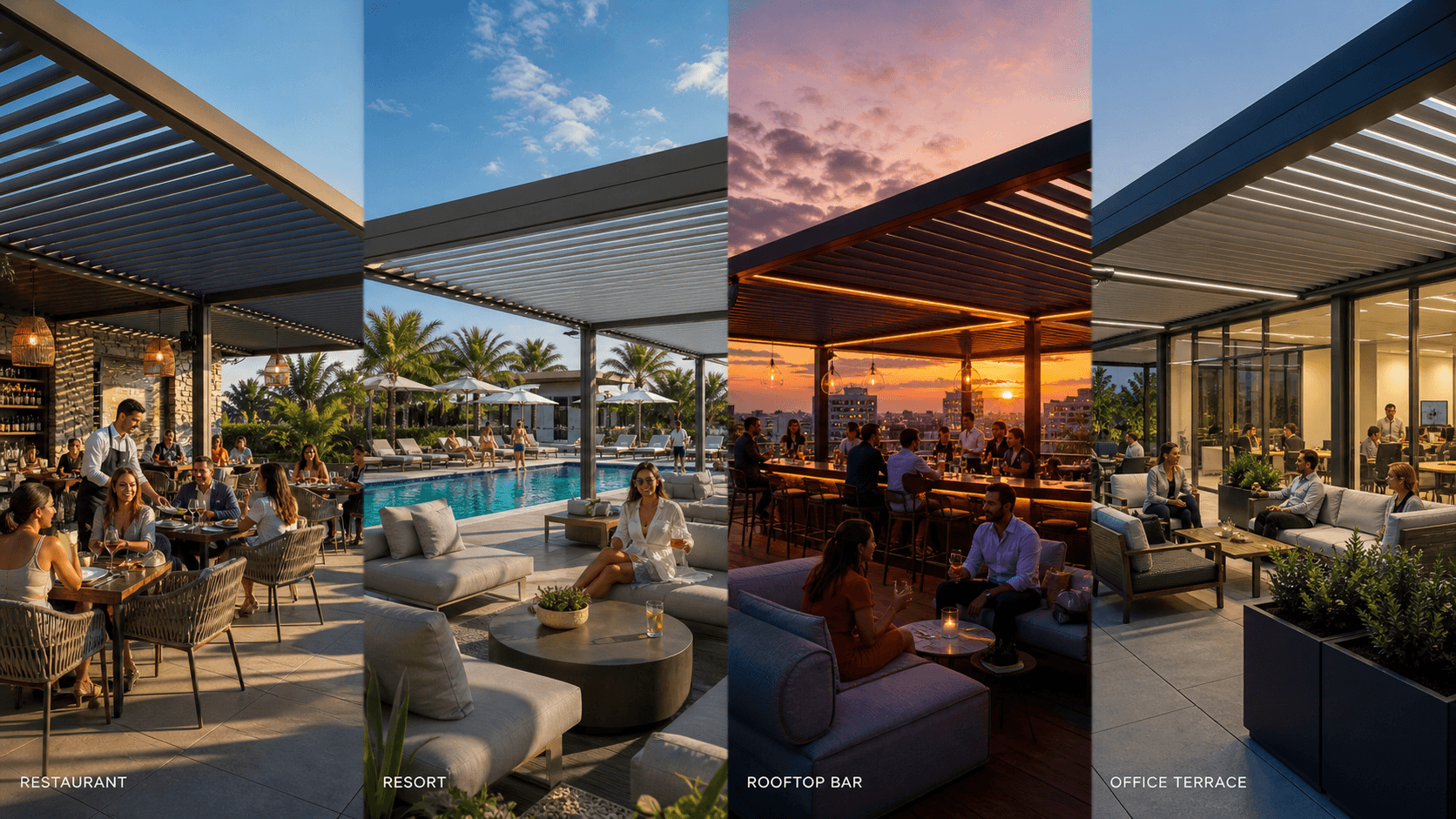
For hospitality projects, a louvered pergola creates an adaptable outdoor space that can respond to both weather conditions and guest needs.
Restaurants often use pergolas to support expanded outdoor dining areas without building permanent enclosed structures. By covering terrace seating, operators can make outdoor tables more usable during light rain or intense sun.
Resorts use outdoor louvered pergolas around pool decks to create defined zones for shade, airflow, and guest comfort. Guests can choose between full exposure or a more comfortable shaded area, all within the same layout.
Rooftop bars and lounges benefit from a modern pergola with a louvered roof that supports both daytime and evening use. With the addition of lighting and heating, these spaces can remain more comfortable and functional after sunset.
Commercial properties, such as office terraces and mixed-use developments, also use pergolas to create practical outdoor amenity areas. Event venues rely on them for adaptable coverage that supports more flexible use during sunny or variable weather conditions.
Louvered Pergola Ideas for Commercial Spaces
Effective commercial installations often combine layout planning with operational flexibility to support more usable, guest-ready outdoor areas.
Rooftop lounges can integrate bar seating, ambient lighting, and a motorized louvered roof system to create a space that transitions smoothly from day to night. Poolside cabanas use adjustable louvered pergolas to offer controlled shade, giving guests greater comfort throughout the day.
For restaurants, multi-bay pergola layouts allow larger dining areas to be covered while still maintaining an open feel. These configurations also make it possible to create flexible seating zones, some fully shaded, others open, depending on the time of day and operational needs.
Motorized vs Manual: Which Is Right for Commercial Projects?
Choosing between manual and motorized systems is a key planning decision in a louvered pergola project.
Manual systems typically range from $1,299 to $7,000+. They do not require electrical work and are generally simpler to install, making them suitable for smaller properties or locations without reliable power access. However, they require staff to adjust the louvers manually, which may not be practical during busy service periods.
Motorized systems are often better suited to hospitality environments where speed, consistency, and staff efficiency matter. Costs generally range from $5,500 to $25,000+ per structure, depending on size and features. With remote or app-based control, staff can adjust settings quickly without interrupting service.
Sensor integration is a key operational advantage. Rain sensors can automatically close the louvers when precipitation is detected, while wind sensors help manage the structure during stronger conditions. For many commercial environments, the added convenience and consistency can support the higher initial investment by improving daily usability and operational control.
Integrated Features for Commercial Installations
Commercial louvered pergola systems go beyond basic shade control. A modern pergola with a louvered roof can include integrated LED lighting for evening service, helping maintain a consistent atmosphere from daytime dining through later service periods.
Retractable screens add privacy and help reduce wind exposure, while outdoor heaters support more comfortable use in cooler conditions. Many systems also connect to building management platforms, allowing centralized control across multiple structures where broader property systems are in place.
These features support day-to-night operation and help maintain guest comfort, especially in spaces that rely on outdoor seating as a regular part of hospitality service.
Materials and Specifications for Commercial Louvered Pergolas
Material selection directly affects long-term performance for commercial louvered pergolas in hospitality environments.
Aluminum is often specified for commercial louvered pergolas. It is corrosion-resistant, lightweight, and typically finished with a powder coating that helps maintain color and surface quality over time with routine care.
A wood louvered pergola, often made from teak or cedar, offers a warmer, more traditional appearance. However, it requires scheduled sealing and maintenance and is more susceptible to moisture and pests, particularly in humid or coastal environments.
Steel is used in projects that require greater structural strength, especially in areas with higher wind exposure. In these cases, galvanized and powder-coated finishes are important for corrosion resistance and long-term outdoor performance.
For coastal properties, marine-grade 316 stainless steel hardware helps resist corrosion and supports long-term durability.
Climate and Structural Considerations
Climate should guide both material selection and system design for commercial louvered pergola projects. In tropical environments with high humidity and frequent rainfall, corrosion resistance and drainage performance are important for long-term outdoor performance. In temperate regions, UV exposure and seasonal temperature changes may be the primary concern.
Wind load compliance is another key factor. Commercial installations may require engineering review or certification to meet local building codes. Choosing a system specified for the project's climate, site conditions, and structural requirements helps support long-term structural reliability and reduce avoidable performance issues.
Cost and ROI for Commercial Louvered Pergolas
The cost of a louvered pergola varies based on size, materials, features, site conditions, and project requirements.
A standard motorized unit measuring 10×12 to 12×12 typically costs between $6,500 and $18,000, depending on specifications and installation scope. On a larger scale, pricing usually falls between $45 and $125 per square foot. Multi-bay installations for restaurants, resorts, or event spaces can range from $30,000 to $100,000+, depending on layout complexity, structural requirements, and integrated features.
For hospitality operators, commercial value may come from more usable outdoor seating, improved guest comfort, and greater flexibility during changing weather conditions. Covering outdoor areas allows service to continue with fewer weather-related interruptions, which may help support stronger space utilization and more consistent outdoor operations.
In addition to operational value, properties may also see improvements in guest satisfaction and overall space utilization.
Permits and Compliance for Commercial Installations
Most commercial pergolas are considered permanent structures, which means permits are often required. Local regulations may include zoning restrictions, height limits, and placement guidelines that affect where and how the structure can be installed.
Wind load certification and engineering approval are also common requirements, particularly in areas with strict building codes. Commercial buyers should confirm these requirements early with local authorities, project engineers, or installation teams to help avoid delays during installation. Choosing a pergola system with appropriate structural documentation can also support a smoother approval and installation process.
Are Louvered Pergolas Worth It for Commercial Properties?
For many commercial properties, a louvered pergola is a practical investment when outdoor space supports guest experience, service flexibility, and long-term commercial value.
It tends to be worth considering when a property can support revenue-generating use from covered outdoor areas, operates in a climate with variable weather, or differentiates through the quality of its outdoor amenities. In these cases, the ability to adapt the space throughout the day can improve usability, support guest comfort, and strengthen outdoor service operations.
It may be less suitable for properties with limited space, strict zoning restrictions, or budgets that only allow for manual systems when motorized operation is required for efficient daily use.
Disadvantages of a Louvered Pergola
Commercial buyers should consider a few trade-offs. The upfront cost is typically higher than that of fixed shade structures, particularly for motorized systems. Ongoing maintenance may include routine checks of motors, drainage channels, sensors, and moving components.
While a louvered pergola provides useful protection from sun and rain, it is not fully enclosed, so it does not offer the same level of insulation or weather sealing as an indoor environment.
FAQs
What is a louvered pergola?
A louvered pergola is an outdoor structure with adjustable slats that rotate to help manage sunlight, shade, and airflow. When open, it allows light and ventilation; when closed, it provides shade and guides rainwater toward integrated drainage channels. It is commonly used in hospitality environments to support more consistent outdoor use as weather conditions change.
Are louvered pergolas worth the investment for hotels and restaurants?
For many hospitality businesses, louvered pergolas can be a practical investment because they help make outdoor areas more usable and support longer service periods. Covered outdoor areas can support more consistent outdoor dining operations by reducing weather-related interruptions. They also improve guest comfort, which can contribute to a stronger overall hospitality experience.
What are the disadvantages of a louvered pergola?
The main trade-offs are a higher upfront cost compared to fixed shade structures and the need for routine maintenance over time. Motorized systems include moving parts that require periodic checks to support reliable operation. They also do not provide the same level of enclosure, insulation, or weather sealing as indoor spaces.
Do louvered pergolas keep rain out during outdoor dining service?
Yes. When fully closed, the louvers form a covered surface that helps direct rainwater into integrated gutters and downspouts. This can help outdoor dining service continue during light to moderate rain, provided the system is properly installed and site conditions are suitable.
How much does a commercial louvered pergola cost?
A typical motorized unit may cost between $6,500 and $18,000 for standard commercial sizes. Larger projects are often priced from $45 to $125 per square foot, with full installations potentially reaching $30,000 to $100,000+, depending on project scale, materials, structural requirements, installation scope, and integrated features.
What is the most suitable material for a commercial louvered pergola?
Aluminum is often specified for commercial louvered pergolas due to its durability, corrosion resistance, and low maintenance requirements. Powder-coated finishes help maintain surface quality and appearance over time in outdoor hospitality environments. Wood offers a warmer, more traditional appearance but requires more upkeep, while steel is used for projects with greater structural requirements.
Do louvered pergolas require permits for commercial installation?
In most cases, yes. They are typically treated as permanent structures, so permits, zoning approvals, and engineering certification may be required. Requirements vary by location, so commercial buyers should confirm applicable requirements with local authorities, project engineers, or installation teams early in the planning process.
Conclusion
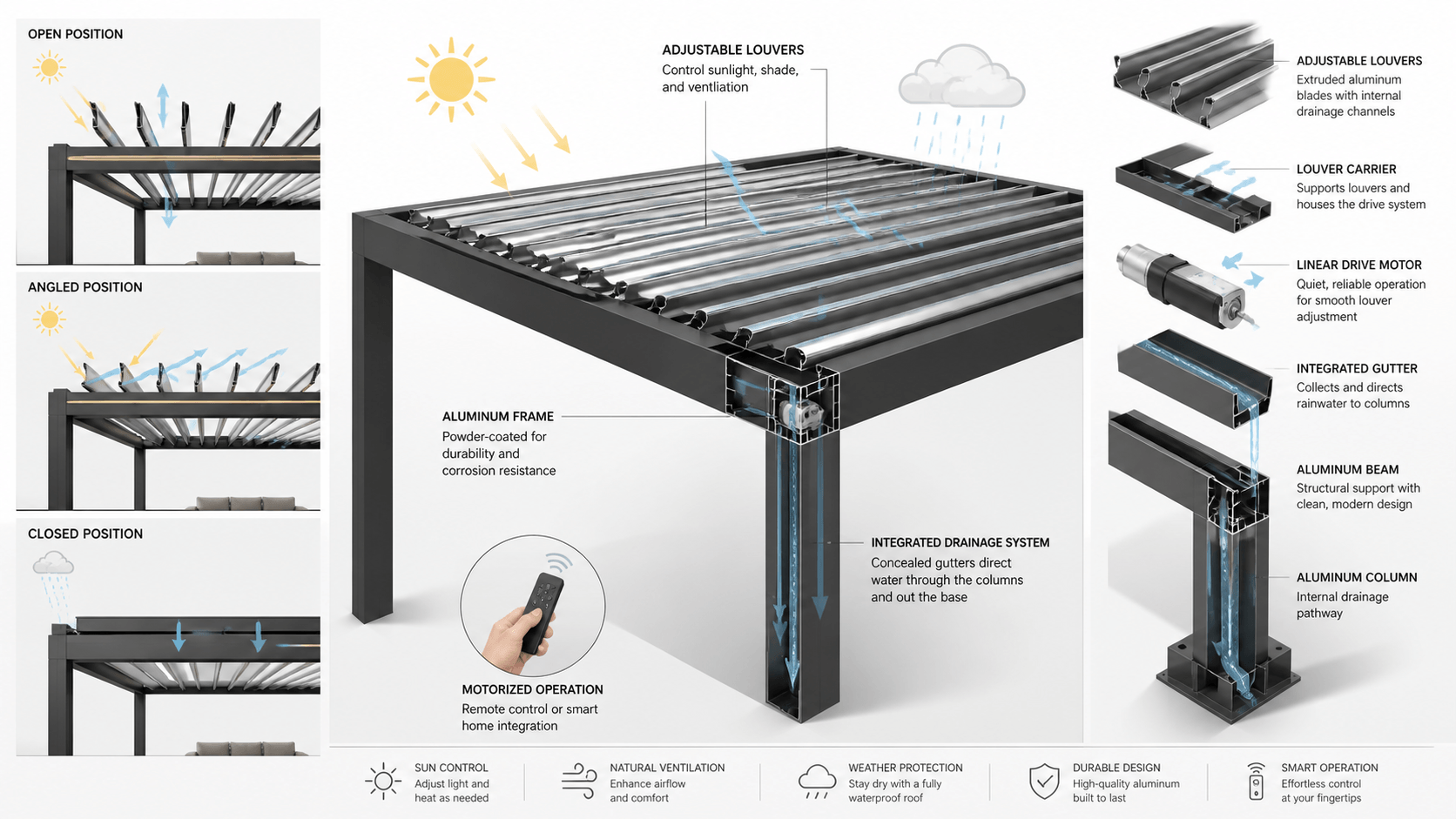
A well-designed louvered pergola brings structure and flexibility to outdoor spaces, helping hospitality properties maintain more consistent outdoor use across changing conditions. With appropriate materials and integrated features, it supports both guest comfort and day-to-day operations over the long term.
Kingmake manufactures outdoor louvered pergola systems for hotels, resorts, and commercial hospitality projects worldwide, with a focus on durability, material performance, and consistent production quality. If you are planning a new project or upgrading an existing outdoor space, our team can support custom production requirements based on your approved layout and commercial use case.
 Whatsapp
 sales@cnkingmake.com
 +8613925925021