
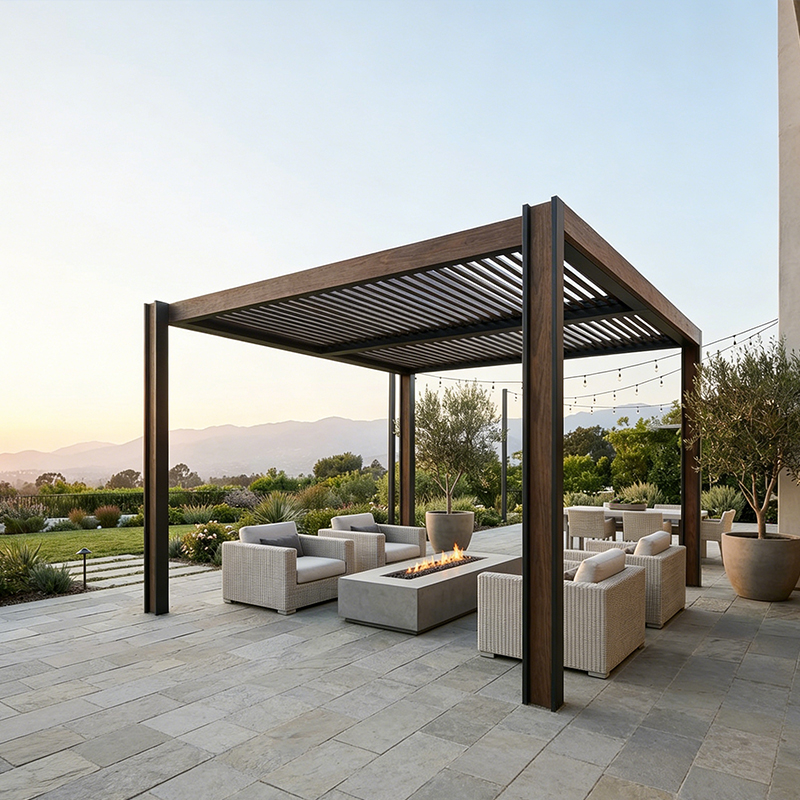
Pergola Guide: Design, Materials & Features for Hotels
A well-designed pergola does more than add shade. In hospitality and commercial outdoor environments, pergolas define guest zones, elevate the look of the property, and make patios, pool decks, and rooftops usable for more hours of the day.
For resorts, hotels, restaurants, and villas, the right pergola becomes an “outdoor room” that supports dining, lounging, and memorable guest experiences—without closing the space in.
At Kingmake Outdoor, we manufacture pergolas for global projects and help clients choose structures that match their site conditions, brand style, and operational needs.
This guide explains pergola types, materials, roof options, sizing, and features—so you can plan confidently and build a space that performs for years.
What Is a Pergola (And What It Isn’t)
A pergola is a freestanding or attached outdoor structure that creates a defined area with overhead framing—typically open slats, a retractable canopy, or adjustable louvers.
The purpose is to provide shade, structure, and visual interest while maintaining airflow and an open feel. Pergolas are often used to frame dining patios, lounge areas, poolside cabanas, and garden walkways.
It helps to clarify what a pergola is not. A pergola is usually not a fully enclosed building, and it’s not always designed to be fully rainproof. If you need complete roof coverage and full weather protection, you may be looking for a pavilion-style structure or a more enclosed patio system.
For most hospitality outdoor zones, pergolas offer the sweet spot: comfort, style, and flexibility without making the space feel closed.
Why Pergolas Matter for Hotels, Resorts, and Commercial Patios
In the U.S. market, guests expect outdoor areas to feel intentional. A pergola signals that the patio is more than extra seating—it’s a designed experience. That matters for both guest satisfaction and revenue.
Pergolas improve comfort by creating shade and helping manage heat on pool decks, rooftops, and dining terraces. They also make service smoother.
When an outdoor zone is clearly defined, staff circulation becomes easier, seating layouts stay organized, and the space looks consistent in photos.
From a branding standpoint, pergolas elevate the overall visual identity of the property. They create a natural frame for seating, greenery, and lighting, and they become a focal point that guests remember and share.
For many resorts and restaurant groups, pergolas are also part of a repeatable design system across multiple locations—especially when paired with consistent outdoor furniture collections.
If your pergola will anchor a lounge area, it’s worth planning the furniture layout early. Many hospitality projects build pergola zones around modular seating such as Outdoor Sofa and flexible shade layering with Patio Umbrella, creating a premium look while keeping the space adaptable.
Pergola Types: Choose the Structure That Fits the Site
Freestanding Pergolas
Freestanding pergolas are the most common choice for commercial outdoor spaces because they can be placed where shade is needed most. They work well for pool decks, garden lounges, spa courtyards, and rooftop terraces.
Since they don’t rely on a building wall for support, freestanding pergolas give you more control over placement and guest flow.
In hospitality planning, freestanding pergolas often serve as “zones” within larger decks. One pergola may frame outdoor dining, while another defines a quieter lounge area. This zoning helps properties serve different guest types without needing physical walls.
Attached Pergolas
Attached pergolas connect to an exterior wall and extend the usable space from a building outward. They are commonly used for restaurant patios, lobby terraces, and villa outdoor dining areas.
Because the building provides one side of support, attached pergolas can be a cleaner solution when you want to create a seamless indoor-outdoor transition.
For commercial environments, attached pergolas also help create a structured entry or seating transition area. They can soften harsh sun exposure near glass walls, reduce glare, and make exterior dining more comfortable.
Louvered-Roof Pergolas
Louvered pergolas represent a modern upgrade that many premium hospitality projects prefer. Adjustable louvers allow you to control sunlight and airflow. When open, they provide ventilation and filtered shade. When closed, they offer greater sun coverage and, depending on the system, improved rain management.
These pergolas are especially popular for outdoor dining patios and rooftop bars in climates where sun intensity changes quickly. For high-end properties, louvered pergolas can also support integrated lighting and screens, creating a “day-to-night” outdoor room.
Retractable Canopy Pergolas
Retractable canopy pergolas offer flexible shade without the complexity of a louvered system. They are often used in seasonal dining patios, event terraces, and spaces where you want to adjust shade based on time of day. Canopies can also soften the look of modern outdoor zones and help create a resort-like atmosphere.
Canopy pergolas work well when the goal is comfort and visual impact, while keeping maintenance and operational complexity lower than mechanical roof systems.
Planning First: Purpose, Guest Experience, and Layout
Before choosing a pergola style, define what the pergola needs to do. In hospitality, a pergola often has one primary purpose and several supporting goals.
A dining pergola prioritizes table spacing, service lanes, and lighting. A poolside pergola prioritizes shade, privacy, and airflow. A lounge pergola often prioritizes comfort, photo-ready design, and flexible seating arrangements.
Sizing should start with furniture footprint, then add circulation. It’s common to plan the pergola “inside” space first—where the seating sits—and then add room for guest movement, staff access, and side elements such as planters or screens.
If your pergola is framing a dining zone, it’s best to confirm table sizes and chair counts early using a consistent collection like Outdoor Dining Set. If it’s framing a poolside lounge zone, plan around recline angles and spacing for Sun Loungers, ensuring guests can move comfortably between chairs.
Location and Orientation: Shade Quality Changes Everything
Placement matters as much as structure. Two pergolas of the same size can perform very differently depending on where they’re installed.
Start by observing sun exposure throughout the day. A pergola that provides shade at noon may offer limited shade in the late afternoon if the orientation is not considered. In hot U.S. markets, afternoon shade can be the difference between a patio that stays occupied and one that empties early.
Next, consider wind exposure. Rooftops and beachfront environments require strong anchoring and materials that handle constant movement and salt air.
Also consider nearby functions: kitchen exhaust, bar service routes, pool splash zones, and slip-risk areas. A pergola should support operations, not create bottlenecks.
For many hospitality projects, the most successful layouts combine pergolas with secondary shade elements. Pergola shade defines the zone, while umbrellas fill in flexible shade where guests want it. That layered approach is one reason hotels often pair pergola zones with premium Patio Umbrella collections.
Best Pergola Materials for Commercial Projects
Aluminum Pergolas: Low Maintenance, Modern, and Hospitality-Ready
Powder-coated aluminum pergolas are a strong fit for hospitality because they offer durability, corrosion resistance, and a clean architectural finish.
Aluminum performs well in humid climates and coastal environments, and it requires minimal upkeep compared to natural wood.
For commercial operations, low maintenance is a major value point. Aluminum pergolas typically require occasional cleaning rather than ongoing sealing or staining cycles.
This matters when properties manage large outdoor footprints and want a consistent appearance year-round.
Aluminum pergolas also match modern outdoor furniture aesthetics well. If your patio is designed around contemporary seating, aluminum helps keep the overall look cohesive.
Wood Pergolas: Warm, Natural, and Premium—With Planned Maintenance
Wood pergolas create a classic, welcoming look that fits resort gardens and villa terraces. Cedar and other rot-resistant woods are commonly used, but wood requires maintenance planning. In many climates, staining and sealing are needed to preserve appearance and extend lifespan.
Wood can be a great choice when the property’s design concept is natural and warm, and when the operations team is prepared for periodic upkeep. For long-term consistency across multiple properties, some clients choose wood-look finishes on aluminum to get the visual warmth with lower maintenance requirements.
Vinyl Pergolas: Practical, Low-Maintenance, and Straightforward
Vinyl pergolas are typically chosen for low maintenance and stable performance. They can be a practical fit for certain commercial environments, though design flexibility may be more limited compared to aluminum or wood. For projects that prioritize quick installation and simplified care, vinyl can be an option worth evaluating.
Roof Styles and Shade Options
Open Slats: Classic Pergola Shade
Open slat roofs provide filtered shade and maintain airflow. This is ideal when the goal is to reduce direct sun without fully blocking light. Open slat pergolas are often used in garden settings, walkways, and lounge zones where the visual pattern of light and shadow enhances the ambiance.
It’s important to set expectations: open slats are not designed to block rain completely. If rain protection is a priority, consider a canopy or louvered roof system.
Adjustable Louvers: Control Sun and Comfort
Louvered roofs provide control. You can adjust for full sun, partial shade, or more coverage depending on the weather and time of day. For restaurants and rooftop bars, this allows better utilization across hours, especially in warmer climates.
Because louvered systems may require drainage planning, it’s smart to consider how water will be managed when louvers are closed. In premium projects, louvers often pair well with integrated lighting to create strong evening ambiance.
Retractable Canopies: Flexible Shade Without Full Mechanical Complexity
Retractable canopy systems are ideal for projects that need adaptable shade but want a simpler approach than adjustable louvers. They work well for event terraces, dining patios, and resort spaces that want soft shade and a refined look.
Features Guests Notice (And Operations Appreciate)
Lighting is one of the most valuable pergola upgrades in hospitality. It extends usable hours and elevates atmosphere. Warm, well-placed lighting transforms pergola zones into evening destinations, especially for dining and lounge spaces.
Privacy screens and curtains create VIP seating and cabana-style areas. This is especially useful near pools, spas, and boutique hotel terraces where guests appreciate semi-private comfort.
Fans, heaters, and misting systems can also extend the season and improve comfort, though these additions may affect electrical planning and permitting.
Greenery integration is another feature that adds softness. Pergolas can support climbing plants or be framed with planters to create a natural boundary.
The key is to plan irrigation and maintenance so the greenery stays healthy without increasing operational complexity.
For poolside projects, pergolas are often designed to frame a premium seating zone around daybeds or loungers.
When the goal is a cabana-style experience, the pergola zone may include plush seating from Outdoor Sofa or relaxation setups that integrate shade layering with Patio Umbrella.
Installation Basics: Foundations, Anchoring, and Site Reality
Commercial pergolas should be treated as engineered structures, especially in wind-exposed locations like rooftops and coastal properties. Foundations matter. Proper footings help ensure stability, prevent shifting, and support long-term performance.
Anchoring methods depend on the substrate. Concrete pads, reinforced decks, and paver systems each require different approaches. For rooftop installations, the project team must consider load distribution and waterproofing details.
Even if the pergola is part of a kit system, commercial projects often benefit from professional installation, especially when integrating lighting, screens, or louvered roofs.
Permits and Compliance: What U.S. Projects Should Expect
In the United States, permit requirements vary by city and county. Many projects require permits based on size, height, roof style, and whether electrical additions are included. Attached pergolas may have additional requirements due to connections with the building.
The best approach is to treat permitting as part of the planning stage. Before finalizing design, confirm local requirements, HOA rules where relevant, and site setbacks. This prevents delays and ensures the pergola is compliant for the project’s location.
Cost and Pricing Factors: What Impacts Budget the Most
Pergola pricing is usually driven by material selection, size, roof type, and customization depth. Open-slat pergolas are typically simpler than louvered systems. Added features such as lighting, curtains, screens, heaters, and custom finishes also affect cost.
In hospitality projects, standardization is one of the most effective ways to control budget without sacrificing quality. When you choose repeatable sizes and finishes, you simplify maintenance, replacement, and multi-property planning.
At Kingmake, we support both standard and customized pergola requirements. If you need OEM/ODM options for a signature look, we can develop it through our streamlined workflow.
How Kingmake Supports Pergola Projects
Kingmake Outdoor is a reliable pergola manufacturer in Foshan, China, serving hotels, resorts, contractors, distributors, and commercial buyers worldwide.
We offer a variety of pergola styles and materials to match different outdoor environments and brand concepts.
Our process is built for project work: you share your design or concept, we refine it with professional recommendations, develop the technical approach, and produce samples for approval before scaling to production.
This helps ensure the final structure fits your site requirements, style direction, and engineering needs.
If your outdoor plan includes a complete FF&E approach, we can align pergolas with coordinated outdoor furniture collections.
Many hospitality clients pair pergola zones with lounge seating from Outdoor Sofa, flexible shade from Patio Umbrella, and dining layouts using Outdoor Dining Set—creating cohesive guest environments from one supplier.
Pergola Buying Checklist
A pergola decision becomes easier when you evaluate it like a project system. Confirm the use case first, then define size based on furniture and circulation. Choose material based on maintenance reality and climate exposure. Decide roof style based on how much shade control you need. Add features that matter to your guests, and confirm anchoring and permitting early.
FAQs: Pergola Questions Buyers Ask Most
What is a pergola used for?
A pergola is used to define outdoor space and provide shade without enclosing the area. It’s commonly used for dining patios, lounge seating, poolside cabanas, and garden walkways where comfort and design impact matter.
Do pergolas block rain?
Most pergolas with open slats provide filtered shade but do not fully block rain. If rain coverage is important, consider a retractable canopy system or a louvered roof pergola designed with drainage planning.
Do I need a permit to build a pergola in the USA?
Permit rules vary by location. Many cities require permits depending on pergola size, height, attachment to a building, and whether electrical features are included. Always verify local code requirements early in the project.
What’s the difference between a pergola and a gazebo or pavilion?
Pergolas typically have open or adjustable roof designs and maintain airflow. Gazebos and pavilions often have more complete roof coverage and sometimes more enclosure, making them better for full rain protection.
Which is better: attached or freestanding pergola?
Freestanding pergolas are best for flexible placement and zoning outdoor decks. Attached pergolas work well when you want a seamless extension from the building and a structured transition between indoor and outdoor areas.
What’s the best material for a low-maintenance pergola?
Powder-coated aluminum is a top low-maintenance option for commercial projects because it resists corrosion and requires minimal upkeep. Vinyl can also be low-maintenance, while wood typically needs regular sealing or staining.
How big should a pergola be for outdoor dining?
A dining pergola should fit the dining set footprint plus comfortable circulation space for guests and staff. Start by measuring tables and chair pull-back space, then add service lanes so movement remains smooth.
Are louvered pergolas worth it for hotels and resorts?
Louvered pergolas can be worth it when a property needs adjustable shade and wants to use outdoor space for more hours of the day. They are especially valuable for outdoor dining and rooftop bars where sun exposure changes throughout the day.
How do you anchor a pergola on pavers or an existing patio?
Anchoring depends on the substrate and wind exposure. Commercial projects typically use engineered footings, reinforced mounting points, or properly designed base plates to ensure stability and long-term performance.
Final Thoughts
A pergola is one of the smartest upgrades a hotel, resort, or commercial property can make to improve outdoor comfort and elevate design. The best pergola is the one that matches your site conditions, supports your guest experience goals, and remains operationally efficient year after year.
If you’re planning a pergola project—whether for a resort pool deck, villa garden, rooftop lounge, or restaurant patio—Kingmake can help you choose the right structure and coordinate it with the outdoor furniture package that completes the space.
Start with our Home Page, then explore pergola options on the Pergola page, and consider coordinating your layout with Outdoor Sofa, Outdoor Dining Set, Sun Loungers, and Patio Umbrella.
 Whatsapp
 sales@cnkingmake.com
 +8613925925021