
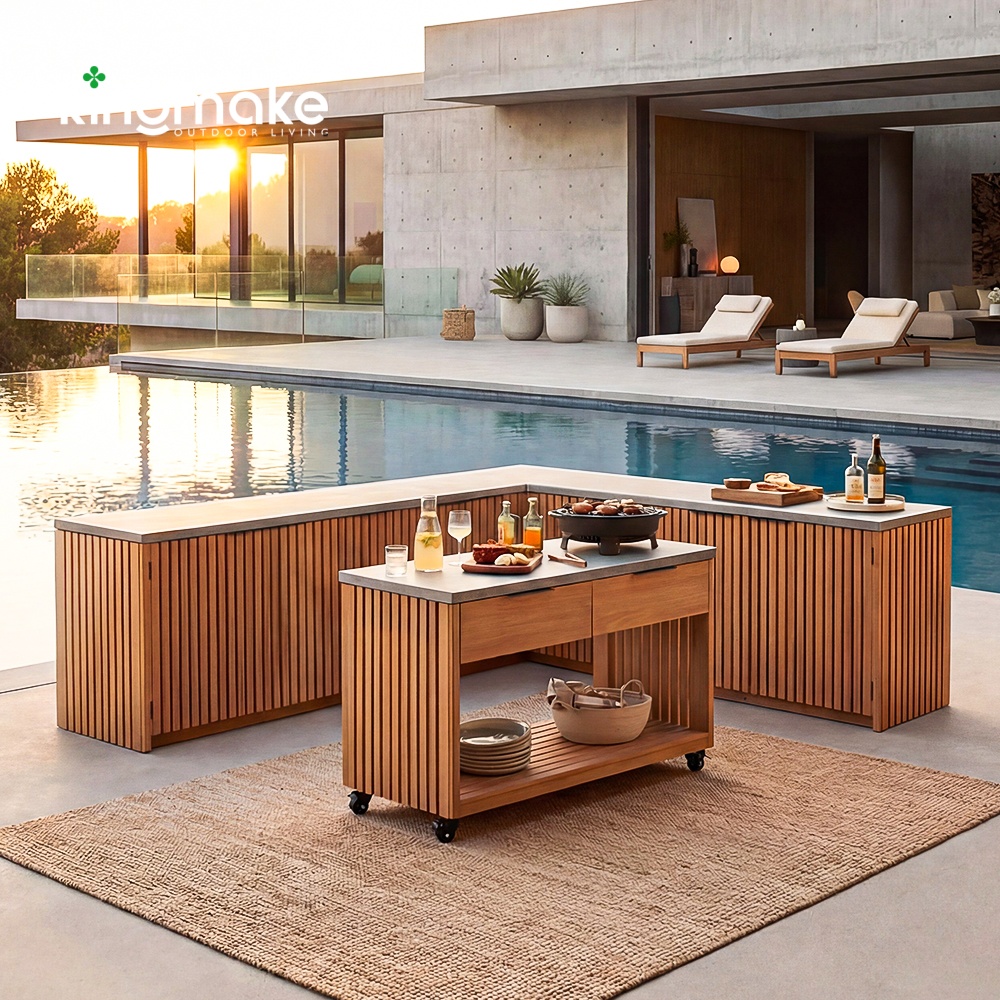
Outdoor Kitchen Planning: What to Consider Before Build-It
Outdoor kitchens are no longer a “nice extra.” In the U.S., they’ve become a true lifestyle feature for homes—and a powerful guest-pleasing amenity for hotels, resorts, and commercial patios.
When the setup is done well, it extends the usable season, increases time spent outdoors, and creates a natural hub for dining, drinks, and events.
But outdoor kitchens also have one major challenge: they live outside. Heat, UV, rain, coastal salt air, freeze-thaw cycles, pool chemicals, heavy foot traffic, and spills will test every material and every design decision.
That’s why the best outdoor kitchens are built with a clear plan—one that balances layout, utilities, durability, comfort, and long-term maintenance.
At Kingmake Outdoor, we help hospitality and commercial buyers worldwide design and supply outdoor kitchens and complementary outdoor environments, including patio umbrellas and bar seating. Below is a practical, U.S.-focused guide on what to consider before you build.
Start With the “Why” (and Who You’re Building For)
Before you select cabinets, countertops, or appliances, define the purpose. The “right” outdoor kitchen for a family home is different from the “right” outdoor kitchen for a pool deck, rooftop bar, or resort event terrace.
Ask two simple questions:
What is the primary use?
Is it a cooking-first setup (grilling and prep), or an entertaining-first setup (drinks, serving, and social flow)? Many outdoor kitchens fail because they over-invest in appliances but under-invest in prep space, shade, and seating.
Who will use it most?
In hospitality, consider peak moments: weekend pool traffic, weddings, corporate events, and holiday seasons. In residential, consider how often you cook and how many guests you typically host.
A clear use case helps you size the kitchen correctly and prevents expensive change orders later.
Choose the Right Location: Comfort + Function Matter More Than You Think
Outdoor kitchens feel effortless when the location works naturally. When the location is wrong, guests avoid the space—even if the cabinetry and appliances are premium.
Sun, wind, and smoke direction
Heat and smoke control are critical in many U.S. climates. If the prevailing wind blows smoke toward lounge seating, dining tables, or building entrances, you’ll get complaints. Plan the “hot zone” (grill and burners), so smoke moves away from people and away from doors and windows.
If the kitchen sits under a roof or pergola, think carefully about heat buildup and ventilation. Covered kitchens can be great for shade, but they need a smart layout and safe clearances to prevent discomfort and smoke concentration.
Distance to the indoor kitchen
In residential projects, a kitchen too far from the house becomes inconvenient fast—more steps, more back-and-forth, more frustration. In commercial projects, distance impacts operational efficiency and staffing.
If the outdoor kitchen is intended to support F&B service, the route to storage, refrigeration, and dish areas should be as direct as possible.
Ground conditions and drainage
Outdoor kitchens require stable, well-prepared surfaces. Poor drainage causes standing water that shortens the life of cabinetry, encourages mildew, and creates slip hazards. Build on a surface that drains properly, and avoid installing cabinets where water pools after heavy rain.
Set a Realistic Budget (Then Design to It)
Outdoor kitchen budgets range widely in the U.S., and most “budget surprises” come from utilities and site work—not from the cabinets themselves.
A simple grill station is relatively straightforward. A full-service outdoor kitchen with sink, refrigeration, electrical loads, gas lines, and a roof structure is closer to building a second kitchen outdoors.
Key cost drivers typically include:
Utility runs (gas, water, drainage, and electrical)
Countertop material and fabrication
Appliance upgrades (especially refrigeration and specialty cooking)
Shade structures and lighting
Permits and inspections, depending on local requirements
A smart approach is to design for the full vision—even if you phase the installation. For example, you can install the cabinetry and counter now, then add refrigeration or a sink later.
This is where a modular, professional Outdoor Kitchens system becomes valuable because it supports future upgrades without tearing down the entire build.
Nail the Layout With Work Zones (So It Feels Effortless)
The most successful outdoor kitchens aren’t necessarily the biggest—they’re the most functional. A good layout is built around zones, not appliances.
The five-zone approach
Think in terms of five core zones:
Hot zone: grill, griddle, burners
Prep/dry zone: main counter space for cutting, plating, and staging
Wet zone: sink and cleanup
Cold zone: fridge, beverage center, ice
Serve/bar zone: pass-through counter, drinks, and guest-facing service
This zoning keeps the cook efficient and keeps guests safe. It also prevents the common mistake of placing the grill in the middle of a traffic path.
Layout types that work in real U.S. spaces
Straight run: ideal for narrow patios, small rooftops, or limited pool deck widths.
L-shape: a strong “starter” choice—adds prep space and creates natural separation between hot and serve zones.
U-shape: best for high-use kitchens—supports multiple users (chef + bartender), adds counter area, and improves workflow.
Clearances and guest flow
Leave enough space behind the cooking line so people can pass comfortably. Keep guests and seating out of the hot zone. In hospitality, the layout should also allow staff to move safely with trays and supplies.
If you plan to add bar seating, make the serve/bar zone intentional, not an afterthought. A well-designed bar ledge improves guest experience and drives F&B revenue.
Utilities & Infrastructure: The Part That Makes or Breaks the Project
Outdoor kitchens depend on infrastructure. If you plan utilities early, everything looks clean and performs well. If you plan utilities late, you end up with awkward workarounds.
Gas: propane vs natural gas
Both work well, but they change the design and operating routine.
Propane is flexible and common, but it requires safe storage and access for tank swaps. Natural gas provides steady fuel supply but often costs more upfront due to line installation.
If you’re building a commercial kitchen or a high-use entertaining space, plan fuel decisions early so cabinetry includes appropriate access and ventilation panels where needed.
Electrical: outlets, lighting, and future upgrades
In real-world use, you almost always need more outlets than expected—small appliances, phone charging, speakers, warming drawers, undercounter fridges, and decorative lighting all add demand.
Plan GFCI outlets, place them where they’re usable (not hidden behind appliances), and consider future upgrades. In hospitality, power planning is even more critical because operators often add equipment over time.
Plumbing: water supply and drainage
A sink makes outdoor cooking easier and more hygienic, but it adds plumbing complexity. In colder climates, you may need winterization planning to prevent damage. For commercial builds, plumbing decisions should align with local codes and operational needs.
Permits and inspections
In many U.S. areas, permits can be required for:
electrical work
plumbing and drainage
gas line installation
roof/pergola structures
permanent installations tied to the property
Always confirm requirements early so the project timeline stays predictable.
Materials That Survive Real Weather (Not Just a Showroom)
Outdoor kitchens fail when materials are chosen for appearance only. The best builds choose materials based on climate and exposure.
Cabinetry: choose commercial-grade durability
Cabinet materials should resist corrosion, warping, and UV damage. Stainless steel is popular, especially in coastal regions. In harsher environments, higher-grade stainless performs better.
Powder-coated aluminium cabinetry is also increasingly used because it combines corrosion resistance with a clean, modern aesthetic—and it stays stable in heat and humidity.
Countertops: focus on performance first
Outdoor countertops should resist:
heat from hot pans and grill-side use
UV fading
stains from sauces, oils, and citrus
freeze-thaw cracking in colder regions
Choose a surface built for outdoor exposure and commit to proper sealing and maintenance if required.
Hardware and details that matter
Small details have big impact:
rust-resistant fasteners
sealed compartments
access panels for utilities
smooth, easy-clean surfaces
durable hinges and handles
For hospitality, these details reduce downtime and replacement costs.
Appliances & Storage: Buy for Your Menu, Not the Trend
The best appliance list depends on how you’ll use the space. A common mistake is to over-buy appliances and under-buy counter space.
Core appliances that fit most builds
Most successful outdoor kitchens include:
a properly sized grill
a prep counter with enough landing space
refrigeration for drinks and basics
storage for tools, serving items, and cleaning supplies
Everything else should be evaluated based on actual use: side burners, pizza ovens, smokers, warming drawers, and specialty equipment can be valuable—but only if they fit your routine.
Storage makes the kitchen feel “complete”
Outdoor kitchens become frustrating when there’s no place for trash, towels, cleaning supplies, utensils, and serving trays. Plan storage with real operation in mind.
In hospitality, storage planning also supports staff efficiency and cleaner guest-facing presentation.
Shade, Shelter, and Guest Comfort: Where Projects Win or Lose
Outdoor kitchens are about the environment, not just the cooking line. Shade, lighting, and seating often determine whether the space becomes a daily favorite—or an unused corner.
Shade strategy
Pergolas and roof structures work well, but they add cost and permit complexity. Patio umbrellas provide flexible, scalable shade and are ideal for pool decks, dining areas, and rooftops.
If you want to create a premium experience, combine the outdoor kitchen with shaded seating zones so guests can stay longer and spend more.
Internal link placement: To plan shade that’s flexible and commercial-ready, explore Kingmake Patio Umbrellas—ideal for pool decks, rooftop bars, and outdoor dining zones.
Lighting: task + ambiance
Good lighting makes the kitchen usable at night. You typically need:
task lighting over the prep and cooking areas
ambient lighting for seating and social zones
Hotels and restaurants benefit from lighting that supports service, photography, and guest comfort without glare.
Seating plans that drive usage
Guests naturally gather where they can sit comfortably. Consider:
bar seating at the serve/bar zone
dining seating nearby for meals
lounge seating slightly back from the hot zone
Bar seating is especially powerful because it encourages conversation and incremental ordering.
Safety and Operations: Especially Important for Hospitality
If you’re building for a hotel, resort, restaurant, or commercial venue, safety and operations should be built into the design.
Plan for:
safe clearances around heat sources
non-slip flooring near wet zones
safe ventilation and access for gas components
easy-to-clean surfaces
a clear maintenance routine
Operational design prevents guest complaints and reduces wear-and-tear. It also protects the long-term value of the investment.
A Simple Outdoor Kitchen Checklist (Use This Before You Build)
Here’s a quick way to validate your plan:
Define purpose and peak capacity
Choose a location with good sun/wind/smoke conditions
Design around work zones and guest flow
Plan utilities early (gas, electric, plumbing, drainage)
Select materials that match your climate exposure
Include shade, lighting, and seating as “must-haves”
Build in safety and a realistic maintenance plan
If you follow this structure, your outdoor kitchen will feel natural to use, easy to operate, and durable across seasons.
Kingmake Outdoor: Build a Complete Outdoor Experience
At Kingmake Outdoor, we support hospitality and commercial buyers worldwide with outdoor kitchen systems designed for real-world performance. Beyond the kitchen itself, we help clients build complete outdoor environments—pairing kitchens with shaded dining, bar seating, and coordinated outdoor furniture to match your property’s style and operational needs.
If you’re designing a U.S. project—pool deck, rooftop lounge, resort terrace, or commercial patio—we can help you plan layouts, choose materials for your climate, and deliver project-ready solutions.
Explore related product categories:
Outdoor Kitchens (modular, durable, commercial-ready)
Patio Umbrellas (shade strategies for dining and service zones)
Bar Stools (complete the bar counter and serve area)
FAQs: What to Consider When Building an Outdoor Kitchen
1) Do I need a permit to build an outdoor kitchen in the USA?
Often yes, especially if you’re adding gas, electrical, plumbing, drainage, or permanent structures. Check local requirements early.
2) What’s a realistic outdoor kitchen budget?
Budgets range widely. Utility runs and site prep often drive cost more than cabinetry. Plan your scope first, then select materials to fit.
3) What layout is best—straight, L-shape, or U-shape?
Straight runs work for smaller patios. L-shapes add prep space and flow. U-shapes support multiple users and higher volume.
4) What are the essential work zones?
Hot zone, prep zone, wet zone, cold zone, and a serve/bar zone make the space efficient and guest-friendly.
5) Propane or natural gas—what should I choose?
Propane is flexible but requires tank access. Natural gas is convenient but may require line installation. Choose based on usage and site conditions.
6) Do outdoor kitchens need ventilation panels?
Built-in grill islands commonly require ventilation solutions—especially with propane—so heat and gas don’t accumulate inside the cabinet area.
7) What materials last best outdoors?
Commercial-grade stainless and powder-coated aluminium are popular for durability. Countertops should be heat- and stain-resistant with good UV performance.
8) Should I use a pergola or patio umbrellas for shade?
Pergolas provide permanent cover but add cost and permits. Patio umbrellas are flexible, scalable, and ideal for hospitality environments.
9) What’s the biggest mistake people make?
Underestimating prep space, shade, and utilities planning. Most users would trade one extra appliance for better counter space and better comfort.
10) How do I make an outdoor kitchen feel premium in a hotel setting?
Combine a functional layout with shade, strong lighting, and a guest-friendly bar zone using commercial-grade bar stools.
 Whatsapp
 sales@cnkingmake.com
 +8613925925021