
How to Maintain Your Planter's Color for Years to Come
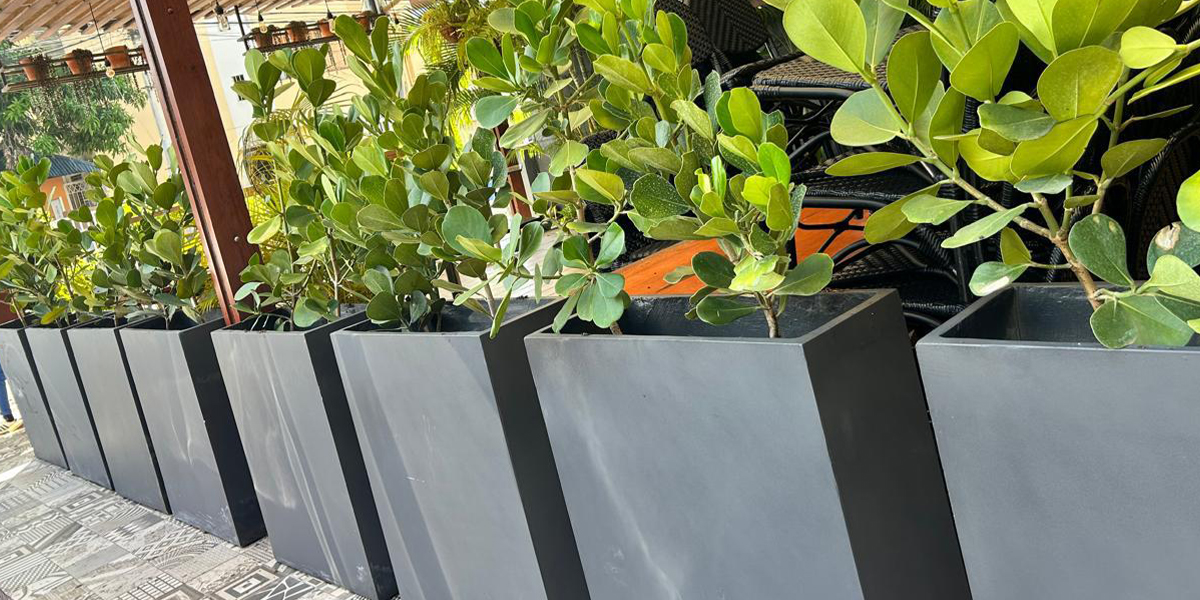
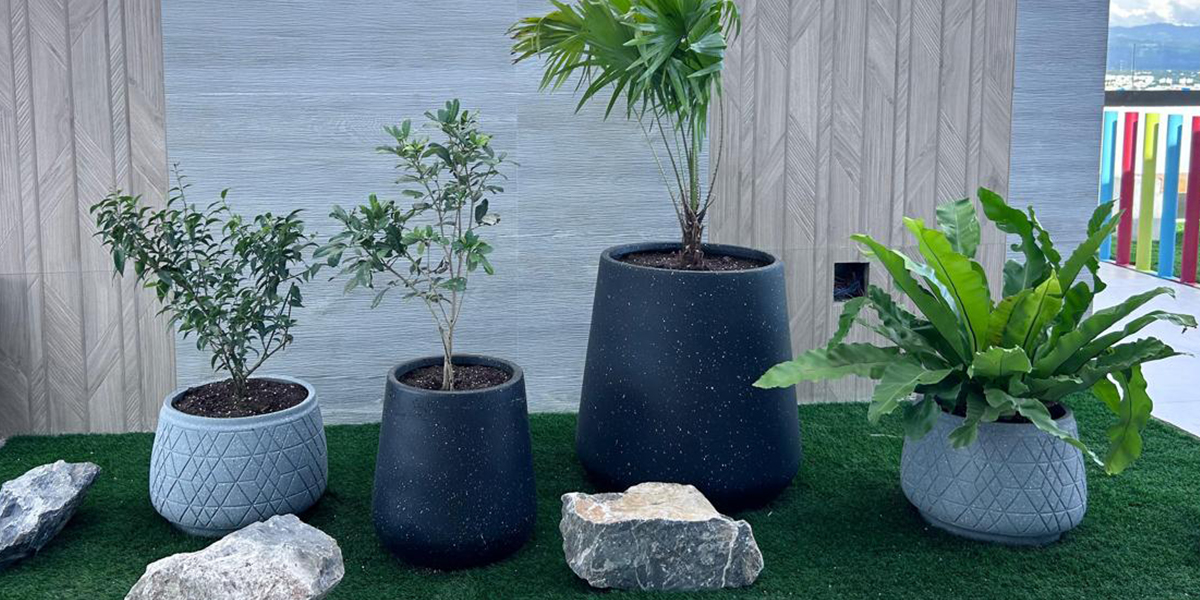 All of kingmake planter are primarily made from a lightweight composite of cement, fiberglass and sand. They are for outdoor and indoor plants and flowers in hotel entrance, resorts patio, villa, city decor etc and other commercial landscape use.
The vibrant or earthy hue of your outdoor planter is a key part of its charm, setting the mood for your garden, patio or high-end modern commercial spaces . However, sun, rain, and time can challenge even the best finishes. At Kingmake, we engineer our planters for lasting beauty, but understanding how they are made and how to care for them will ensure their colors remain rich and true for many seasons. This guide explains the journey of a Kingmake planter from raw materials to your outdoor and provides a clear care routine to preserve its appearance.
Raw Materials: The Foundation of Durability
Not all planters are created equal. The longevity of the color starts with the integrity of the material beneath it. This specific blend is crucial:
Cement provides structural strength and a classic, textured feel.
Fiberglass acts as a reinforcing network, giving the planter exceptional tensile strength, making it resistant to cracking and much lighter than solid concrete.
Sand fine-tunes the mixture, contributing to the overall density and smoothness of the cast.
This composite creates a stable, watertight vessel that forms the perfect canvas for our finishes.
The Manufacturing Process: Precision for Perfection
The manufacturing process is where durability is baked in. It's a multi-stage ritual that cannot be rushed.
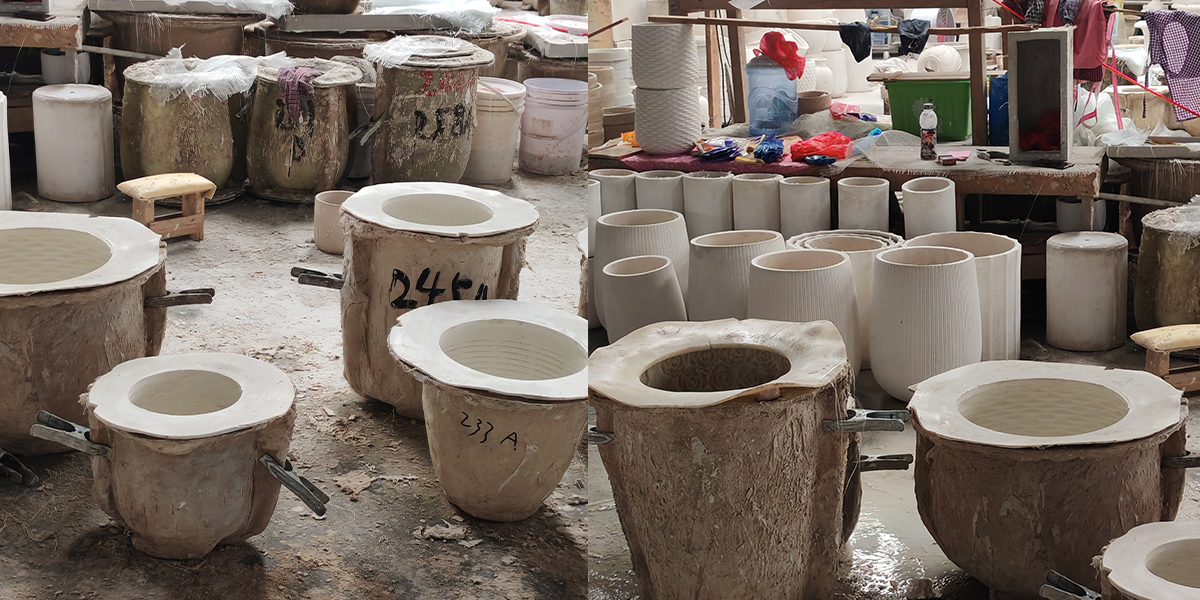
Molding: The composite blend is poured into high-quality molds—often fiberglass or silicone for precise detail. It is then vibrated to eliminate air bubbles, ensuring a uniform, defect-free structure.
Curing (The Most Critical Step): After demolding, the planter enters a controlled curing phase. It is kept in a humid environment for days, allowing the cement to hydrate fully and develop its maximum strength slowly. This prevents internal weaknesses that could later cause cracks or color adhesion issues.
In Kingmake factory workshop, rows of these cured bases are stored, undergoing a final air-drying process to achieve their maximum hardness before moving to the next production stage. Seasoning: The planter then rests for an extended period (often for a week). This allows its internal chemistry to stabilize, moisture levels to equalize, and alkalinity to reduce—preparing a perfectly mature surface for painting.
The Coloring Process: Art Meets Science
This is where beauty is applied with science-backed methods to ensure longevity. A raw, cured planter is washed and prepared for its finish.
Priming: Before any color is applied, a high-penetration, alkali-resistant sealer is used. This crucial layer seals the porous composite, preventing moisture migration and "efflorescence" (white salt stains) from undermining the topcoat.
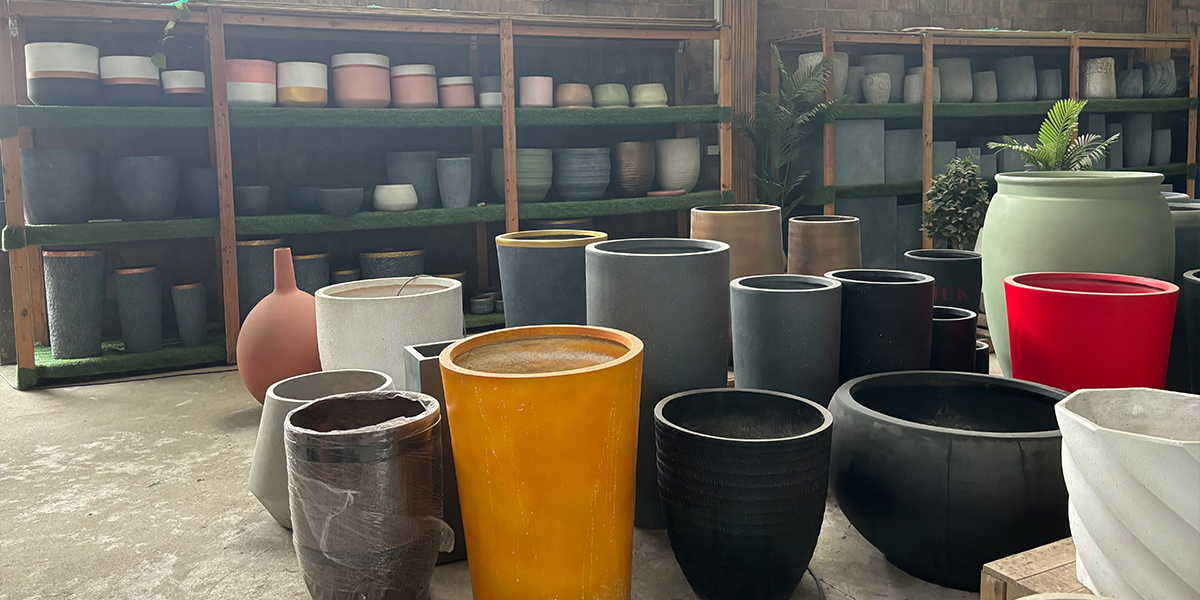
Hand-Painting & Finishing: There are 18 planter colours available. Our artisans then apply the finish by hand. This isn't standard paint; we use flexible, weather-resistant coatings like acrylic or polyurethane concrete paints. The hand-painted technique allows for the unique, textured finish that gives each Kingmake planter its character—a slight variation in color that makes it a one-of-a-kind piece, harmonizing with natural surroundings. For some lines, we use through-body coloring (adding mineral oxides to the composite mix itself), which is virtually fade-proof.
Your Care Guide: Preserving the Beauty
Even the most durable finish benefits from simple, proactive care. Follow these steps to protect your investment:
Strategic Placement: While our planters are outdoor-safe, prolonged direct sunlight is the primary cause of fading for any surface. Place them in partial shade or areas with dappled light where possible. Rotating them occasionally ensures even exposure.
Weather Protection: In cases of severe inclement weather (hail, freezing storms), it is advisable to move planters to a sheltered area or cover them. Although watertight and frost-resistant, this extra step minimizes extreme stress.
Gentle Cleaning: Regularly remove dirt and organic debris. Use a soft brush or cloth with mild soapy water. Avoid pressure washers or abrasive cleaners that can damage the finish.
Re-sealing (Long-Term Maintenance): Every 2-3 years, check the water repellency of the finish. If water stops beading on the surface and starts soaking in, it's time to refresh the protective layer. After a gentle cleaning and allowing the planter to dry completely, apply a new coat of concrete-specific outdoor sealer. This simple step will restore water resistance and UV protection, dramatically extending the life of the color.
However, outdoor finishes do tend to fade gradually with long-term use and weather exposure. Kingmake outdoor planter pots that have lost their color can often be successfully repainted. This process can restore their appearance and extend their functional life. The key to a durable, long-lasting result lies in proper surface preparation and the use of correct materials.
Core Steps for Repainting
Cleaning and Preparation: The planter must be thoroughly cleaned of all dirt, moss, and algae. Any loose or flaking old paint should be scraped or sanded off. The surface must then be completely dry before any new paint is applied.
Priming (Critical for Concrete/Cement): For planters made of concrete, cement, applying a specialty alkali-resistant primer is essential. This seals the porous surface, prevents moisture damage and "efflorescence" (white salt stains), and creates a stable base for the topcoat to adhere to.
Selecting and Applying Paint: Use paint specifically formulated for outdoor masonry or concrete. Acrylic latex or polyurethane-based paints offer good flexibility and weather resistance. Apply paint in thin, even coats, allowing each coat to dry completely before applying the next. Multiple thin coats are more durable than one thick coat.
Curing and Sealing: After the final coat, allow the planter to cure in a sheltered, well-ventilated area for several days. For added protection, a clear, waterproof outdoor sealer can be applied over the dry paint.
Considerations by Material
Concrete/Cement Planters: Priming is non-negotiable for a lasting finish.
Professional-Grade Results from the Factory
While DIY repainting is possible for individual planters, achieving a factory-fresh, perfectly even, and maximally durable finish requires controlled industrial processes. At Kingmake, our professional repainting is integrated into our manufacturing. Each planter undergoes precise surface treatment, priming, and the application of industrial-grade coatings cured under optimal conditions. This ensures color consistency, superior adhesion, and longevity that is difficult to replicate at home. The enduring color of Kingmake planter is the result of advanced material science, meticulous manufacturing, and artistic hand-finishing.
We provide bulk order production for hotels, resorts, landscapes, city decors and wholsaler etc, Ready to add lasting color and style to your space?
Contact us today to discuss your project needs, request samples, or get a quote. Let Kingmake’s expertise in durable, beautiful planters provide the perfect solution for your outdoor vision.
 Whatsapp
 sales@cnkingmake.com
 +8613925925021