
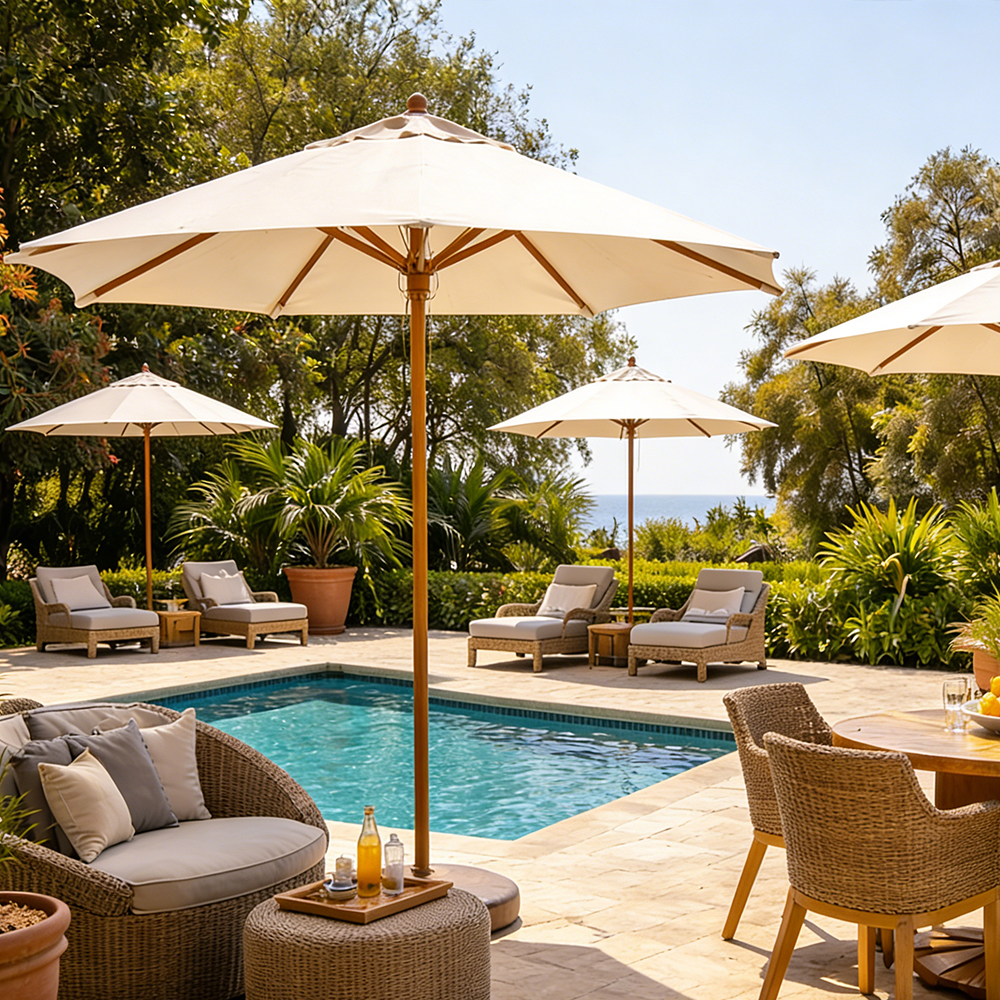
How Many Pool Deck Umbrellas Does Your Resort Need?
A resort pool deck can have plenty of loungers and still feel uncomfortable if shade is limited. Guests don’t always complain that there aren’t enough seats—they complain that the shaded seats are “always taken,” that the deck is “too hot,” or that the pool area feels stressful at peak hours. Umbrellas solve that problem, but only when they’re planned like a system. This guide shows how to calculate how many umbrellas your pool deck needs, how canopy size changes the count, where to place umbrellas for better all-day shade, and how to avoid cluttered walkways and unstable setups. The goal is simple: shade that feels intentional, not random. Umbrella planning affects guest comfort, operations, and even perceived quality. In the hot sun, shaded seating becomes premium seating, whether you label it that way or not. That’s why umbrella count is closely tied to guest satisfaction. Too few umbrellas creates competition, “chair saving,” and frequent staff interventions. Too many umbrellas can make the deck feel crowded, block views, and turn circulation lanes into obstacle courses. A well-planned umbrella layout does two things at once. It keeps guests comfortable during peak sun hours, and it keeps the pool deck easy to move through and easy to service. Before counting umbrellas, define what “success” looks like on your deck. Most resorts fall into one of three shade targets. This means you’re planning to shade nearly every lounger and every dining table during peak hours. It’s common for luxury pools, adults-only resorts, and destination properties where the pool is the main attraction. The benefit is fewer complaints and a calmer deck. The tradeoff is higher umbrella count or larger canopies, plus more attention to wind planning and base placement. This means shading all dining tables and a meaningful portion of loungers, usually around half to two-thirds of lounger inventory. Done right, it creates real choice: guests can choose sun or shade without feeling like shade is impossible to get. Balanced shading also keeps the deck visually clean. You can maintain open “sun lanes” and still protect the zones where guests linger longest. Here you shade dining areas and select premium loungers, often focusing shade near the pool bar, daybed zones, and front-row seating. It can work well for compact pool decks if the shaded seats are placed strategically. The key with a minimal target is fairness. If only a few seats are shaded, guests will compete for them unless you distribute shade carefully. Umbrella planning fails when resorts count chairs but ignore how guests behave. Start with the seating that holds people in place for the longest time. Loungers are the main “shade demand” category. Guests on loungers stay longer, and they feel heat more intensely because they’re less likely to move frequently. Count loungers in pairs and clusters, not as single units. Umbrella coverage usually works best when it shades a pair or a small group with a side table. If you have poolside dining or cocktail tables, plan shade for those seats first. Guests don’t want to eat in direct sun, and staff don’t want customers relocating mid-service. This is also where shade improves revenue. Comfortable dining zones keep guests ordering longer and returning more often. If your pool deck includes daybeds or cabana-style seating, treat them as “must shade” zones. These are your highest-value seats and the most photographed areas of the deck. Even if a daybed has a canopy, you may still need umbrellas nearby to create consistent shade coverage around it. Now we can start with the quick rules that make planning easy. Think in umbrella-size groups because canopy size affects how many seats one umbrella can realistically shade. A standard market umbrella in this range typically shades 2 to 4 chaise loungers, depending on layout, sun angle, and whether the loungers are arranged as pairs. If you want predictable comfort, plan closer to the lower end of that range. Two loungers in strong shade feel premium. Four loungers can work, but shade “quality” becomes more variable through the day. A larger umbrella can shade up to 4 loungers more comfortably, especially if you’re shading two lounger pairs with a shared gap in the middle. Large canopies can reduce the total umbrella count, but they require more careful placement. They also tend to need heavier bases and more wind-smart planning. For dining zones, the simplest planning approach is one umbrella per table. If tables are large, or chairs are spaced wider, you may need larger canopies to keep shade on seated guests. A helpful sizing mindset is to choose a canopy that extends beyond the seating footprint so shade stays on guests even as the sun moves. Umbrella count is influenced by umbrella type. Two decks with the same seating inventory can need different umbrella counts depending on whether they use center-pole or offset shade systems. Center-pole umbrellas work especially well for dining tables and tightly planned lounger pairs. They create predictable shade and are easy to manage operationally. They also allow a modular approach. You can add shade where demand is highest without restructuring the entire deck. Cantilever umbrellas can shade seating without placing a pole in the center of the group. That’s ideal for lounger clusters and premium zones where you want unobstructed seating. Because they can cover larger seating blocks, they may reduce umbrella count in some layouts. The tradeoff is heavier bases and stronger placement discipline—especially on windy decks. If your deck feels visually busy, fewer larger canopies can create a cleaner, more upscale look. You get fewer bases, fewer poles, and more open sightlines. But the plan only works if there are shade lands where guests sit. Oversized umbrellas placed randomly can still leave seats unshaded at peak hours. The biggest umbrella planning mistake is treating umbrellas like decorations. Umbrellas are functional equipment. Shade must follow the seat, and the seat must remain easy to access. Where shade falls at 10 am is not where it falls at 3 pm. A perfect “morning layout” can fail in the afternoon if the umbrellas weren’t positioned with sun movement in mind. A practical approach is to identify your peak hours and test where the sun hits during those windows. On many US resort decks, the hardest time is early afternoon when sun is strongest. Pool decks need clear lanes for guests and staff. Avoid placing umbrella bases where traffic naturally funnels: towel stations, bar queues, restroom routes, and main entrances. If umbrellas block the flow, guests bump bases, bases shift, and wobble increases. That leads to unstable canopies and faster wear. Shade is great, but not if the shaded seats sit in constant splash. Position umbrellas so loungers stay comfortable, and keep a clear walking lane along the pool edge. The pool edge should feel open and safe. The best layouts keep shade on seats, not on the pathway. In breezy environments, shade planning is also stability planning. Coastal resorts, rooftops, and open decks often do better with fewer, better-placed umbrellas rather than lots of lightly stabilized ones. More umbrellas means more canopies catching wind and more bases to manage. If your deck is windy, you may need a tighter plan with strategic placements and stronger base solutions. A calm, stable layout beats a high-count layout that staff must constantly close, reposition, or worry about. If umbrellas aren’t stable, they’ll be closed more often. And if they’re closed during peak hours, your “umbrella count” doesn’t matter. This is why many resorts plan shade with operational realism. The best umbrella plan is the one that stays open safely for the longest portion of the day. Here’s a fast method you can apply to almost any pool deck. Decide if your goal is full-shade, balanced, or minimal. Then count how many loungers you want shaded at peak time. If you have 80 loungers and you want a balanced target (about 60% shaded), your shaded lounger target is about 48 loungers. Decide if you’ll use mostly 9-foot umbrellas, mostly 11–13-foot umbrellas, or a mix. A mixed approach is common: 9-foot umbrellas for lounger pairs and dining, plus a few larger canopies for premium clusters. For 9-foot umbrellas, plan roughly one umbrella per two lounger pairs. For larger umbrellas, plan roughly one umbrella per two pairs with more flexibility. Using our example of 48 shaded loungers, you might plan for about 16–20 umbrellas if using 9-foot canopies, then reduce slightly if using larger canopies in premium zones. Add one umbrella per poolside dining table or bar-height table zone that needs shade. Dining shade is where guests notice discomfort fastest. Shade these seats first. In real layouts, umbrellas don’t shade “perfect blocks” all day. You often need a small buffer to cover sun movement, particularly in late afternoon. If your deck has irregular shapes, stairs, or multiple zones, adjust upward slightly or use a few larger canopies to cover awkward areas. Umbrellas aren’t just about quantity. They’re about where shade is available. First shade the seats guests fight for: front-row loungers, premium seating, and any area near the pool bar. These are the zones that create “shade scarcity” complaints. Second, shade dining and bar seating. This supports revenue and guest comfort. Third, shade secondary loungers in quieter areas. This provides choice and reduces the feeling of competition. If your pool deck includes deeper lounge seating and premium zones, shade becomes part of the experience. A well-shaded daybed zone can absorb demand and reduce pressure on standard loungers. This is where coordinated pool-deck planning matters. A resort deck feels more elevated when shade, seating, and premium areas work together visually and functionally. Umbrellas with the same diameter don’t always shade the same way. A few specs matter in real-world comfort. Square canopies often shade seating blocks more efficiently because they align with lounger pairs and tables. Round canopies can leave corner gaps depending on how chairs are arranged. If the canopy is too high, shade can drift away from the seat as the sun moves. If it’s too low, it can block sightlines and feel cramped. The best canopies sit high enough for open views but low enough to keep shade on the seating footprint. Guests notice shade quality. A high-quality canopy creates consistent comfort, reduces heat buildup, and maintains its look across seasons of sun exposure. Two umbrellas can shade four seats comfortably or shade eight seats poorly. Count shaded seats, not umbrellas. Most pool decks need a mix. Smaller umbrellas for pairs and dining, larger canopies for premium clusters. If your bar line is in full sun, guests get uncomfortable fast. Shade isn’t only for loungers. On windy decks, umbrella planning must include stability planning. Choose placements and canopy types that can safely stay open. For hospitality projects, we recommend planning umbrellas at the same time you plan poolside seating. When the deck is designed as a complete system—loungers in predictable pairs, premium zones defined, dining shaded, and pathways protected—you often need fewer umbrellas to achieve better comfort. This is also where matching the style language matters. A coordinated deck looks intentional, photographs better, and feels more premium. In practice, hotels often pair umbrella planning with consistent pool seating and premium lounge zones so shade is distributed across the experiences guests actually choose. Patio Umbrella for commercial pool-deck shade options Sun Loungers for poolside seating layout planning Outdoor Daybed for premium shaded zones and high-dwell seating Start by deciding your shade target, then count the seats you want shaded at peak. Many resorts shade all dining tables and 50–70% of loungers, then adjust based on sun path and layout. In most layouts, a 7.5–9 ft umbrella shades about 2–4 loungers depending on how the loungers are grouped and how the sun moves through the day. Fewer large umbrellas can look cleaner and reduce base clutter, but they require careful placement and wind planning. More small umbrellas offer flexible coverage and modular layout control. 9-foot umbrellas are common for lounger pairs and small groups. Larger 11–13 foot umbrellas can cover bigger clusters and premium zones more effectively when space allows. Place umbrellas where guests dwell longest and where shade is most demanded—premium loungers, dining zones, and front-row seating—while keeping pathways and bar queues clear. Use fewer, better-placed umbrellas with strong base solutions, avoid exposed corners and edges, and prioritize operational stability so umbrellas can stay open safely during peak hours. A great pool deck doesn’t just “have umbrellas.” It has a shade plan. Start with your comfort goal, count the seating that truly needs shade, apply simple lounger and table ratios, and then refine the layout based on sun path and circulation. When shade is planned with seating and flow, you’ll reduce complaints, improve guest comfort, and create a pool deck that feels premium—without overbuying or overcrowding the space.Why Pool Deck Umbrella Count Matters More Than It Seems
Step 1: Decide Your Shade Target (Your Service Level)
Full-shade target (high comfort, high expectation)
Balanced target (most common for hotels and resorts)
Minimal target (small decks or tight budgets)
Step 2: Count Seating That Actually Needs Shade
Loungers: your biggest shade driver
Dining and bar seating: shade isn’t optional
Daybeds and premium zones
Step 3: Use Simple Umbrella-to-Seating Ratios (Fast Estimate)
7.5 to 9-foot umbrellas (most common)
11 to 13-foot umbrellas (more extensive coverage)
Dining tables (4 to 6 seats)
Step 4: Choose Umbrella Types Based on Pool-Deck Layout
Market umbrellas (center-pole)
Cantilever umbrellas (offset)
When fewer large umbrellas beat many small ones
Step 5: Plan Shade Like a Layout, Not a Product List
Sun path: shade moves all day
Keep circulation lanes clear
Consider splash zones and pool edge safety
Step 6: Wind and Safety Changes Your Umbrella Count
Wind exposure can reduce the number of umbrellas you should deploy
Base strategy is part of coverage strategy
A Practical Resort Umbrella Calculator (5-Minute Method)
Step 1: Count peak-hour loungers that should be shaded
Step 2: Choose your canopy size strategy
Step 3: Apply the ratio
Step 4: Add dining tables
Step 5: Adjust for sun path and layout inefficiency
Shade Zoning That Reduces Complaints Without Overbuying
Prioritize shade where guests compete for it most
Combine umbrellas with premium lounging zones
Product Specs That Affect Coverage (Without Getting Technical)
Canopy shape
Pole height
Fabric and shade quality
Common Mistakes Resorts Make (And How to Avoid Them)
Mistake: counting umbrellas instead of counting shaded seats
Mistake: buying the same size everywhere
Mistake: forgetting that dining and queues need shade too
Mistake: ignoring wind exposure
Kingmake’s Pool-Deck Shade Formula: Comfort Without Clutter
FAQs: How Many Umbrellas Does a Pool Deck Need?
How many pool umbrellas do I need for a hotel pool deck?
How many loungers can a 9 ft umbrella shade?
Is it better to use fewer large umbrellas or more small ones?
What size umbrella is best for pool loungers?
Where should umbrellas be placed on a pool deck for all-day shade?
How do I plan umbrellas for windy pool decks or coastal resorts?
Final Takeaway
 Whatsapp
 sales@cnkingmake.com
 +8613925925021