
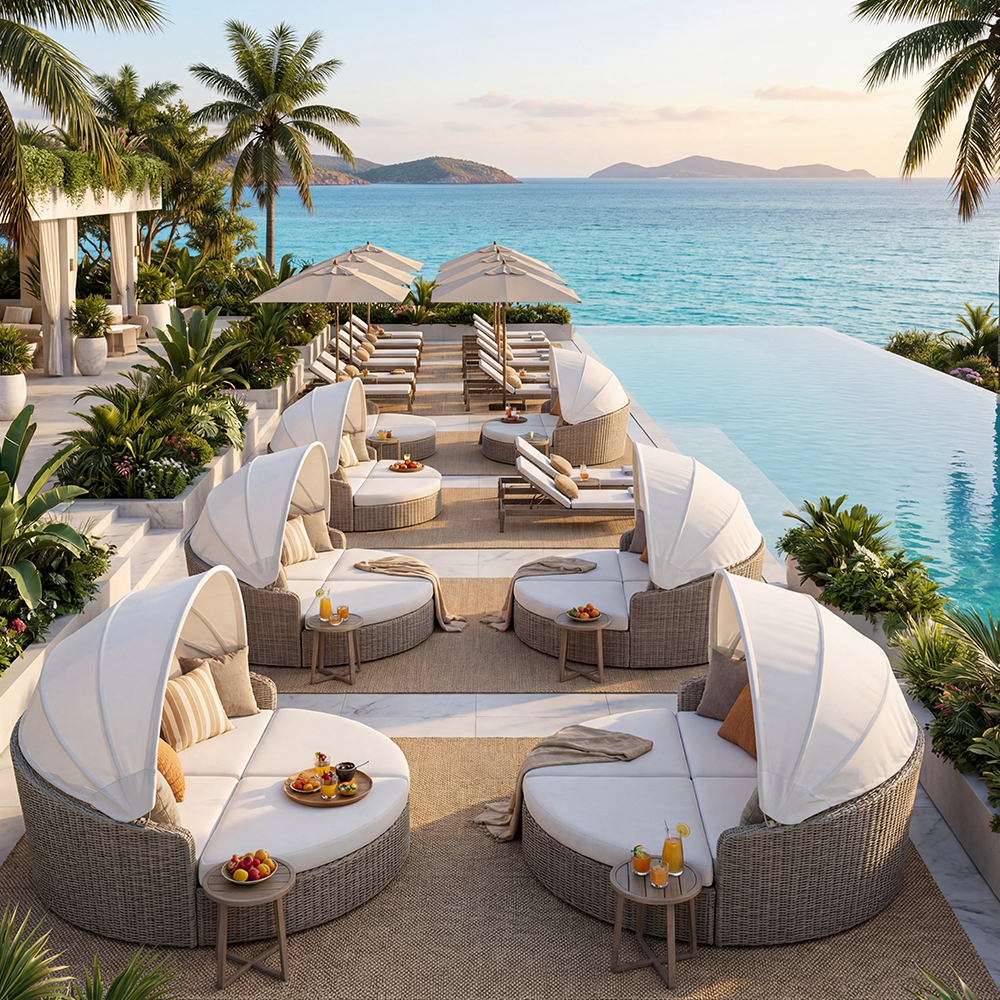
Hotel Daybed Rental Pricing Strategy
Daybeds can be one of the highest-impact upgrades on a hotel pool deck. They take the same square footage as a few loungers, but they sell a premium experience—shade, comfort, privacy, and “this is the best seat” energy. When priced correctly, daybed rentals increase ancillary revenue, lift pool bar sales, and improve guest perception of the entire outdoor area.
The challenge is that many hotels either underprice daybeds (so they sell out fast but leave money on the table) or overcomplicate the offer (so guests don’t book at all). This guide walks through a practical, hotel-ready daybed pricing strategy built around clear tiers, simple booking rules, and operations that support premium pricing.
Why Daybed Rentals Work So Well for Hotels
A pool deck has limited inventory. You can add a few loungers, but you can’t easily add “premium.” Daybeds create premium inventory instantly because they feel exclusive. Guests don’t just pay for a place to sit—they pay for the best spot, better comfort, and better service access.
Daybeds also solve a common pool problem: shade scarcity. On hot days, shaded seats become the first to “disappear,” which triggers chair saving and guest frustration. When daybeds provide reliable shade, they become a premium choice that reduces pressure on standard seating.
Most importantly, daybeds increase spending behavior. Guests who commit to a daybed tend to stay longer and order more food and drinks. That’s why a smart pricing plan often improves both guest experience and pool bar performance.
Start With Your Goal: Revenue, Experience, or Both
Before setting rates, define what your daybed program is designed to accomplish. Hotels often assume “more money,” but daybeds can also be a guest satisfaction tool that improves reviews and reduces crowding complaints.
If your main KPI is revenue, focus on sell-through and spend per party. If your KPI is guest experience, focus on availability, service speed, and shade comfort. If your KPI is both, use a pricing model that encourages F&B spend while keeping the offer simple.
This matters because your pricing model should match your goal. A flat rental fee is simple and predictable. A minimum spend model drives bar revenue. A hybrid model can do both, but only if your service execution is strong.
Define What You’re Actually Selling
Pricing gets easier when you define the “product.” A daybed rental can be a basic reserved seat, or it can be a hosted VIP experience. Guests will pay more for clarity and confidence.
Decide what’s included. Are towels included? Bottled water? A fruit plate? A dedicated server? A shade solution that stays consistent through the day? Even small inclusions can justify higher pricing when they reduce friction.
Also decide how the daybed is positioned. Is it a quiet relaxation zone? A social zone near the bar? A family zone with easier access and more shade? Guests pay differently depending on the vibe and the location.
Know Your Inventory Types (Because Pricing Changes by Type)
Not all daybeds should be priced the same. Hotels often make the mistake of offering a single price even though the product varies by location and experience.
Poolside daybeds in the front row are naturally premium. They have the best view, the easiest water access, and often the highest guest demand. Back-row daybeds may still be comfortable, but they don’t have the same perceived value.
Canopy daybeds and shaded daybeds typically price higher because shade is predictable and privacy feels stronger. Open daybeds can still sell well, especially in shoulder seasons or cooler climates, but they are more dependent on umbrella placement and sun path.
Capacity also matters. If your daybed comfortably fits two guests, price and policies should reflect that. If it can host three or four, your pricing model can be adjusted accordingly—but only if service and space planning support it.
The Three Core Pricing Models Hotels Use
Most successful hotels choose one of these models and keep it consistent. Guests should understand it in seconds.
Flat rental fee (simple and easy to sell)
A flat fee works well when you want predictable revenue and a low-friction booking flow. Guests pay a clear amount and get a reserved daybed for a defined time period.
This is often ideal for midscale resorts or properties where F&B service is lighter. It also works when your bar is not the primary revenue engine of the pool area.
Minimum spend model (the F&B driver)
Minimum spend works well when your pool bar is strong and service is fast. Guests reserve the daybed by committing to a minimum amount spent on food and drinks.
The simplest way to frame it is as a credit. Guests feel better when the minimum spend becomes their dining credit rather than a “fee plus spend” situation. It’s psychologically cleaner and increases conversion.
Hybrid model (fee + minimum spend)
Hybrid pricing is common in high-demand locations and luxury properties. It works best for front-row daybeds, canopy daybeds, or curated packages where the experience truly feels elevated.
If you use hybrid pricing, keep the explanation simple. Guests should not feel like they’re being charged twice without a clear reason.
How to Set Your Price Floor Without Guessing
A pricing strategy needs a price floor so you don’t undercharge. The simplest approach is to base it on utilization, staffing, and the value of the inventory.
Start by estimating how often daybeds will be booked. Many hotels have strong demand on weekends and uneven demand midweek. Your floor price should still make sense on slower days.
Then estimate staffing and reset cost. Premium seating requires premium cleanliness and faster service. If the daybed takes longer to reset or needs more attention, that operational cost should be reflected in your pricing.
Finally, check your opportunity cost. A daybed can replace several standard seats. If you price it too low, you lose both revenue and the premium positioning that makes daybeds valuable.
Use Tiered Pricing by Location (The Easiest Revenue Upgrade)
The fastest way to improve revenue without changing your product is tiered pricing. Guests already understand “front row costs more.” Your job is to make it official and easy to book.
A simple three-tier system works well:
Premium tier: front-row, best view, closest to water or best shade reliability
Standard tier: strong comfort, great access, solid value
Value tier: comfortable but less prime location
Tiering also reduces guest frustration. When only one price exists, guests feel unfairness if they get a less desirable spot. When tiers exist, guests feel like they chose the right option for their budget.
Dynamic Pricing That Doesn’t Feel Greedy
Dynamic pricing works best when it feels logical. Guests accept higher prices on weekends, holidays, and peak-season dates. They also accept higher prices when the weather is perfect and the resort is busy.
The key is to adjust pricing at the right level. Adjust by day, by tier, and by booking window rather than making unpredictable changes every hour. Guests don’t need real-time surge pricing drama for pool seating.
If you do weather-based pricing, keep a clear rain plan. Guests hesitate to book if they fear losing money due to weather. A transparent reschedule or credit policy builds trust and increases conversion.
Packages and Bundles That Increase Conversion
Packages make daybeds easier to sell because guests can see the value immediately. They also protect margins when you build bundles around high-profit items like beverages.
Keep bundles simple. Two or three options are usually enough. A “classic” package, a “celebration” package, and a “VIP” package can cover most needs without confusing guests.
Bundles also work well for special occasions. Guests are more likely to book a daybed when it feels like a moment—anniversary, birthday, or a vacation highlight—rather than just a seat.
Day-Use and Non-Guest Sales (If Your Market Supports It)
Some hotels unlock major revenue by selling daybeds to non-guests during low occupancy periods. This works best in destinations with strong local demand and a pool bar scene.
The key is protecting the hotel guest experience. Reserve a portion of inventory for in-house guests first. Set clear check-in windows. Use wristbands or digital confirmation. Make service expectations clear so the deck feels controlled, not chaotic.
If you expand to day-use sales, your pricing can be higher on peak days because you are selling a curated experience, not simply filling empty seats.
Booking Experience: How Guests Reserve Impacts Price
Friction kills premium sales. If guests have to call, wait, or ask multiple questions, many will abandon the idea. Clear booking paths increase conversion, and higher conversion supports higher pricing.
Show daybed tiers with photos, simple names, and clear “what’s included” lines. Avoid hidden fees. If service charges or gratuity policies apply, present them clearly to prevent negative surprises.
Policies guests ask about most should be visible on the booking page. Cancellation cutoffs, late arrival rules, max capacity, outside food rules, and weather policies all reduce booking hesitation when explained upfront.
Operations That Make Premium Pricing Stick
Pricing only works if the delivered experience matches the promise. If service is slow, guests won’t hit minimum spend and will feel resentful. If daybeds look worn, the premium perception collapses.
Speed matters most. Minimum spend programs require fast ordering, fast delivery, and attentive service. If a guest wants to spend, you must make it easy.
Reset standards matter too. Daybeds must look “photo-ready” all season. That means reliable cleaning processes, a plan for cushion care, and quick replacement of worn components.
Durability helps here. Premium daybeds should be commercial-grade, designed for daily use, sun, humidity, and constant guest contact. The more resilient the product, the easier it is to maintain premium presentation.
What to Avoid: Common Pricing Mistakes
Underpricing premium inventory is one of the most common errors. It creates a “sold out every day” problem that looks good on paper but harms guest perception. Guests get frustrated when the best seats are always gone, and you lose revenue.
Overcomplicating rules is another mistake. Guests should not need a staff explanation to understand the offer. If your pricing and policies feel complicated, bookings will drop.
Hidden fees are also dangerous. When guests book a daybed and later discover service fees, rules, or restrictions, they remember the surprise more than the comfort.
Finally, don’t ignore shade planning. Daybeds sell better when they offer reliable comfort. If half your daybeds sit in harsh sun with inconsistent shade, you’ll struggle to price them confidently.
Kingmake Outdoor Daybeds Built for Hospitality Projects
Premium daybeds perform best when they stay comfortable, stable, and photo-ready through long seasons of sun, humidity, and daily guest use. Kingmake Outdoor manufactures commercial Outdoor Daybeds for hotels, resorts, and hospitality projects—engineered with durable frames, all-weather materials, and cushion options designed for real operations, from poolside lounging to resort terraces.
Because daybeds are typically part of a complete outdoor setting, we also help buyers create cohesive pool-deck layouts by pairing daybeds with coordinated Patio Umbrellas for reliable shade and complementary Sun Loungers to balance standard seating with premium zones. With custom OEM/ODM capability, bulk production support, and worldwide shipping, Kingmake makes it easier to build a consistent, brand-aligned outdoor experience that lasts.
FAQs: Daybed Rental Pricing for Hotels
How much should a hotel charge for a pool daybed rental?
Pricing depends on your location, demand, and what’s included. A practical approach is to set a floor that covers staffing and reset cost, then use tiered pricing for premium locations and higher-demand days.
What is a minimum spend for a cabana or daybed?
A minimum spend is a commitment to spend a certain amount on food and drinks to reserve the daybed. Many hotels convert the minimum spend into a credit so guests feel they’re paying for consumption, not a fee.
Is minimum spend a credit toward food and drinks?
It should be, if you want higher conversion and fewer guest complaints. A credit-based minimum spend is easier for guests to understand and easier to justify at premium levels.
Should hotels charge per person or per daybed?
Charging per daybed is simpler and more common. If you want to limit overcrowding, control capacity through a max guest policy rather than per-person pricing.
How do you price front-row vs back-row daybeds?
Use tiered pricing. Premium rows cost more because they have better views, access, and demand. Tiered pricing feels fair and improves revenue without changing inventory.
Can hotels use dynamic pricing for daybeds?
Yes, especially for weekends, holidays, and peak-season dates. Keep dynamic pricing predictable and pair it with clear policies so guests trust the system.
What should be included in a daybed rental package?
Common inclusions are towels, water, shade assurance, and a simple food or beverage add-on. The best packages focus on convenience and premium experience.
How far in advance should guests reserve daybeds?
Most hotels allow advance reservations to reduce friction and guarantee availability. A short booking window also works if your property relies on walk-up demand, but advance booking usually increases conversion.
 Whatsapp
 sales@cnkingmake.com
 +8613925925021