
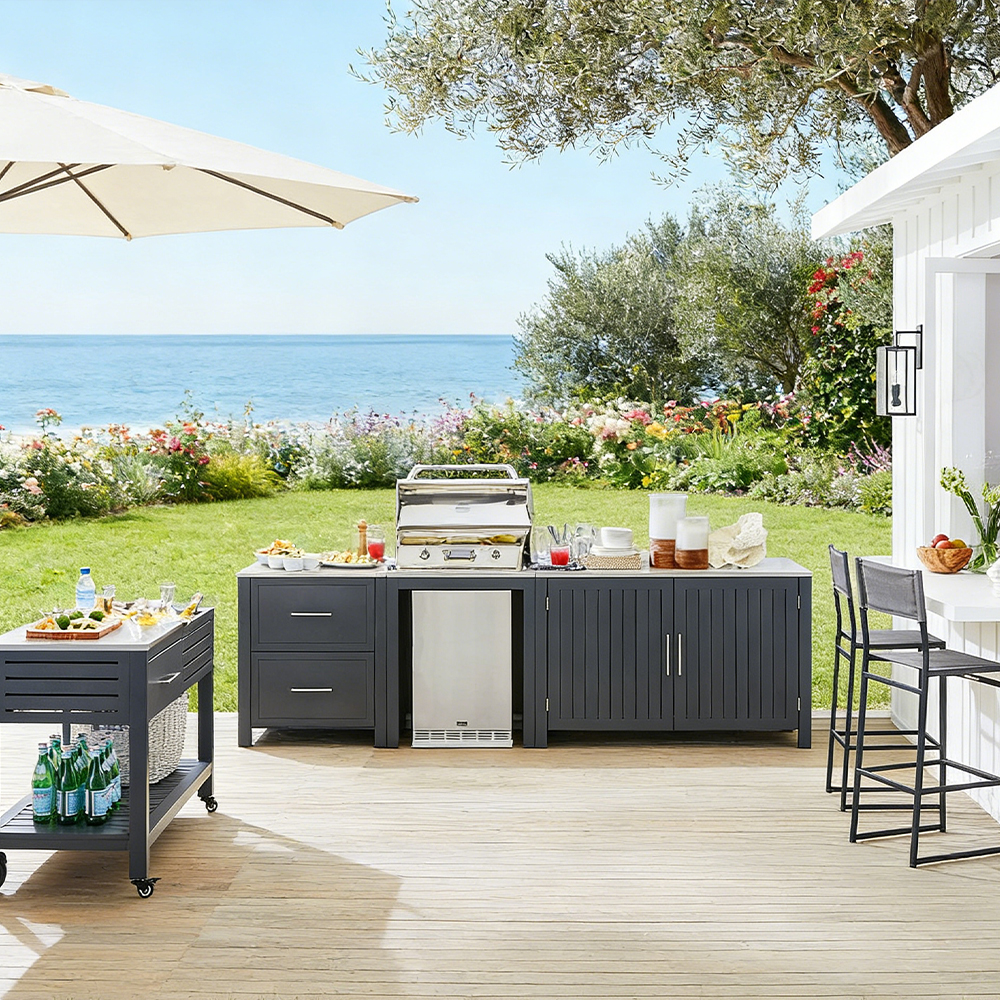
Coastal Outdoor Kitchen Maintenance for Humid Climates USA
Outdoor kitchens near the ocean or in high-humidity regions face a tougher reality than most people expect. Coastal air carries salt that settles quietly on metal surfaces and hardware, while humidity creates the perfect environment for moisture buildup, mildew, and staining.
If you manage a hotel, resort, or commercial patio in the U.S., the goal isn’t “perfectly clean.” It’s consistent, practical upkeep that prevents corrosion and keeps your outdoor kitchen looking premium season after season.
This guide breaks outdoor kitchen maintenance into simple routines that work in coastal and humid environments. You’ll learn what to clean, how often to do it, what to watch for, and how to reduce long-term replacement costs with better daily habits.
Why Coastal + Humidity Changes Everything
Coastal air and high humidity speed up moisture damage, causing faster wood rot, rust, and surface wear than inland areas. That’s why materials, coatings, and maintenance strategies must be chosen specifically to handle salty air and constant moisture exposure.
Salt doesn’t splash—it settles
In coastal areas, salt travels on the breeze and forms a thin film across cabinet faces, appliance exteriors, screws, hinges, and seams. It’s easy to miss because it doesn’t always look dirty. But if salt residue sits too long, it accelerates corrosion and can lead to pitting tiny crater-like marks that can spread over time.
Humidity creates hidden condensation
Humidity affects outdoor kitchens in a different way. Cabinets often trap warm air in the daytime and cool down at night. That temperature swing can create condensation inside drawers and behind doors. When moisture stays trapped especially around grease residue mildew and mold can develop even if the kitchen looks spotless from the outside.
The double pressure you have to manage
In simple terms, coastal kitchens need frequent salt removal, and humid kitchens need strong moisture control. When you manage both together, you prevent most of the early wear that causes projects to look aged long before they should.
The Maintenance Mindset That Saves Money
Adopting a proactive maintenance mindset helps you catch small issues early, preventing costly repairs down the road. Regular upkeep protects your property’s value while saving you time, stress, and money in the long run.
Think prevention, not repair
Most outdoor kitchen failures start small. A stiff hinge. A faint orange dot near a handle. A musty smell in one cabinet. If you catch these early, the fix is simple. If you ignore them, the issue spreads and becomes expensive.
Keep it predictable with a routine
The easiest way to maintain an outdoor kitchen isn’t deep cleaning every time. It’s having a schedule that staff can repeat without overthinking. A quick weekly wipe-down and a monthly inspection will prevent most coastal/humidity problems.
Weekly Maintenance: The “Salt Removal” Reset
Weekly Maintenance: The “Salt Removal” Reset keeps your outdoor surfaces protected by removing salt buildup that causes corrosion and surface damage.
Focus on high-touch and high-exposure surfaces
A weekly routine is the most important habit in coastal areas. Salt residue builds faster than most people realize, especially during windy days and stormy seasons.
Start with cabinet faces, handles, and appliance exteriors. Pay attention to seams and corners where salt collects. If your kitchen sits near a pool, treat splash zones as high priority because water and chemicals increase surface stress.
The rinse-first habit
Before wiping aggressively, lightly rinse or damp-wipe to lift salt residue. This prevents grinding salt particles into surfaces, which can create micro-scratches where corrosion begins. After that, wipe gently and dry.
Don’t forget undersides and edges
Salt settles under counter overhangs, beneath cabinet lips, and around base edges—areas that get skipped during quick cleans. These are often where corrosion starts because moisture lingers longer.
Monthly Maintenance: The “Inside the Cabinets” Check
Monthly maintenance matters—an “inside the cabinets” check helps spot leaks, pests, loose hinges, or moisture buildup early. This quick habit protects your home, extends cabinet life, and prevents costly repairs down the line.
Cabinet interiors are where mildew begins
In humid climates, cabinet interiors can develop moisture buildup even when the outside looks perfect. Once a month, open everything and check for condensation, dampness, or musty odor. If you find moisture, dry the interior fully and look for what caused it: blocked ventilation, damp items stored inside, or poor airflow in the surrounding structure.
Grease and crumbs feed mildew
Humidity alone doesn’t create mildew. Mildew needs moisture plus organic material. Grease film around cooking zones and crumbs inside storage areas become the “food.” Monthly degreasing and wiping interiors removes that fuel source.
Hardware inspection prevents early failure
Check hinges, handles, drawer slides, and fasteners. These small parts fail first in salty, humid conditions. If a hinge feels stiff or a handle base shows staining, address it early before corrosion spreads into surrounding surfaces.
Seasonal or Quarterly Maintenance: The Protection Layer
Seasonal or quarterly maintenance adds a strong protection layer that shields your property from weather damage, wear, and costly repairs. Regular upkeep keeps decks, fences, and exteriors looking fresh while extending their lifespan year-round.
Refresh protection after heavy weather
Coastal areas often experience heavy rain, storms, and intense sun. After demanding seasons, refresh the kitchen’s protective routine. The goal is to restore surfaces that have been exposed to harsh conditions and constant cleaning cycles.
Countertops may need resealing more often
If your outdoor kitchen uses a surface that requires sealing, humidity and frequent rain can shorten protective cycles. Watch for signs that water no longer beads on the surface. When that happens, stains and discoloration become more likely.
Covers and fittings should be checked for wear
Covers take a beating in coastal environments. Wind can loosen them, and trapped moisture can cause damage if the cover material is not breathable. Inspect the fit, replace worn straps, and upgrade if covers no longer protect properly.
Humidity Control: Keep Moisture From Getting Trapped
Humidity control helps prevent excess moisture from getting trapped inside your home, protecting walls, floors, and structures from damage. It also improves indoor air quality by reducing mold, mildew, and musty odors.
Airflow is the best defense
Air movement reduces condensation and helps surfaces dry faster. If your kitchen has ventilation panels or gaps, keep them open and clear. Avoid packing cabinet shelves too tightly, which blocks airflow and encourages dampness to linger.
Keep cabinet interiors dry on purpose
Hotels and resorts often store cleaning items in outdoor cabinets. That’s fine but avoid storing damp towels, wet sponges, or anything dripping. These small habits are one of the most common causes of mildew issues.
Remove grease before it holds moisture
Grease collects moisture and holds it close to surfaces. That’s why kitchens near the ocean can feel “sticky” over time. Regular wipe-downs near cooking areas reduce both corrosion risk and mildew risk.
Covers in Coastal Areas: Protect Without Creating a Sauna
Why plastic tarps cause problems
Plastic tarps trap moisture. That trapped damp air accelerates corrosion on metal and encourages mildew inside cabinets. A kitchen can look protected from rain but still suffer long-term damage underneath a non-breathable cover.
Choose breathable, fitted protection
Breathable covers protect from rain and salt spray while allowing airflow. Fit matters, too. A loose cover can flap in the wind and scuff surfaces, while a properly fitted cover stays secure and protects better.
If you’re building a long-term protection plan for a hotel or resort, a consistent cover strategy also keeps the outdoor area looking clean and organised during off-hours.
Internal link suggestion: Pair your kitchen with a breathable protection plan using Kingmake’s Furniture Cover category.
Shade and Shelter: The “Maintenance Multiplier”
Shade reduces wear on materials
Direct sun increases surface heat, speeds up fading, and creates stronger expansion and contraction cycles. In coastal environments, that heat stress combines with salt and humidity, creating faster wear.
Flexible shade works best for hospitality spaces
Many hotels prefer shade solutions that can be adjusted seasonally. Umbrellas allow you to protect bar seating and prep zones during peak sun without committing to permanent structures.
Internal link suggestion: For pool decks and rooftops, explore Kingmake’s Patio Umbrella category to keep guests comfortable while reducing direct exposure in key zones.
“Kingmake Outdoor: Premium Hospitality-Grade Outdoor Solutions”
Kingmake Outdoor is a Foshan, China–based, one-stop manufacturer supplying hospitality-grade outdoor solutions to hotels, resorts, distributors, retailers, and project contractors across the U.S. and worldwide.
With 17+ years of experience, a 15,000㎡ self-owned factory, and full capabilities across design, production, quality control, and global shipping, we help buyers build outdoor spaces that perform in real weather and real operations.
Beyond complete Outdoor Kitchens, we support cohesive outdoor zones with matching shade and protection—such as Patio Umbrellas and commercial-grade Furniture Covers, along with custom OEM/ODM options, bulk production, reliable lead times, and a 5-year warranty.
A Quick Coastal + Humidity Checklist for Hotel Teams
Weekly
Wipe or rinse exposed surfaces to remove salt residue, then dry high-touch areas like handles and seams.
Monthly
Check cabinet interiors for condensation or odor, degrease cooking zones, and inspect hinges and slides for stiffness or staining.
Quarterly
Refresh surface protection, check countertop sealing needs, and confirm covers still fit securely and allow airflow.
Final Thoughts
Outdoor kitchens in coastal and humid environments can stay premium for years when maintenance is proactive and predictable.
Remove salt regularly, keep moisture from getting trapped, use breathable covers, and reduce exposure with smart shade planning. These habits protect the kitchen’s appearance, extend equipment life, and help hospitality teams maintain a consistently high-end guest experience.
If you want help selecting outdoor kitchen configurations designed for coastal performance, Kingmake can recommend a project-ready solution based on your site conditions, usage volume, and design goals so maintenance stays simple and long-term durability stays strong.
FAQs
How often should I clean an outdoor kitchen near the ocean?
A quick weekly wipe-down is recommended, with a deeper monthly check of cabinet interiors and hardware.
What causes rust in coastal outdoor kitchens?
Salt residue settles on surfaces and in seams. When it sits too long, it speeds up corrosion, especially on small hardware parts first.
How do I prevent mold and mildew inside cabinets?
Focus on airflow and dryness. Keep interiors clean, avoid storing damp items inside, and check monthly for condensation.
Are breathable covers worth it in humid climates?
Yes. They protect from rain and salt spray without trapping moisture, which reduces corrosion and mildew risk.
Do outdoor countertops need extra care near the coast?
Often yes. Humidity and rain can shorten protective cycles, especially for porous surfaces that need resealing.
What parts fail first in salty, humid conditions?
Hinges, handles, drawer slides, and fasteners usually show the earliest signs of corrosion and stiffness.
How can hotels maintain outdoor kitchens without daily labor?
Use a simple weekly routine plus a monthly inspection schedule, supported by breathable covers and good airflow planning.
Should I use umbrellas or a pergola for protection?
Umbrellas offer flexible shade and seasonal adjustment, while permanent structures offer full coverage when permitted and properly ventilated.
What should I do if I spot early rust or pitting?
Act immediately. Clean gently, dry the area, and restore protection before the issue spreads.
 Whatsapp
 sales@cnkingmake.com
 +8613925925021